
Safety
General information, not medical advice
Your prescriber and the leaflet in your pack know your situation. This page does not.
- Follow your prescriber and the leaflet
- Don't start, stop, or change a dose on your own
- Doses and warnings differ by country and product
Xarelto Tablet: Uses, Dosage, Side Effects, Precautions and Alternates
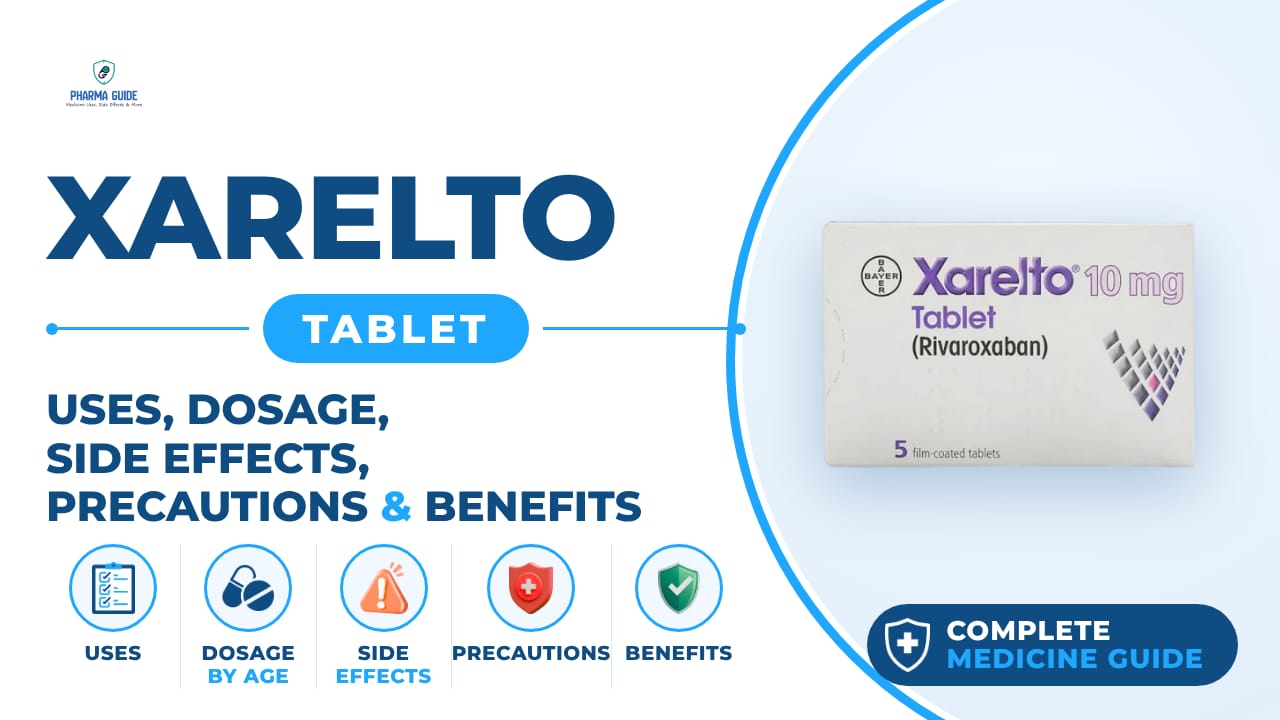
| Generic name | Rivaroxaban |
|---|---|
| Drug class | Factor Xa inhibitor |
| Forms | Tablet, Oral suspension (liquid) |
Quick overview
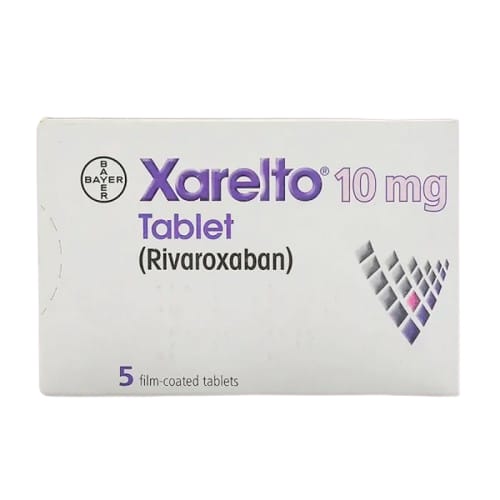
Xarelto is a prescription tablet containing the active ingredient rivaroxaban, a factor Xa inhibitor that acts as a blood thinner (anticoagulant). It is used to reduce the tendency of blood to form clots and to treat or prevent conditions such as deep vein thrombosis, pulmonary embolism, and stroke risk in certain heart conditions. It is available as a tablet and as an oral suspension. As with any blood thinner, it carries a risk of bleeding and requires careful use under a doctor's supervision.
What is Xarelto Tablet
Xarelto is a prescription medicine that works as a blood thinner (anticoagulant). It contains the active ingredient rivaroxaban and is used to reduce the tendency of blood to form clots.
Xarelto Tablet uses
- Treat or prevent blood clots in the legs (deep vein thrombosis, DVT) or lungs (pulmonary embolism, PE)
- Help prevent strokes or serious blood clots in adults with atrial fibrillation not caused by a heart valve problem
- Prevent DVT and PE in adults having hip or knee replacement surgery
- Prevent blood clots in adults hospitalized for serious illness who are at risk due to reduced mobility or other risk factors
- Used with aspirin to lower the risk of heart attack, stroke, or death in adults with coronary artery disease or peripheral arterial disease
- Treat and prevent DVT and PE from happening again in children and certain infants who have received at least 5 days of initial blood thinner treatment
- Lower the risk of DVT or PE coming back after treatment for blood clots for at least 6 months
- Prevent DVT and PE after heart surgery in children 2 years and older with congenital heart disease
Benefits of Xarelto Tablet
- Reduces the chance of a stroke or blood clot forming in the body
- Helps prevent recurring blood clots in the legs or lungs
- Lowers the risk of serious heart problems, heart attack, or stroke when used with aspirin in certain heart and blood vessel conditions
How Xarelto Tablet works
Xarelto works by blocking a substance in the blood called Factor Xa, which is needed to form blood clots. This helps stop clots from forming or getting bigger.
Xarelto Tablet dosage
Take exactly as prescribed by your doctor and follow all directions on your prescription label. Do not change your dose or stop taking this medicine without your doctor's advice, since stopping suddenly can increase your risk of blood clots or stroke.
For some conditions, take with food; whether you take it with or without food may depend on the tablet strength, so follow your doctor's instructions carefully. If you cannot swallow a tablet whole, it can be crushed and mixed with a small amount of applesauce and swallowed right away without chewing; certain strengths must be followed immediately by food. The medicine can be given through a feeding tube if needed, following your healthcare provider's instructions.
In children, the tablet should be swallowed whole and should not be split; ask your doctor about switching to the liquid form if needed. If a child vomits within 30 minutes of taking the liquid form, give a new full dose; if vomiting happens later than 30 minutes, do not give another dose and wait for the next scheduled one. Shake the oral liquid before use and measure each dose with the measuring device provided, not a kitchen spoon.
Tell any doctor or dentist treating you that you are taking this medicine, especially before surgery, dental work, or anesthesia procedures. Refill your prescription before you run out of medicine.
| Age group | Dose |
|---|---|
| Under 18 years | Specialist-directed dosing required; pediatric dosing depends on indication and body weight |
| 18–64 years | 10–20 mg once daily, depending on indication |
| 65 years & older | Same indication-specific dose; kidney function and bleeding risk must be considered |
| Adults | 10–20 mg once daily for many indications |
Available forms and strengths
- Tablet
- Oral suspension (liquid)
Side effects of Xarelto Tablet
Common
- Bleeding
- Vomiting
- Cough
- Stomach or gut inflammation
- Nausea
- Anaemia
- Bruising
- Headache
- Dizziness
Serious
- Signs of an allergic reaction: hives, difficulty breathing, swelling of face, lips, tongue, or throat
- Symptoms of a spinal blood clot: back pain, numbness, tingling, muscle weakness in the lower body, or loss of bladder or bowel control
- Bruising or bleeding that will not stop, such as nosebleeds, bleeding gums, or heavy menstrual bleeding
- Pain, swelling, new drainage, or excessive bleeding from a wound
- Headaches, dizziness, weakness, or feeling like you might pass out
- Urine that looks red, pink, or brown
- Bloody or tarry stools, coughing up blood, or vomit that looks like coffee grounds
- Signs of liver problems such as yellowing of the skin and/or eyes (jaundice)
Warnings and precautions
- Do not stop taking this medicine without your doctor's advice, as stopping suddenly can increase your risk of blood clots or stroke.
- This medicine can cause a very serious blood clot around the spinal cord if you have a spinal tap or spinal anesthesia (epidural). Tell any doctor treating you that you are taking this medicine.
- Do not use this medicine if you have an artificial heart valve or a condition called antiphospholipid syndrome (APS).
- This medicine can make it easier for you to bleed, even from a minor injury.
- Some drugs can increase your risk of bleeding when used with this medicine, so tell your doctor about all other medicines you use.
- Taking this medicine during pregnancy may cause bleeding in the mother or the unborn baby. Tell your doctor if you are pregnant or planning to become pregnant.
- It may not be safe to breastfeed while using this medicine. Ask your doctor about the risks.
- Tell your doctor if you have kidney disease, as this medicine needs to be used with caution or may not be recommended depending on how severe the kidney problem is.
- Tell your doctor if you have liver disease. This medicine is not recommended if you have severe liver disease that increases the risk of bleeding.
- Be careful before you drive or use machines or tools until you know how this medicine affects you. If it makes you feel faint or dizzy, do not drive or use machinery.
Storage
- Store at room temperature away from moisture and heat
- Do not freeze the oral suspension (liquid)
- Store in a cool dry place where the temperature stays below 30°C
- Keep your tablets in their blister pack until it is time to take them
- Keep it where young children cannot reach it
- If you no longer need the medicine or it is out of date, take it to any pharmacy for safe disposal
- Do not use this medicine after the expiry date
When to see a doctor
- Call your doctor at once if you have signs of bleeding such as headaches, feeling very weak or dizzy, bleeding gums, nosebleeds, heavy menstrual periods or abnormal vaginal bleeding, blood in your urine, bloody or tarry stools, coughing up blood, vomit that looks like coffee grounds, or any bleeding that will not stop.
- Get emergency medical help if you have signs of an allergic reaction such as hives, difficulty breathing, or swelling of your face, lips, tongue, or throat.
- Seek emergency medical attention if you have symptoms of a spinal blood clot, including back pain, numbness, tingling, muscle weakness in your lower body, or loss of bladder or bowel control.
- If you think you have taken too much of this medicine, seek urgent medical attention, as an overdose can cause excessive bleeding.
Alternatives
- Apixaban
- Dabigatran
- Edoxaban
Watch the video
FAQs
What is Xarelto tablet used for?
Xarelto is used to treat or prevent blood clots such as deep vein thrombosis (DVT) and pulmonary embolism (PE), help prevent strokes in adults with atrial fibrillation, prevent clots after hip or knee replacement surgery, and lower the risk of heart attack or stroke when used with aspirin in certain heart conditions.
How does Xarelto work?
Xarelto works by blocking a substance in the blood called Factor Xa, which is needed to form blood clots. This helps stop clots from forming or getting bigger.
What is the dosage of Xarelto for adults?
For adults, the typical dose is 10-20 mg once daily depending on the indication. It should be taken exactly as prescribed, and some strengths require food, so follow your doctor's instructions carefully.
What are the common side effects of Xarelto?
Common side effects include bleeding, vomiting, cough, stomach or gut inflammation, nausea, anaemia, bruising, headache, and dizziness.
Can I stop taking Xarelto suddenly?
No, you should not stop taking Xarelto without your doctor's advice, as stopping suddenly can increase your risk of blood clots or stroke.
General information, not medical advice
Your prescriber and the leaflet in your pack know your situation. This page does not.
- Follow your prescriber and the leaflet
- Don't start, stop, or change a dose on your own
- Doses and warnings differ by country and product
Sources
Video
Related medicines
Savaysa Tablet: Uses, Dosage, Side Effects, Precautions and Alternates
Factor Xa Inhibitor
Savaysa (edoxaban) is a Factor Xa inhibitor that lowers stroke risk in atrial fibrillation and treats DVT and PE. Learn uses, dosage, and side effects.

Injectafer Injection: Uses, Dosage, Side Effects, Precautions and Alternates
Iron products
Injectafer (ferric carboxymaltose) treats iron deficiency anemia and heart failure-related iron deficiency via IV. Learn uses, dosage, side effects, and