
Safety
General information, not medical advice
Your prescriber and the leaflet in your pack know your situation. This page does not.
- Follow your prescriber and the leaflet
- Don't start, stop, or change a dose on your own
- Doses and warnings differ by country and product
Savlon Cream: Uses, Dosage, Side Effects, Precautions and Alternates
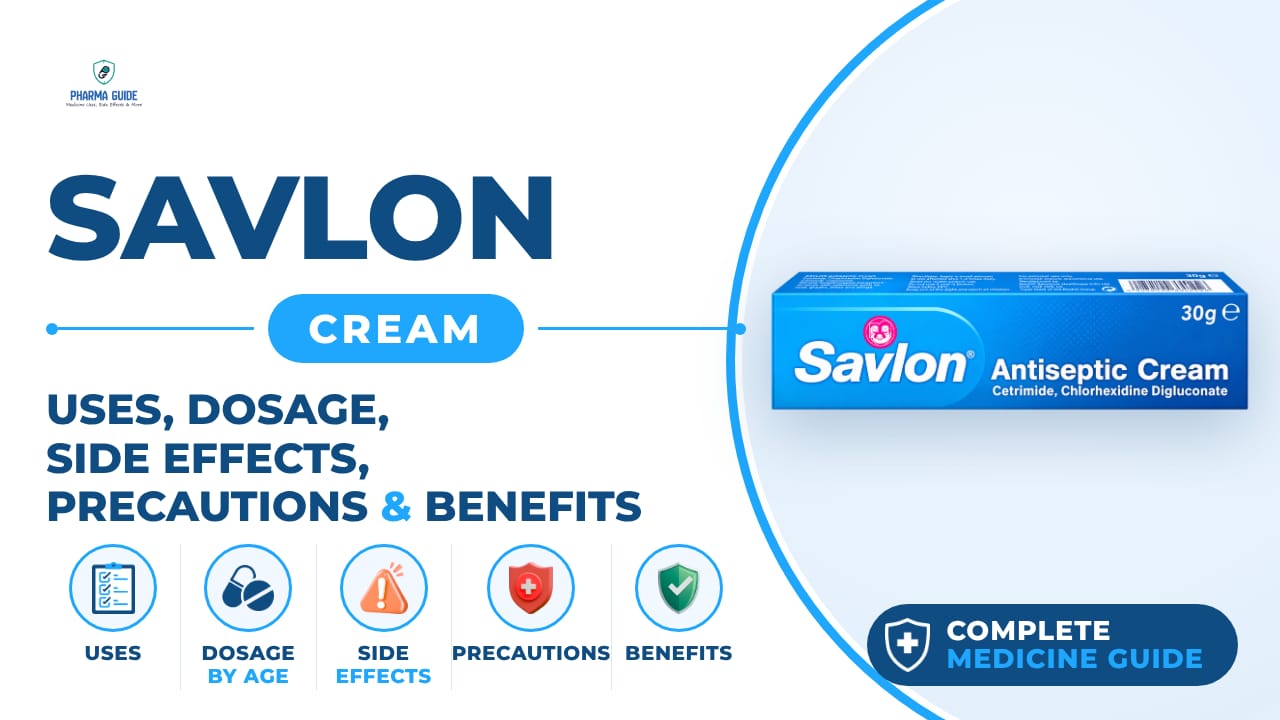
| Generic name | Cetrimide and Chlorhexidine Digluconate |
|---|---|
| Drug class | Antiseptics and disinfectants |
| Forms | Cream |
Quick overview
Savlon Cream is a topical antiseptic cream containing cetrimide and chlorhexidine digluconate. It is used to cleanse the skin and help prevent infection in minor wounds, cuts, grazes, burns, and other common skin problems. It works by killing germs such as bacteria, viruses and fungi on the skin, and is suitable for adults and children when used as directed.
What is Savlon Cream
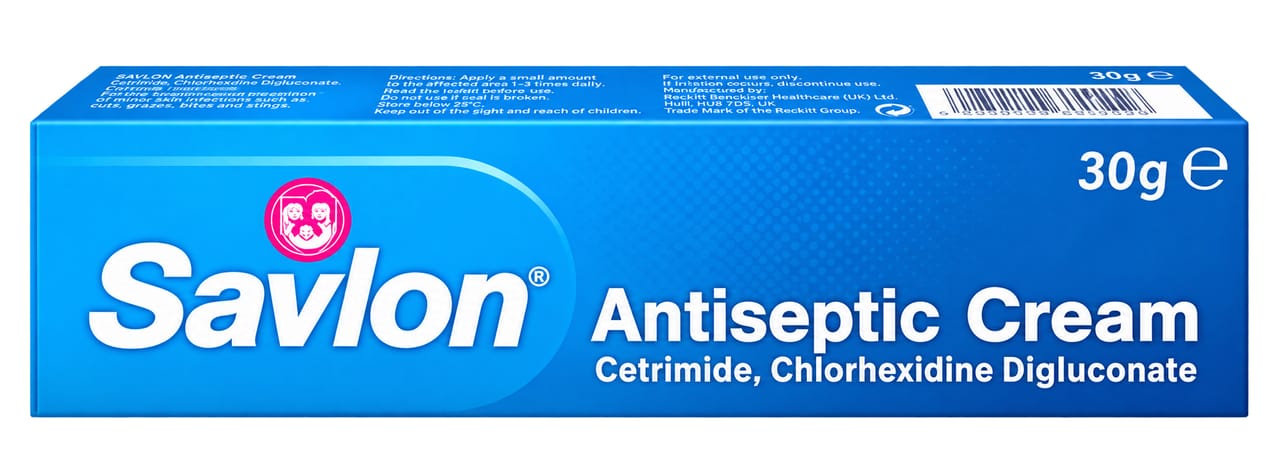
Savlon Antiseptic Cream is a topical cream containing the antiseptics cetrimide and chlorhexidine digluconate. It is used for cleaning the skin and helping to prevent infection in minor wounds and skin problems.
Savlon Cream uses
- Cleansing and prevention of infection in minor skin lesions, blisters, minor burns and small wounds
- First aid for cuts, grazes, superficial burns, scalds, shaving cuts, insect bites and stings
- Minor skin problems including blisters, sores, chapped skin, nappy rash, spots, blackheads and sunburn
Benefits of Savlon Cream
- Helps cleanse minor wounds and reduce the risk of infection
- Can be used for minor burns and scalds as part of first aid care
- Useful for a range of minor skin problems such as shaving cuts, blisters, sores, chapped skin, spots, blackheads, nappy rash and sunburn
- Contains antiseptic ingredients cetrimide and chlorhexidine digluconate
- Suitable for adults and children
- Available in different tube sizes for travel or home use
- Easy to apply as a smooth cream
How Savlon Cream works
Savlon contains chlorhexidine, an antiseptic that kills germs such as bacteria, viruses and fungi on the skin, which helps prevent infection in minor wounds.
Savlon Cream dosage
Wash your hands thoroughly before and after applying the cream. Clean the affected area with clean water and pat dry. Gently apply the cream to the wound using clean fingers or gauze.
For cuts and small wounds, protect the area with a plaster or non-adherent dressing; burns and scalds are best left uncovered. Reapply as required.
For minor burns and scalds, cool the area under cool running water for at least 10 minutes before drying and applying the cream without rubbing.
Avoid contact with the eyes, mouth, ears and other sensitive internal areas. Do not use on animal bites; seek medical advice for dog or cat bites. If skin looks infected or symptoms continue, seek medical advice.
| Age group | Dose |
|---|---|
| Under 2 Years | Use only if advised by a healthcare professional |
| 2–12 Years | Apply a thin layer to the affected area as directed |
| 13–17 Years | Apply a thin layer to the affected area 2–3 times daily |
| Adults (18+ Years) | Apply a thin layer to the affected area 2–3 times daily |
Available forms and strengths
- Cream
Side effects of Savlon Cream
Common
- Skin irritation
Serious
- Difficulty breathing
- Swelling of the face, tongue or throat
- Dizziness
- Allergic skin reactions such as dermatitis, itching, redness, eczema, rash, hives, and blisters
- Anaphylactic reaction or anaphylactic shock
- Angioedema and urticaria
- Corneal injury and permanent eye damage including permanent visual impairment following accidental contact with the eyes during surgery
Warnings and precautions
- Use Savlon on the skin only. Do not swallow it.
- Avoid getting the cream near the brain, the membranes around the brain and spinal cord, or the middle ear.
- Do not let the cream get into your eyes because of the risk of damage to your vision. If it does get into your eyes, rinse immediately and thoroughly with water.
- Serious, lasting injury to the surface of the eye, sometimes needing a corneal transplant, has been reported when similar products accidentally got into the eye during surgery under general anaesthesia.
- Do not use Savlon on large open wounds or wounds that are bleeding heavily; get medical help instead.
- Do not use Savlon if you are allergic to any of its ingredients, especially chlorhexidine, as it may cause allergic reactions.
- Savlon should not be mixed with or used alongside soap or other similar cleaning substances, as they can cancel out its antiseptic effect.
- There is no evidence that Savlon causes harm during pregnancy, but you should ask your doctor, pharmacist or midwife for advice before using it if you are pregnant.
- If you are breast-feeding, ask your doctor or pharmacist for advice before use. As a general precaution, rinse the affected area thoroughly with water before breast-feeding.
- Do not use on infected or seriously damaged skin unless advised by a healthcare professional.
- Stop use if severe redness, burning, itching, swelling, or rash develops.
- Keep away from children to prevent accidental ingestion.
- Savlon does not affect your ability to drive or use machines.
Storage
- Keep this medicine out of the sight and reach of children
- Do not store above 25°C
- Use within 12 months of opening
- Do not use after the expiry date shown on the end of the tube
When to see a doctor
- If you or a child accidentally swallow some of the cream, contact a doctor or your local emergency department right away.
- Stop using the cream and get medical advice if you have difficulty breathing, swelling of the face, tongue or throat, or dizziness.
- If the cream gets in your eyes and you have irritation, redness, pain, or changes in your vision, get medical advice promptly.
- If your symptoms do not improve or get worse, you must speak to a doctor.
Alternatives
- Povidone-Iodine Cream
- Chlorhexidine Cream
- Mupirocin Ointment
Watch the video
FAQs
What is Savlon Cream used for?
It is used for cleansing the skin and preventing infection in minor wounds, cuts, grazes, burns, scalds, insect bites, blisters, sores, chapped skin, nappy rash, spots, blackheads and sunburn.
How does Savlon Cream work?
It contains chlorhexidine, an antiseptic that kills germs such as bacteria, viruses and fungi on the skin, helping prevent infection in minor wounds.
How should Savlon Cream be applied?
Clean the affected area with water and pat dry, then gently apply a thin layer using clean fingers or gauze. Cuts and small wounds can be covered with a plaster, while burns and scalds are best left uncovered; reapply as required.
Can Savlon Cream be used on burns?
Yes, for minor burns and scalds, cool the area under cool running water for at least 10 minutes, dry, and apply the cream without rubbing.
What should I do if Savlon Cream gets in my eyes?
Do not let the cream get into your eyes due to the risk of vision damage. If it does, rinse immediately and thoroughly with water and seek medical advice if irritation, redness, pain, or vision changes occur.
General information, not medical advice
Your prescriber and the leaflet in your pack know your situation. This page does not.
- Follow your prescriber and the leaflet
- Don't start, stop, or change a dose on your own
- Doses and warnings differ by country and product
Sources
Video
Related medicines

Injectafer Injection: Uses, Dosage, Side Effects, Precautions and Alternates
Iron products
Injectafer (ferric carboxymaltose) treats iron deficiency anemia and heart failure-related iron deficiency via IV. Learn uses, dosage, side effects, and

Gliclazide Tablet: Uses, Dosage, Side Effects, Precautions and Alternates
Sulfonylurea (hypoglycemic/antidiabetic agent)
Gliclazide Tablet is a sulfonylurea for type 2 diabetes that boosts insulin release. Learn about dosage, side effects, warnings, and precautions.