
Safety
General information, not medical advice
Your prescriber and the leaflet in your pack know your situation. This page does not.
- Follow your prescriber and the leaflet
- Don't start, stop, or change a dose on your own
- Doses and warnings differ by country and product
Saxagliptin Tablet: Uses, Dosage, Side Effects, Precautions and Alternates
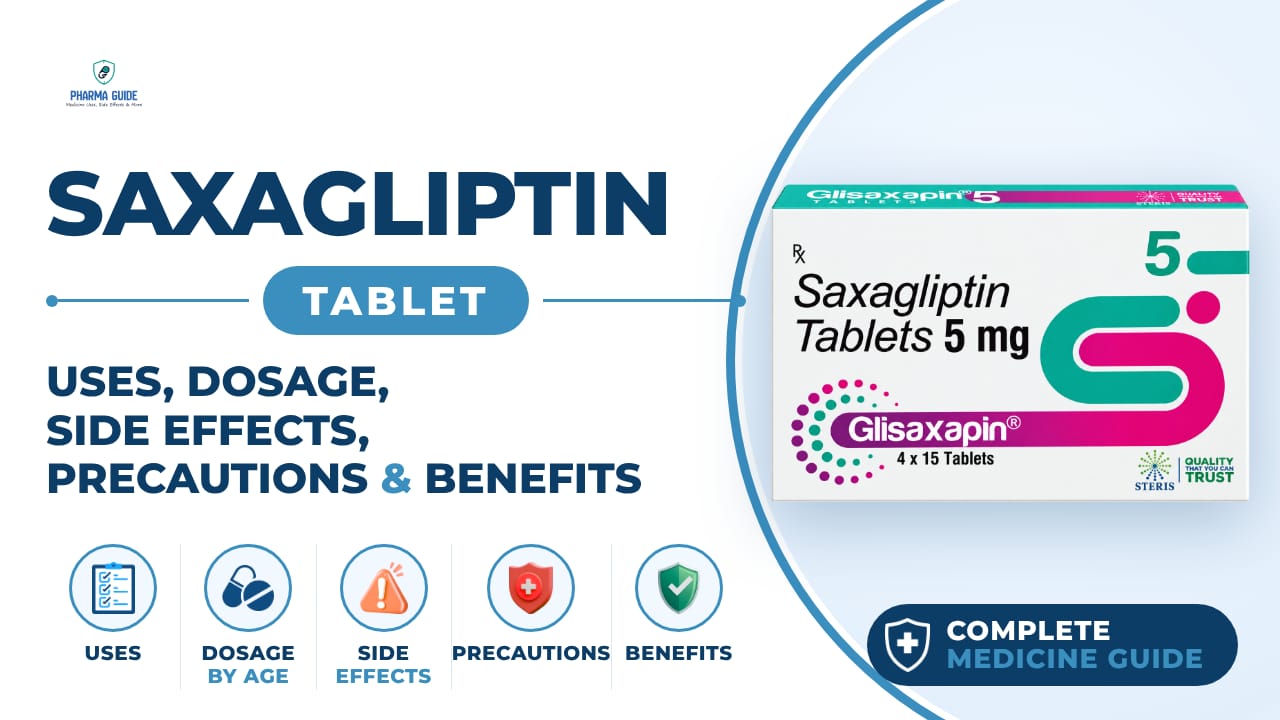
| Generic name | saxagliptin |
|---|---|
| Drug class | Dipeptidyl peptidase-4 (DPP4) inhibitor |
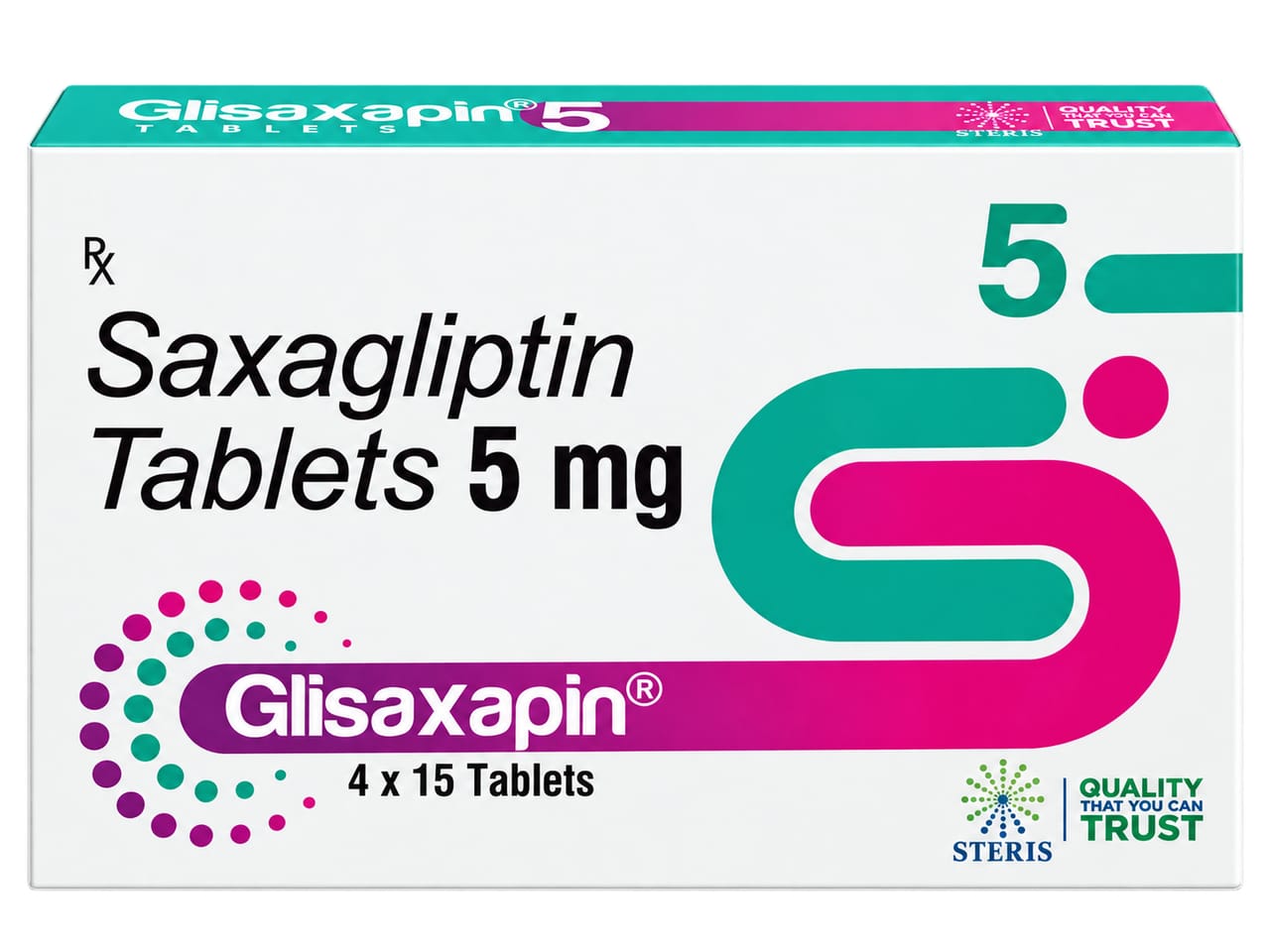
| Forms | Film-coated tablet (2.5 mg and 5 mg strengths) |
Quick overview
Saxagliptin Tablet is a prescription oral anti-diabetic medicine used, along with diet and exercise, to help control blood sugar in adults with type 2 diabetes. It belongs to a class of medicines called DPP-4 inhibitors and is usually taken once daily. It may be used alone or combined with other diabetes medicines, and dosing depends on age, kidney function, and other medicines being taken.
What is Saxagliptin Tablet
Saxagliptin is a prescription tablet that belongs to a group of medicines called oral anti-diabetics. It is used along with diet and exercise to help control blood sugar in adults with type 2 diabetes.
Saxagliptin Tablet uses
- To improve blood sugar (glycemic) control in adults with type 2 diabetes mellitus, as an add-on to diet and exercise
- As monotherapy when metformin cannot be used because of intolerance or contraindications
- In combination with other diabetes medicines, including metformin, a sulphonylurea, a thiazolidinedione, or insulin, when those treatments alone do not control blood sugar well enough
Benefits of Saxagliptin Tablet
- Helps lower blood sugar levels (fasting and after meals)
- Lowers HbA1c (a measure of average blood sugar control) when used alone or combined with other diabetes medicines
- Does not typically cause weight gain
- Taken once daily
- Has a low risk of hypoglycemia when used alone
- Can be combined with other diabetes medicines
- Helps improve overall glucose control
How Saxagliptin Tablet works
Saxagliptin blocks an enzyme called DPP-4, which raises the levels of natural gut hormones that trigger insulin release after eating and lower the amount of sugar made by the liver. This helps lower blood sugar after meals and between meals.
Saxagliptin Tablet dosage
Take the tablet once daily, at the same time each day, with or without food. Swallow the tablet whole with water; do not split, cut, crush, or chew it. If you miss a dose, take it as soon as you remember, but do not take two doses on the same day to make up for a missed one. Keep taking this medicine until your doctor tells you to stop, even if you feel well, to keep your blood sugar under control. Continue following the diet and exercise plan recommended by your doctor or nurse while taking this medicine.
| Age group | Dose |
|---|---|
| Under 18 years | Safety and effectiveness are not established; no standard pediatric dose |
| 18–64 years | Usually 2.5 mg or 5 mg once daily, depending on kidney function and interacting medicines |
| 65–74 years | Usually 2.5–5 mg once daily, with dosing guided by kidney function |
| 75 years and older | Individualized cautiously; 2.5 mg once daily may be used when reduced kidney function requires dose reduction |
Available forms and strengths
- Film-coated tablet (2.5 mg and 5 mg strengths)
Side effects of Saxagliptin Tablet
Common
- Upper respiratory tract infection
- Urinary tract infection
- Headache
- Inflamed nose or throat (nasopharyngitis), cold, or sore throat
- Sinus infection (sinusitis)
- Stomach infection (gastroenteritis)
- Dizziness
- Diarrhea
- Stomach ache
- Nausea and vomiting
- Muscle pain
- Indigestion (dyspepsia)
- Swelling of hands, ankles, or feet (peripheral oedema)
Serious
- Inflammation of the pancreas (pancreatitis): severe, persistent abdominal pain, sometimes spreading to the back, with nausea or vomiting
- Serious allergic reaction (anaphylaxis, angioedema): swelling of face, lips, tongue, or throat, difficulty breathing or swallowing, hives, rash
- Heart failure: increasing shortness of breath, rapid weight gain, swelling of the feet, ankles, or legs, unusual tiredness
- Severe joint pain (arthralgia)
- Bullous pemphigoid (a serious skin condition): blistering or breakdown of the skin
- Low blood sugar (hypoglycemia), especially when combined with insulin or a sulphonylurea: shaking, sweating, rapid heartbeat, blurred vision, hunger, headache, mood change, confusion
Warnings and precautions
- Do not use this medicine if you have type 1 diabetes or diabetic ketoacidosis; it is not a substitute for insulin in people who need insulin.
- This medicine has been linked to acute inflammation of the pancreas. Watch for severe, ongoing abdominal pain and tell your doctor right away if it happens; the medicine should be stopped if pancreatitis is suspected.
- Serious allergic reactions, including anaphylaxis and swelling of the face and throat, have occurred. Do not use this medicine again if you have had a serious allergic reaction to it or similar medicines.
- A skin condition called bullous pemphigoid, which can cause blistering severe enough to need hospital care, has been reported.
- People with a history of heart failure or kidney problems may be at higher risk of hospitalization for heart failure while taking this medicine.
- Severe joint pain has been reported with this type of medicine and may develop soon after starting or after a long period of use.
- Taking certain other medicines, such as carbamazepine, dexamethasone, phenobarbital, phenytoin, or rifampicin, may make this medicine less effective at controlling blood sugar.
- This medicine should not be used during pregnancy unless your doctor decides it is clearly necessary. Studies in animals showed possible harm at high doses, but effects in humans are unknown.
- It is not known if this medicine passes into human breast milk. You should not take this medicine while breastfeeding unless your doctor and you decide the benefits outweigh possible risks.
- People with reduced kidney function may need a lower dose. This medicine is not recommended for people on hemodialysis for end-stage kidney disease.
- This medicine should be used carefully in people with moderate liver problems, and is not recommended for those with severe liver problems.
- The effect of alcohol on how this medicine works in the body has not been specifically studied.
- This medicine may cause dizziness in some people. If you feel dizzy, avoid driving or using machines. There is also a risk of low blood sugar if taken with other diabetes medicines like insulin or sulphonylureas, which can affect your ability to drive safely.
Storage
- Store at room temperature, between 15°C and 30°C
- This medicine does not require any special storage conditions
- Keep out of the sight and reach of children and pets
- Do not use after the expiry date shown on the pack
- Do not use if the package is damaged or shows signs of tampering
- Do not throw away medicines via wastewater or household garbage; ask your pharmacist how to dispose of medicines you no longer need
When to see a doctor
- Stop taking this medicine and get medical help right away if you have severe, persistent abdominal pain (possibly spreading to your back), with or without nausea and vomiting — this could be a sign of pancreatitis.
- Stop taking this medicine and call your doctor or nurse right away if you have signs of a serious allergic reaction, such as rash, hives, or swelling of the face, lips, tongue, or throat that causes trouble breathing or swallowing.
- Call your doctor immediately if you notice symptoms of heart failure, such as increasing shortness of breath, rapid weight gain, or swelling of your feet.
- Call your doctor if you develop severe joint pain.
- Contact your doctor right away if you develop blisters or skin breakdown, as this could be a sign of a serious skin condition called bullous pemphigoid.
- Stop taking this medicine and see your doctor immediately if you have symptoms of low blood sugar such as trembling, sweating, anxiety, blurred vision, tingling lips, paleness, mood change, or confusion.
Alternatives
- Sitagliptin
- Linagliptin
- Alogliptin
Watch the video
FAQs
What is Saxagliptin Tablet used for?
It is used along with diet and exercise to improve blood sugar control in adults with type 2 diabetes, either alone or combined with other diabetes medicines like metformin, a sulphonylurea, a thiazolidinedione, or insulin.
How should I take Saxagliptin Tablet?
Take it once daily at the same time each day, with or without food. Swallow the tablet whole with water; do not split, cut, crush, or chew it.
What are the common side effects of Saxagliptin Tablet?
Common side effects include upper respiratory tract infection, urinary tract infection, headache, nasopharyngitis, sinusitis, dizziness, diarrhea, stomach ache, nausea and vomiting, muscle pain, indigestion, and swelling of hands or feet.
Can Saxagliptin Tablet cause pancreatitis?
Yes, it has been linked to acute inflammation of the pancreas. Seek medical help right away for severe, persistent abdominal pain, sometimes spreading to the back, with nausea or vomiting.
Is Saxagliptin Tablet safe during pregnancy or breastfeeding?
It should not be used during pregnancy unless clearly necessary, and it is not known if it passes into breast milk, so it should be avoided while breastfeeding unless your doctor decides the benefits outweigh the risks.
General information, not medical advice
Your prescriber and the leaflet in your pack know your situation. This page does not.
- Follow your prescriber and the leaflet
- Don't start, stop, or change a dose on your own
- Doses and warnings differ by country and product
Sources
Video
Related medicines

Injectafer Injection: Uses, Dosage, Side Effects, Precautions and Alternates
Iron products
Injectafer (ferric carboxymaltose) treats iron deficiency anemia and heart failure-related iron deficiency via IV. Learn uses, dosage, side effects, and

Gliclazide Tablet: Uses, Dosage, Side Effects, Precautions and Alternates
Sulfonylurea (hypoglycemic/antidiabetic agent)
Gliclazide Tablet is a sulfonylurea for type 2 diabetes that boosts insulin release. Learn about dosage, side effects, warnings, and precautions.