
Safety
General information, not medical advice
Your prescriber and the leaflet in your pack know your situation. This page does not.
- Follow your prescriber and the leaflet
- Don't start, stop, or change a dose on your own
- Doses and warnings differ by country and product
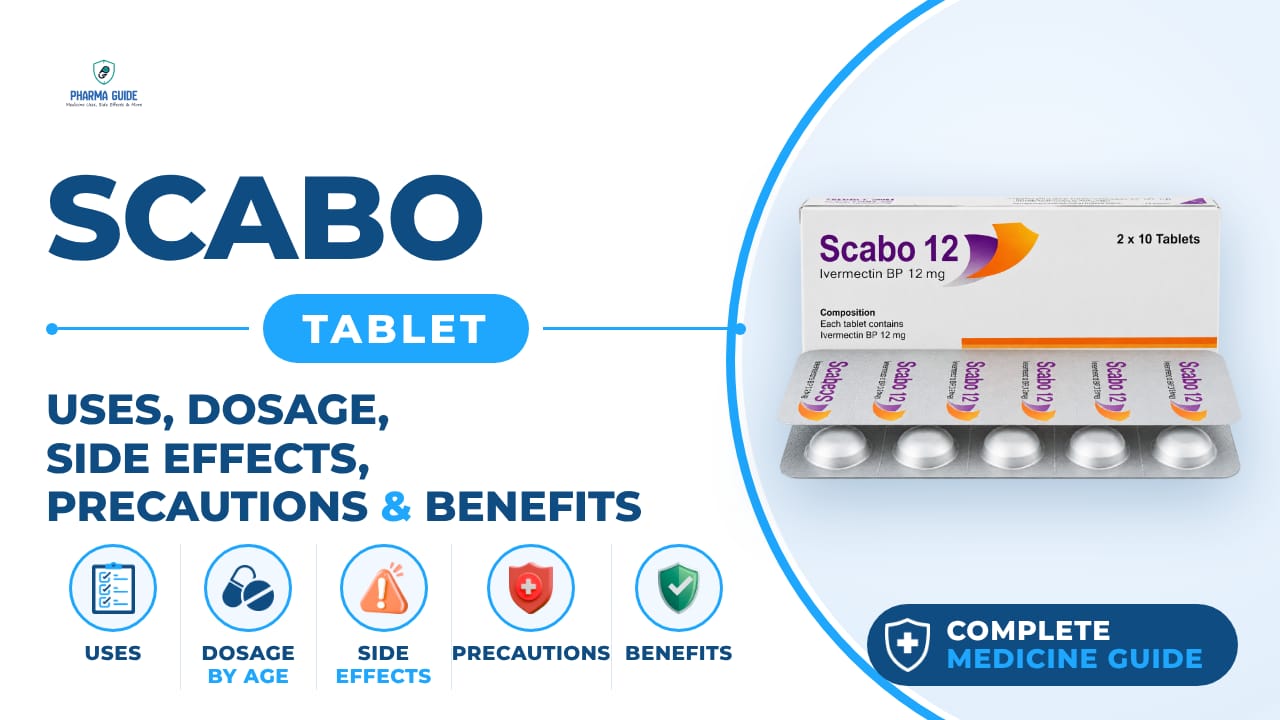
Scabo Tablet: Uses, Dosage, Side Effects, Precautions and Alternates
| Generic name | Ivermectin |
|---|---|
| Drug class | Anthelmintic (antiparasitic), avermectin (macrocyclic lactone) class |
| Forms | Tablet, Topical lotion, Topical cream |
Quick overview
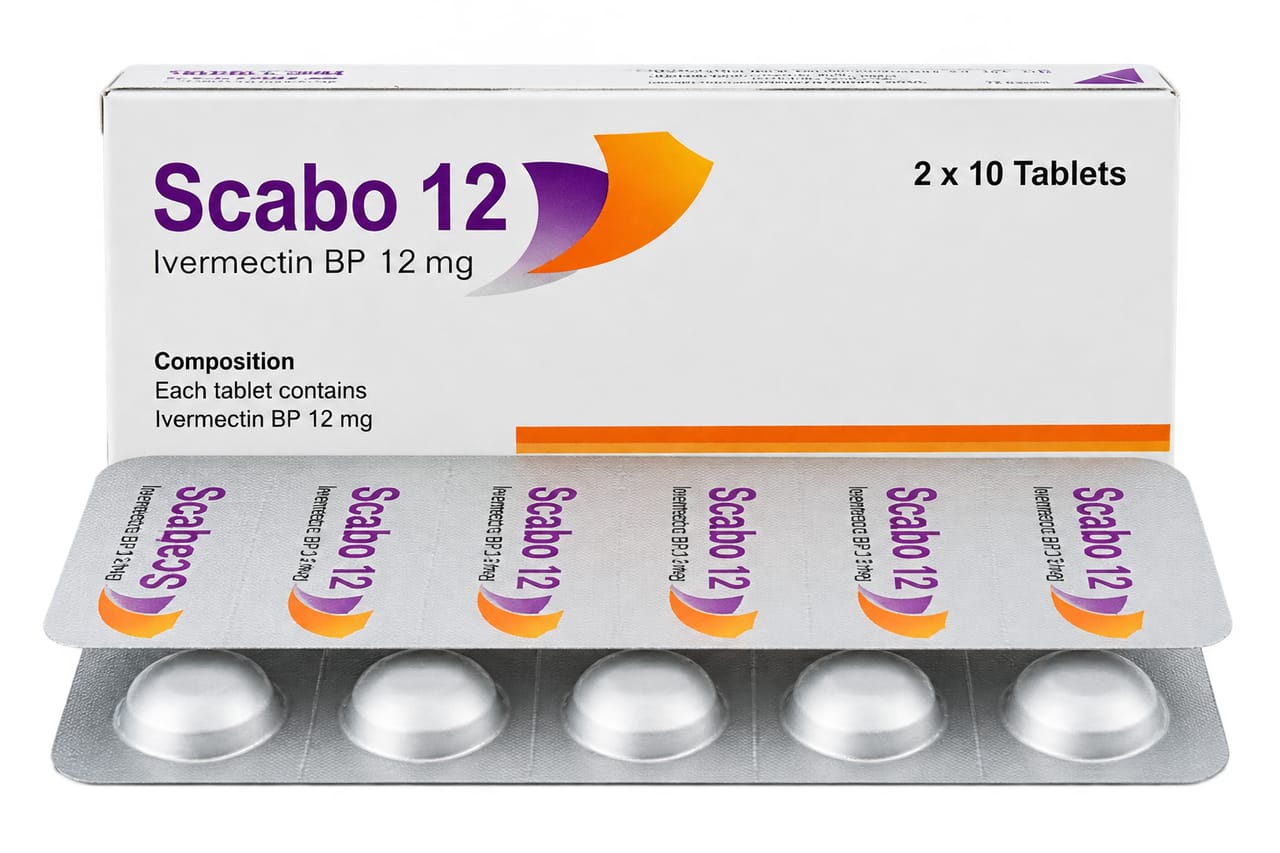
Scabo Tablet contains ivermectin, an antiparasitic medicine from the avermectin class. It is taken by mouth to treat certain worm infections, scabies, and lice. It works by paralyzing and killing parasites, and is sometimes used alongside other treatments or as part of combination public health programs. It should be taken exactly as directed, with attention to specific warnings around Loa loa infection and other precautions.
What is Scabo Tablet
Scabo is an antiparasitic medicine that contains ivermectin. It comes as a tablet taken by mouth and is used to treat certain worm infections, scabies, and lice.
Scabo Tablet uses
- Treatment of intestinal strongyloidiasis (an infection caused by the Strongyloides worm)
- Treatment of onchocerciasis (river blindness) caused by Onchocerca volvulus
- Treatment of scabies, often combined with a topical scabies cream, especially in outbreaks or when creams alone don't work
- Used as part of combination treatment programs for lymphatic filariasis, along with albendazole and/or diethylcarbamazine
- Used off-label for head lice that don't respond to other treatments, under medical supervision
Benefits of Scabo Tablet
- Can clear certain worm infections with just one or two doses
- Helps relieve scabies and lice infestations when combined with other treatments
- Used in public health programs to control diseases like river blindness and lymphatic filariasis
How Scabo Tablet works
Ivermectin attaches to specific channels in the nerve and muscle cells of parasites, letting chloride into their cells. This over-activates the cells and causes paralysis, which kills the parasite. Human cells don't have these same channels, so the medicine mostly leaves human cells unaffected at normal doses.
Scabo Tablet dosage
Take the tablet by mouth with a full glass of water. Take it on an empty stomach, generally at least one hour before a meal, because food increases how much of the drug your body absorbs. Swallow the tablet whole; do not chew or crush it unless your product label says you can. Do not take with alcohol. Complete the treatment or repeat the dose exactly as your doctor instructs to make sure the infection is fully cleared.
If you were given a topical (skin) form of the medicine, only apply it to skin or scalp as directed and keep it away from your eyes and mouth; topical forms are not swallowed. Wash clothing and bedding in warm water and keep skin clean to help prevent the infection from coming back or spreading to others.
If you miss a dose, take it as soon as you remember, but skip it if it's almost time for your next dose — don't double up.
| Age group | Dose |
|---|---|
| Under 5 Years or Below 15 kg Body Weight | Not recommended unless prescribed by a doctor |
| 5 Years and Above | Dose based on body weight (commonly 200 mcg/kg per dose) |
| Adults (18–64 Years) | Usually 200 mcg/kg as a single dose; may be repeated if advised |
| Older Adults (65+ Years) | Dose based on body weight and medical condition |
Available forms and strengths
- Tablet
- Topical lotion
- Topical cream
Side effects of Scabo Tablet
Common
- Dizziness
- Itching (pruritus)
- Nausea, diarrhea, abdominal pain
- Headache
- Fatigue/weakness
- Drowsiness
- Skin rash
- Mild muscle or joint pain
- Swollen lymph glands
- Fever
Serious
- Seizures
- Hepatitis or elevated liver enzymes
- Severe skin reactions such as Stevens-Johnson syndrome or toxic epidermal necrolysis (rare)
- Neurotoxicity such as confusion or altered consciousness
- Severe allergic reaction (rash, itching, swelling, difficulty breathing)
- Vision problems
- Severe dizziness or fainting
- Severe abdominal pain
Warnings and precautions
In people from parts of West or Central Africa who are heavily infected with the Loa loa parasite, treating onchocerciasis with this medicine has rarely caused serious, and sometimes fatal, brain inflammation (encephalopathy). Anyone with significant exposure to Loa loa-affected areas should be checked for this infection before treatment and watched closely if treatment goes ahead.
Treating onchocerciasis can trigger an immune reaction to the dying parasites, called a Mazzotti reaction, causing itching, rash, fever, swollen lymph nodes, and rarely a sudden drop in blood pressure when standing. People with severe eye disease from this infection need close monitoring during treatment.
Some people, especially those with a high parasite load or Loa loa co-infection, have experienced altered mental states like extreme sleepiness, confusion, or even coma. This usually improves once the medicine is stopped and supportive care is given.
This medicine has no proven role in preventing or treating viral infections and should only be used for the parasitic and skin conditions it's approved for.
Don't use this medicine if you're allergic to ivermectin or any ingredient in the product.
Scabo should only be used in pregnancy if your doctor decides it's clearly needed, since its safety in human pregnancy hasn't been firmly established and animal studies showed harm at high doses. Treatment is often postponed until after delivery if possible.
Small amounts of the medicine pass into breast milk. It should only be used while breastfeeding if your doctor decides the benefit to you outweighs any possible risk to your baby.
The medicine is mainly cleared through the liver and stool, not the kidneys, so major buildup isn't expected in kidney disease, but caution and doctor supervision are advised for severe kidney impairment.
Use with caution if you have significant liver problems, since the medicine is broken down mainly in the liver and there isn't much data on adjusting the dose for liver disease.
You shouldn't drink alcohol while taking this medicine.
This medicine may cause dizziness or drowsiness in some people. If this happens to you, avoid driving or using machinery until you feel fully alert.
Storage
- Store at room temperature, below 30°C
- Keep away from light and moisture
- Do not freeze
- Keep in a closed container
- Keep out of reach of children
- Use the medicine before its expiry date
When to see a doctor
Get medical attention right away if you develop a severe rash, trouble breathing, yellowing of your skin or eyes, or sudden confusion or altered mental state.
If you think you or someone else has taken too much of this medicine, get emergency medical help right away or contact a poison control service — don't try to treat an overdose at home.
If you have an allergic reaction such as rash, swelling, or difficulty breathing, stop taking the medicine right away and get emergency help.
Alternatives
- Permethrin Cream
- Sulfur Ointment
- Malathion Lotion
- Lindane Lotion
Watch the video
FAQs
What is Scabo Tablet used for?
Scabo Tablet is used to treat intestinal strongyloidiasis, onchocerciasis (river blindness), scabies (often with a topical cream), and as part of combination treatment for lymphatic filariasis. It's also used off-label for head lice that don't respond to other treatments.
How should I take Scabo Tablet?
Take it by mouth with a full glass of water on an empty stomach, generally at least one hour before a meal, since food increases absorption. Swallow the tablet whole without chewing or crushing it, and avoid alcohol while taking it.
What are the side effects of Scabo Tablet?
Common side effects include dizziness, itching, nausea, diarrhea, abdominal pain, headache, fatigue, drowsiness, skin rash, mild muscle or joint pain, swollen lymph glands, and fever. Serious side effects include seizures, liver problems, severe skin reactions, neurotoxicity, and severe allergic reactions.
Who should be cautious about taking Scabo Tablet?
People from parts of West or Central Africa heavily infected with Loa loa parasite should be checked before treatment, as it has rarely caused serious brain inflammation. Caution is also needed in pregnancy, breastfeeding, and in those with liver or severe kidney problems.
What happens if I miss a dose of Scabo Tablet?
If you miss a dose, take it as soon as you remember, but skip it if it's almost time for your next dose. Don't take a double dose to make up for the missed one.
General information, not medical advice
Your prescriber and the leaflet in your pack know your situation. This page does not.
- Follow your prescriber and the leaflet
- Don't start, stop, or change a dose on your own
- Doses and warnings differ by country and product
Sources
Video
Related medicines

Injectafer Injection: Uses, Dosage, Side Effects, Precautions and Alternates
Iron products
Injectafer (ferric carboxymaltose) treats iron deficiency anemia and heart failure-related iron deficiency via IV. Learn uses, dosage, side effects, and

Gliclazide Tablet: Uses, Dosage, Side Effects, Precautions and Alternates
Sulfonylurea (hypoglycemic/antidiabetic agent)
Gliclazide Tablet is a sulfonylurea for type 2 diabetes that boosts insulin release. Learn about dosage, side effects, warnings, and precautions.