
Safety
General information, not medical advice
Your prescriber and the leaflet in your pack know your situation. This page does not.
- Follow your prescriber and the leaflet
- Don't start, stop, or change a dose on your own
- Doses and warnings differ by country and product
Sebifin Tablet: Uses, Dosage, Side Effects, Precautions and Alternates
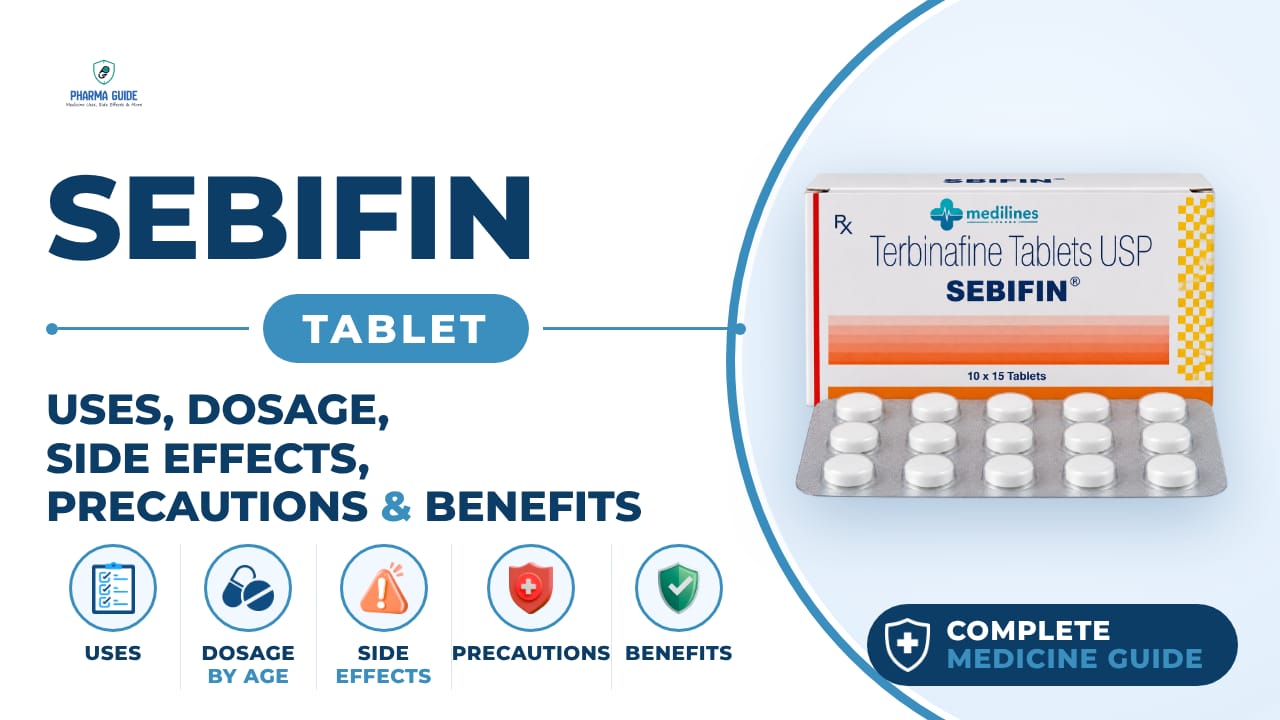
| Generic name | Terbinafine |
|---|---|
| Drug class | Antifungal (squalene epoxidase inhibitor) |
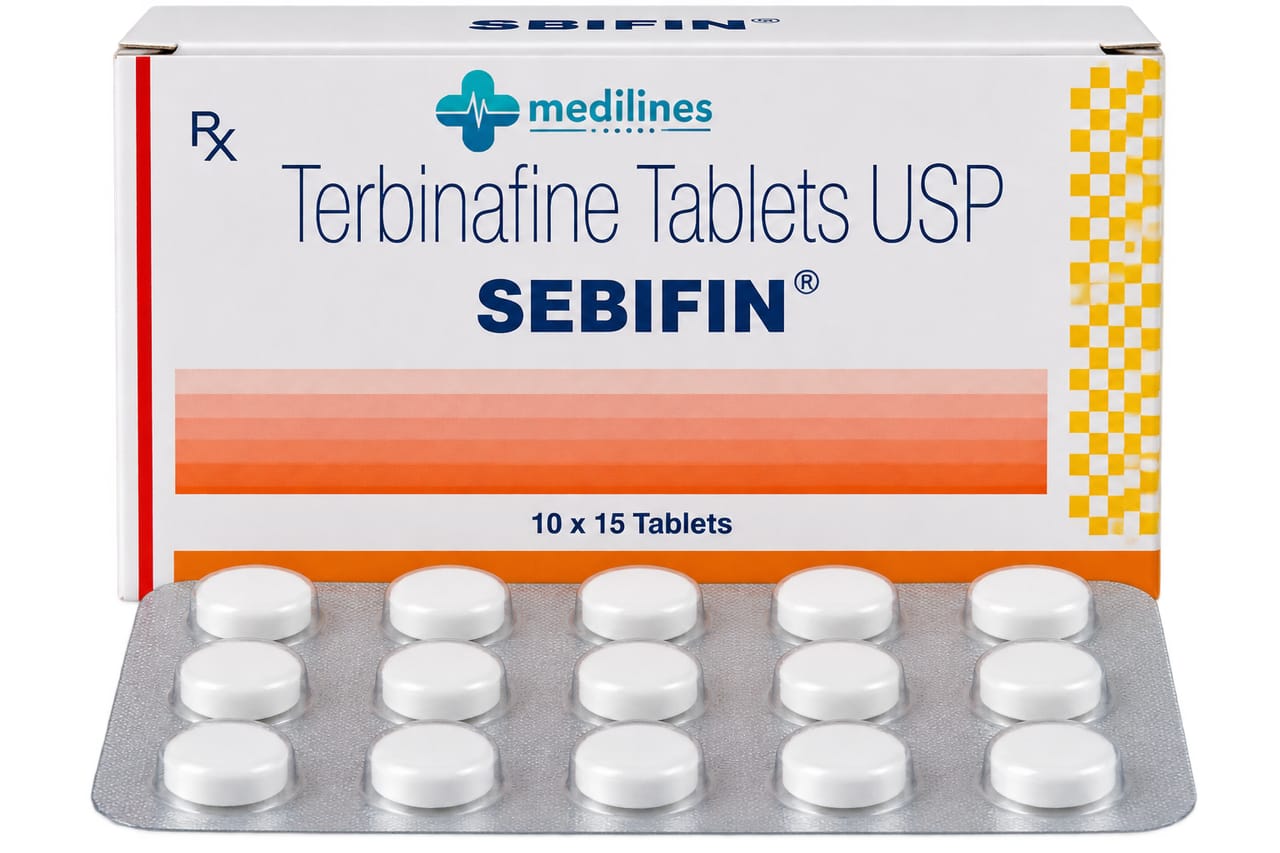
| Forms | Tablet |
Quick overview
Sebifin Tablet contains Terbinafine, an antifungal medicine that treats fungal infections of the skin, nails, and hair, such as athlete's foot, jock itch, ringworm, and nail infections. It works by blocking an enzyme fungi need to build their cell membrane, which kills the fungus and stops the infection from spreading. It is taken as prescribed, with dosage depending on age and the type of infection being treated.
What is Sebifin Tablet
Sebifin Tablet is an antifungal medicine used to treat fungal infections of the skin, nails, and hair, such as athlete's foot, jock itch, ringworm, and nail infections.
Sebifin Tablet uses
- Athlete's foot
- Jock itch
- Ringworm infection
- Onychomycosis (fungal infection of the nails)
- Fungal infections of the scalp
Benefits of Sebifin Tablet
- Fungal Infection Treatment: Helps treat fungal infections caused by susceptible fungi.
- Nail Fungus Support: Helps treat fungal infections of fingernails and toenails.
- Ringworm Treatment: Helps manage certain skin fungal infections.
- Athlete's Foot Support: Helps treat fungal infections affecting the feet.
How Sebifin Tablet works
Sebifin works by blocking an enzyme called squalene epoxidase that fungi need to build their cell membrane. This stops the fungus from making a substance called ergosterol, which weakens and damages the fungal cell membrane, killing the fungus and stopping the infection from spreading.
Sebifin Tablet dosage
Sebifin Tablet can be taken with or without food. Swallow the tablet whole with a glass of water; do not chew or crush it. Take the tablet at about the same time each day. If it upsets your stomach, try taking it right after a light meal. Complete the full course of treatment even if you feel better after a few doses, as stopping early may let the infection return or get worse.
Treatment length depends on the infection: skin infections are usually treated for a few weeks, while nail infections often need treatment for several months. This medicine is not recommended for children under 18 years due to limited safety information. Older adults should take this medicine under medical supervision as they may be more sensitive to side effects.
| Age group | Dose |
|---|---|
| Under 12 Years | Use only if prescribed by a healthcare professional |
| 12 Years and Above | Dose depends on body weight and infection type |
| Adults (18–64 Years) | Usually 250 mg once daily as prescribed |
| Older Adults (65+ Years) | 250 mg once daily; medical evaluation recommended, especially with liver problems |
Available forms and strengths
- Tablet
Side effects of Sebifin Tablet
Common
- Nausea or vomiting
- Diarrhoea
- Stomach pain or upset stomach
- Headache
- Joint or muscle aches
- Loss of appetite
- Skin rash or itching
- Change or temporary loss of taste
- Dizziness or light-headedness
- Tiredness
Serious
- Signs of allergic reaction such as swelling of face, lips, tongue, or throat, breathing difficulty, or severe skin rash
- Signs of liver problems such as yellowing of the skin or eyes, dark urine, persistent nausea, loss of appetite, or pain in the upper right abdomen
- Serious skin reactions such as Stevens-Johnson syndrome or toxic epidermal necrolysis, with painful rashes, blistering, or peeling skin
- Signs of blood problems such as fever, sore throat, mouth ulcers, chills, or unusual bleeding or bruising
- Chest pain
Warnings and precautions
- This medicine may cause serious skin reactions like Stevens-Johnson syndrome or toxic epidermal necrolysis, which involve painful blistering and peeling skin. Tell your doctor if you get a skin rash that persists or worsens.
- In rare cases, this medicine can lower blood cell counts. Your doctor may want regular blood tests to check for this during treatment.
- This medicine may cause depression in some people. Contact your doctor right away if you notice symptoms of depression.
- Avoid this medicine if you are allergic to it, and seek urgent medical help if you notice signs of an allergic reaction like rash, swelling of the face or throat, or breathing difficulty.
- This medicine is not recommended for children under 18 years old because there isn't enough safety information for this age group.
- This medicine is not recommended during pregnancy unless your doctor decides it is necessary. Talk to your doctor if you are pregnant or planning to become pregnant.
- This medicine is not recommended while breastfeeding because it passes into breast milk and could affect the baby.
- Use this medicine with caution if you have kidney problems, since it is cleared from the body by the kidneys. Your doctor may need to adjust your dose.
- This medicine is not recommended if you have liver problems, as it may make liver damage worse. Your doctor may monitor your liver function during treatment.
- It's best to avoid alcohol while taking this medicine, as it may increase the risk of liver damage.
- This medicine can cause tiredness, dizziness, or light-headedness in some people. Avoid driving or operating machinery if you feel this way.
Storage
- Keep your medicine in the original container until it is time to take it.
- Store it in a cool, dry place below 25°C and protected from light.
- Do not store SEBIFIN or any other medicine in the bathroom or near a sink.
- Do not leave it in the car or on window sills.
- Keep the medicine where children cannot reach it.
- Store Below 30° C
- Ask your pharmacist what to do with any medicine you have left over.
When to see a doctor
- Get medical help right away if you notice yellowing of your skin or eyes, dark urine, ongoing nausea, loss of appetite, tiredness, vomiting, or pain in the upper right part of your stomach — these can be signs of a serious liver problem.
- Seek emergency care for signs of a severe allergic reaction, such as swelling of the face, lips, tongue, or other body parts, shortness of breath, wheezing, or a rash with itching.
- Get help immediately if you develop a serious skin reaction, including painful red areas, large blisters, or peeling skin, which may come with fever, chills, and feeling generally unwell.
- Tell your doctor immediately if you notice fever, sore throat, mouth ulcers, or flu-like symptoms such as chills, aching joints, swollen glands, or lack of energy, as these can be signs of a blood problem.
- If you think you or someone else has taken too much of this medicine, contact your doctor or local poison control center right away, or go to the nearest emergency department, even if there are no symptoms yet.
Alternatives
- Itraconazole
- Fluconazole
- Ketoconazole
Watch the video
FAQs
What is Sebifin Tablet used for?
Sebifin Tablet is used to treat fungal infections of the skin, nails, and hair, such as athlete's foot, jock itch, ringworm infection, onychomycosis (nail fungal infection), and fungal infections of the scalp.
How does Sebifin Tablet work?
Sebifin works by blocking an enzyme called squalene epoxidase that fungi need to build their cell membrane. This stops the fungus from making ergosterol, which weakens and damages the fungal cell membrane, killing the fungus and stopping the infection from spreading.
What is the usual dose of Sebifin Tablet for adults?
Adults aged 18 to 64 years usually take 250 mg once daily as prescribed. Older adults (65+) also typically take 250 mg once daily, with medical evaluation recommended, especially if they have liver problems.
Can Sebifin Tablet be taken with food?
Yes, Sebifin Tablet can be taken with or without food. It should be swallowed whole with a glass of water without chewing or crushing, and if it upsets your stomach, it can be taken right after a light meal.
Is Sebifin Tablet safe during pregnancy or breastfeeding?
Sebifin Tablet is not recommended during pregnancy unless the doctor decides it is necessary, and it is not recommended while breastfeeding because it passes into breast milk and could affect the baby.
General information, not medical advice
Your prescriber and the leaflet in your pack know your situation. This page does not.
- Follow your prescriber and the leaflet
- Don't start, stop, or change a dose on your own
- Doses and warnings differ by country and product
Sources
Video
Related medicines

Injectafer Injection: Uses, Dosage, Side Effects, Precautions and Alternates
Iron products
Injectafer (ferric carboxymaltose) treats iron deficiency anemia and heart failure-related iron deficiency via IV. Learn uses, dosage, side effects, and

Gliclazide Tablet: Uses, Dosage, Side Effects, Precautions and Alternates
Sulfonylurea (hypoglycemic/antidiabetic agent)
Gliclazide Tablet is a sulfonylurea for type 2 diabetes that boosts insulin release. Learn about dosage, side effects, warnings, and precautions.