
Safety
General information, not medical advice
Your prescriber and the leaflet in your pack know your situation. This page does not.
- Follow your prescriber and the leaflet
- Don't start, stop, or change a dose on your own
- Doses and warnings differ by country and product
Sedil Tablet: Uses, Dosage, Side Effects, Precautions and Alternates
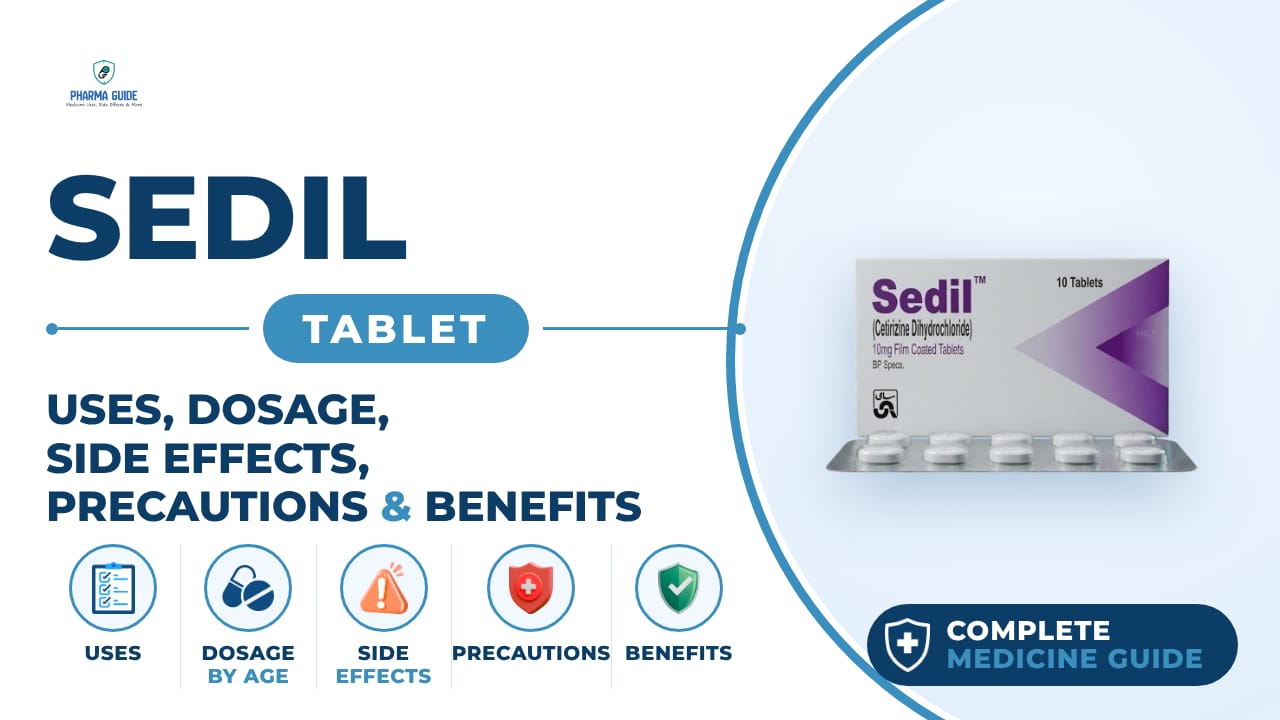
| Generic name | Cetirizine Dihydrochloride |
|---|---|
| Drug class | Second Generation Antihistamine (H1 Receptor Antagonist) |
| Forms | Tablet |
Quick overview
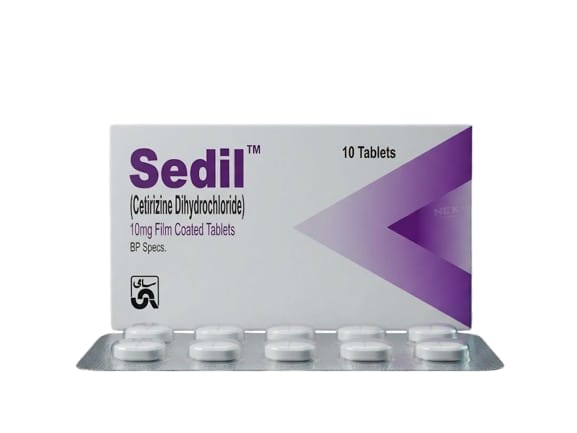
Sedil Tablet contains Cetirizine Dihydrochloride, a second generation antihistamine (H1 receptor antagonist) used to treat seasonal and year round allergies. It relieves symptoms such as sneezing, runny nose, itching, and hives by blocking histamine. It is taken once daily and may cause mild side effects such as headache or drowsiness in some people.
What is Sedil Tablet
Sedil Tablet contains Cetirizine Dihydrochloride, a second generation antihistamine. It is used to treat seasonal and year round allergies.
Sedil Tablet uses
- Seasonal allergic rhinitis (hay fever)
- Perennial allergic rhinitis
- Chronic urticaria (hives)
- Allergic conjunctivitis
- Skin allergies with itching and rash
Benefits of Sedil Tablet
- Relieves sneezing, runny nose, and nasal congestion caused by allergies
- Reduces itching, redness, and watery eyes
- Provides up to 24 hour relief with a single daily dose
- Causes less drowsiness than older antihistamines
- Convenient once daily tablet, easy to take with or without food
How Sedil Tablet works
It works by blocking histamine, a natural substance the body releases during an allergic reaction, which stops symptoms like sneezing, itching, and swelling.
Sedil Tablet dosage
Take one tablet by mouth once daily, with or without food. Swallow the tablet whole with a glass of water; do not crush or chew it. Take it at the same time each day for consistent relief. Do not exceed the dose recommended by your doctor. For children, use the lower dose as directed by a doctor.
| Age group | Dose |
|---|---|
| Under 12 years | Not recommended |
| 12–18 years | 5–10 mg, once daily |
| 18–60 years | 10 mg, once daily |
| 60+ years | 5 mg, once daily |
Available forms and strengths
- Tablet
Side effects of Sedil Tablet
Common
- Headache
- Dry mouth
- Fatigue or drowsiness
- Sore throat
- Nausea
- Dizziness
- Abdominal pain
- Restlessness
- Upset stomach, diarrhoea
- Runny nose
Serious
- Rare allergic reaction with swelling of the face, lips, or throat
- Confusion
- Hallucinations
- Abnormal liver function tests
- Rapid heartbeat
- Loss of consciousness
Warnings and precautions
- Use during pregnancy only if advised by a doctor, as safety information is limited. Use during breastfeeding only if advised by a doctor, as safety information is limited.
- People with moderate to severe kidney disease may need a dose adjustment since the drug is cleared through the kidneys. Do not take this medicine if you have serious kidney problems.
- Avoid alcohol, as it can increase drowsiness when combined with this medicine.
- This medicine may cause mild drowsiness in some people, so use caution until you know how it affects you when driving or operating machinery.
- Talk to your doctor or pharmacist before taking this medicine if you have epilepsy or are at risk of convulsions, or if you have problems passing urine such as from spinal cord problems, prostate, or bladder issues.
- This medicine does not usually cause drowsiness and should not normally affect your ability to drive or operate machinery, but in rare cases some people feel dizzy, nauseous, or drowsy. If this happens, do not drive or operate machinery.
- This product contains lactose. If you have been told you have an intolerance to some sugars, talk to your doctor before taking it.
- Elderly patients may be more sensitive to the sedative effects and dizziness caused by this medicine.
- Do not take this medicine if you are allergic to cetirizine dihydrochloride or any other ingredients, or if you have serious kidney problems.
- If you are due to have an allergy test, ask your doctor whether you should stop taking this medicine for several days before testing, since it may affect test results.
Storage
- Store below 30°C in a cool, dry place.
- Keep the strip in its original packaging away from direct sunlight.
- Keep out of reach of children.
- Do not use after the expiry date printed on the pack.
When to see a doctor
- Stop taking this medicine and talk to your doctor if you experience confusion, hallucinations, abnormal liver function tests, rapid heartbeat, or loss of consciousness.
- Seek medical help if you notice a rare allergic reaction with swelling of the face, lips, or throat.
Alternatives
- Cetirizine
- Zyrtec
- Alerid
Watch the video
FAQs
What is Sedil Tablet used for?
Sedil Tablet is used to treat seasonal and perennial allergic rhinitis, chronic urticaria (hives), allergic conjunctivitis, and skin allergies with itching and rash.
What is the dosage of Sedil Tablet?
Adults aged 18-60 years take 10 mg once daily, those above 60 years take 5 mg once daily, and those aged 12-18 years take 5-10 mg once daily. It is not recommended for children under 12 years. The tablet should be swallowed whole with water, with or without food.
What are the common side effects of Sedil Tablet?
Common side effects include headache, dry mouth, fatigue or drowsiness, sore throat, nausea, dizziness, abdominal pain, restlessness, upset stomach, diarrhoea, and runny nose.
Can Sedil Tablet cause drowsiness while driving?
This medicine does not usually cause drowsiness and should not normally affect your ability to drive, but in rare cases some people feel dizzy, nauseous, or drowsy. If this happens, avoid driving or operating machinery.
Is Sedil Tablet safe during pregnancy?
Sedil Tablet should be used during pregnancy only if advised by a doctor, as safety information is limited.
General information, not medical advice
Your prescriber and the leaflet in your pack know your situation. This page does not.
- Follow your prescriber and the leaflet
- Don't start, stop, or change a dose on your own
- Doses and warnings differ by country and product
Sources
Video
Related medicines

Injectafer Injection: Uses, Dosage, Side Effects, Precautions and Alternates
Iron products
Injectafer (ferric carboxymaltose) treats iron deficiency anemia and heart failure-related iron deficiency via IV. Learn uses, dosage, side effects, and

Gliclazide Tablet: Uses, Dosage, Side Effects, Precautions and Alternates
Sulfonylurea (hypoglycemic/antidiabetic agent)
Gliclazide Tablet is a sulfonylurea for type 2 diabetes that boosts insulin release. Learn about dosage, side effects, warnings, and precautions.