
Safety
General information, not medical advice
Your prescriber and the leaflet in your pack know your situation. This page does not.
- Follow your prescriber and the leaflet
- Don't start, stop, or change a dose on your own
- Doses and warnings differ by country and product
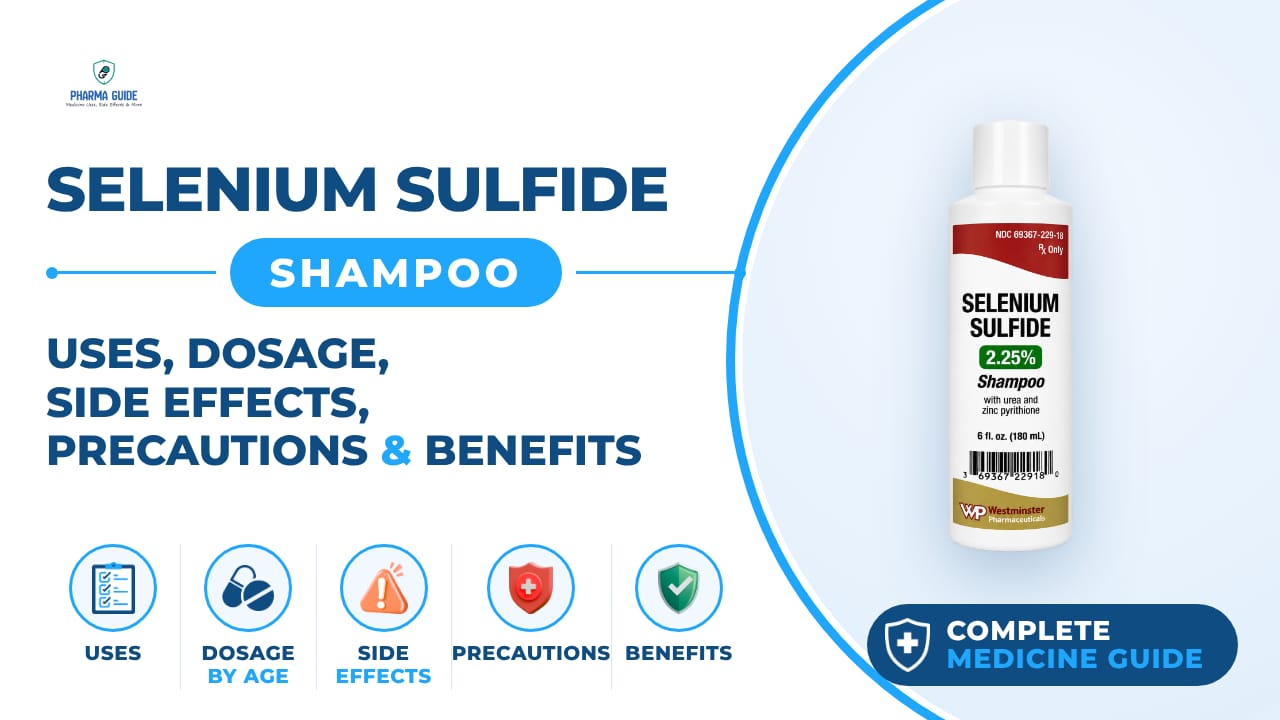
Selenium Sulfide Shampoo: Uses, Dosage, Side Effects, Precautions and Alternates
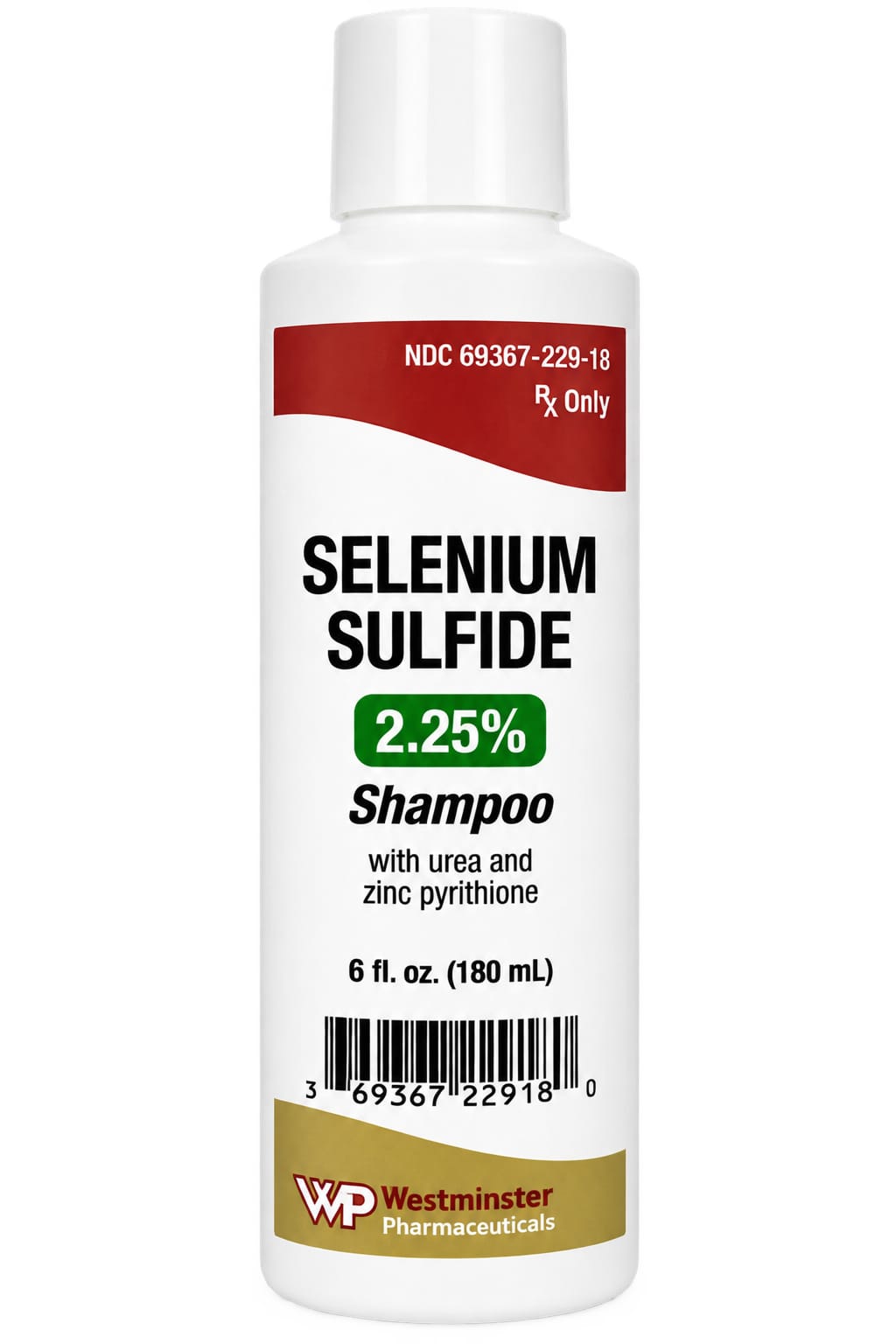
| Generic name | Selenium Sulfide |
|---|---|
| Drug class | Astringents, Anti-infective |
| Forms | Lotion, Shampoo, Cream |
Quick overview
Selenium Sulfide Shampoo contains Selenium Sulfide, an antifungal and antiseborrheic agent from the astringent and anti-infective drug class. It is applied to the scalp and skin to treat dandruff, seborrheic dermatitis, and the fungal skin infection tinea versicolor. It comes as a lotion, shampoo, or cream and is used externally, typically one to two times per week as directed.
What is Selenium Sulfide Shampoo
Selenium Sulfide is an antifungal and antiseborrheic agent that comes as a lotion or shampoo. It is used on the scalp and skin to treat dandruff, seborrheic dermatitis, and a fungal skin infection called tinea versicolor.
Selenium Sulfide Shampoo uses
- Dandruff
- Seborrheic Dermatitis
- Tinea Versicolor (pityriasis versicolor)
Benefits of Selenium Sulfide Shampoo
- Relieves symptoms such as itching and flaking of the scalp associated with dandruff
- Helps control the scaly, itchy rash on the scalp linked to seborrheic dermatitis
- Treats fungal skin infection that causes small discolored patches on the skin
How Selenium Sulfide Shampoo works
Selenium Sulfide slows down the fast turnover and growth of skin cells, which helps with dandruff and seborrheic dermatitis. It also has mild antifungal action against the yeast that lives on the scalp and skin, which may play a role in these conditions.
Selenium Sulfide Shampoo dosage
This product is for external use only. Avoid contact with the eyes, mucous membranes, or open wounds, and do not use on broken skin or inflamed areas. Shake the lotion well before use.
For scalp conditions, massage into wet scalp, wait a few minutes, then rinse thoroughly, and repeat the application and rinse. Wash your hands thoroughly after use. If used before or after bleaching, tinting, or perming hair, rinse hair with cool water for at least 5 minutes after applying.
For tinea versicolor, wet the skin, apply to the affected areas, work into a lather, leave on the skin for about 10 minutes, then rinse thoroughly. Rinse hair thoroughly after treatment to help prevent hair discoloration.
Do not use for longer or shorter than your doctor recommends. If you miss an application, apply it the next time you would normally wash the affected area; do not double up to make up for a missed one.
| Age group | Dose |
|---|---|
| Under 2 Years | Not recommended unless prescribed by a doctor |
| 2–12 Years | Use as directed by a doctor (usually 1–2 times per week if prescribed) |
| 12+ Years (Adults & Teens) | Use 1–2 times per week or as directed |
Available forms and strengths
- Lotion
- Shampoo
- Cream
Side effects of Selenium Sulfide Shampoo
Common
- Skin irritation
- Oily or dry hair or scalp
- Hair discoloration
- Temporary increase in hair loss
- Burning or stinging where applied
Serious
- Severe allergic reaction (rash, itching, severe dizziness, trouble breathing)
- Signs of accidental swallowing such as nausea, vomiting, and diarrhoea
Warnings and precautions
- This medicine is for external use only. Avoid getting it in your eyes, mucous membranes, or on open wounds.
- Do not use on broken skin, cuts, or inflamed or infected areas because more of the medicine may be absorbed into the body, which can be harmful.
- If you have a known allergy to selenium sulfide or any ingredient in the product, do not use it.
- Be careful applying this medicine near the eyes, genital area, or skin folds, since it can cause burning and irritation there.
- Children should only use this medicine if a doctor has prescribed it, and should be watched closely for side effects.
- Keep this medicine out of the reach of children.
- This medicine is generally not recommended during pregnancy unless your doctor says it's necessary. Talk with your doctor about the risks and benefits before using it.
- This medicine is not recommended while breastfeeding unless your doctor says it's necessary. Discuss the risks and benefits with your doctor first.
- Avoid contact with eyes, mouth, and broken or irritated skin. Rinse thoroughly after use to remove all shampoo residue.
- Do not use more frequently than recommended, as it may cause scalp dryness or irritation. Stop use and seek medical advice if severe redness, burning, swelling, or allergic reactions occur.
- Avoid using on the scalp if there are open wounds or severe skin irritation. Wash hands after applying the shampoo.
- Avoid prolonged contact with hair, as it may cause hair discoloration or changes in hair texture, especially in treated, dyed, or light-colored hair.
- It isn't known how this medicine interacts with alcohol, so check with your doctor before drinking.
- This medicine is applied to the skin and does not cause drowsiness or affect concentration, so it should not affect your ability to drive or operate machinery.
Storage
- Store lotion in a tight container at 15–30°C (59–86°F); protect from heat; do not freeze
- Store shampoo at 20°–25°C (68°–77°F), with excursions permitted to 15°–30°C (59°–86°F); brief exposure up to 40°C (104°F) may be tolerated but should be minimized; protect from freezing
When to see a doctor
- If you swallow this medicine, get medical help right away.
- If the medicine gets in your eyes, rinse thoroughly with water right away.
- Stop using the medicine and tell your doctor if you notice a severe reaction or if your skin condition doesn't improve or gets worse.
- Seek immediate medical attention if you develop signs of a serious allergic reaction such as rash, itching, severe dizziness, or trouble breathing.
Alternatives
- Ketoconazole Shampoo
- Zinc Pyrithione Shampoo
- Coal Tar Shampoo
Watch the video
FAQs
What is Selenium Sulfide Shampoo used for?
It is used to treat dandruff, seborrheic dermatitis, and the fungal skin infection tinea versicolor.
How often should I use Selenium Sulfide Shampoo?
It is typically used one to two times per week, or as directed by your doctor.
How does Selenium Sulfide Shampoo work?
It slows down the fast turnover and growth of skin cells, which helps with dandruff and seborrheic dermatitis, and it has mild antifungal action against yeast on the scalp and skin.
What are the common side effects of Selenium Sulfide Shampoo?
Common side effects include skin irritation, oily or dry hair or scalp, hair discoloration, temporary increase in hair loss, and burning or stinging where applied.
Can Selenium Sulfide Shampoo be used during pregnancy?
It is generally not recommended during pregnancy unless your doctor says it's necessary, so discuss the risks and benefits with your doctor before using it.
General information, not medical advice
Your prescriber and the leaflet in your pack know your situation. This page does not.
- Follow your prescriber and the leaflet
- Don't start, stop, or change a dose on your own
- Doses and warnings differ by country and product
Sources
Video
Related medicines

Injectafer Injection: Uses, Dosage, Side Effects, Precautions and Alternates
Iron products
Injectafer (ferric carboxymaltose) treats iron deficiency anemia and heart failure-related iron deficiency via IV. Learn uses, dosage, side effects, and

Gliclazide Tablet: Uses, Dosage, Side Effects, Precautions and Alternates
Sulfonylurea (hypoglycemic/antidiabetic agent)
Gliclazide Tablet is a sulfonylurea for type 2 diabetes that boosts insulin release. Learn about dosage, side effects, warnings, and precautions.