
Safety
General information, not medical advice
Your prescriber and the leaflet in your pack know your situation. This page does not.
- Follow your prescriber and the leaflet
- Don't start, stop, or change a dose on your own
- Doses and warnings differ by country and product
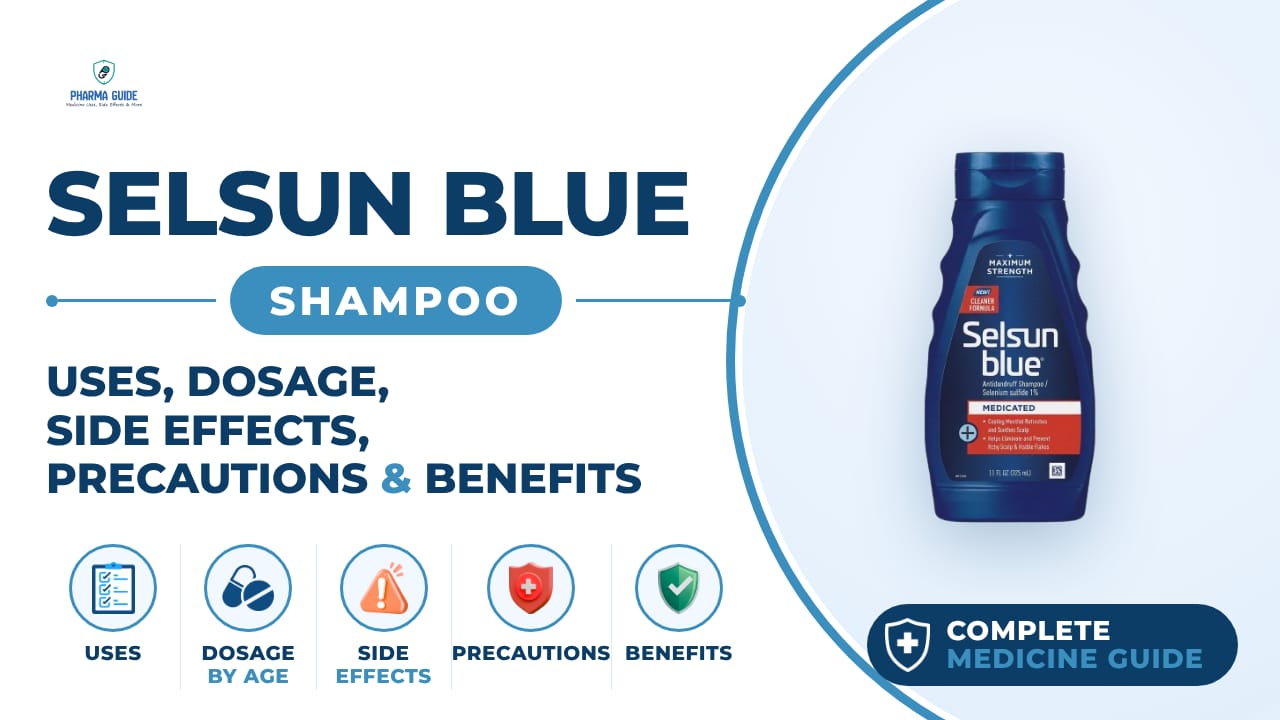
Selsun Blue Shampoo: Uses, Dosage, Side Effects, Precautions and Alternates
| Generic name | Selenium Sulfide |
|---|---|
| Drug class | Topical Skin Products |
| Forms | Lotion, Shampoo, Topical foam |
Quick overview
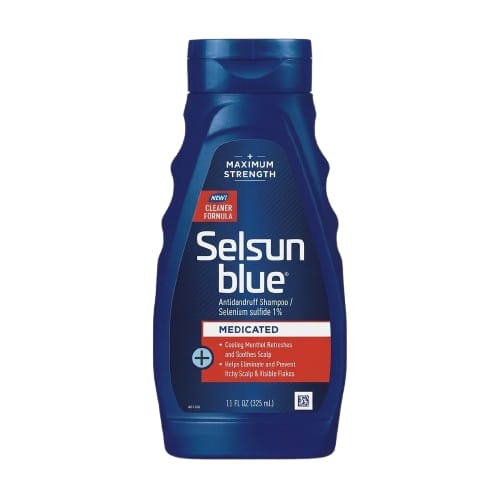
Selsun Blue Shampoo contains selenium sulfide, an antifungal agent in the topical skin products class. It is applied to the skin and scalp to treat dandruff and certain fungal skin conditions. The shampoo works by slowing skin cell growth and reducing scalp yeast, and it is available as a shampoo, lotion, and topical foam.
What is Selsun Blue Shampoo
Selsun Blue is a medicated shampoo and lotion that contains selenium sulfide. It is an antifungal agent used on the skin and scalp to treat dandruff and certain fungal skin conditions.
Selsun Blue Shampoo uses
- Dandruff
- Itchy scalp associated with dandruff
- Flaky scalp
- Scalp scaling
- Seborrheic dermatitis (depending on formulation)
Benefits of Selsun Blue Shampoo
- Reduces dandruff flakes.
- Relieves scalp itching.
- Helps control scalp scaling.
- Reduces dandruff recurrence.
- Improves scalp cleanliness.
How Selsun Blue Shampoo works
Selenium sulfide slows the growth of skin cells and reduces the yeast on the scalp that contributes to dandruff and related fungal conditions.
Selsun Blue Shampoo dosage
This medicine is meant for use on the skin only and should not be swallowed. Shake the product well before using, and remove jewelry before use since the product may damage it. Rinse hair and scalp before applying for dandruff or seborrheic dermatitis. Massage the product into the scalp, letting it reach the roots, then let it sit for the recommended time before rinsing thoroughly.
For tinea versicolor, apply to the affected skin, add a little water to form a lather, leave on for about 10 minutes, then rinse the body thoroughly, repeating daily for a week.
Wash your hands after use. Avoid contact with the eyes, mucous membranes, genital area, skin folds, or open wounds. This medicine should only be used in children with a doctor's guidance.
| Age group | Dose |
|---|---|
| Under 18 years | Not recommended |
| 18–64 years | 1% shampoo, twice/week |
| 65+ years | 1% shampoo, twice/week |
Available forms and strengths
- Lotion
- Shampoo (1%)
- Topical foam
Side effects of Selsun Blue Shampoo
Common
- Skin irritation
- Hair color change
- Oily or dry skin or hair
- Temporary hair loss
- Skin rash
- Burning or stinging where applied
- Scalp sores
- Nail or scalp discoloration
Serious
- Severe blistering of the skin
- Itchiness, redness, peeling, or dryness of treated skin
- Serious eye symptoms such as sudden vision loss, blurred vision, eye pain or swelling
- Serious heart symptoms such as fast or irregular heartbeat, fluttering in the chest, shortness of breath, sudden dizziness or passing out
- Severe headache, confusion, slurred speech, arm or leg weakness, trouble walking, loss of coordination, very stiff muscles, high fever, profuse sweating, or tremors
- Severe allergic reactions including difficulty breathing and swelling of the face, lips, or throat
Warnings and precautions
- This medicine is for use on the skin only. Avoid contact with the eyes, mucous membranes, or open wounds.
- Do not use on broken or severely inflamed skin, as this can increase how much the medicine is absorbed into the body.
- Do not use this medicine if you are allergic to selenium sulfide or other ingredients in the product.
- Safety and effectiveness have not been established for use in infants.
- Children should only use this medicine if a doctor prescribes it, and should be watched closely for side effects.
- This medicine is not recommended during pregnancy unless your doctor says it is absolutely necessary, and should not normally be used for tinea versicolor in pregnant women.
- It is not known if this medicine passes into breast milk; talk to your doctor before using it while breastfeeding.
- Do not leave the shampoo on longer than the product label recommends.
- Avoid using on bleached, dyed, or permed hair unless the label permits.
- It is not known how this medicine interacts with alcohol, so ask your doctor before drinking alcohol while using it. Stop use if irritation or rash develops.
Storage
- Keep tightly capped
- Store below 86°F (30°C)
- Keep this and all other medicines out of reach of children
When to see a doctor
- Get medical help right away if you have severe blistering, itching, redness, peeling, or irritation of the treated skin.
- Seek emergency care right away for serious eye symptoms, serious heart symptoms, or severe nervous system symptoms like confusion, slurred speech, weakness, or very stiff muscles with high fever.
- If the medicine is accidentally swallowed, seek immediate medical help.
- If your condition does not improve or gets worse with regular use, check with your doctor.
Alternatives
- Neutrogena T/Sal
- Head & Shoulders
- Nizoral Shampoo
Watch the video
FAQs
What is Selsun Blue Shampoo used for?
It is used to treat dandruff, itchy and flaky scalp, scalp scaling, and seborrheic dermatitis depending on the formulation.
How does Selsun Blue Shampoo work?
It contains selenium sulfide, which slows the growth of skin cells and reduces the yeast on the scalp that contributes to dandruff and related fungal conditions.
How often should Selsun Blue Shampoo be used?
For adults and older adults, the 1% shampoo is typically used twice a week. It is not recommended for use in children under 18 without a doctor's guidance.
What are the common side effects of Selsun Blue Shampoo?
Common side effects include skin irritation, hair color change, oily or dry skin or hair, temporary hair loss, skin rash, burning or stinging, scalp sores, and nail or scalp discoloration.
Can Selsun Blue Shampoo be used during pregnancy?
It is not recommended during pregnancy unless a doctor says it is absolutely necessary, and it should not normally be used for tinea versicolor in pregnant women.
General information, not medical advice
Your prescriber and the leaflet in your pack know your situation. This page does not.
- Follow your prescriber and the leaflet
- Don't start, stop, or change a dose on your own
- Doses and warnings differ by country and product
Sources
Video
Related medicines

Injectafer Injection: Uses, Dosage, Side Effects, Precautions and Alternates
Iron products
Injectafer (ferric carboxymaltose) treats iron deficiency anemia and heart failure-related iron deficiency via IV. Learn uses, dosage, side effects, and

Gliclazide Tablet: Uses, Dosage, Side Effects, Precautions and Alternates
Sulfonylurea (hypoglycemic/antidiabetic agent)
Gliclazide Tablet is a sulfonylurea for type 2 diabetes that boosts insulin release. Learn about dosage, side effects, warnings, and precautions.