
Safety
General information, not medical advice
Your prescriber and the leaflet in your pack know your situation. This page does not.
- Follow your prescriber and the leaflet
- Don't start, stop, or change a dose on your own
- Doses and warnings differ by country and product
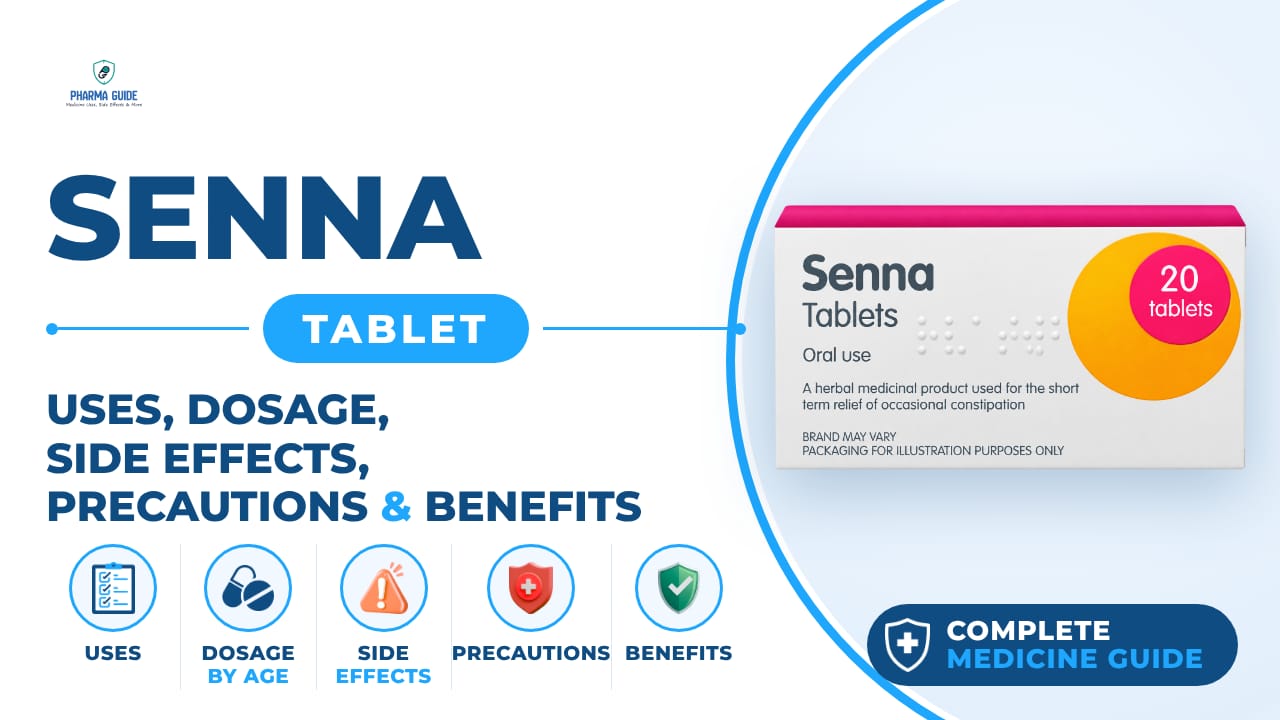
Senna Tablet: Uses, Dosage, Side Effects, Precautions and Alternates
| Generic name | Senna (sennosides) |
|---|---|
| Drug class | Laxatives (stimulant laxative) |
| Forms | Liquid, Syrup, Tablet, Packet, Capsule, Tablet, Chewable, Powder, Granules |
Quick overview
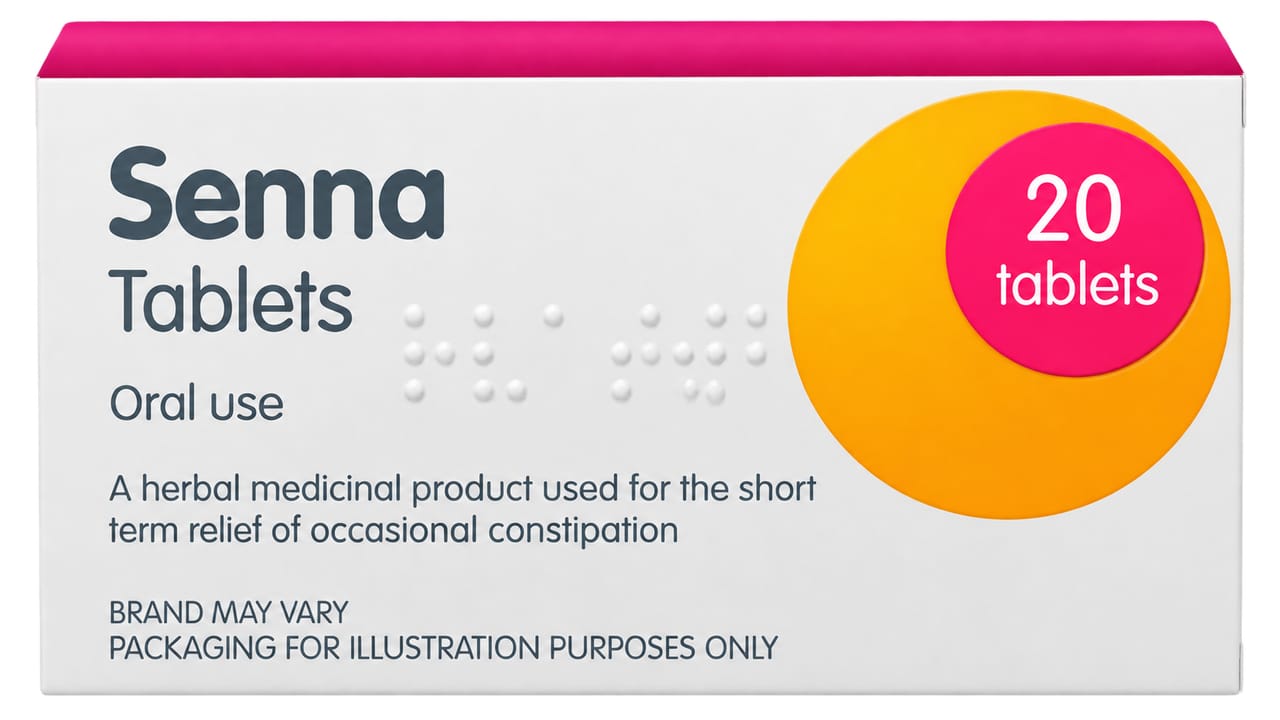
Senna Tablet (generic name: senna/sennosides) is a stimulant laxative used for a short time to relieve occasional constipation. It is available without a prescription in tablet and other forms. Senna typically produces a bowel movement within 6 to 12 hours and is also used to prepare the bowel before surgery, certain medical procedures, and colonoscopy.
What is Senna Tablet
Senna is a stimulant laxative used for a short time to relieve occasional constipation. It comes in tablet and other forms and is available without a prescription.
Senna Tablet uses
- Relieves occasional constipation (irregularity)
- Used on a short-term basis to treat constipation
- Used to empty the bowels before surgery and certain medical procedures
- Used as a bowel preparation before colonoscopy
Benefits of Senna Tablet
- Generally produces a bowel movement within 6 to 12 hours
- Can be used for children as young as 2 years old under medical guidance
How Senna Tablet works
Senna is a stimulant laxative. It works by increasing the activity of the intestines to cause a bowel movement.
Senna Tablet dosage
Take exactly as directed on the package or by your doctor. Take preferably at bedtime, or as directed by your doctor, since it usually causes a bowel movement within 6 to 12 hours. Do not take senna for more than 1 week without talking to your doctor.
For certain tablet products, swallow the pills whole with a glass of water; do not split, chew, or crush them. Chewable tablets should be chewed well before swallowing.
If taking other medicines by mouth, take senna two or more hours before or after those medicines. Do not use different forms of senna (such as tablets and liquid) at the same time without medical advice.
Eat a high-fiber diet and drink plenty of liquids each day as recommended by your doctor. If you forget a dose and it is almost time for your next dose, skip the missed dose; do not double up.
| Age group | Dose |
|---|---|
| Under 2 years | Do not use unless prescribed |
| 2–5 years | Doctor's advice required |
| 6–11 years | 1 tablet once daily, preferably at bedtime |
| 12 years & older | 1–2 tablets once daily, preferably at bedtime |
| Adults | 1–2 tablets once daily, preferably at bedtime |
Available forms and strengths
- Liquid
- Syrup
- Tablet
- Packet
- Capsule
- Tablet, Chewable
- Powder
- Granules
Side effects of Senna Tablet
Common
- Brown discoloration of urine
- Faintness
- Stomach discomfort
- Nausea
- Stomach cramps
- Stomach pain or cramps
Serious
- Rectal bleeding
- No bowel movement within 12 hours after using senna
- Black, tarry stools or blood in the stools
- Signs of low potassium level: leg cramps, constipation, irregular heartbeats, fluttering in your chest, increased thirst or urination, numbness or tingling, muscle weakness or limp feeling
- Signs of an allergic reaction: hives, difficulty breathing, swelling of the face, lips, tongue, or throat, rash, itching, red or blistered skin, wheezing, tightness in chest or throat, trouble swallowing or talking
Warnings and precautions
- Do not use senna for longer than one week unless a doctor tells you to.
- Frequent or continued use of senna may make you dependent on laxatives and cause your bowels to stop working normally.
- Older adults (65 years or older) should talk with their doctor about the risks and benefits, since senna is usually not recommended for long-term use in this age group.
- Do not use senna if you have diarrhea or loose stools, severe stomach pain, a blockage in your digestive tract, Crohn's disease, ulcerative colitis, appendicitis, hemorrhoids, anal prolapse, or if you are dehydrated.
- Using senna for longer than 2 weeks may cause your bowels to stop functioning normally and may also cause a serious electrolyte imbalance.
- Ask a doctor before using senna if you are pregnant or plan to become pregnant. Tell your doctor if you become pregnant while taking senna.
- Ask a health care professional before using senna if you are breastfeeding. Studies suggest this medicine poses minimal risk to the infant when used during breastfeeding.
- Long-term use may cause a serious electrolyte imbalance, which can cause muscle weakness, heart problems, and liver damage.
- Discuss with your healthcare professional the use of this medicine with alcohol, since interactions may occur.
Storage
- Keep this medication in the container it came in, tightly closed, and out of reach of children.
- Store it at room temperature and away from excess heat and moisture (not in the bathroom).
- Store between 15º to 30ºC (59 to 86F)
- Dispose of unneeded medications in a way so that pets, children, and other people cannot take them. Do not flush this medication down the toilet. Use a medicine take-back program.
When to see a doctor
- Stop taking senna and call your doctor right away if you have rectal bleeding.
- Tell your doctor if you have stomach pain, nausea, vomiting, or a sudden change in bowel movements that lasts more than 2 weeks.
- Get emergency medical help if you have signs of an allergic reaction such as hives, difficulty breathing, or swelling of your face, lips, tongue, or throat.
- Call your doctor if you do not have a bowel movement within 12 hours after using senna, or if you have signs of low potassium such as leg cramps, irregular heartbeats, or muscle weakness.
- Call your doctor right away if you or your child has rectal bleeding, no bowel movement within 30 minutes of enema use, or symptoms of dehydration such as confusion, decreased urination, feeling thirsty, or vomiting.
- If you think there has been an overdose, call your poison control center or get medical care right away.
Alternatives
- Correctol 50 Plus
- Ex-Lax Gentle Strength
- Gentlax S
- Peri-Colace
- Senokot S
- Lactulose
- Psyllium
- Docusate
- Mineral oil
- Bisacodyl
Watch the video
FAQs
How long does it take for Senna Tablet to work?
Senna typically produces a bowel movement within 6 to 12 hours, so it is often taken at bedtime.
How long can I take Senna Tablet?
Do not take senna for more than 1 week without talking to your doctor, since longer use may cause dependence on laxatives and bowel function problems.
What is the dosage of Senna Tablet for adults?
Adults and those 12 years and older typically take 1–2 tablets once daily, preferably at bedtime.
What should I do if I don't have a bowel movement after taking Senna Tablet?
Call your doctor if you do not have a bowel movement within 12 hours after using senna.
Can children take Senna Tablet?
Senna can be used for children as young as 2 years old under medical guidance, with doctor's advice required for ages 2–5 and specific doses for ages 6–11.
General information, not medical advice
Your prescriber and the leaflet in your pack know your situation. This page does not.
- Follow your prescriber and the leaflet
- Don't start, stop, or change a dose on your own
- Doses and warnings differ by country and product
Sources
Video
Related medicines

Injectafer Injection: Uses, Dosage, Side Effects, Precautions and Alternates
Iron products
Injectafer (ferric carboxymaltose) treats iron deficiency anemia and heart failure-related iron deficiency via IV. Learn uses, dosage, side effects, and

Gliclazide Tablet: Uses, Dosage, Side Effects, Precautions and Alternates
Sulfonylurea (hypoglycemic/antidiabetic agent)
Gliclazide Tablet is a sulfonylurea for type 2 diabetes that boosts insulin release. Learn about dosage, side effects, warnings, and precautions.