
Safety
General information, not medical advice
Your prescriber and the leaflet in your pack know your situation. This page does not.
- Follow your prescriber and the leaflet
- Don't start, stop, or change a dose on your own
- Doses and warnings differ by country and product
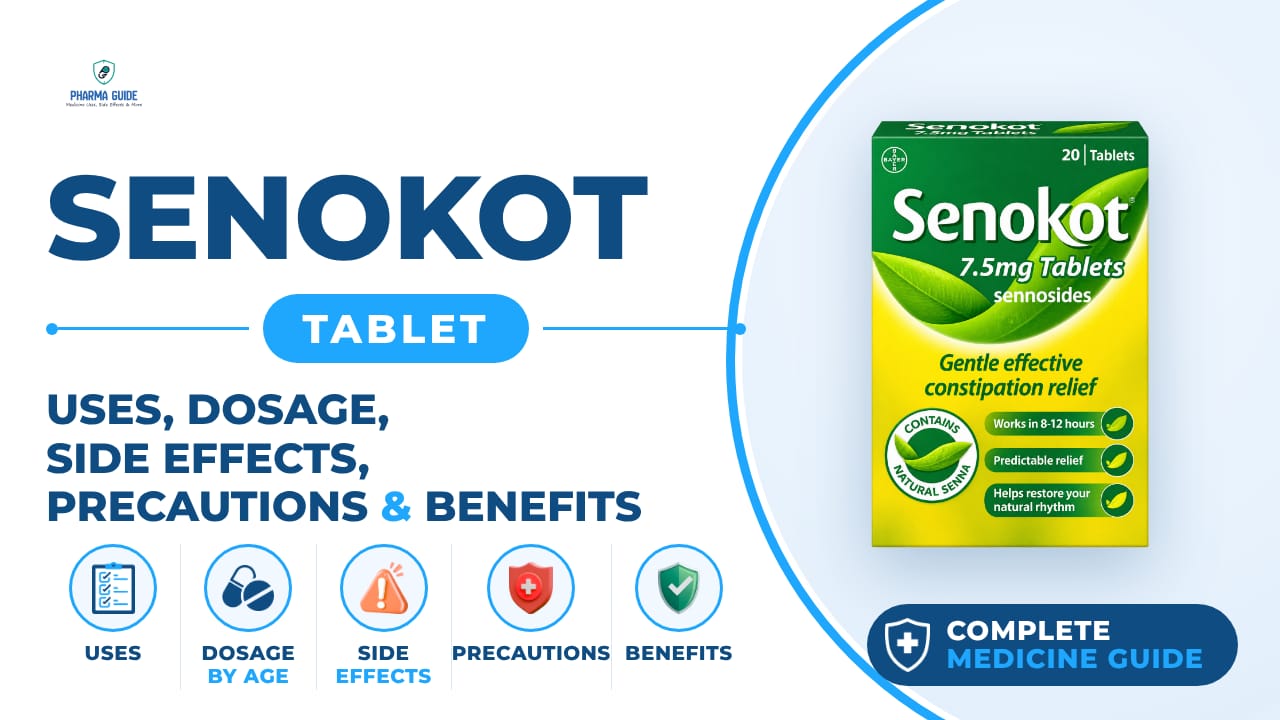
Senokot Tablet: Uses, Dosage, Side Effects, Precautions and Alternates
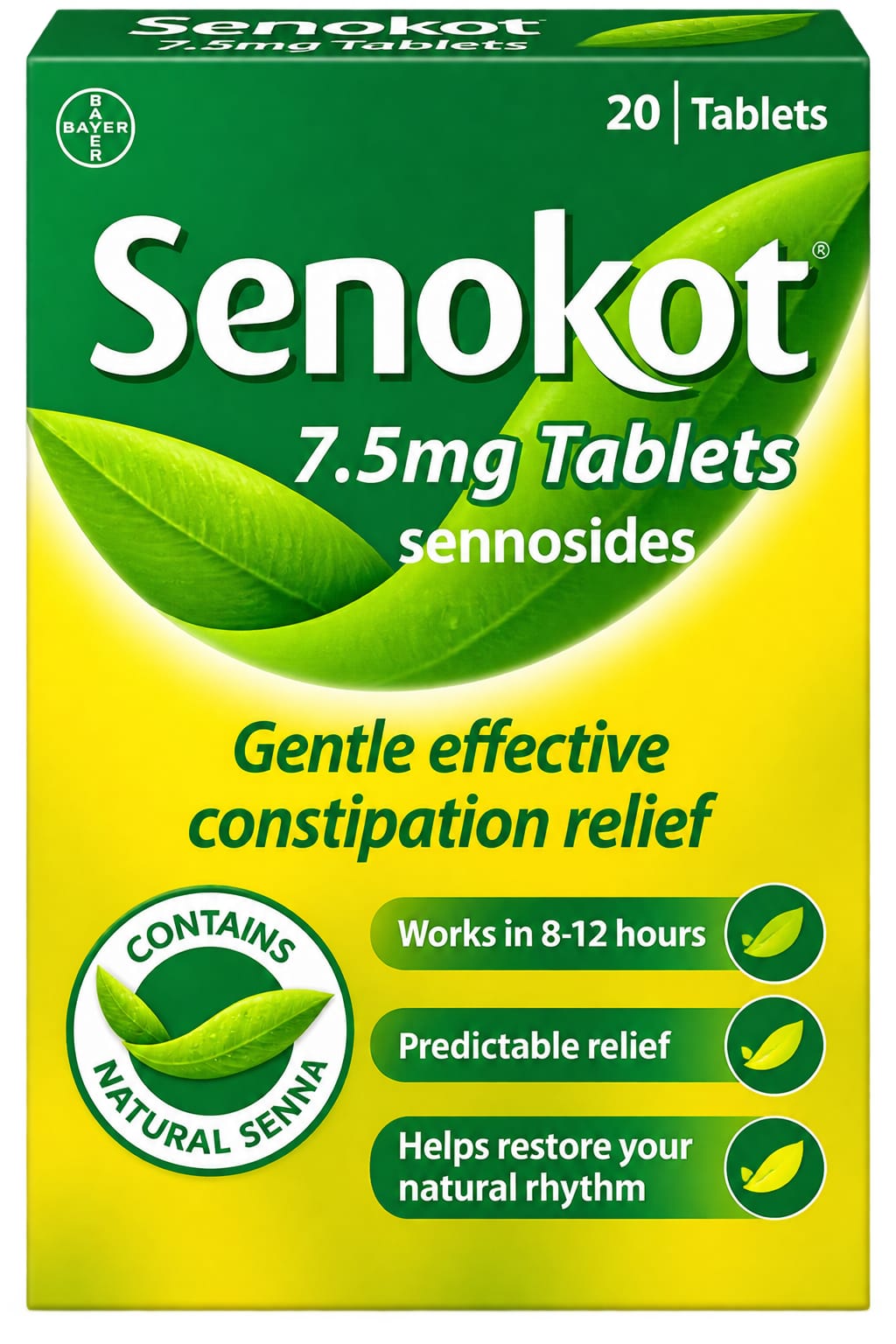
| Generic name | Senna (sennosides) |
|---|---|
| Drug class | Laxative (stimulant laxative) |
| Forms | Tablet, Chewable tablet, Liquid |
Quick overview
Senokot Tablet contains senna (sennosides) and belongs to the stimulant laxative class. It is used to relieve occasional or mild constipation, including gentle overnight relief and bowel preparation before a colonoscopy. It works by increasing the squeezing movements of the lower bowel to help push stool out, usually producing a bowel movement within 6 to 12 hours.
What is Senokot Tablet
Senokot is a laxative made from senna, a plant-based ingredient. It is used to relieve occasional constipation by helping the bowel move more easily.
Senokot Tablet uses
- Relief of occasional or mild constipation
- Helping empty the bowel before a colonoscopy
- Gentle overnight relief of occasional constipation
Benefits of Senokot Tablet
- Provides gentle, reliable relief from occasional or mild constipation
- Promotes the body's natural bowel movements
- Produces a bowel movement within 6 to 12 hours after use
How Senokot Tablet works
Senna increases the wave-like squeezing movements of the lower bowel, which helps push stool through and out of the body.
Senokot Tablet dosage
Swallow the tablet whole with a full glass of water; do not crush, chew, or break it. Chewable tablets must be chewed before swallowing. Measure liquid forms with the device provided, not a kitchen spoon. Do not use different forms of senna (tablets, liquids, and others) at the same time.
Take preferably at bedtime so a bowel movement can occur overnight, and drink extra fluids (at least one full glass) with each dose. Avoid taking this medicine within 2 hours before or after other medicines. Do not take for longer than 1 week unless a healthcare provider has told you to, and do not take more than the recommended dose.
| Age group | Dose |
|---|---|
| Under 2 years | Do not use unless prescribed |
| 2–5 years | Doctor's advice required |
| 6–11 years | 1 tablet once daily, usually at bedtime |
| 12 years & older | 1–2 tablets once daily, usually at bedtime |
| Adults | 1–2 tablets once daily, usually at bedtime |
Available forms and strengths
- Tablet
- Chewable tablet
- Liquid
Side effects of Senokot Tablet
Common
- Stomach pain, discomfort, or cramps
- Diarrhea or an urgent need to have a bowel movement
- Nausea, gas
- Discoloration of urine
Serious
- Rectal bleeding
- No bowel movement within 12 hours after using senna
- Low blood potassium (leg cramps, constipation, irregular heartbeats, fluttering in the chest, increased thirst or urination, numbness or tingling, muscle weakness or limp feeling)
- Signs of an allergic reaction: hives, difficult breathing, swelling of the face, lips, tongue, or throat
- Rash or itching
Warnings and precautions
- Do not use if you have diarrhea, hemorrhoids, stomach pain, a blockage in your intestines, inflammatory bowel disease, or appendicitis.
- Do not use for more than one week unless a healthcare provider tells you to, as long-term use of stimulant laxatives can cause bowel problems, dehydration, and electrolyte imbalance.
- Do not use other laxatives at the same time unless your doctor has told you to.
- Avoid taking this medicine within 2 hours of other medicines, as it can reduce how well those medicines are absorbed.
- Do not use with other herbal supplements that can lower potassium levels, such as horsetail, licorice, aloe, buckthorn, gossypol, or rhubarb.
- Talk to a doctor before use if you take heart medications, water pills, steroids, licorice root, or other medicines that may affect electrolyte balance.
Ask a doctor before using this product if you are pregnant; it is not recommended during pregnancy. Ask a doctor before using this product if you are breastfeeding; it is not recommended while breastfeeding. People with kidney problems should be aware of the possible risk of electrolyte imbalance and should talk to a healthcare professional before use. This medicine may cause dizziness or fainting due to abdominal spasms; avoid driving or operating machinery if you experience these symptoms.
Storage
- Store at room temperature away from moisture, heat, and light.
- Store at 15°C to 25ºC.
- Keep out of the sight and reach of children.
When to see a doctor
- Get emergency medical help if you have signs of an allergic reaction, such as hives, difficulty breathing, or swelling of the face, lips, tongue, or throat.
- Stop using and call your doctor right away if you have rectal bleeding or no bowel movement within 12 hours of taking it.
- Stop using and call your doctor if you have signs of low blood potassium, such as leg cramps, irregular heartbeats, fluttering in the chest, increased thirst or urination, numbness or tingling, or muscle weakness.
- Call your healthcare provider if your constipation does not improve after 1 week of use, or if it gets worse.
- If you think you have taken too much, contact your healthcare professional, hospital emergency department, or regional poison control center right away, even if you have no symptoms.
Alternatives
- MiraLAX (polyethylene glycol)
- Linzess (linaclotide)
- Colace
- Metamucil (psyllium fiber)
- Dulcolax (bisacodyl)
- Lubiprostone
- Magnesium oxide
- Docusate
- Bisacodyl
- Senokot S
Watch the video
FAQs
How long does Senokot Tablet take to work?
It usually produces a bowel movement within 6 to 12 hours after use, which is why it is often taken at bedtime for overnight relief.
How should I take Senokot Tablet?
Swallow the tablet whole with a full glass of water without crushing, chewing, or breaking it, preferably at bedtime, and drink extra fluids with each dose.
How long can I use Senokot Tablet?
Do not take it for longer than 1 week unless a healthcare provider has told you to, since long-term use of stimulant laxatives can cause bowel problems, dehydration, and electrolyte imbalance.
What are the serious side effects of Senokot Tablet?
Serious effects include rectal bleeding, no bowel movement within 12 hours of use, low blood potassium symptoms like leg cramps or irregular heartbeats, and signs of an allergic reaction such as hives or facial swelling.
Who should not use Senokot Tablet?
It should not be used by people with diarrhea, hemorrhoids, stomach pain, intestinal blockage, inflammatory bowel disease, or appendicitis, and pregnant or breastfeeding women should ask a doctor first.
General information, not medical advice
Your prescriber and the leaflet in your pack know your situation. This page does not.
- Follow your prescriber and the leaflet
- Don't start, stop, or change a dose on your own
- Doses and warnings differ by country and product
Sources
Video
Related medicines

Injectafer Injection: Uses, Dosage, Side Effects, Precautions and Alternates
Iron products
Injectafer (ferric carboxymaltose) treats iron deficiency anemia and heart failure-related iron deficiency via IV. Learn uses, dosage, side effects, and

Gliclazide Tablet: Uses, Dosage, Side Effects, Precautions and Alternates
Sulfonylurea (hypoglycemic/antidiabetic agent)
Gliclazide Tablet is a sulfonylurea for type 2 diabetes that boosts insulin release. Learn about dosage, side effects, warnings, and precautions.