
Safety
General information, not medical advice
Your prescriber and the leaflet in your pack know your situation. This page does not.
- Follow your prescriber and the leaflet
- Don't start, stop, or change a dose on your own
- Doses and warnings differ by country and product
Septran Tablet: Uses, Dosage, Side Effects, Precautions and Alternates
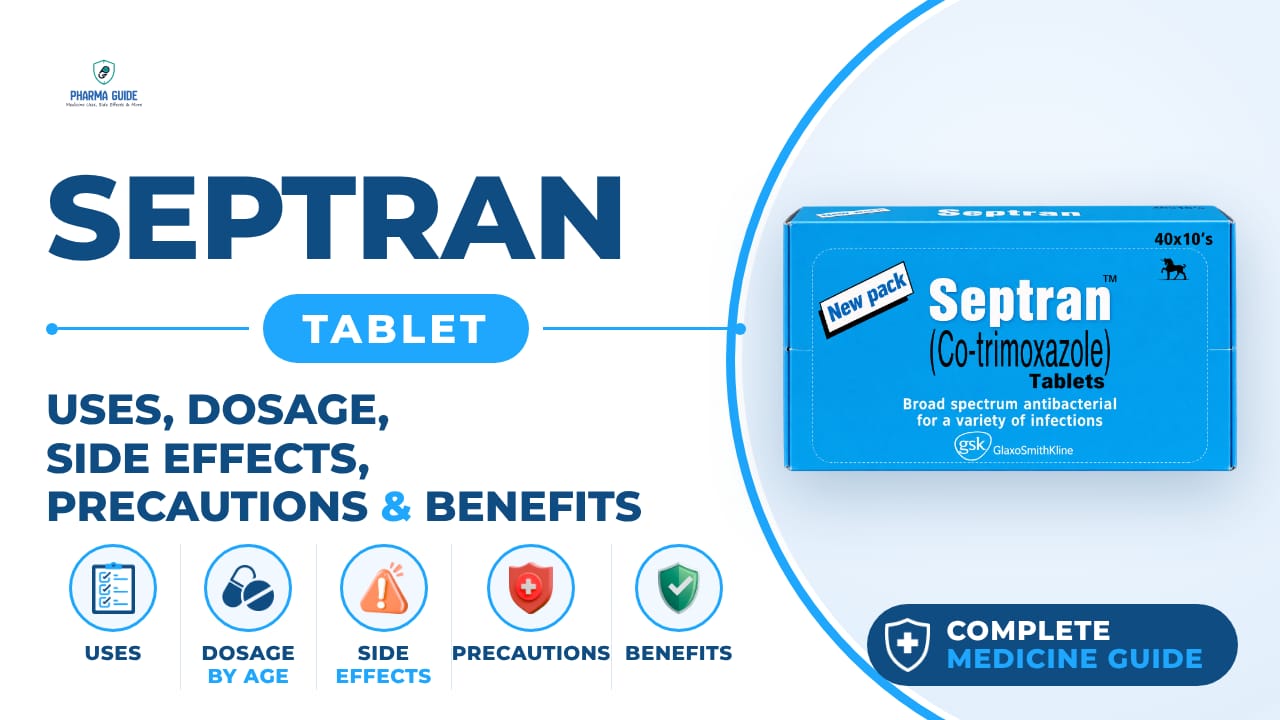
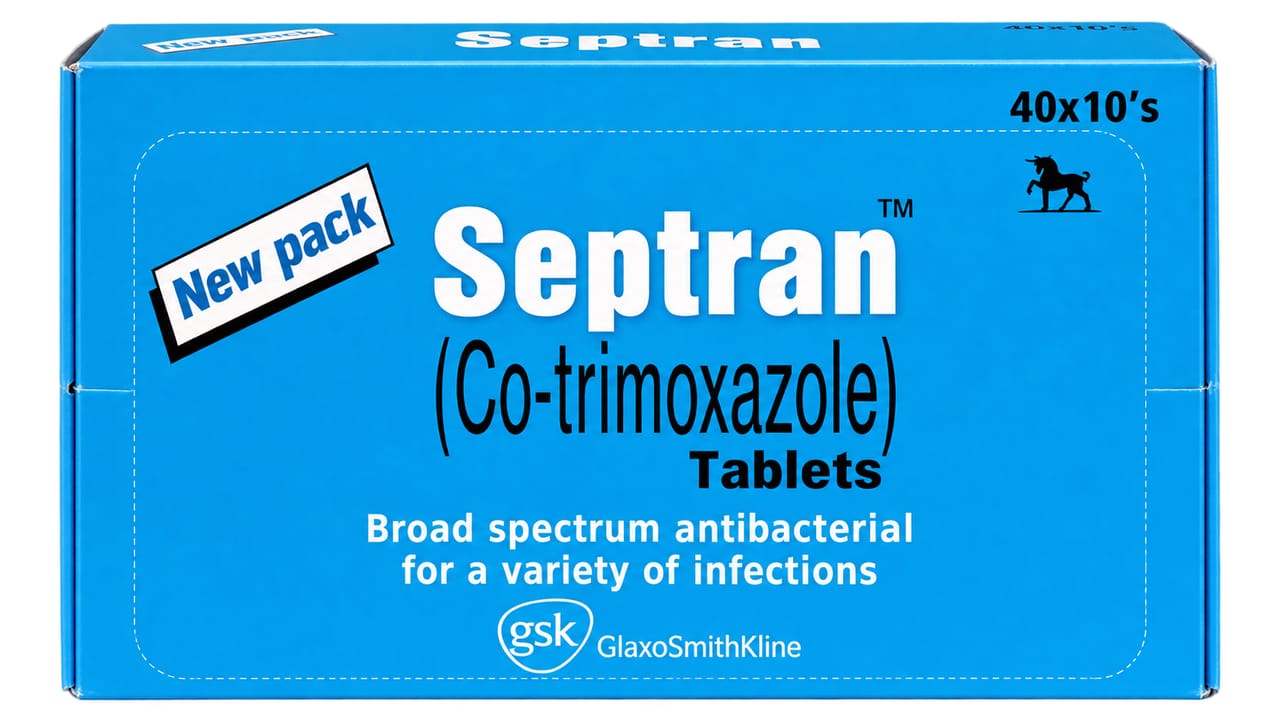
| Generic name | sulfamethoxazole and trimethoprim |
|---|---|
| Drug class | Sulfonamide antibacterial combination (sulfonamide antibiotic) |
| Forms | Tablets, Double strength (DS) tablets, Oral suspension, Injection (intravenous infusion) |
Quick overview
Septran Tablet contains sulfamethoxazole and trimethoprim, a sulfonamide antibacterial combination used to treat various bacterial infections such as urinary tract infections, ear infections, and chronic bronchitis flare-ups. It only works against bacterial infections, not viral ones like the common cold or flu. The medicine should be taken exactly as prescribed, with the full course completed to avoid resistance.
What is Septran Tablet
Septran (also known as Bactrim or Septra) is a combination antibiotic containing two medicines, sulfamethoxazole and trimethoprim, that work together to fight bacterial infections. It only treats infections caused by bacteria, not viruses.
Septran Tablet uses
- Urinary tract infections
- Acute otitis media (ear infections) in children
- Acute exacerbations of chronic bronchitis in adults
- Shigellosis (bacterial diarrhea/enteritis)
- Pneumocystis jiroveci pneumonia (treatment and prevention)
- Traveler's diarrhea in adults
- Cholera (as an adjunct to fluid and electrolyte replacement)
- Nocardiosis
- Brucellosis (used together with another antibiotic)
Benefits of Septran Tablet
- Combines two antibiotics that work better together than either one alone against many bacteria
- Can be used both to treat active infections and to prevent certain infections (like Pneumocystis jiroveci pneumonia) in people at high risk
How Septran Tablet works
The medicine contains two antibiotics that block two different steps bacteria need to make folic acid, which they need to grow and survive. Used together, they are more effective than either one used alone, and can kill bacteria instead of just stopping their growth.
Septran Tablet dosage
Take this medicine exactly as directed by your doctor, and finish the full course even if you feel better early on. Skipping doses or not completing treatment may make the infection harder to treat and can lead to antibiotic resistance.
Drink plenty of fluids while taking this medicine to help prevent kidney stones and crystals forming in the urine. This medicine will not work against viral infections such as the common cold or flu. It is recommended to take the suspension with some food or drink to help reduce stomach upset. Avoid excess sun exposure or tanning beds, as this medicine can make skin more sensitive to sunburn.
| Age group | Dose |
|---|---|
| Under 2 months | Not recommended |
| 2 months–11 years | Weight-based dose; not age-based |
| 12–17 years | Usually weight-based, depending on infection |
| 18+ years | Usually 1 DS tablet (800/160 mg) every 12 hours for infections such as UTI, when prescribed |
Available forms and strengths
- Tablets
- Double strength (DS) tablets (800/160 mg)
- Oral suspension
- Injection (intravenous infusion)
Side effects of Septran Tablet
Common
- Nausea
- Vomiting
- Loss of appetite (anorexia)
- Skin rash
- Headache
- Diarrhea
- Allergic skin reactions such as rash and urticaria
Serious
- Severe skin reactions including Stevens-Johnson syndrome and toxic epidermal necrolysis
- Fulminant hepatic necrosis (severe liver damage)
- Agranulocytosis and aplastic anemia (severe blood cell problems)
- Immune thrombocytopenia (low platelets) that can be life-threatening
- Severe allergic reaction affecting the lungs and airways, making breathing difficult
- Watery or bloody diarrhea (possible sign of C. difficile colitis)
- Yellowing of skin or eyes (jaundice)
- Seizures
- High potassium levels causing nausea, weakness, tingling, chest pain, irregular heartbeat
- Low sodium levels causing headache, confusion, slurred speech, weakness, vomiting
- Low blood cell counts causing fever, chills, mouth sores, easy bruising, unusual bleeding
Warnings and precautions
- This medicine can cause severe, potentially fatal skin reactions such as Stevens-Johnson syndrome and toxic epidermal necrolysis. Stop the medicine immediately if a rash or any sign of reaction appears.
- Rare but fatal reactions have occurred including severe liver damage, dangerously low white blood cells, and other serious blood disorders.
- This medicine can cause diarrhea from a bacterial overgrowth (C. difficile) that can range from mild to life-threatening, and can occur even two or more months after stopping the antibiotic.
- This medicine should not be used in babies younger than 2 months old.
- This medicine should not be combined with leucovorin when being used to treat Pneumocystis jiroveci pneumonia, as this combination has been linked to treatment failure and higher risk of death.
- This medicine must not be combined with the heart medicine dofetilide, as it can raise dofetilide levels and cause dangerous heart rhythm problems.
- If you have recently taken this medicine and are given it again, you could have a serious reaction including circulatory shock with fever, very low blood pressure, and confusion.
- This medicine should generally be avoided during pregnancy, especially in the first trimester, because it may harm the unborn baby or cause birth defects, unless your doctor decides the benefit outweighs the risk.
- This medicine passes into breast milk and should generally not be used while breastfeeding.
- This medicine should be used with caution in people with kidney problems, and the dose may need to be reduced. It should not be used at all if kidney function is severely impaired and cannot be monitored.
- This medicine should not be used in people with severe liver damage, and should be used with caution in those with impaired liver function.
- People who drink alcohol regularly may be more likely to have low folate levels, so this medicine should be used with caution in chronic alcoholics.
- This medicine may cause weakness, tiredness, dizziness, or confusion, so caution should be used when driving or operating machinery until you know how it affects you.
Storage
- Store at 20° to 25°C (68° to 77°F)
- Dispense in tight, light-resistant container
- Store at room temperature away from moisture, heat, and light
- Keep out of reach and sight of children
When to see a doctor
- Get emergency help right away if you have signs of an allergic reaction such as hives, cough, chest pain, shortness of breath, or swelling of the face or throat.
- Call your doctor immediately if you develop severe stomach pain or watery or bloody diarrhea, even months after your last dose.
- Call your doctor right away if you notice any skin rash, no matter how mild it seems.
- Seek medical help if you notice yellowing of your skin or eyes, which could indicate liver problems.
- Get medical attention if you experience a seizure while taking this medicine.
- Contact your doctor if you notice signs of high potassium such as nausea, weakness, tingling, chest pain, or irregular heartbeat.
- Contact your doctor if you notice signs of low sodium such as headache, confusion, slurred speech, severe weakness, vomiting, or loss of coordination.
- Seek medical care if you notice signs of low blood cell counts such as fever, chills, mouth sores, unusual bruising or bleeding, or feeling light-headed or short of breath.
- If you think you have taken too much of this medicine, seek emergency medical help or contact poison control immediately, even without symptoms.
Alternatives
- Bactrim
- Bactrim DS
- Septra
- SMZ-TMP DS
- Cotrim
- Sulfatrim
- Sulfatrim Pediatric
Watch the video
FAQs
What is Septran Tablet used for?
Septran Tablet is used to treat bacterial infections such as urinary tract infections, ear infections in children, chronic bronchitis flare-ups, shigellosis, Pneumocystis jiroveci pneumonia, traveler's diarrhea, cholera, nocardiosis, and brucellosis.
How does Septran Tablet work?
It contains two antibiotics, sulfamethoxazole and trimethoprim, that block two different steps bacteria need to make folic acid, which they need to grow and survive. Together they are more effective than either alone and can kill bacteria instead of just stopping their growth.
What are the common side effects of Septran Tablet?
Common side effects include nausea, vomiting, loss of appetite, skin rash, headache, diarrhea, and allergic skin reactions such as rash and urticaria.
Can Septran Tablet be used during pregnancy?
Septran Tablet should generally be avoided during pregnancy, especially in the first trimester, because it may harm the unborn baby or cause birth defects, unless a doctor decides the benefit outweighs the risk.
Is Septran Tablet safe for infants?
No, Septran Tablet should not be used in babies younger than 2 months old.
General information, not medical advice
Your prescriber and the leaflet in your pack know your situation. This page does not.
- Follow your prescriber and the leaflet
- Don't start, stop, or change a dose on your own
- Doses and warnings differ by country and product
Sources
Video
Related medicines

Injectafer Injection: Uses, Dosage, Side Effects, Precautions and Alternates
Iron products
Injectafer (ferric carboxymaltose) treats iron deficiency anemia and heart failure-related iron deficiency via IV. Learn uses, dosage, side effects, and

Gliclazide Tablet: Uses, Dosage, Side Effects, Precautions and Alternates
Sulfonylurea (hypoglycemic/antidiabetic agent)
Gliclazide Tablet is a sulfonylurea for type 2 diabetes that boosts insulin release. Learn about dosage, side effects, warnings, and precautions.