
Safety
General information, not medical advice
Your prescriber and the leaflet in your pack know your situation. This page does not.
- Follow your prescriber and the leaflet
- Don't start, stop, or change a dose on your own
- Doses and warnings differ by country and product
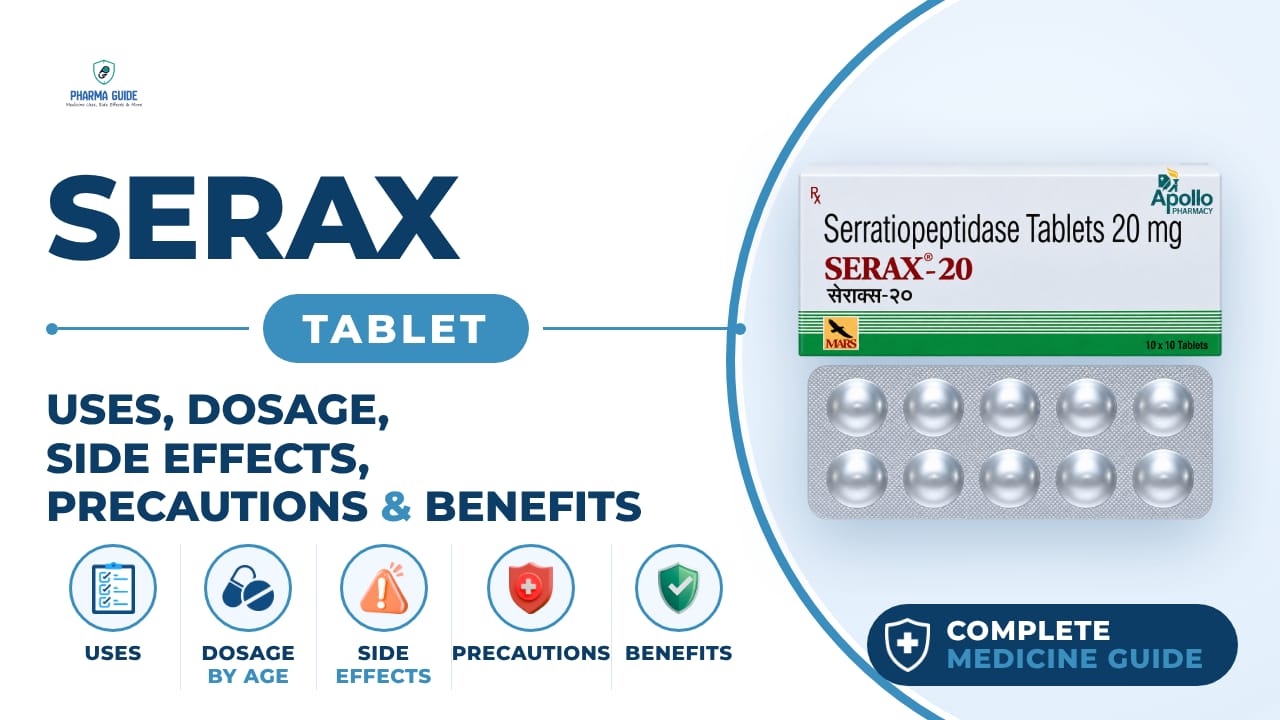
Serax Tablet: Uses, Dosage, Side Effects, Precautions and Alternates
| Generic name | oxazepam |
|---|---|
| Drug class | Benzodiazepine (Antianxiety Agent) |
| Forms | Tablet, Capsule |
Quick overview
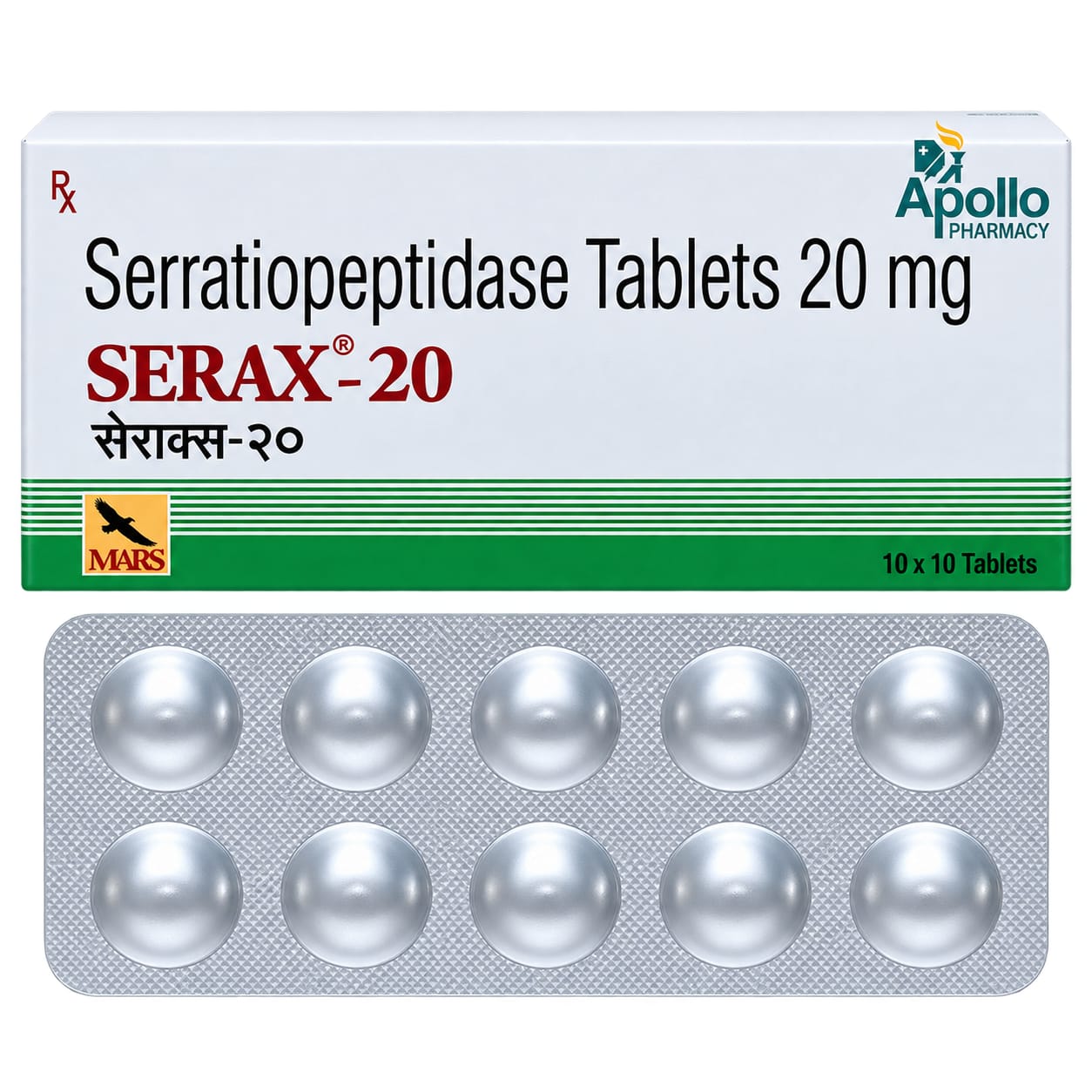
Serax is a brand name that has been used for different medicines depending on the country and formulation, including oxazepam (a benzodiazepine), serratiopeptidase (an enzyme), or ebastine (an antihistamine). Depending on the formulation, it may be used for anxiety, alcohol withdrawal, pain and swelling, or allergy symptoms. Because different products share this name, it is important to check the exact ingredient printed on your pack or prescription. This medicine can cause side effects and requires certain precautions, so it should be used only as directed by your doctor.
What is Serax Tablet
Serax is a brand name that has been used for different medicines depending on the country and formulation. In some sources it refers to oxazepam, a benzodiazepine used for anxiety and alcohol withdrawal. In other sources, the same brand name is used for tablets containing serratiopeptidase, an enzyme used for pain and swelling, or ebastine, an antihistamine for allergies. Because the sources describe different products under this name, always check the exact ingredient printed on your pack or prescription.
Serax Tablet uses
- Short-term relief of anxiety disorders and symptoms of anxiety
- Anxiety associated with depression
- Anxiety, tension, agitation, and irritability in older patients
- Symptoms of alcohol withdrawal such as tremors and confusion
- (In some formulations) pain and swelling linked to arthritis, back pain, sinusitis, or post-operative and dental wounds
- (In some formulations) seasonal and year-round allergy symptoms such as sneezing, runny nose, itchy eyes, and hives
Benefits of Serax Tablet
- Calms the central nervous system to reduce anxiety
- May help with tension, agitation, and irritability in older patients
- (Enzyme formulation) helps reduce pain and swelling from inflammation
- (Antihistamine formulation) provides allergy relief with once-daily dosing and causes less drowsiness than older allergy medicines
How Serax Tablet works
Depending on the formulation, Serax works in different ways: as a benzodiazepine it slows down activity in the central nervous system to calm anxiety; as an enzyme product it breaks down proteins involved in pain and swelling; as an antihistamine it blocks histamine receptors to control allergy symptoms without easily entering the brain, which causes less drowsiness.
Serax Tablet dosage
Use exactly as prescribed by your doctor or pharmacist.
Available forms and strengths
- Tablet
- Capsule
Side effects of Serax Tablet
Common
- Stomach pain
- Nausea and vomiting
- Diarrhea
- Loss of appetite
- Skin rash or itching
- Nose bleed
- Drowsiness, dizziness, blurred vision, headache
- Amnesia or forgetfulness, trouble concentrating
- Slurred speech
- Swelling
- Constipation
- Irregular menstrual periods or loss of interest in sex
- Dry mouth
- Insomnia
Serious
- Increased risk of bleeding or nosebleeds, especially with blood thinners
- Allergic reactions such as rash, redness, itching, swelling of face/tongue/throat, dizziness, or breathing difficulties
- Risk of physical and psychological dependence, tolerance, or severe withdrawal symptoms if stopped abruptly
- Severe CNS depression and slow breathing when combined with alcohol or opioids
- Mental/mood changes, clumsiness, trouble walking, tremor
- Trouble urinating, sleep disturbances
- Yellowing of eyes or skin, dark urine, clay-colored stools (possible liver problems)
- Unusual bleeding or bruising
- Rarely, irregular heartbeat or severe allergic reaction (antihistamine formulation)
Warnings and precautions
- This medicine is generally not recommended during pregnancy, as it may be linked with birth defects or harm to the unborn baby. Tell your doctor right away if you are or think you might be pregnant.
- This medicine can pass into breast milk and may affect a nursing baby, so talk to your doctor before breastfeeding while using it.
- Use with caution if you have kidney disease, since the medicine may stay in your body longer and its effects could be increased.
- Use with caution if you have liver disease, as the drug is cleared through the liver and its effects could last longer than expected.
- Avoid alcohol while taking this medicine, since it can add to drowsiness, dizziness, and other side effects, and in some formulations may increase the risk of stomach bleeding.
- Do not drive or operate machinery until you know how this medicine affects you, since it can cause drowsiness, dizziness, or reduced alertness.
- Combining this medicine with opioid painkillers can cause severe sleepiness, slowed or stopped breathing, coma, and death.
- This medicine carries a risk of abuse, misuse, and addiction, which can lead to overdose or death.
- Stopping this medicine suddenly or lowering the dose too quickly after continued use can cause serious, even life-threatening withdrawal reactions. Any dose changes should be done gradually under medical supervision.
- Avoid taking this medicine for more than about 4 weeks, as the safety of long-term use has not been established for some formulations.
- If you need surgery, this medicine (enzyme formulation) should be stopped 10-14 days beforehand because it may increase bleeding risk.
- Do not use this medicine if you have had an allergic reaction to it before, and it should not be used in people with psychotic disorders.
Storage
- Store the medicine in a closed container at room temperature, away from heat, moisture, and direct light
- Keep from freezing
- Keep out of the reach of children
- Do not keep outdated medicine or medicine no longer needed
- Ask your healthcare professional how you should dispose of any medicine you do not use
- Store below 30°C in a cool dry place away from direct sunlight
- Keep the tablets in their original blister pack until use
- Do not use after the printed expiry date
When to see a doctor
- Get emergency medical help right away if you notice signs of a severe allergic reaction, such as rash, swelling of the face, tongue, or throat, dizziness, or trouble breathing.
- Seek emergency care immediately if you notice signs of overdose, such as severe drowsiness, confusion, loss of consciousness, shakiness, unsteady walk, or breathing problems.
- Call your doctor right away if you notice dark urine, yellowing of the eyes or skin, pale or clay-colored stools, or unusual bleeding or bruising, as these may be signs of a serious liver or blood problem.
Alternatives
- Sertraline
- Escitalopram
- Hydroxyzine
- Buspirone
Watch the video
FAQs
What is Serax Tablet used for?
Depending on the formulation, Serax may be used for short-term relief of anxiety, anxiety with depression, agitation in older patients, alcohol withdrawal symptoms, pain and swelling from arthritis or injuries, or allergy symptoms like sneezing and itchy eyes.
What are the common side effects of Serax Tablet?
Common side effects include stomach pain, nausea, vomiting, diarrhea, loss of appetite, skin rash, drowsiness, dizziness, blurred vision, headache, forgetfulness, slurred speech, constipation, dry mouth, and insomnia.
Is it safe to drink alcohol while taking Serax Tablet?
No, alcohol should be avoided while taking Serax as it can increase drowsiness, dizziness, and other side effects, and in some formulations may raise the risk of stomach bleeding.
Can Serax Tablet be used during pregnancy?
Serax is generally not recommended during pregnancy as it may be linked with birth defects or harm to the unborn baby. You should tell your doctor right away if you are or think you might be pregnant.
Can I stop taking Serax Tablet suddenly?
No, stopping Serax suddenly or lowering the dose too quickly can cause serious, even life-threatening withdrawal reactions. Any dose changes should be done gradually under medical supervision.
General information, not medical advice
Your prescriber and the leaflet in your pack know your situation. This page does not.
- Follow your prescriber and the leaflet
- Don't start, stop, or change a dose on your own
- Doses and warnings differ by country and product
Sources
Video
Related medicines

Injectafer Injection: Uses, Dosage, Side Effects, Precautions and Alternates
Iron products
Injectafer (ferric carboxymaltose) treats iron deficiency anemia and heart failure-related iron deficiency via IV. Learn uses, dosage, side effects, and

Gliclazide Tablet: Uses, Dosage, Side Effects, Precautions and Alternates
Sulfonylurea (hypoglycemic/antidiabetic agent)
Gliclazide Tablet is a sulfonylurea for type 2 diabetes that boosts insulin release. Learn about dosage, side effects, warnings, and precautions.