
Safety
General information, not medical advice
Your prescriber and the leaflet in your pack know your situation. This page does not.
- Follow your prescriber and the leaflet
- Don't start, stop, or change a dose on your own
- Doses and warnings differ by country and product
Seretide Inhaler: Uses, Dosage, Side Effects, Precautions and Alternates
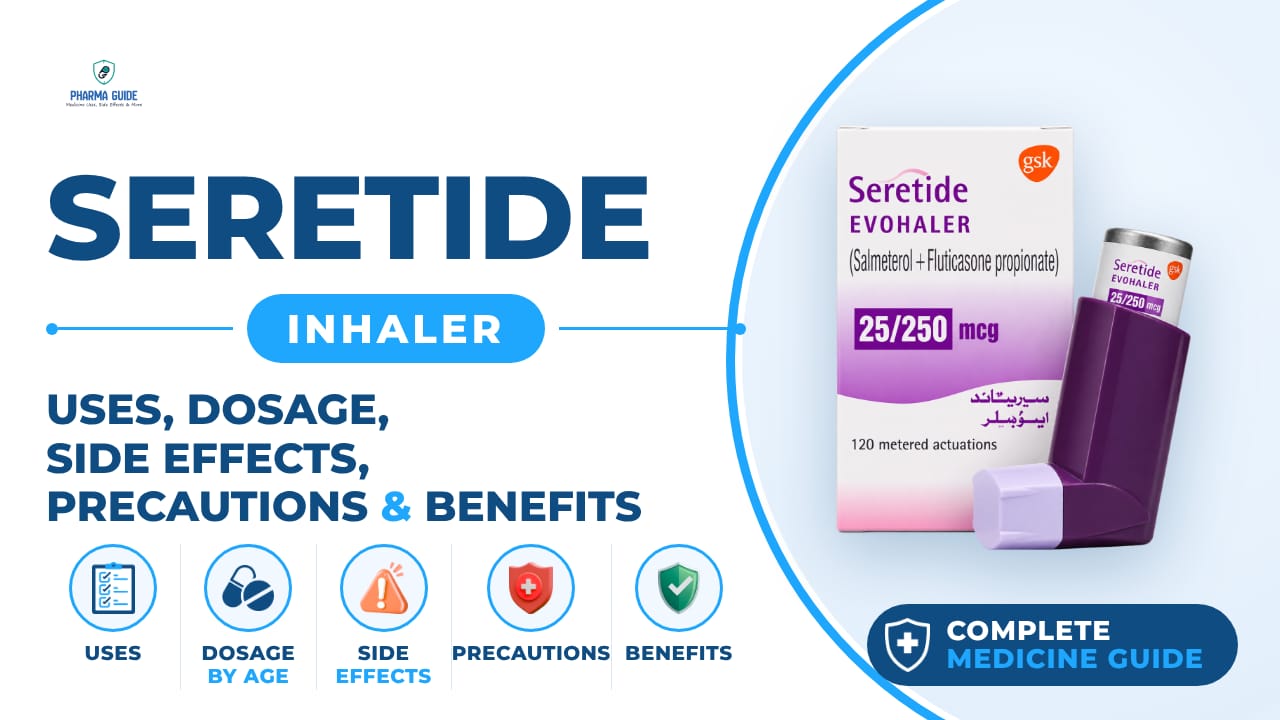
| Generic name | Fluticasone propionate + Salmeterol xinafoate |
|---|---|
| Drug class | Corticosteroid (inhaled steroid) combined with a long-acting bronchodilator (LABA) |
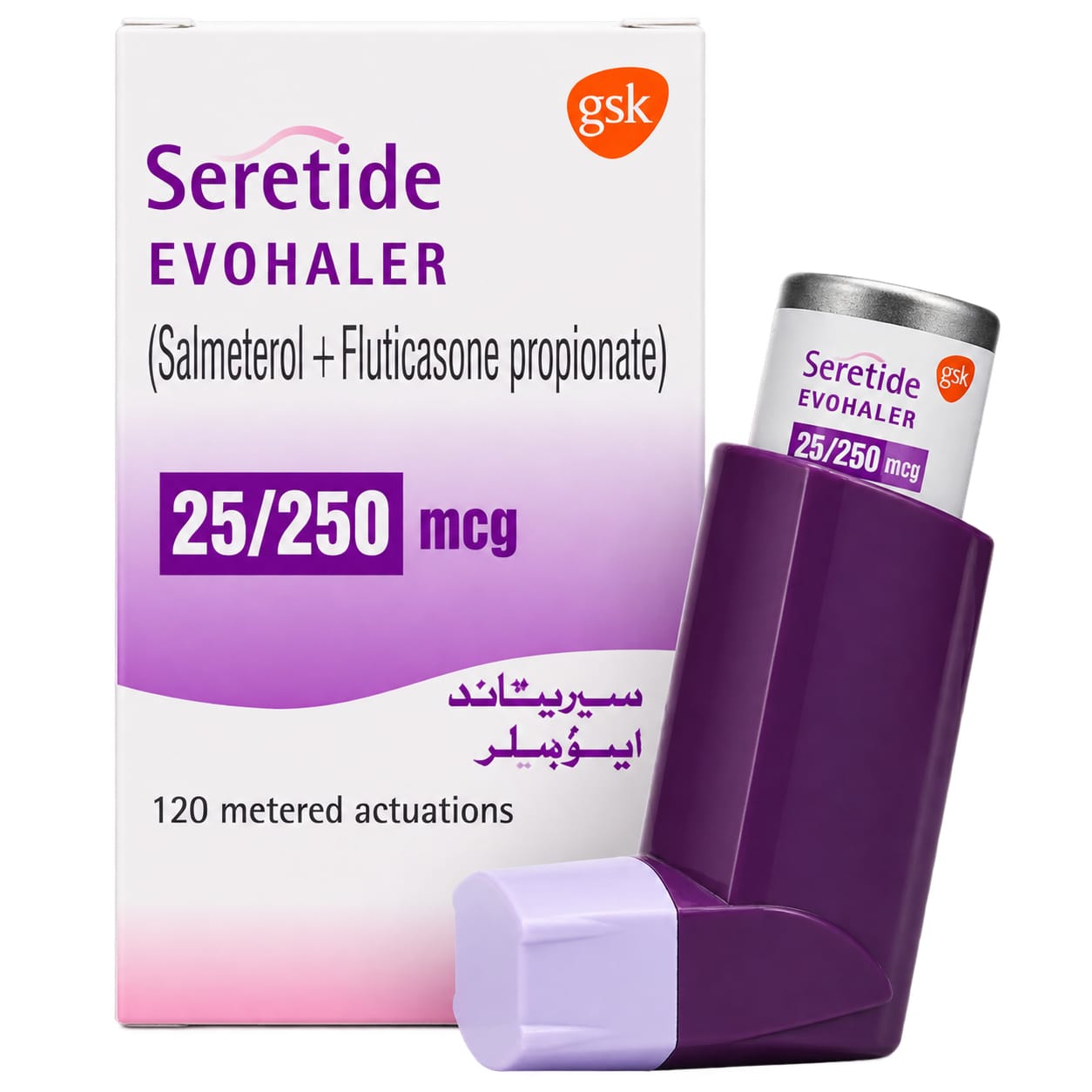
| Forms | Accuhaler (dry powder inhaler), Metered Dose Inhaler (MDI/Evohaler, a pressurised puffer) |
Quick overview
Seretide Inhaler combines fluticasone propionate, a corticosteroid, with salmeterol xinafoate, a long-acting bronchodilator, in one device. It is used regularly to control asthma and chronic obstructive pulmonary disease (COPD) by reducing airway swelling and keeping airways open. It is taken twice daily and is not a rescue treatment for sudden breathlessness. It comes as an Accuhaler or a Metered Dose Inhaler (MDI/Evohaler).
What is Seretide Inhaler
Seretide is an inhaler that combines two medicines, fluticasone propionate and salmeterol xinafoate, in one device. It is used to control asthma and chronic obstructive pulmonary disease (COPD) by reducing airway swelling and keeping airways open.
Seretide Inhaler uses
- Asthma in people who need regular treatment
- Chronic obstructive pulmonary disease (COPD) in people who need regular treatment
Benefits of Seretide Inhaler
- Helps control breathing difficulties when fluticasone and salmeterol are taken together regularly
- Reduces swelling and irritation in the airways so you can breathe more easily
- Keeps the breathing tubes in the lungs open for up to twelve hours
- Helps you stay free of symptoms throughout the day and night when used every day
How Seretide Inhaler works
Seretide combines two medicines. Fluticasone is a corticosteroid that reduces swelling and irritation in the airways. Salmeterol is a bronchodilator that relaxes and opens the airways, making breathing easier. Used together regularly, they help control breathing difficulties.
Seretide Inhaler dosage
Use this medicine regularly every day, twice a day, even if you feel well — it controls your condition but does not cure it. Do not stop using it or change the dose without checking with your doctor. Take it at about the same time each day to get the best effect and help you remember. It does not matter if you take it before or after food. Breathe the medicine in through your mouth only.
This medicine does not relieve a sudden attack of breathlessness — you need a separate reliever inhaler for that. Rinse your mouth with water and spit it out after use to help prevent a sore mouth, throat, or hoarse voice. If you find the inhaler hard to use, ask about using a spacer device with it.
Before first use of the inhaler, release puffs into the air until the counter reads a set number to make sure it works; if it has not been used for a week or more, release two puffs into the air before using it. Clean the inhaler mouthpiece and casing weekly with a dry cloth; never put the metal canister in water.
If you miss a dose, skip it if it is nearly time for the next one, otherwise use it as soon as you remember; do not double up. Children under 4 years old have not been studied with this medicine.
| Age group | Dose |
|---|---|
| Under 4 Years | Use only if prescribed by a doctor |
| 4–11 Years | 50/100 mcg twice daily (depending on product strength) |
| 12 Years and Above | 50/100, 50/250, or 50/500 mcg twice daily (as prescribed) |
| Adults (18–64 Years) | 50/100, 50/250, or 50/500 mcg twice daily (based on asthma severity) |
| Older Adults (65+ years) | Individualized dose based on medical condition and response |
Available forms and strengths
- Accuhaler (dry powder inhaler)
- Metered Dose Inhaler (MDI/Evohaler, a pressurised puffer)
- Strengths: 50/100 mcg, 50/250 mcg, 50/500 mcg
Side effects of Seretide Inhaler
Common
- Hoarseness
- Soreness of the mouth, throat, or tongue
- Soreness in the food pipe (oesophagus)
- Increased blood pressure
- Increase in heart rate
- Headache
- Muscle cramps
- Pain in joints
- Skin rash
- Bruises
- Sweating, trembling, feeling nervous or anxious
- Sleep disturbances
- Unusual activity and irritability (mainly in children)
- Slowing of growth in children and adolescents
- Dry mouth or throat, cough
- Different taste in the mouth
Serious
- Allergic reaction: wheezing or difficulty breathing, swelling of the face, eyelids, lips, mouth, tongue or throat, chest pain or tightness, hives, fainting
- Pneumonia (lung infection)
- Shortness of breath
- Irregular heartbeat
- Eye problems such as cataract or glaucoma
- Rounded face
- Signs of oral thrush (very sore tongue, throat or mouth with white sores)
Warnings and precautions
- Do not use if you are allergic to fluticasone propionate, salmeterol xinafoate, lactose monohydrate, milk proteins (Accuhaler only), or any other ingredient in this medicine.
- Tell your doctor about any other medical conditions, including mouth thrush, tuberculosis, diabetes, thyroid conditions, high blood pressure, heart problems, or low blood potassium.
- Do not use this medicine to treat a sudden asthma attack — it will not work fast enough; use a separate reliever medicine instead. Do not stop using this medicine suddenly or change your dose without checking with your doctor, as your condition may worsen.
- Some medicines can interfere with how Seretide works, including beta-blockers for high blood pressure, ketoconazole for fungal infections, and ritonavir for HIV. If your body is under stress from severe infection, surgery, or an accident, you may need steroid tablets or injections for a time, so tell any doctor treating you that you use this inhaler.
- Use regularly as prescribed; it is not a rescue inhaler for sudden asthma attacks. Rinse your mouth with water after each use to reduce the risk of oral thrush. Do not exceed the prescribed dose or use more frequently than recommended.
- Inform your doctor if you have heart disease, high blood pressure, irregular heartbeat, or thyroid problems. Use with caution if you have tuberculosis, fungal infections, glaucoma, cataracts, osteoporosis, or a weakened immune system.
- Check with your doctor if you are pregnant or planning to become pregnant. Your doctor can discuss the risks and benefits with you. Talk to your doctor if you are breastfeeding or planning to breastfeed.
- This medicine is not expected to affect your ability to drive or use machines, but be careful until you know how it affects you.
Storage
- Keep in a dry place where the temperature stays below 30°C, away from direct heat or sunlight
- If the inhaler becomes very cold it may not work properly — keep it away from frost
- The metal canister is pressurised — do not expose it to temperatures higher than 50°C, and do not burn or puncture it, even when empty
- Store in a cool dry place away from moisture, heat or sunlight — do not store in the bathroom, near a sink, in the car, or on window sills
- Keep it where children cannot reach it
- If you no longer need the medicine or it is out of date, take it to any pharmacy for safe disposal
- Do not use this medicine after the expiry date
When to see a doctor
- If your breathing or wheezing gets worse right after using this inhaler, stop using it and tell your doctor as soon as possible
- Call your doctor right away if you think you are having an allergic reaction, notice a change in your vision, or notice any serious side effects
- Get emergency medical help right away for signs of an allergic reaction such as wheezing, difficulty breathing, swelling of the face, eyelids, lips, mouth, tongue or throat, chest pain or tightness, hives, or fainting
- If you think you have used too much of this medicine, seek urgent medical attention, even if you feel fine
Alternatives
- Advair
- Flutiform
- Relvar Ellipta
Watch the video
FAQs
What is Seretide Inhaler used for?
Seretide Inhaler is used to control asthma and chronic obstructive pulmonary disease (COPD) in people who need regular treatment, by reducing airway swelling and keeping airways open.
How often should Seretide Inhaler be used?
It should be used regularly every day, twice a day, even if you feel well, as it controls the condition but does not cure it.
Can Seretide Inhaler be used for a sudden asthma attack?
No, Seretide Inhaler does not relieve a sudden attack of breathlessness. A separate reliever inhaler is needed for that, as it will not work fast enough to treat a sudden asthma attack.
What are the common side effects of Seretide Inhaler?
Common side effects include hoarseness, soreness of the mouth, throat, or tongue, increased blood pressure, increased heart rate, headache, muscle cramps, joint pain, skin rash, bruises, sweating, trembling, sleep disturbances, and dry mouth or throat.
What forms does Seretide Inhaler come in?
Seretide Inhaler comes as an Accuhaler (dry powder inhaler) or a Metered Dose Inhaler (MDI/Evohaler, a pressurised puffer), in strengths of 50/100 mcg, 50/250 mcg, and 50/500 mcg.
General information, not medical advice
Your prescriber and the leaflet in your pack know your situation. This page does not.
- Follow your prescriber and the leaflet
- Don't start, stop, or change a dose on your own
- Doses and warnings differ by country and product
Sources
Video
Related medicines

Injectafer Injection: Uses, Dosage, Side Effects, Precautions and Alternates
Iron products
Injectafer (ferric carboxymaltose) treats iron deficiency anemia and heart failure-related iron deficiency via IV. Learn uses, dosage, side effects, and

Gliclazide Tablet: Uses, Dosage, Side Effects, Precautions and Alternates
Sulfonylurea (hypoglycemic/antidiabetic agent)
Gliclazide Tablet is a sulfonylurea for type 2 diabetes that boosts insulin release. Learn about dosage, side effects, warnings, and precautions.