
Safety
General information, not medical advice
Your prescriber and the leaflet in your pack know your situation. This page does not.
- Follow your prescriber and the leaflet
- Don't start, stop, or change a dose on your own
- Doses and warnings differ by country and product
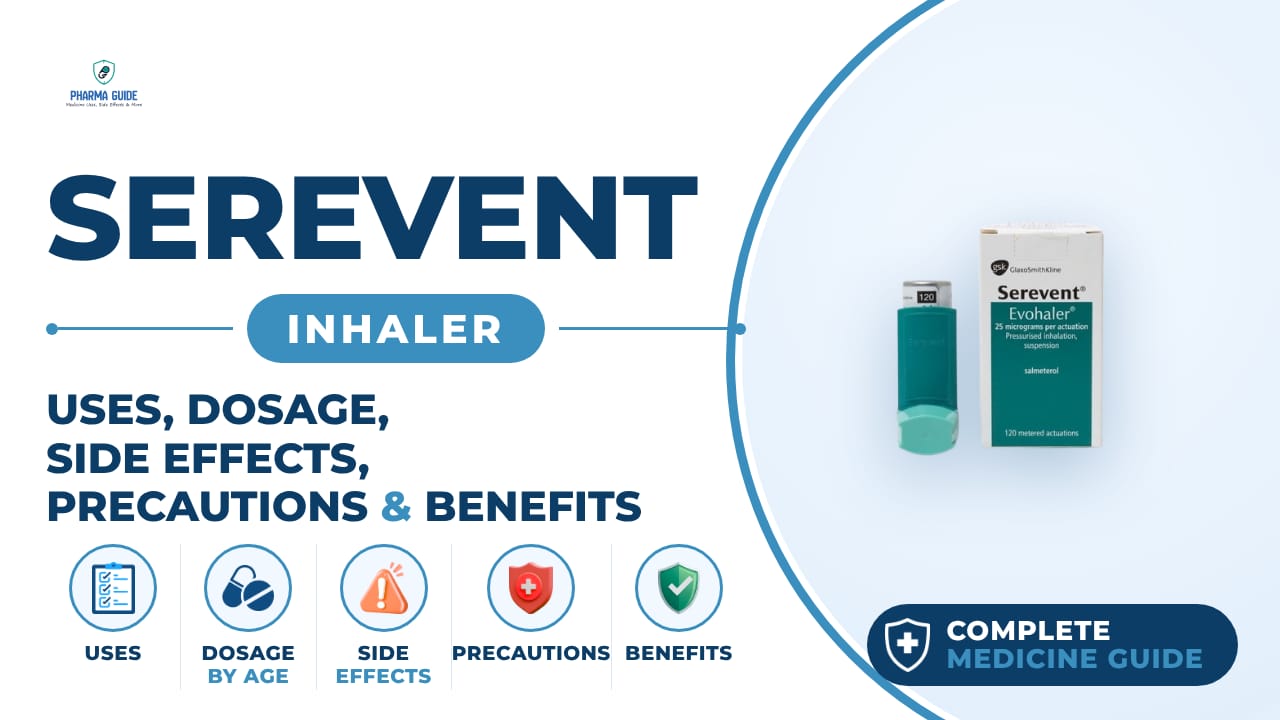
Serevent Inhaler: Uses, Dosage, Side Effects, Precautions and Alternates
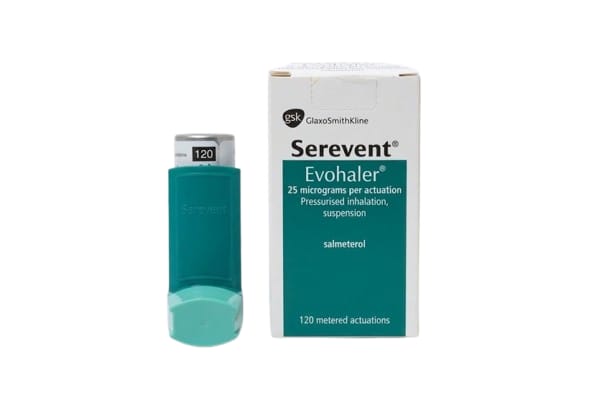
| Generic name | Salmeterol (salmeterol xinafoate) |
|---|---|
| Drug class | Inhaled long-acting beta-2 agonist (LABA) |
| Forms | Inhaler |
Quick overview
Serevent Inhaler contains salmeterol, a long-acting inhaled beta-2 agonist (LABA) used to keep the airways in the lungs open over a long period of time. It is used for long-term, regular treatment of asthma (together with an inhaled corticosteroid), for chronic obstructive pulmonary disease (COPD), and to prevent exercise-induced bronchospasm. It is not a rescue inhaler and must be used regularly as prescribed, with a fast-acting inhaler kept on hand for sudden symptoms.
What is Serevent Inhaler
Serevent is a prescription inhaler that contains salmeterol (salmeterol xinafoate), a long-acting bronchodilator medicine used to help keep the airways in the lungs open over a long period of time.
Serevent Inhaler uses
- Long-term regular treatment of asthma (including nighttime asthma and exercise-induced asthma), used together with an inhaled corticosteroid
- Chronic obstructive pulmonary disease (COPD)
- Prevention of exercise-induced bronchospasm (airway tightening during exercise)
Benefits of Serevent Inhaler
- Keeps airway muscles relaxed and open for 12 hours or more after inhalation
- Helps control nighttime asthma symptoms and nighttime breathing flare-ups
- Helps prevent airway narrowing triggered by exercise when taken beforehand
- Improves symptoms, lung function, and quality of life in COPD
How Serevent Inhaler works
Serevent contains salmeterol, which relaxes the muscles around the airways in the lungs. This lets the airways open up so air can flow more easily, making it easier to breathe. It works for a long time, which is why it's used for regular, ongoing control rather than sudden symptoms.
Serevent Inhaler dosage
Use this medicine regularly every day, inhaled through the mouth, to get the most benefit — it is not meant to relieve sudden breathing problems. If you have asthma, you must use this inhaler together with another inhaler that contains a corticosteroid; do not use it alone for asthma. Always keep a fast-acting rescue inhaler (such as albuterol/salbutamol) on hand for sudden symptoms, since this medicine takes longer to start working.
For exercise-induced symptoms, use it about 30 minutes before exercise; wait at least 12 hours before a second dose if needed. Do not take extra or more frequent doses than prescribed. Do not stop using this medicine suddenly or without talking to your doctor first, even if you feel better.
Shake the aerosol inhaler well before use to mix the contents evenly. When using the aerosol inhaler, breathe out fully first, then press down to release the dose just as you start to breathe in slowly and deeply, then hold your breath as long as comfortable. If taking a second puff from the aerosol inhaler, keep it upright and wait about half a minute before repeating. A spacer device may be used with the aerosol inhaler if you find it hard to coordinate pressing and breathing in.
Do not exhale or blow into the Diskus/Accuhaler powder device, and do not try to take it apart or let it get wet. The Diskus/Accuhaler powder inhaler does not need shaking or priming before use. Not recommended for children younger than 4 years old.
| Age group | Dose |
|---|---|
| Under 18 years | Not recommended |
| 18–64 years | 50 mcg, twice/day |
| 65+ years | 50 mcg, twice/day |
Available forms and strengths
- Inhaler
Side effects of Serevent Inhaler
Common
- Headache
- Flu-like symptoms or common cold
- Runny or stuffy nose, sinus congestion
- Sore throat or throat irritation
- Cough
- Muscle or joint pain
- Tremor (shakiness)
Serious
- Severe allergic reaction (hives, swelling of face/lips/tongue/throat, trouble breathing)
- Sudden worsening of wheezing or breathing problems right after use (paradoxical bronchospasm)
- Heart problems such as fast or irregular heartbeat, palpitations, high or low blood pressure, chest pain
- Low potassium levels (muscle cramps or weakness, tiredness, constipation, heart palpitations, tingling or numbness)
- High blood sugar (increased thirst, urination, tiredness)
- Nervous system effects such as nervousness, tremors, severe headache
- Increased risk of asthma-related hospitalization or death if used without an inhaled corticosteroid
Warnings and precautions
- This medicine should not be used by itself to treat asthma — it must be used together with a corticosteroid inhaler, because using it alone can raise the risk of asthma-related death.
- Do not use this medicine to treat a sudden asthma attack or worsening breathing problems — it works too slowly and is not a rescue inhaler. Always have a fast-acting inhaler available for sudden symptoms.
- Do not use this medicine together with another inhaler containing a similar long-acting bronchodilator medicine unless your doctor tells you to.
- Do not stop using this medicine suddenly without talking to your doctor, as your symptoms may come back or get worse.
- If you are allergic to salmeterol, lactose, or milk proteins, you should not use this medicine.
- Pregnancy: It isn't known for certain whether this medicine could harm an unborn baby. Tell your doctor if you are or plan to become pregnant, and only use it if your doctor decides the benefit is greater than the risk.
- Breastfeeding: It isn't known for sure if this medicine passes into breast milk in meaningful amounts. Tell your doctor if you are breastfeeding so they can weigh the benefits and risks.
- Kidney: No dose change is needed for people with kidney problems.
- Liver: Tell your doctor if you have liver problems before using this medicine.
- Alcohol: It isn't known whether drinking alcohol affects this medicine, but you should tell your doctor if you drink alcohol.
- Driving: Be careful driving or using machinery until you know how this medicine affects you.
Storage
- Store at room temperature, between 68 F and 77 F (20 C and 25 C); can tolerate 59 F to 89 F (15 C to 30 C) for short periods such as during transport
- Store in a cool, dry place, away from heat or sunlight
- Keep the inhaler inside its unopened foil package until ready to use; once opened, it is only good for 6 weeks — throw it away after 6 weeks or when empty, whichever comes first
- Store below 30°C, protect from frost and direct sunlight
- Do not expose the pressurized canister to temperatures higher than 50°C; do not break, puncture, or burn the canister even when it seems empty
- Store in original packaging, away from moisture, heat, and sunlight; do not store in the bathroom, near a sink, in the car, or on window sills
- Keep out of the reach of children
- Take any unused or expired medicine to a pharmacy for safe disposal
When to see a doctor
- Get emergency help right away if you have signs of a severe allergic reaction, such as hives, swelling of the face, lips, tongue, or throat, or trouble breathing.
- Stop using the inhaler and call your doctor right away, or get emergency care, if you suddenly have more trouble breathing or wheezing after using it.
- Call your doctor right away if you notice a fast or irregular heartbeat, chest pain, or changes in blood pressure.
- Call your doctor if you have signs of low potassium, such as muscle cramping or weakness, constipation, tiredness, heart palpitations, or tingling/numbness in your hands or feet.
- Tell your doctor right away if this medicine isn't helping your breathing as much as usual or isn't lasting as long as usual — this could mean your asthma or COPD is getting worse.
- Seek urgent medical help if you think you have used too much of this medicine, even if you feel fine.
Alternatives
- Arcapta Neohaler
- Brovana
- Foradil
Watch the video
FAQs
What is Serevent Inhaler used for?
Serevent is used for long-term, regular treatment of asthma (together with an inhaled corticosteroid), for chronic obstructive pulmonary disease (COPD), and to prevent exercise-induced bronchospasm.
Can Serevent be used alone to treat asthma?
No. Serevent should not be used by itself for asthma — it must be used together with a corticosteroid inhaler, because using it alone can raise the risk of asthma-related death.
Is Serevent a rescue inhaler for sudden asthma attacks?
No, Serevent is not a rescue inhaler. It works too slowly for sudden symptoms, so a fast-acting inhaler such as albuterol/salbutamol should always be kept on hand for sudden breathing problems.
How long does Serevent work after inhalation?
Serevent keeps airway muscles relaxed and open for 12 hours or more after inhalation, which is why it's used for regular, ongoing control rather than sudden symptoms.
How soon before exercise should Serevent be used?
For exercise-induced symptoms, Serevent should be used about 30 minutes before exercise, and you should wait at least 12 hours before a second dose if needed.
General information, not medical advice
Your prescriber and the leaflet in your pack know your situation. This page does not.
- Follow your prescriber and the leaflet
- Don't start, stop, or change a dose on your own
- Doses and warnings differ by country and product
Sources
Video
Related medicines

Injectafer Injection: Uses, Dosage, Side Effects, Precautions and Alternates
Iron products
Injectafer (ferric carboxymaltose) treats iron deficiency anemia and heart failure-related iron deficiency via IV. Learn uses, dosage, side effects, and

Gliclazide Tablet: Uses, Dosage, Side Effects, Precautions and Alternates
Sulfonylurea (hypoglycemic/antidiabetic agent)
Gliclazide Tablet is a sulfonylurea for type 2 diabetes that boosts insulin release. Learn about dosage, side effects, warnings, and precautions.