
Safety
General information, not medical advice
Your prescriber and the leaflet in your pack know your situation. This page does not.
- Follow your prescriber and the leaflet
- Don't start, stop, or change a dose on your own
- Doses and warnings differ by country and product
Shingrix Injection: Uses, Dosage, Side Effects, Precautions and Alternates
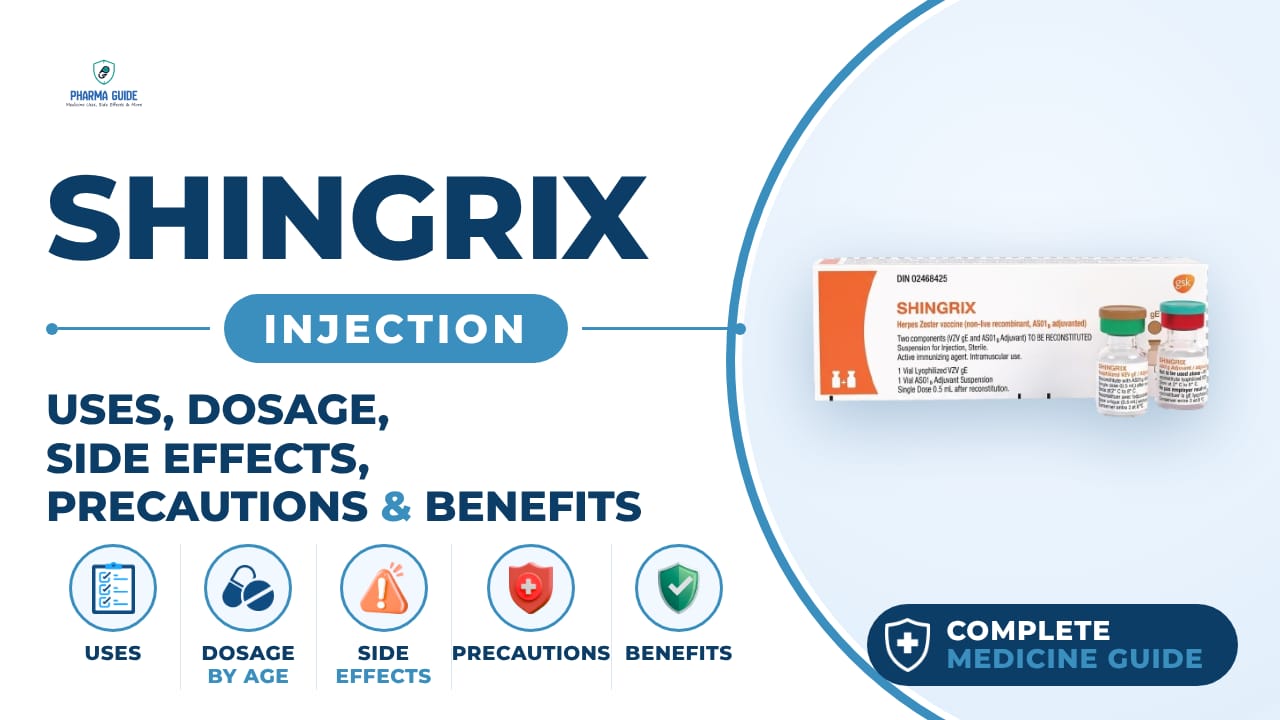
| Generic name | zoster vaccine (inactivated) / recombinant varicella zoster virus glycoprotein E vaccine |
|---|---|
| Drug class | Viral vaccines |
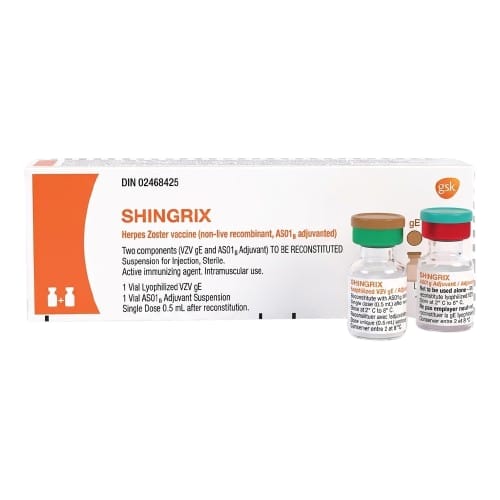
| Forms | Single-dose vial kit for reconstitution |
Quick overview
Shingrix is a vaccine given by injection to help protect adults against shingles (herpes zoster) and the long-lasting nerve pain called post-herpetic neuralgia (PHN) that can follow it. It is given as two doses, two to six months apart, and does not treat shingles or chickenpox once they have already developed. Common effects include soreness at the injection site, fatigue, and headache, and it is important to complete both doses for full protection.
What is Shingrix Injection
Shingrix is a vaccine given by injection to help protect adults against shingles (herpes zoster), a painful blistering rash caused by the chickenpox virus becoming active again in the body. It also helps protect against a long-lasting nerve pain that can follow shingles called post-herpetic neuralgia (PHN). It does not treat shingles or chickenpox once they have already developed.
Shingrix Injection uses
- Prevents shingles (herpes zoster) in adults 50 years and older
- Prevents shingles in adults 18 years and older who have an increased risk of shingles due to a weakened immune system from disease or treatment
- Helps prevent post-herpetic neuralgia (PHN), the long-lasting nerve pain that can follow shingles
Benefits of Shingrix Injection
- Shown to be over 90% effective at preventing shingles in adults 50 years and older who received both doses
- Reduces the risk of shingles in people over 70 by about 91%
- Reduces the risk of post-herpetic neuralgia in people over 70 by about 89%
- Long-term data shows protection lasting at least 10 years
- Can still provide some protection in people with weakened immune systems, even though the effect may be reduced
How Shingrix Injection works
Shingrix contains a small piece of protein from the shingles virus along with an ingredient called an adjuvant. This combination causes your body to build its own protection (antibodies) against shingles, so your immune system can fight off the virus if it becomes active again. It takes about 2 weeks for your body to build up this protection.
Shingrix Injection dosage
Shingrix is given as an injection into a muscle, usually the upper arm, by a doctor, nurse, or pharmacist. It is given as a series of 2 doses, with the second dose given 2 to 6 months after the first. For people with a weakened immune system, the second dose may be given sooner, as early as 1 to 2 months after the first.
Shingrix can be given at the same time as a flu shot, pneumonia vaccine, tetanus vaccine, COVID-19 booster, or RSV vaccine, using a different injection site for each. It is important to complete both doses to get the full benefit of the vaccine. You may be asked to remain seated during the injection and for a short time afterward if you have a history of fainting after injections.
| Age group | Dose |
|---|---|
| Under 18 years | Not recommended |
| 18–49 years | 0.5 mL, once/day |
| 60+ years | 0.5 mL, once/day |
Available forms and strengths
- Single-dose vial kit for reconstitution
Side effects of Shingrix Injection
Common
- Pain, redness, and swelling at the injection site
- Muscle pain
- Fatigue/tiredness
- Headache
- Shivering/chills
- Fever
- Stomach pain, nausea, vomiting, or diarrhea
- Joint pain
- Injection site itching
- Generally feeling unwell
Serious
- Severe allergic reaction (hives, difficulty breathing, swelling of face, lips, tongue, or throat, fast heartbeat, dizziness, weakness)
- Guillain-Barré syndrome (weakness, tingling, trouble speaking or swallowing, problems with balance or eye movement, loss of bladder or bowel control)
- Fainting after the injection
Warnings and precautions
- Do not get Shingrix if you have ever had a life-threatening allergic reaction to an inactivated zoster vaccine or any of its ingredients. Do not get the second dose if the first dose caused a life-threatening allergic reaction.
- There is an increased risk of Guillain-Barré syndrome, a rare condition causing nerve inflammation, within 42 days after getting the vaccine.
- Fainting can happen after getting this and other injectable vaccines. If you have fainted after injections before, you can ask to lie down during the shot.
- You may need to delay the vaccine if you currently have an infection with a high temperature, or if you have an acute severe illness.
- Temporary pain, redness, or swelling at the injection site may occur after the shot.
- It is not known whether Shingrix will harm an unborn baby. Tell your doctor if you are pregnant or plan to become pregnant.
- It may not be safe to breastfeed a baby shortly after receiving Shingrix. Ask your doctor about any risks.
- There is no information on whether Shingrix affects your ability to drive or use machines, but you should not drive or use machines if you are feeling unwell after the vaccine.
Storage
- Shingrix will normally be stored at the doctor's clinic or at the pharmacy
- If you collect Shingrix from your pharmacy prior to the injection, store it in a refrigerator (2°C – 8°C) in the original package in order to protect from light
- Do not freeze
- Keep it where young children cannot reach it
- If you no longer need to use this medicine or it is out of date, take it to any pharmacy for safe disposal
- Do not use this medicine after the expiry date
When to see a doctor
- Get emergency medical help right away if you have signs of an allergic reaction, such as hives, trouble breathing, or swelling of your face, lips, tongue, or throat.
- Seek medical attention right away if you have weakness or tingling, trouble speaking or swallowing, problems with balance or eye movement, or loss of bladder or bowel control, as these may be signs of Guillain-Barré syndrome.
- Call your doctor right away if you have a high fever after the vaccine.
Alternatives
- Varilrix
- Varivax
- Zostavax
Watch the video
FAQs
How many doses of Shingrix are needed?
Shingrix is given as a series of 2 doses, with the second dose given 2 to 6 months after the first. For people with a weakened immune system, the second dose may be given sooner, as early as 1 to 2 months after the first.
How effective is Shingrix at preventing shingles?
Shingrix is shown to be over 90% effective at preventing shingles in adults 50 years and older who received both doses, and it reduces the risk of shingles in people over 70 by about 91%.
How long does protection from Shingrix last?
Long-term data shows protection lasting at least 10 years.
Can Shingrix be given with other vaccines?
Shingrix can be given at the same time as a flu shot, pneumonia vaccine, tetanus vaccine, COVID-19 booster, or RSV vaccine, using a different injection site for each.
What are the common side effects of Shingrix?
Common side effects include pain, redness, and swelling at the injection site, muscle pain, fatigue, headache, chills, fever, stomach upset, joint pain, and generally feeling unwell.
General information, not medical advice
Your prescriber and the leaflet in your pack know your situation. This page does not.
- Follow your prescriber and the leaflet
- Don't start, stop, or change a dose on your own
- Doses and warnings differ by country and product
Sources
Video
Related medicines
Spikevax Injection: Uses, Dosage, Side Effects, Precautions and Alternates
Viral vaccines
Spikevax Injection is an mRNA COVID-19 vaccine for people 65+ and those 6 months-64 years with risk factors. Learn dosage, side effects, and warnings.
Zostavax Injection: Uses, Dosage, Side Effects, Precautions and Alternates
Viral vaccines
Zostavax Injection is a live vaccine that helps prevent shingles in adults 50+. Learn about its dosage, side effects, warnings, and storage.