
Safety
General information, not medical advice
Your prescriber and the leaflet in your pack know your situation. This page does not.
- Follow your prescriber and the leaflet
- Don't start, stop, or change a dose on your own
- Doses and warnings differ by country and product
Zostavax Injection: Uses, Dosage, Side Effects, Precautions and Alternates
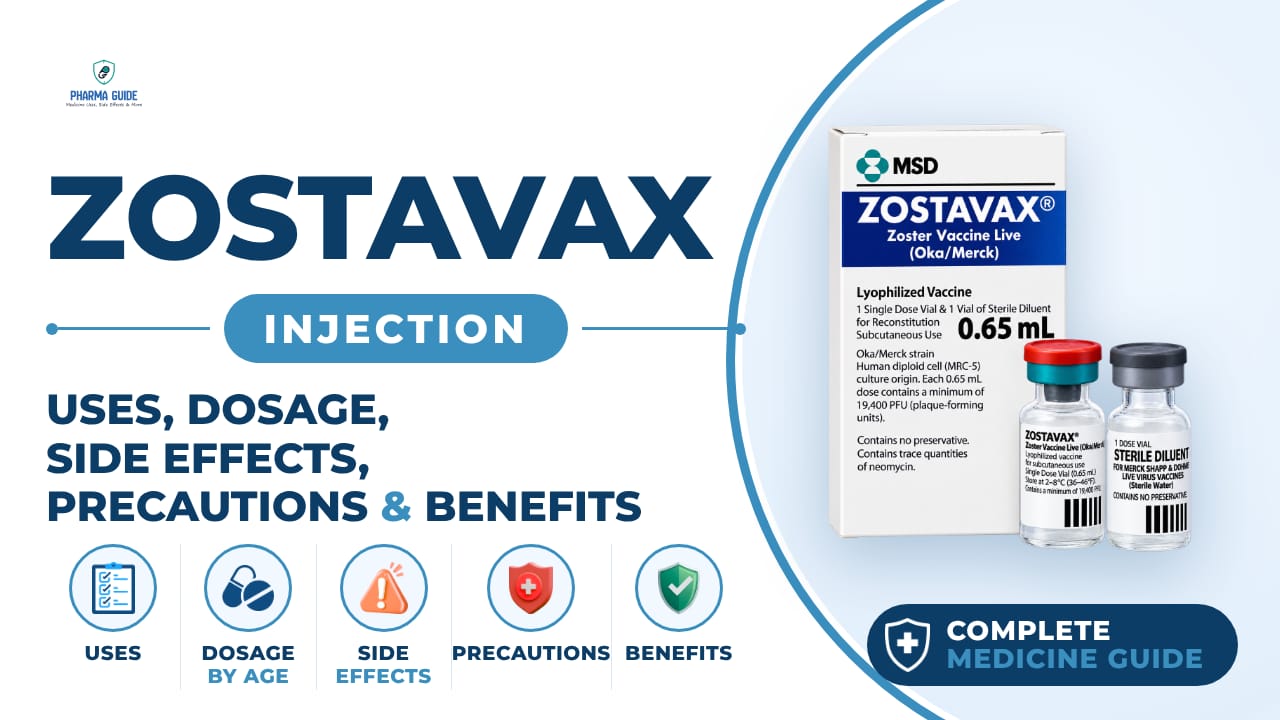
| Generic name | zoster vaccine live |
|---|---|
| Drug class | Viral vaccines |
| Forms | Suspension for subcutaneous injection (lyophilized powder reconstituted with diluent) |
Quick overview
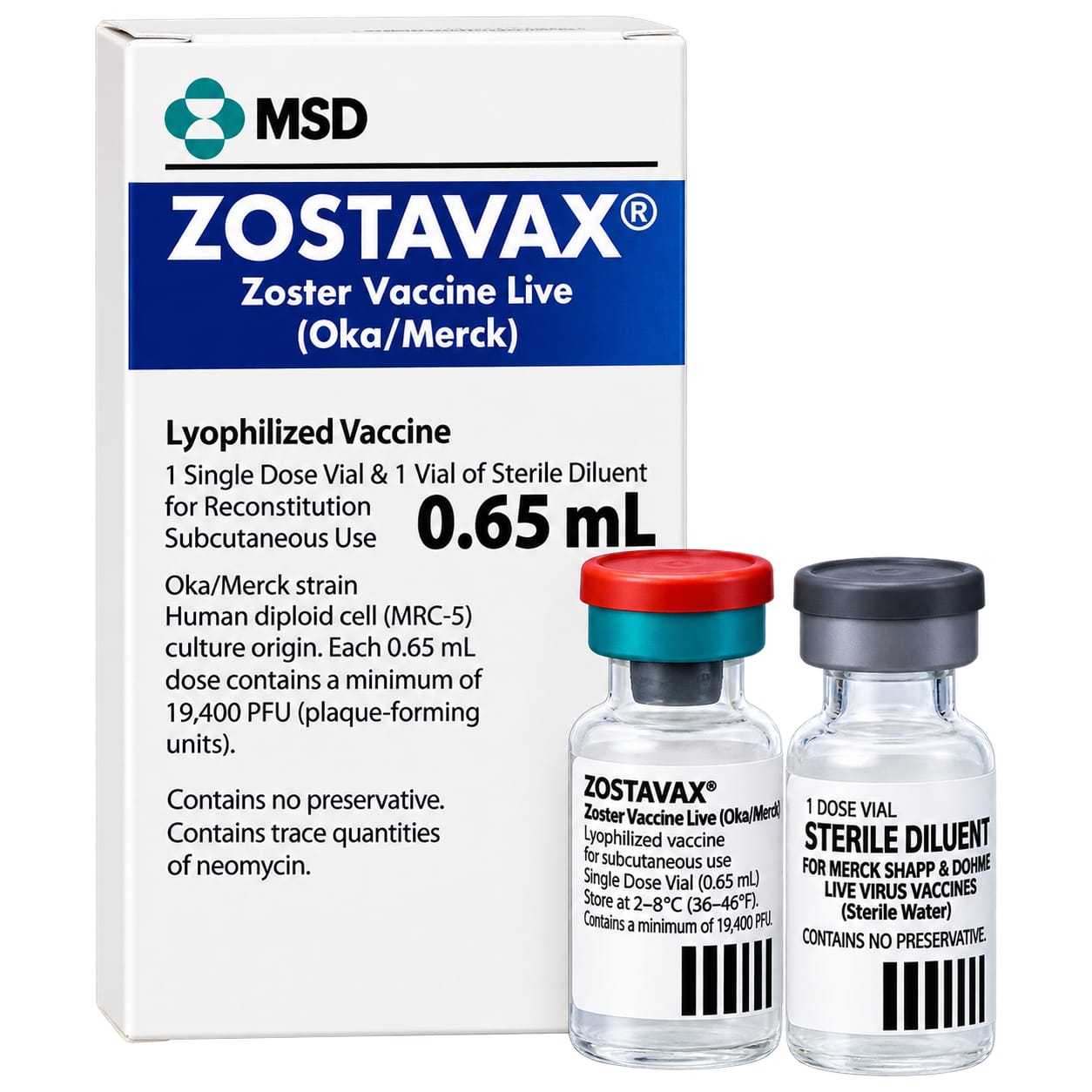
Zostavax Injection contains zoster vaccine live, a weakened (live attenuated) form of the varicella-zoster virus, from the viral vaccines class. It is used to help prevent shingles (herpes zoster) in adults 50 years of age and older. It is given as a single injection under the skin and is not a treatment for existing shingles or its nerve pain.
What is Zostavax Injection
Zostavax is a vaccine made from a weakened (live attenuated) form of the varicella-zoster virus, the same virus that causes chickenpox. It is used to help prevent shingles in adults.
Zostavax Injection uses
- Prevention of herpes zoster (shingles) in adults 50 years of age and older
Benefits of Zostavax Injection
- Helps prevent shingles (herpes zoster)
- Reduces the risk of postherpetic neuralgia
- Historically provided protection with a single dose
- Helps reduce complications associated with shingles
How Zostavax Injection works
The vaccine boosts your body's immunity against the virus that causes shingles, helping it fight off the virus if it becomes active again. This immune boost is believed to be the way it protects against shingles and its complications.
Zostavax Injection dosage
This vaccine is given as a single injection under the skin, not into a vein or muscle. It should be given in the upper arm (deltoid). Administer the vaccine right after it is mixed (reconstituted) to keep it fully effective. It is not for use in children or adolescents, and it is not a treatment for existing shingles or the nerve pain it causes.
| Age group | Dose |
|---|---|
| 50–59 years | Historically 0.65 mL as a single subcutaneous dose |
| 60–64 years | Historically 0.65 mL as a single subcutaneous dose |
| 65 years and older | Historically 0.65 mL as a single subcutaneous dose |
Available forms and strengths
- Suspension for subcutaneous injection (lyophilized powder reconstituted with diluent)
Side effects of Zostavax Injection
Common
- Redness, pain, swelling, itching, warmth, or bruising at the injection site
- Hard lump at the injection site
- Headache
- Pain in the arm or leg
Serious
- Allergic reactions including anaphylaxis, which may include difficulty breathing or swallowing, swelling of the face, lips, mouth, throat, or neck, wheezing or shortness of breath, or hives
- Chicken pox
- Shingles (vaccine strain or wild-type)
- Fever
- Swollen glands near the injection site
- Joint pain and muscle pain
- Nausea
- Rash, including at the injection site
- Guillain-Barré syndrome (muscle weakness, abnormal sensations, tingling in the arms, legs, and upper body)
- Facial paralysis
- Necrotizing retinitis in patients on immunosuppressive therapy
- Serious or fatal disseminated vaccine-strain varicella-zoster virus disease in immunocompromised patients
Warnings and precautions
- Do not receive this vaccine if you have ever had a severe allergic reaction to gelatin, neomycin, or any other ingredient in the vaccine.
- This vaccine should not be given to people with a weakened immune system from disease or treatment, since it may cause serious or fatal infection with the vaccine virus.
- The weakened vaccine virus may rarely spread from the person who received the vaccine to other people, so caution is needed around those with weak immune systems or pregnant women who haven't had chickenpox.
- Vaccination should be delayed if you have a current illness such as fever, or if you have active, untreated tuberculosis.
- This vaccine does not protect everyone who receives it, and it isn't known how long protection lasts beyond 4 years or whether a repeat dose will be needed.
- If given together with the pneumococcal vaccine PNEUMOVAX 23, the body's immune response to this vaccine may be weaker. It's recommended the two vaccines be given at least 4 weeks apart.
- This vaccine must not be given to women who are pregnant. Women should avoid becoming pregnant for 3 months after getting vaccinated.
- It isn't known whether the vaccine virus passes into breast milk. Your doctor will weigh the benefits of breastfeeding against your need for the vaccine before deciding whether you should receive it.
- No routine dose adjustment was required solely for kidney impairment, but immune status should be assessed. No routine dose adjustment was required solely for liver impairment.
- No major direct interaction with alcohol is established. There is no evidence that this vaccine affects your ability to drive or use machinery.
Storage
- Before mixing, ZOSTAVAX must be stored frozen between -58°F and +5°F (-50°C and -15°C)
- May be stored and/or transported at refrigerator temperature between 36°F and 46°F (2°C to 8°C) for up to 72 continuous hours prior to reconstitution
- Vaccine stored between 36°F and 46°F (2°C to 8°C) that is not used within 72 hours of removal from freezer storage should be discarded
- The diluent should be stored separately at room temperature (68°F to 77°F, 20°C to 25°C), or in the refrigerator (36°F to 46°F, 2°C to 8°C)
- Before reconstitution, protect from light
- Discard reconstituted vaccine if not used within 30 minutes
- Do not freeze reconstituted vaccine
When to see a doctor
- Get medical help right away if you develop a chickenpox-like rash within 2 to 4 weeks of getting the vaccine, if you feel unwell, or if you develop a fever.
- Call your doctor or go to the emergency department right away if you notice signs of a serious allergic reaction, such as swelling of the face, lips, mouth, throat or neck, difficulty swallowing or breathing, wheezing, shortness of breath, severe skin reactions, or hives.
- Call your doctor right away if you don't feel well during or after getting the vaccine.
Alternatives
- Recombinant zoster vaccine (RZV)
- Shingrix
Watch the video
FAQs
What is Zostavax Injection used for?
Zostavax Injection is used to help prevent shingles (herpes zoster) in adults 50 years of age and older. It is not a treatment for existing shingles or its nerve pain.
How is Zostavax Injection given?
It is given as a single injection under the skin (subcutaneous), typically in the upper arm, and must be administered right after it is mixed (reconstituted) to keep it fully effective.
What are the common side effects of Zostavax Injection?
Common side effects include redness, pain, swelling, itching, warmth, or bruising at the injection site, a hard lump at the injection site, headache, and pain in the arm or leg.
Who should not receive Zostavax Injection?
People who have had a severe allergic reaction to gelatin, neomycin, or any other vaccine ingredient, those with a weakened immune system, and pregnant women should not receive this vaccine.
How long does protection from Zostavax Injection last?
The vaccine does not protect everyone who receives it, and it isn't known how long protection lasts beyond 4 years or whether a repeat dose will be needed.
General information, not medical advice
Your prescriber and the leaflet in your pack know your situation. This page does not.
- Follow your prescriber and the leaflet
- Don't start, stop, or change a dose on your own
- Doses and warnings differ by country and product
Sources
Video
Related medicines
Spikevax Injection: Uses, Dosage, Side Effects, Precautions and Alternates
Viral vaccines
Spikevax Injection is an mRNA COVID-19 vaccine for people 65+ and those 6 months-64 years with risk factors. Learn dosage, side effects, and warnings.
Shingrix Injection: Uses, Dosage, Side Effects, Precautions and Alternates
Viral vaccines
Shingrix is a two-dose vaccine that helps prevent shingles and post-herpetic neuralgia in adults. Learn about dosage, side effects, and precautions.