
Safety
General information, not medical advice
Your prescriber and the leaflet in your pack know your situation. This page does not.
- Follow your prescriber and the leaflet
- Don't start, stop, or change a dose on your own
- Doses and warnings differ by country and product
Spikevax Injection: Uses, Dosage, Side Effects, Precautions and Alternates
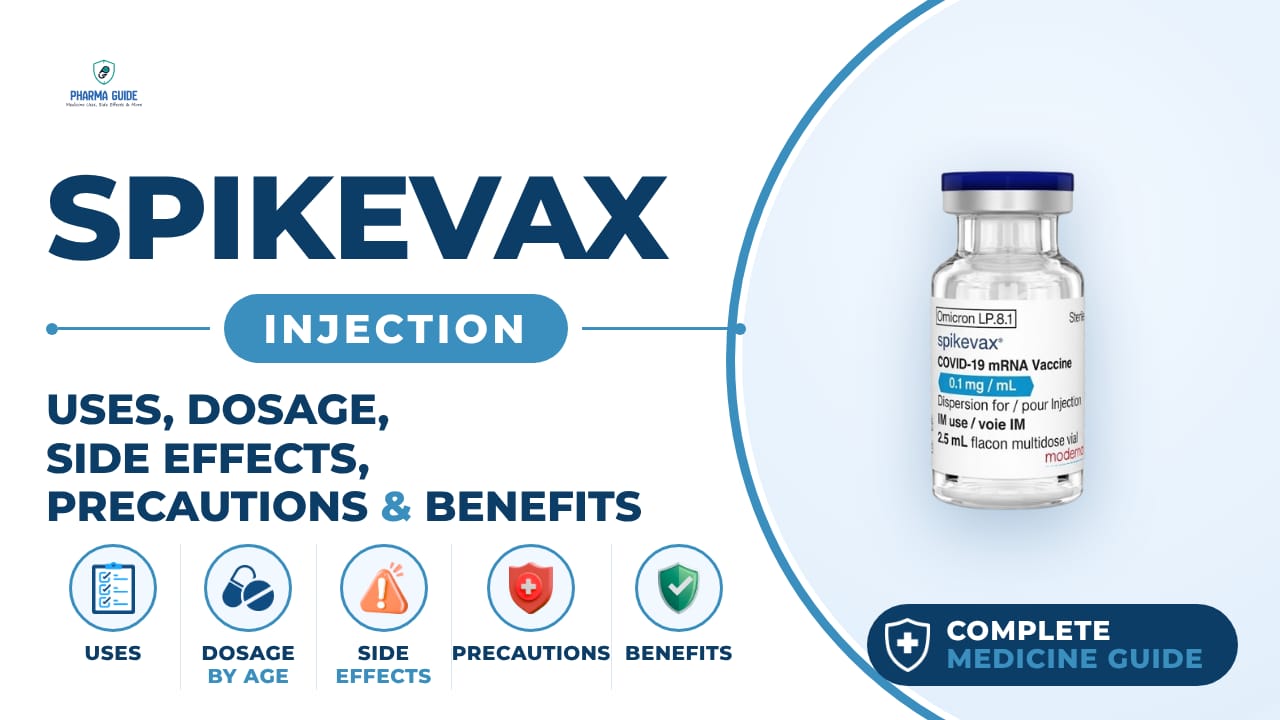
| Generic name | COVID-19 Vaccine, mRNA |
|---|---|
| Drug class | Viral vaccines |
| Forms | Injection |
Quick overview
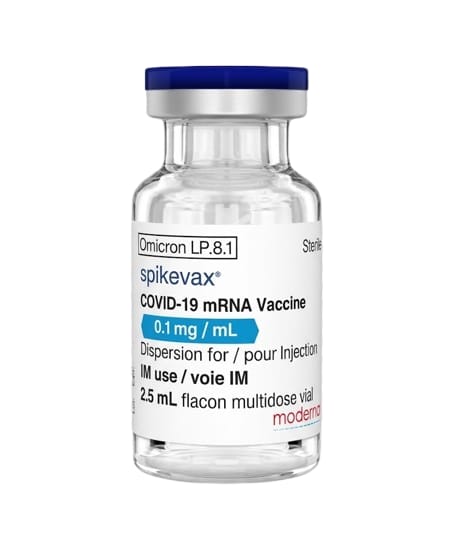
Spikevax Injection is an mRNA COVID-19 vaccine made by Moderna that helps protect against COVID-19, the illness caused by the SARS-CoV-2 virus. It is used in people 65 years and older, as well as in people 6 months through 64 years of age who have at least one health condition that raises their risk of severe COVID-19. It contains no live virus and cannot give you COVID-19. It is given as a shot by a healthcare provider, usually into the upper arm.
What is Spikevax Injection
Spikevax is an mRNA vaccine made by Moderna that helps protect against COVID-19, the illness caused by the SARS-CoV-2 virus. It does not contain any live virus, so it cannot give you COVID-19.
Spikevax Injection uses
- Helps prevent COVID-19 in people 65 years of age and older
- Helps prevent COVID-19 in people 6 months through 64 years of age who have at least one health condition that raises their risk of severe COVID-19
Benefits of Spikevax Injection
- Can lower your chance of getting COVID-19
- If you do get infected, it can make the illness less severe
- May help lower the chance of developing long COVID
How Spikevax Injection works
Spikevax uses mRNA wrapped in tiny fat particles to teach your cells to make a harmless piece of the virus's spike protein. Your immune system recognizes this protein as foreign and builds a defense against it, which helps protect you from COVID-19.
Spikevax Injection dosage
This vaccine is given as a shot into a muscle, usually in the upper arm, by a healthcare provider. Children under 2 years old without previous Moderna COVID-19 vaccine doses receive two separate shots about a month apart. People 2 years of age and older usually receive a single shot regardless of past COVID-19 vaccination. If you've had a COVID-19 vaccine before, your provider will wait a certain amount of time before giving you this one. Your provider may ask you to stay for a short time after your shot so they can watch for any allergic reaction. Keep a record of the vaccines you receive and bring it to your appointments.
| Age group | Dose |
|---|---|
| Under 12 years | 0.25 mL, once |
| 12–60 years | 0.5 mL, once |
| 60+ years | 0.5 mL, once |
Available forms and strengths
- Injection
Side effects of Spikevax Injection
Common
- Pain, redness, or swelling where the shot was given
- Tiredness
- Headache
- Fever
- Chills
- Muscle pain
- Joint pain
- Nausea, vomiting, or loss of appetite
- Swelling and tenderness in the armpits or groin
- Irritability or crying, sleepiness, and loss of appetite in young children
Serious
- Severe allergic reaction (anaphylaxis), with symptoms like trouble breathing, swelling of the face and throat, fast heartbeat, body-wide rash, dizziness and weakness
- Myocarditis (inflammation of the heart muscle) or pericarditis (inflammation of the lining around the heart), especially in males 12 through 24 years old
- Fainting after the shot
- Febrile seizures (seizures caused by fever), reported after marketing
Warnings and precautions
- A severe allergic reaction can rarely happen, usually within minutes to an hour after the shot, so your provider may want you to stay nearby for monitoring and treatment must be available right away.
- This vaccine can raise the risk of heart inflammation conditions called myocarditis and pericarditis, most often in the first week after the shot. Young men between 12 and 24 are at the highest risk.
- People with weakened immune systems, including those taking medicines that suppress the immune system, may not respond to the vaccine as strongly as others.
- Fainting can happen after getting this or other injected vaccines, so steps should be taken to prevent injury if you feel faint.
- This vaccine may not fully protect everyone who receives it.
- There isn't enough data yet to know the exact risks of this vaccine during pregnancy, though animal studies showed no harm to the fetus.
- Pregnant people face a higher risk of severe COVID-19, so discuss the decision with your healthcare provider.
- It isn't known if this vaccine passes into breast milk or affects breastfed babies.
- Your healthcare provider can help you weigh the benefits of breastfeeding against your need for vaccination.
- It isn't known if drinking alcohol affects this vaccine.
- Don't drive or use machinery if you feel unwell after your shot. Wait until any side effects have gone away before driving or operating machines.
Storage
- Store frozen between -50°C to -15°C (-58°F to 5°F)
- After thawing, may be stored refrigerated between 2°C to 8°C (36°F to 46°F) for up to 60 days or until the expiration date on the carton, whichever comes first
- After thawing, may be stored between 8°C to 25°C (46°F to 77°F) for up to 12 hours
- Do not refreeze once thawed
- Minimize exposure to room light during storage and avoid direct sunlight and ultraviolet light; thawed syringes can be handled in room light conditions
- Your doctor, pharmacist, or nurse is responsible for storing this vaccine and disposing of any unused product correctly
When to see a doctor
- Get medical help right away if you have chest pain, shortness of breath, a fast or pounding heartbeat, or fainting after your shot, as these can be signs of heart inflammation.
- Call for help right away if you notice trouble breathing, swelling of your face or throat, a fast heartbeat, a rash all over your body, or dizziness and weakness, as these can be signs of a severe allergic reaction.
Alternatives
- CoronaVac
- Nuvaxovid
- Comirnaty
Watch the video
FAQs
What is Spikevax Injection used for?
It helps prevent COVID-19 in people 65 years and older, and in people 6 months through 64 years of age who have at least one health condition that raises their risk of severe COVID-19.
Can Spikevax Injection give you COVID-19?
No. Spikevax contains no live virus, so it cannot give you COVID-19.
How is Spikevax Injection given?
It is given as a shot into a muscle, usually the upper arm, by a healthcare provider. Children under 2 without prior Moderna doses get two shots about a month apart, while people 2 and older usually get a single shot.
What are the common side effects of Spikevax Injection?
Common side effects include pain, redness, or swelling at the injection site, tiredness, headache, fever, chills, muscle and joint pain, and nausea or vomiting.
Who is at higher risk of heart inflammation from Spikevax?
Myocarditis or pericarditis risk is highest in males 12 through 24 years old, most often occurring in the first week after the shot.
General information, not medical advice
Your prescriber and the leaflet in your pack know your situation. This page does not.
- Follow your prescriber and the leaflet
- Don't start, stop, or change a dose on your own
- Doses and warnings differ by country and product
Sources
- Spikevax Prescribing Information. Moderna US, Inc. 2026
- Drugs.com Spikevax page, medically reviewed by Carmen Pope, last updated Aug 31, 2026
- FDA Highlights of Prescribing Information for SPIKEVAX, revised 8/2026
- WebMD Spikevax (COVID-19 Vaccine, mRNA) page, reviewed by Alex Poppen, PharmD, Sep 02, 2026
Video
Related medicines
Zostavax Injection: Uses, Dosage, Side Effects, Precautions and Alternates
Viral vaccines
Zostavax Injection is a live vaccine that helps prevent shingles in adults 50+. Learn about its dosage, side effects, warnings, and storage.
Shingrix Injection: Uses, Dosage, Side Effects, Precautions and Alternates
Viral vaccines
Shingrix is a two-dose vaccine that helps prevent shingles and post-herpetic neuralgia in adults. Learn about dosage, side effects, and precautions.