
Safety
General information, not medical advice
Your prescriber and the leaflet in your pack know your situation. This page does not.
- Follow your prescriber and the leaflet
- Don't start, stop, or change a dose on your own
- Doses and warnings differ by country and product
Signoflam Tablet: Uses, Dosage, Side Effects, Precautions and Alternates
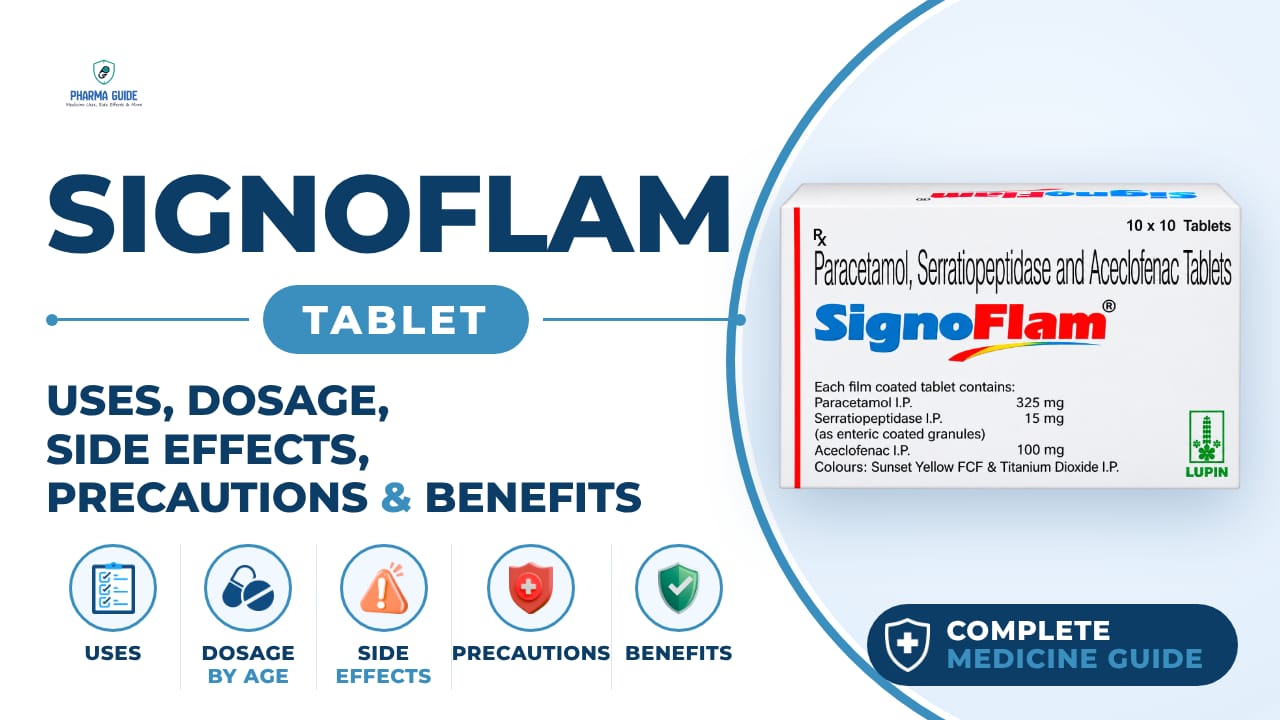
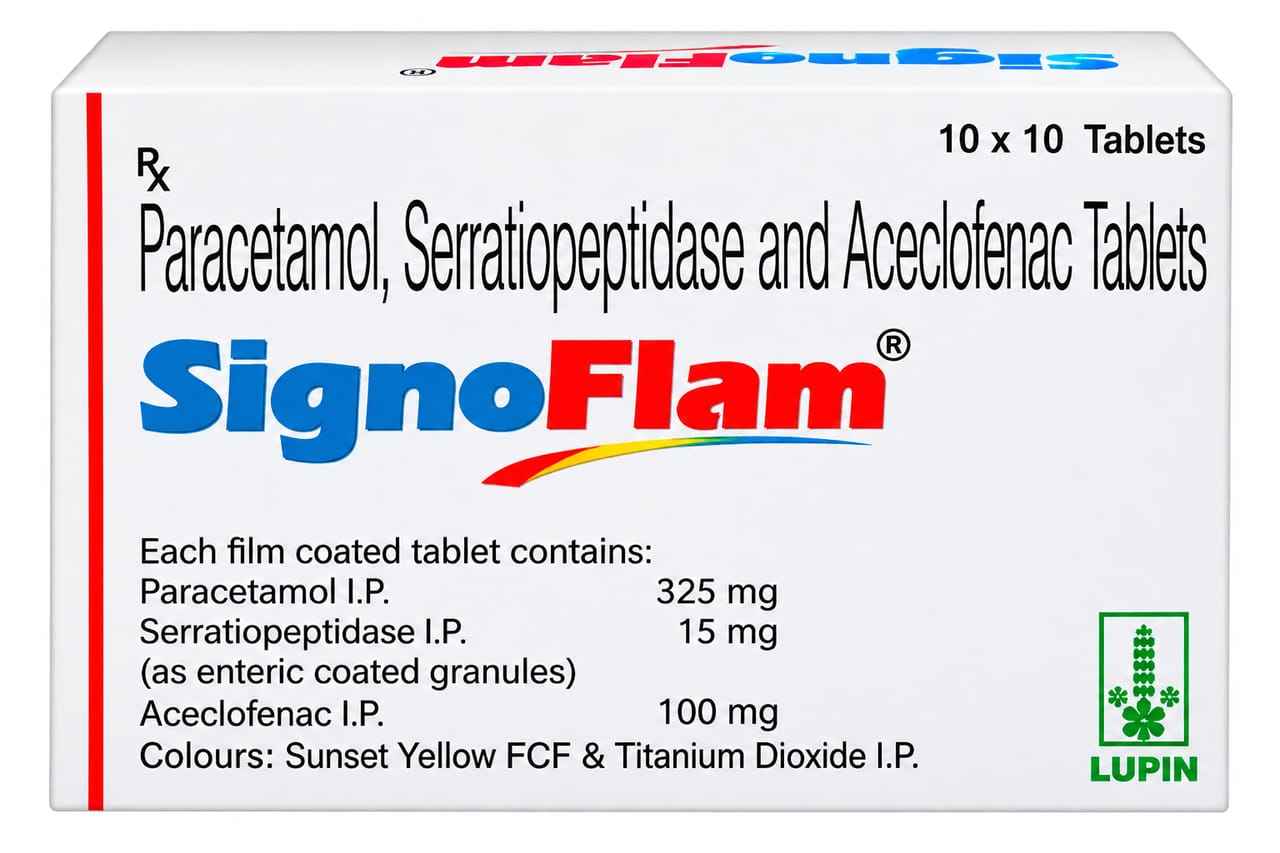
| Generic name | Aceclofenac + Paracetamol + Serratiopeptidase |
|---|---|
| Drug class | Nonsteroidal anti-inflammatory drug (NSAID) combination with analgesic, antipyretic and proteolytic enzyme |
| Forms | Tablet |
Quick overview
Signoflam Tablet is a combination medicine containing aceclofenac, paracetamol, and serratiopeptidase, used to relieve pain, swelling, and inflammation in conditions such as arthritis, muscle injuries, back pain, and after surgery. It combines an anti-inflammatory painkiller, a pain and fever reliever, and an enzyme that helps reduce swelling. As with any medicine, it carries potential side effects and precautions that should be discussed with your doctor.
What is Signoflam Tablet
Signoflam Tablet is a combination medicine containing aceclofenac (an anti-inflammatory painkiller), paracetamol (for pain and fever), and serratiopeptidase (an enzyme that helps reduce swelling). It is used to relieve pain, swelling and inflammation in conditions like arthritis, muscle injuries, back pain and after surgery.
Signoflam Tablet uses
- Relief of pain and inflammation in arthritis (osteoarthritis, rheumatoid arthritis)
- Management of muscle pain, sprains, and back pain
- Relief of post-operative and dental pain
- Reduction of swelling and inflammation due to injury or trauma
- Neck pain
- Toothache
- Sports injury pain
Benefits of Signoflam Tablet
- Helps ease musculoskeletal discomfort such as muscle pain, joint stiffness, back pain, and sprains, improving mobility and comfort
- Supports recovery and reduces inflammation and swelling after surgical procedures
- Helps manage fever, headaches, and moderate migraine episodes
How Signoflam Tablet works
Aceclofenac blocks the body's production of prostaglandins, chemicals that cause pain, swelling and redness. Paracetamol acts on the brain's pain and temperature control centers to reduce pain and fever. Serratiopeptidase is an enzyme that helps break down inflammatory proteins and reduce fluid build-up in swollen tissues, helping decrease swelling and support healing. Together these ingredients act at different levels to ease pain and reduce inflammation.
Signoflam Tablet dosage
Take the tablet exactly as advised by your doctor. Swallow the tablet whole with a glass of water. Take it after food or with milk to reduce the chance of stomach irritation. Do not crush, chew, or break the tablet. Try to take it at the same time each day if recommended. Continue use only for the duration advised by your doctor. If you miss a dose, take it as soon as you remember, but if it is close to your next dose, skip the missed one and do not double up.
| Age group | Dose |
|---|---|
| Under 12 years | Not recommended |
| 12–18 years | 1 tablet, 1–2 times daily |
| 18–60 years | 1 tablet, 2 times daily |
| 60+ years | 1 tablet, 1–2 times daily |
Available forms and strengths
- Tablet
Side effects of Signoflam Tablet
Common
- Abdominal pain
- Nausea
- Vomiting
- Diarrhoea
- Flatulence
- Constipation
- Indigestion
- Dizziness, drowsiness
- Stomach upset
- Lack of appetite
- Raised liver enzymes
- Heartburn
- Blurry vision
Serious
- Signs of serious skin reactions (exfoliative dermatitis, Stevens-Johnson syndrome, toxic epidermal necrolysis) such as skin rash and mucosal lesions
- Black stools or blood in stools (possible stomach bleeding)
- Vomiting blood
- Severe stomach pain
- Yellow eyes or yellow skin
Warnings and precautions
- Do not take this medicine if you have a history of or active, recurrent peptic ulcer or bleeding, if you have had allergic reactions to ibuprofen, aspirin or other NSAIDs, if you have had a previous severe allergic (anaphylactic) reaction, or if you suffer from severe high blood pressure.
- Tell your doctor before taking this medicine if you have uncontrolled high blood pressure, diabetes, smoke, have high cholesterol, have gastrointestinal bleeding, ulcers or perforation, have inflammatory bowel disease, have an autoimmune disorder like lupus, have connective tissue disorders, have had inflammation of the brain lining, have bleeding disorders, have had sudden severe headaches or seizures from possible brain bleeding, or are on water-tablet (diuretic) therapy.
- This medicine is generally not recommended for people under 18 years of age. Medical advice is needed before considering use in this age group.
- Avoid this medicine if you have a known sensitivity to aceclofenac, paracetamol, serratiopeptidase, or any of its other ingredients.
- People with asthma, especially asthma triggered by painkillers, should use this medicine carefully and seek medical advice, as it can trigger breathing problems.
- People with existing heart conditions or high blood pressure may need careful evaluation before using this medicine, as it can cause fluid retention and may worsen heart problems.
- This medicine is generally not recommended during pregnancy. It is important to talk to your doctor to understand if it is suitable for you.
- This medicine is usually not preferred during breastfeeding, as it may pass into breast milk. Talk to your doctor before use.
- This medicine is generally not suitable for people with moderate to severe kidney problems. A doctor can help assess if it is right for you.
- Caution is needed for people with liver-related conditions. Those with severe liver problems may need to avoid this medicine, while others may need careful monitoring.
- It is best to avoid alcohol while taking this medicine, as combining both may increase strain on the liver and the risk of stomach problems.
- Some people may feel dizzy after taking this medicine. Avoid driving or using machinery if you do not feel fully alert.
Storage
- Store at room temperature, ideally not exceeding 30°C
- Keep away from sunlight and moisture
- Keep out of reach of children and pets
When to see a doctor
Stop taking this medicine and contact your doctor if you notice signs of a serious skin reaction, such as skin rash and sores in the mouth, eyes, or other mucous membranes.
If you accidentally take too much of this medicine, seek medical help right away or go to the nearest hospital. Signs of overdose may include nausea, vomiting, stomach discomfort, dizziness, drowsiness, headache, or unusual weakness.
Watch for serious warning signs such as black stools or blood in stools, vomiting blood, severe stomach pain, yellowing of the eyes or skin, or swelling of the face, lips or throat and breathing difficulty — seek medical help if these occur.
Alternatives
- Movexx-SP
- Acemiz-S
- Hifenac-SP
Watch the video
FAQs
What is Signoflam Tablet used for?
It is used to relieve pain, swelling and inflammation in conditions like arthritis, muscle injuries, back pain, neck pain, toothache, sports injuries and after surgery.
What are the ingredients in Signoflam Tablet?
It contains aceclofenac (an anti-inflammatory painkiller), paracetamol (for pain and fever), and serratiopeptidase (an enzyme that helps reduce swelling).
How should I take Signoflam Tablet?
Swallow the tablet whole with a glass of water, preferably after food or with milk to reduce stomach irritation. Do not crush, chew, or break it, and take it only for the duration advised by your doctor.
What are the common side effects of Signoflam Tablet?
Common side effects include abdominal pain, nausea, vomiting, diarrhoea, flatulence, constipation, indigestion, dizziness, drowsiness, stomach upset, lack of appetite, raised liver enzymes, heartburn, and blurry vision.
Is Signoflam Tablet safe during pregnancy?
It is generally not recommended during pregnancy, so it is important to talk to your doctor to understand if it is suitable for you.
General information, not medical advice
Your prescriber and the leaflet in your pack know your situation. This page does not.
- Follow your prescriber and the leaflet
- Don't start, stop, or change a dose on your own
- Doses and warnings differ by country and product
Sources
- KD. Tripathi. Essentials of Medical Pharmacology. Seventh Edition. 2013.
- Manju Tiwari. The role of serratiopeptidase in the resolution of inflammation. NIH National Library of Medicine.
- MedlinePlus. Acetaminophen: MedlinePlus Drug Information.
- DrugBank Online. Aceclofenac: Uses, interactions, mechanism of action.
- DrugBank Online. Serrapeptase: Uses, interactions, mechanism of action.
- Pareek, A., Chandurkar, N., Sharma, V., Desai, M., Kini, S., & Bartakke, G. (2009). A randomized, multicentric, comparative evaluation of aceclofenac–paracetamol combination with aceclofenac alone in Indian patients with osteoarthritis flare-up. Expert Opinion on Pharmacotherapy.
Video
Related medicines

Injectafer Injection: Uses, Dosage, Side Effects, Precautions and Alternates
Iron products
Injectafer (ferric carboxymaltose) treats iron deficiency anemia and heart failure-related iron deficiency via IV. Learn uses, dosage, side effects, and

Gliclazide Tablet: Uses, Dosage, Side Effects, Precautions and Alternates
Sulfonylurea (hypoglycemic/antidiabetic agent)
Gliclazide Tablet is a sulfonylurea for type 2 diabetes that boosts insulin release. Learn about dosage, side effects, warnings, and precautions.