
Safety
General information, not medical advice
Your prescriber and the leaflet in your pack know your situation. This page does not.
- Follow your prescriber and the leaflet
- Don't start, stop, or change a dose on your own
- Doses and warnings differ by country and product
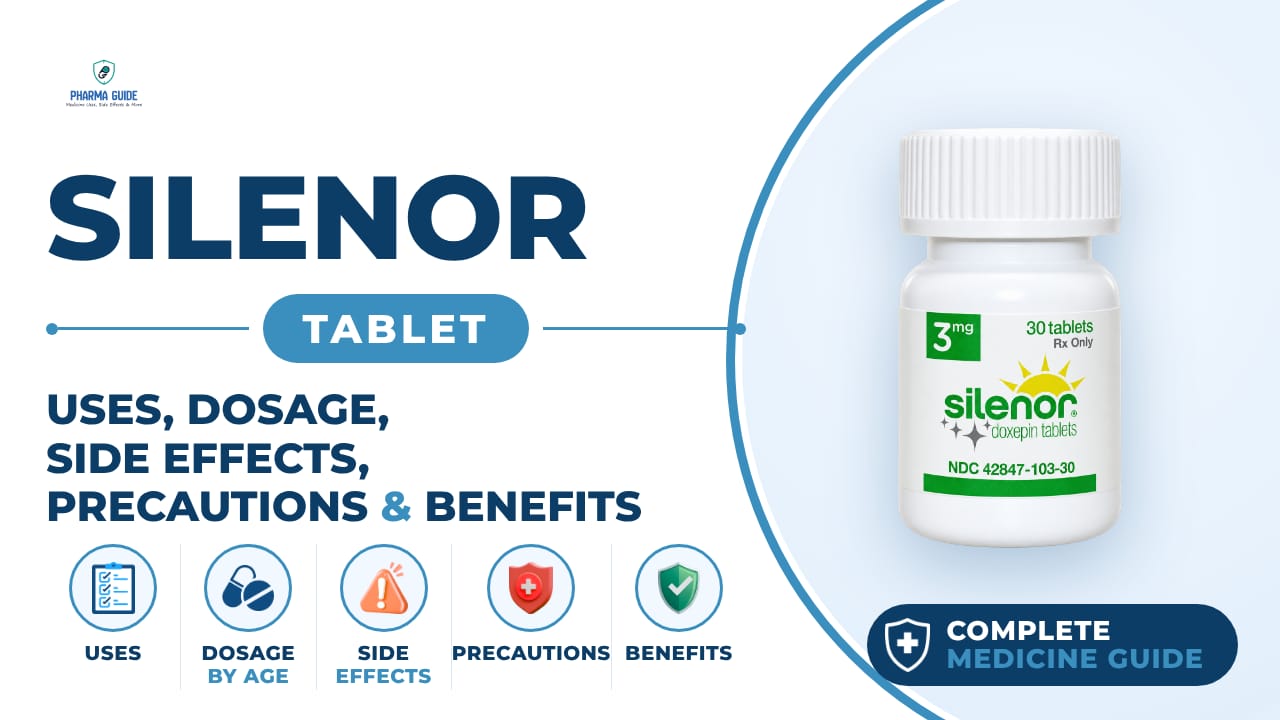
Silenor Tablet: Uses, Dosage, Side Effects, Precautions and Alternates
| Generic name | doxepin |
|---|---|
| Drug class | tricyclic antidepressant (used as a hypnotic/sleep medicine) |
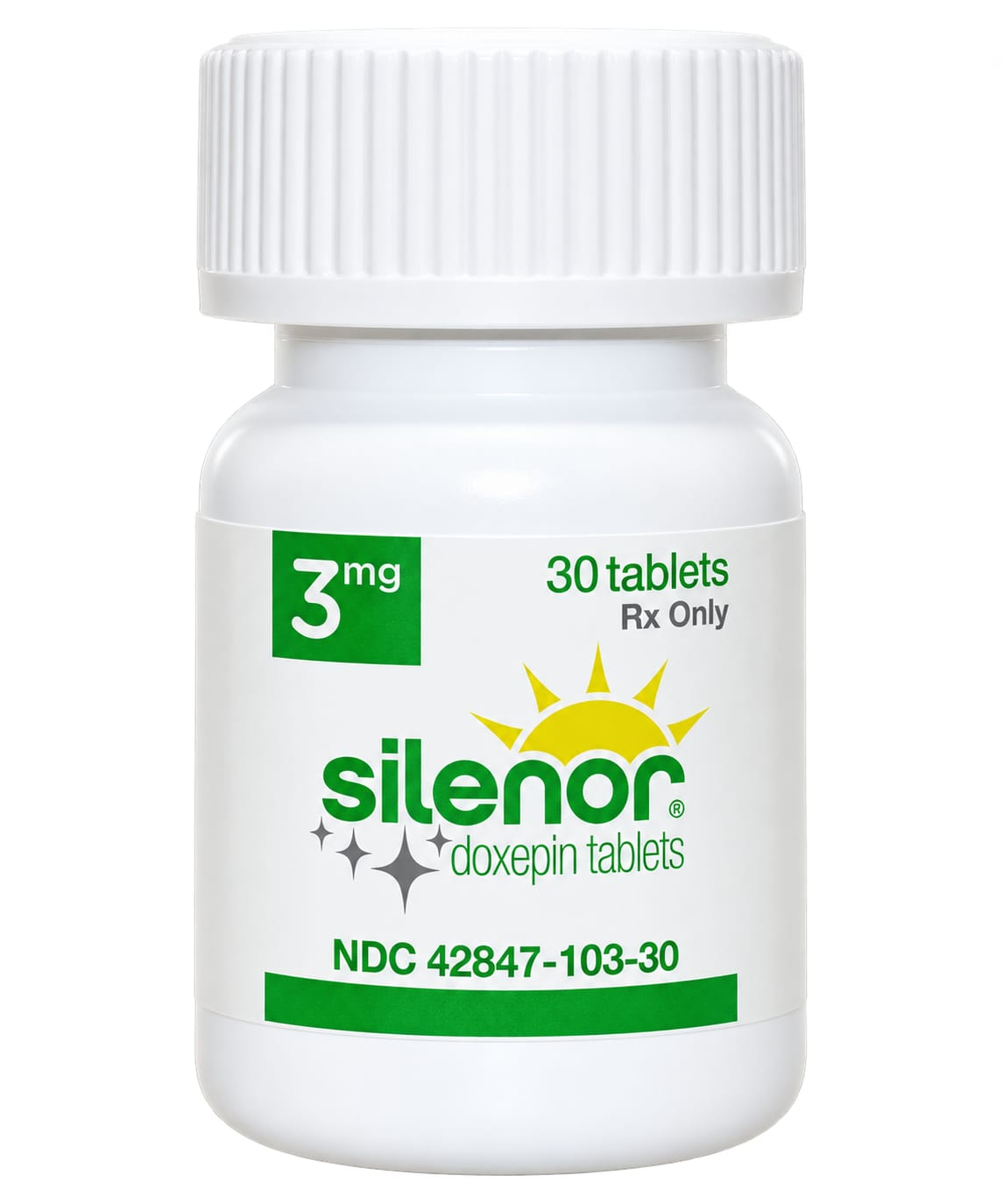
| Forms | Tablet (3 mg), Tablet (6 mg) |
Quick overview
Silenor Tablet contains doxepin, a tricyclic antidepressant used at a low dose as a prescription sleep medicine. It is used to treat insomnia in adults who have trouble staying asleep through the night. Silenor is not classified as a controlled substance and may carry a lower risk of dependence compared to benzodiazepine-type sleeping medicines. It is available as tablets in two strengths.
What is Silenor Tablet
Silenor is a prescription sleep medicine (hypnotic) made from a low dose of doxepin, which at higher doses is used as an antidepressant. It is used to treat insomnia in adults who have trouble staying asleep.
Silenor Tablet uses
- Treats insomnia
- Helps with difficulty staying asleep
- May reduce nighttime awakenings
- Helps improve sleep maintenance
Benefits of Silenor Tablet
- Uses a very low dose of doxepin
- Can improve sleep maintenance
- Not classified as a controlled substance
- Has lower dependence potential than benzodiazepine-type sleeping medicines
How Silenor Tablet works
Silenor is thought to work by blocking histamine receptors in the brain, which helps promote and maintain sleep. The exact way it helps with sleep maintenance isn't fully understood.
Silenor Tablet dosage
Take Silenor within 30 minutes of bedtime. Do not take it within 3 hours of a meal, as this may make the medicine less effective or cause next-day sleepiness. After taking this medicine, only do activities needed to get ready for bed. Only take this medicine if you are able to get a full night of sleep before you need to be active again. If you miss a dose, wait and take your next dose at your regular time the next night — do not take two doses at once. Elderly patients usually start on a lower dose than younger adults. Call your doctor if your sleep problems get worse or do not improve within 7 to 10 days.
| Age group | Dose |
|---|---|
| Under 18 years | Safety and effectiveness are not established |
| 18–64 years | 6 mg once nightly; some patients may use 3 mg once nightly |
| 65–74 years | Usually start with 3 mg once nightly; may increase to 6 mg if needed and tolerated |
Available forms and strengths
- Tablet (3 mg)
- Tablet (6 mg)
Side effects of Silenor Tablet
Common
- Drowsiness or sleepiness
- Nausea or vomiting
- Upper respiratory tract infection
- Headache
- Dry mouth
- Stomach pain or discomfort
- Diarrhea
- Tooth infection
- Falls or joint sprains
- Joint stiffness or back pain
- Tingling or prickling sensation
- Altered sense of taste
- Abnormal dreams
- Anxiety
- Dizziness
- High blood pressure
Serious
- Doing activities while not fully awake and not remembering them, such as sleep-driving, sleepwalking, preparing and eating food, making phone calls, or having sex
- Worsening depression or new or worsening suicidal thoughts or actions
- Severe allergic reaction (hypersensitivity)
- Signs of overdose including confusion, hallucinations, seizures, irregular heartbeat, severe low blood pressure, or loss of consciousness
Warnings and precautions
- Do not take this medicine if you are currently taking, or have taken within the last two weeks, a type of antidepressant called an MAOI, as this combination can cause serious or life-threatening side effects.
- Do not take this medicine if you have untreated narrow angle glaucoma or severe difficulty urinating.
- This medicine can cause you to get out of bed and do activities like driving, eating, or making phone calls while not fully awake, with no memory of doing them afterward. This is more likely if you drink alcohol or take other sedating medicines.
- This medicine may worsen depression or increase suicidal thoughts, especially in people who already have depression.
- This medicine is generally not recommended for people with severe sleep apnea because it can further slow down breathing.
- If your insomnia does not improve after 7 to 10 days of treatment, there may be another medical or psychiatric condition causing it that needs to be evaluated.
- There isn't enough information to know if this medicine is completely safe during pregnancy. Taking it late in pregnancy may cause breathing, feeding, or temperature problems in the newborn. Talk to your doctor if you are pregnant or planning to become pregnant.
- This medicine passes into breast milk and may cause excess sleepiness, breathing problems, poor feeding, or low muscle tone in a nursing baby. Breastfeeding is not recommended while taking this medicine.
- Kidney problems are not expected to significantly change how this medicine works in the body, since only small amounts are removed through urine.
- People with liver problems may have higher levels of this medicine in their body. Treatment should start at the lower 3 mg dose and be monitored closely for next-day side effects.
- Do not drink alcohol while taking this medicine, as it can increase sleepiness and the risk of serious side effects, including dangerous sleep-related behaviors.
- Do not drive, operate heavy machinery, or do other activities that require full alertness after taking this medicine, since it can cause drowsiness that may last into the next day.
Storage
- Store at room temperature between 68°F and 77°F (20°C to 25°C)
- Protect from light
- Keep in a tightly closed container
- Keep out of the reach and sight of children
- Safely throw away medicine that is out of date or no longer needed
When to see a doctor
- Call your healthcare provider right away if you find out you have done an activity like sleep-driving, sleepwalking, or other activities you don't remember after taking this medicine.
- Get medical help right away if you take too much of this medicine, even if you don't notice any symptoms.
- Seek help right away if you have thoughts of harming or killing yourself.
Alternatives
- Ramelteon
- Rozerem
- Daridorexant
Watch the video
FAQs
What is Silenor Tablet used for?
Silenor is used to treat insomnia in adults who have trouble staying asleep, helping reduce nighttime awakenings and improve sleep maintenance.
When should I take Silenor Tablet?
Take Silenor within 30 minutes of bedtime, and avoid taking it within 3 hours of a meal, as this may reduce its effectiveness or cause next-day sleepiness. Only take it if you can get a full night's sleep before needing to be active again.
Is Silenor a controlled substance?
No, Silenor is not classified as a controlled substance and may have a lower risk of dependence compared to benzodiazepine-type sleeping medicines.
What are the common side effects of Silenor Tablet?
Common side effects include drowsiness, nausea, headache, dry mouth, stomach pain, diarrhea, dizziness, and abnormal dreams, among others.
Can Silenor cause sleep-related behaviors like sleepwalking?
Yes, Silenor can cause activities like sleep-driving, sleepwalking, or eating while not fully awake, with no memory of them afterward, especially if combined with alcohol or other sedating medicines.
General information, not medical advice
Your prescriber and the leaflet in your pack know your situation. This page does not.
- Follow your prescriber and the leaflet
- Don't start, stop, or change a dose on your own
- Doses and warnings differ by country and product
Sources
Video
Related medicines

Injectafer Injection: Uses, Dosage, Side Effects, Precautions and Alternates
Iron products
Injectafer (ferric carboxymaltose) treats iron deficiency anemia and heart failure-related iron deficiency via IV. Learn uses, dosage, side effects, and

Gliclazide Tablet: Uses, Dosage, Side Effects, Precautions and Alternates
Sulfonylurea (hypoglycemic/antidiabetic agent)
Gliclazide Tablet is a sulfonylurea for type 2 diabetes that boosts insulin release. Learn about dosage, side effects, warnings, and precautions.