
Safety
General information, not medical advice
Your prescriber and the leaflet in your pack know your situation. This page does not.
- Follow your prescriber and the leaflet
- Don't start, stop, or change a dose on your own
- Doses and warnings differ by country and product
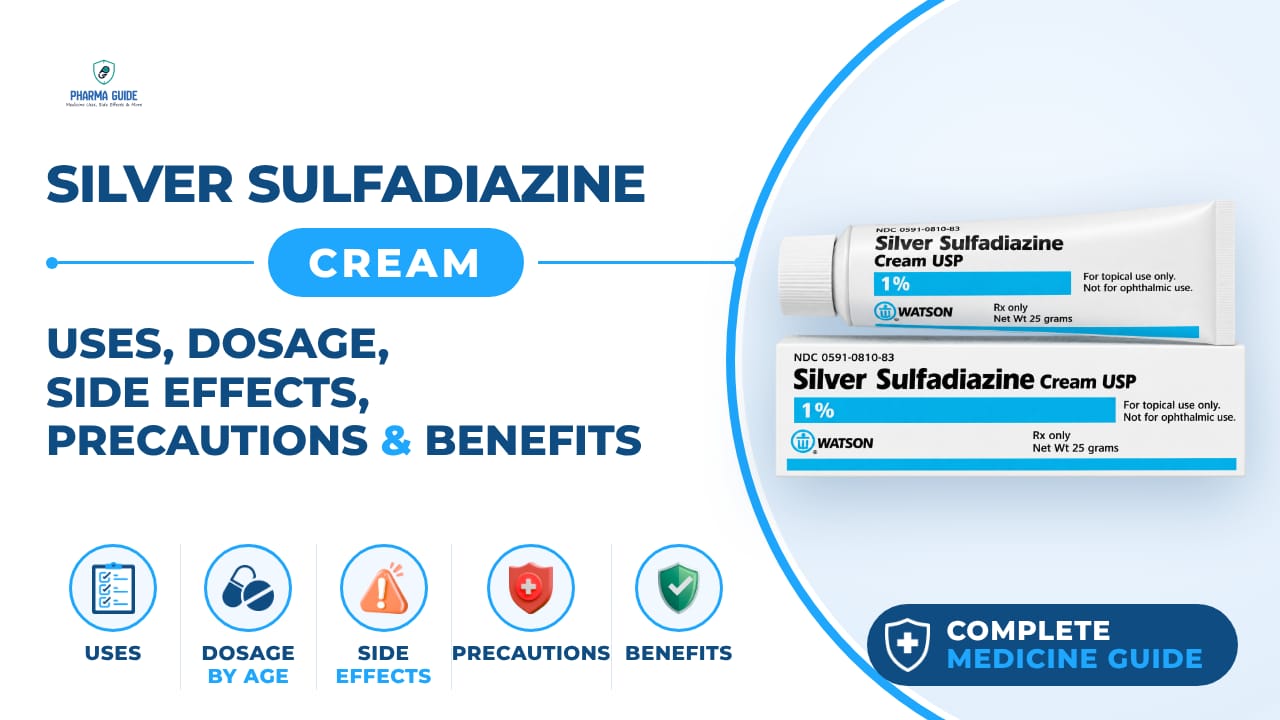
Silver Sulfadiazine Cream: Uses, Dosage, Side Effects, Precautions and Alternates
| Generic name | Silver sulfadiazine |
|---|---|
| Drug class | Topical antibiotic (sulfonamide) |
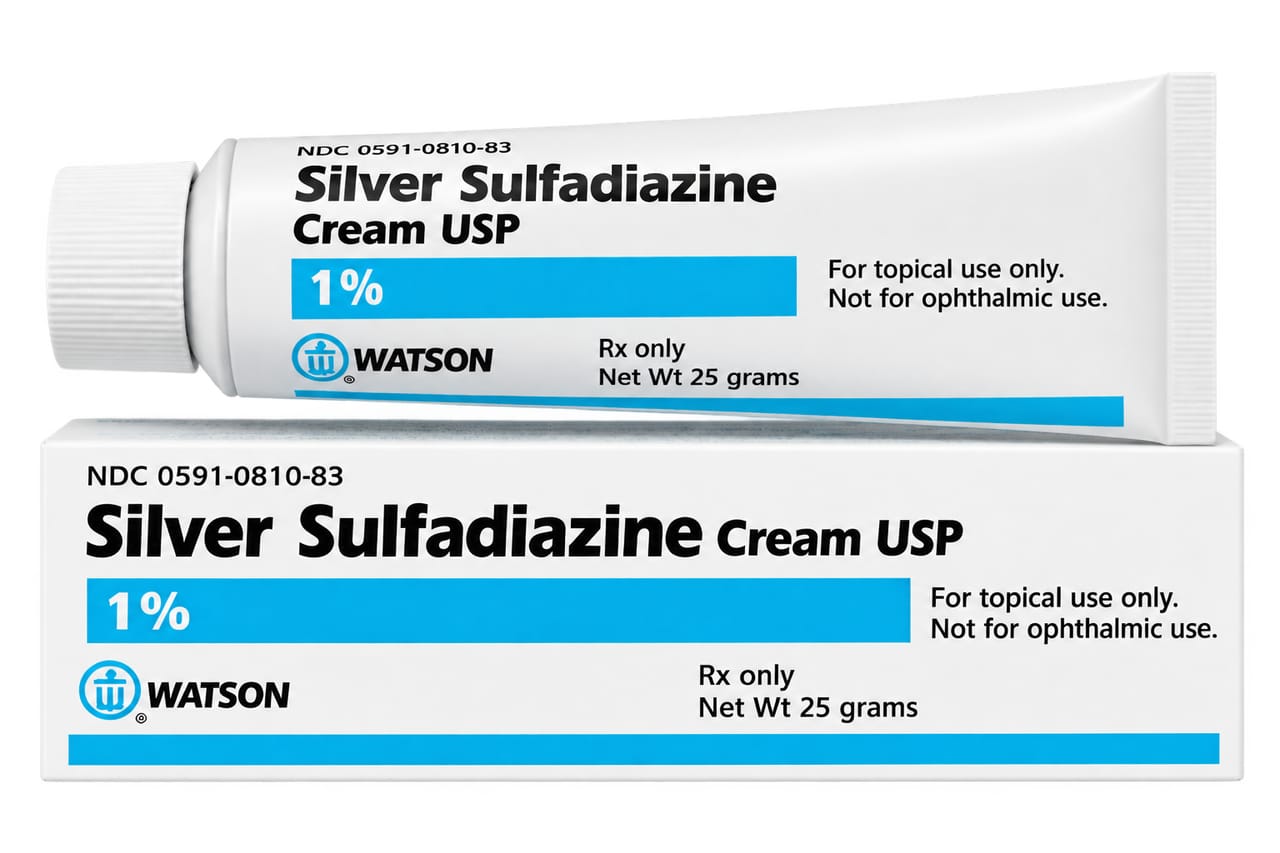
| Forms | Cream (1% w/w) |
Quick overview
Silver Sulfadiazine Cream contains silver sulfadiazine, a topical antibiotic from the sulfonamide class. It is a prescription cream applied to the skin to prevent and treat infections in burns and certain wounds by killing bacteria or stopping their growth. It is used for second- and third-degree burns as well as infected leg ulcers, skin grafts, incisions, abrasions, and minor cuts and wounds.
What is Silver Sulfadiazine Cream
Silver sulfadiazine cream is a prescription topical antibiotic used on the skin to prevent and treat infections in burns and certain wounds. It works by killing bacteria or stopping their growth.
Silver Sulfadiazine Cream uses
- Preventing and treating infection in second- and third-degree burns
- Treating infected leg ulcers, skin grafts, incisions, and other clean wounds, abrasions, minor cuts and wounds
- Off-label use for other skin infections such as ulcers, at a doctor's discretion
Benefits of Silver Sulfadiazine Cream
- Broad-spectrum activity against many gram-positive and gram-negative bacteria, and some yeasts, including Pseudomonas aeruginosa, a common cause of burn infections
- Widely available, affordable, and generally well tolerated
- Helps lower the risk of a wound infection spreading to the blood (sepsis)
How Silver Sulfadiazine Cream works
The cream kills bacteria or stops them from growing by acting on the bacterial cell wall and membrane, which helps reduce or prevent infection in the wound.
Silver Sulfadiazine Cream dosage
This medicine is for use on the skin only. Do not get it in the eyes, nose, mouth, or vagina. Clean the wound and remove dead or burned skin before applying. Apply using sterile gloves and/or a sterile spatula, using a clean technique each time.
Keep the wound covered with the cream at all times; reapply right away if it rubs or washes off. A dressing may be placed over the cream, or the area may be left uncovered, depending on your doctor's instructions. For hand burns, the hand may be placed in a clean plastic bag or glove after applying the cream, and should be moved regularly.
Continue using the cream for as long as your doctor tells you, even if the wound seems to be healing, until it is fully healed or ready for a skin graft. Each container of cream should be used for only one person to avoid spreading germs. If you miss an application, apply it as soon as you remember, but do not apply extra to make up for it.
| Age group | Dose |
|---|---|
| Under 2 Months | Not recommended |
| 2 Months and Above | Apply a thin layer (about 1/16 inch) to affected burn area once or twice daily |
| Adults (18–64 Years) | Apply a thin layer once or twice daily; reapply as needed after dressing changes |
| Older Adults (65+ years) | Apply a thin layer once or twice daily; use with caution based on health condition |
Available forms and strengths
- Cream (1% w/w)
Side effects of Silver Sulfadiazine Cream
Common
- Burning or stinging feeling on the treated area
- Itching (pruritus)
- Skin rash, including eczema or contact dermatitis
- Skin discoloration (brownish-gray or blue-green to black)
- Increased sensitivity to sunlight
Serious
- Low white blood cell count (leukopenia), usually appearing 2-3 days after starting treatment
- Serious blood problems such as agranulocytosis, aplastic anemia, or hemolytic anemia
- Signs of a blood disorder: bleeding gums, cough or hoarseness, fever with or without chills, painful or difficult urination, sores or ulcers in the mouth, unusual bleeding or bruising, or yellowing of the skin or eyes
- Argyria (blue-gray skin discoloration) from silver absorption after large-area or prolonged use
- Life-threatening skin reactions (Stevens-Johnson syndrome, toxic epidermal necrolysis) — red target-like spots, blistering, peeling skin, mouth/nose/genital ulcers, red swollen eyes, flu-like symptoms
- Kidney problems, including rare cases of kidney failure
- Liver problems: dark urine, tiredness, poor appetite, upset stomach, light-colored stools, vomiting, yellow skin or eyes
Warnings and precautions
- This medicine should not be used late in pregnancy (at or near term) because of the risk of a serious condition called kernicterus in the newborn. Earlier in pregnancy, it should only be used if your doctor decides the benefit outweighs the risk to the baby.
- This medicine can pass into breast milk and may cause harm to the baby, so caution is needed if you are breastfeeding. Talk to your doctor about the safest way to feed your baby while using this cream.
- People with kidney problems should use this cream with caution, because the body may take longer to clear the absorbed drug, which could increase side effects. People with liver problems should also use this cream with caution, since the body may take longer to remove the absorbed drug, which could increase side effects.
- This medicine is not known to affect your ability to drive or use machines.
- This medicine can cause life-threatening skin rashes such as Stevens-Johnson syndrome or toxic epidermal necrolysis. These start as reddish, target-like spots or circular patches, often with blisters, and may come with ulcers in the mouth, throat, nose or genitals, red swollen eyes, and flu-like symptoms. If this has happened to you before with silver sulfadiazine, you must never use it again.
- Do not use this cream if you are allergic to it or any of its ingredients, if you are pregnant and near the end of pregnancy, or if your baby is premature or younger than 2 months old.
- Do not use this medicine for longer than your doctor recommends, as this can increase the risk of side effects and may lead to a second infection.
- If you are treating large wounds, drink plenty of fluids to help prevent dehydration and kidney damage.
- Avoid smoking or being near open flames while using this cream, since fabric that has touched it can catch fire more easily; washing does not fully remove this risk.
- This medicine may slow down the natural separation of dead tissue (eschar) from the wound and can change how the burn looks, which may make it harder for your doctor to check on healing.
- People with a blood condition called G6PD deficiency should use this cream cautiously, as it may cause red blood cell breakdown (hemolysis).
- If swallowed, this medicine can be harmful — contact a doctor or poison control right away.
Storage
- Store between 8°C and 25°C (some products: store at room temperature away from heat, moisture, and direct light; do not freeze)
- Store in the original container to protect from light
- Discard jars 24 hours after opening and tubes 7 days after opening to keep the product sterile
- Keep out of reach and sight of children
- Do not keep outdated medicine or medicine no longer needed; ask your pharmacist how to dispose of unused medicine
When to see a doctor
- Get medical help right away if you notice a rash, hives, itching, or red, swollen, blistered, or peeling skin, with or without fever, or if you have wheezing, chest or throat tightness, or trouble breathing or swallowing — these can be signs of a serious allergic reaction.
- Call your doctor right away if you develop a rash, red or peeling skin, red or irritated eyes, sores in the mouth/throat/nose/eyes, fever, chills, sore throat, a new or worsening cough, unusual tiredness or weakness, bruising or bleeding, or signs of liver problems like dark urine, tiredness, poor appetite, stomach pain, light-colored stools, vomiting, or yellow skin or eyes.
- Seek medical help if you are unable to pass urine or notice a change in how much urine you are passing.
- If your skin infection or burn does not improve within a few days to weeks, or gets worse, contact your doctor.
- If you think you or someone you are caring for has used too much of this medicine, contact a healthcare professional, hospital emergency department, or poison control right away, even without symptoms.
Alternatives
- Mafenide Acetate Cream
- Bacitracin Ointment
- Hydrogel Dressings
Watch the video
FAQs
What is Silver Sulfadiazine Cream used for?
It is used to prevent and treat infection in second- and third-degree burns, as well as infected leg ulcers, skin grafts, incisions, abrasions, and minor cuts and wounds.
How does Silver Sulfadiazine Cream work?
It kills bacteria or stops them from growing by acting on the bacterial cell wall and membrane, which helps reduce or prevent infection in the wound.
How should Silver Sulfadiazine Cream be applied?
Clean the wound and remove dead or burned skin, then apply a thin layer using sterile gloves or a sterile spatula, keeping the wound covered with cream at all times and reapplying if it rubs or washes off.
What are the common side effects of Silver Sulfadiazine Cream?
Common side effects include burning or stinging on the treated area, itching, skin rash, skin discoloration, and increased sensitivity to sunlight.
Can Silver Sulfadiazine Cream be used during pregnancy?
It should not be used late in pregnancy due to the risk of kernicterus in the newborn, and earlier in pregnancy it should only be used if the doctor decides the benefit outweighs the risk.
General information, not medical advice
Your prescriber and the leaflet in your pack know your situation. This page does not.
- Follow your prescriber and the leaflet
- Don't start, stop, or change a dose on your own
- Doses and warnings differ by country and product
Sources
Video
Related medicines

Injectafer Injection: Uses, Dosage, Side Effects, Precautions and Alternates
Iron products
Injectafer (ferric carboxymaltose) treats iron deficiency anemia and heart failure-related iron deficiency via IV. Learn uses, dosage, side effects, and

Gliclazide Tablet: Uses, Dosage, Side Effects, Precautions and Alternates
Sulfonylurea (hypoglycemic/antidiabetic agent)
Gliclazide Tablet is a sulfonylurea for type 2 diabetes that boosts insulin release. Learn about dosage, side effects, warnings, and precautions.