
Safety
General information, not medical advice
Your prescriber and the leaflet in your pack know your situation. This page does not.
- Follow your prescriber and the leaflet
- Don't start, stop, or change a dose on your own
- Doses and warnings differ by country and product
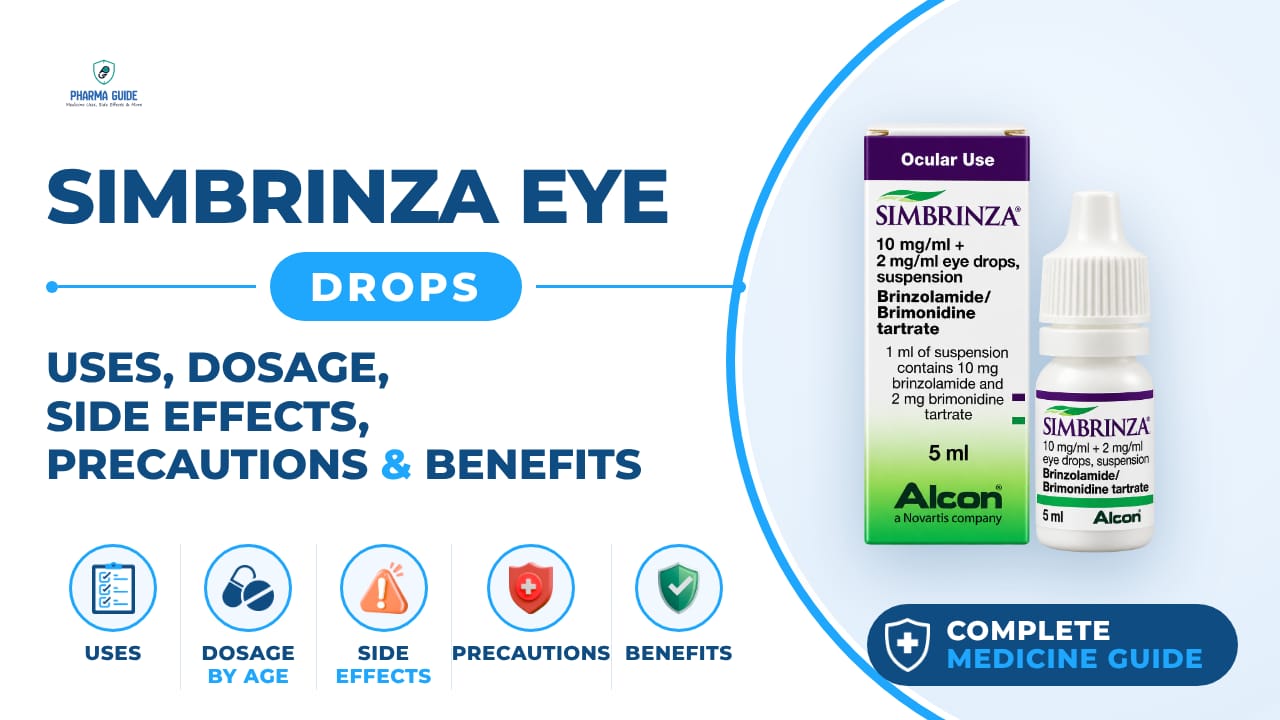
Simbrinza Eye Drops: Uses, Dosage, Side Effects, Precautions and Alternates
| Generic name | brinzolamide and brimonidine tartrate |
|---|---|
| Drug class | Ophthalmic glaucoma agent (carbonic anhydrase inhibitor / alpha-2 adrenergic receptor agonist combination) |
| Forms | Eye drops (ophthalmic suspension) |
Quick overview
Simbrinza Eye Drops combine brinzolamide and brimonidine tartrate, two medicines belonging to the carbonic anhydrase inhibitor and alpha-2 adrenergic receptor agonist classes. This prescription eye drop is used to lower high pressure inside the eye in open-angle glaucoma and ocular hypertension. It works by reducing the amount of fluid the eye produces. It is given as drops applied directly to the affected eye or eyes.
What is Simbrinza Eye Drops
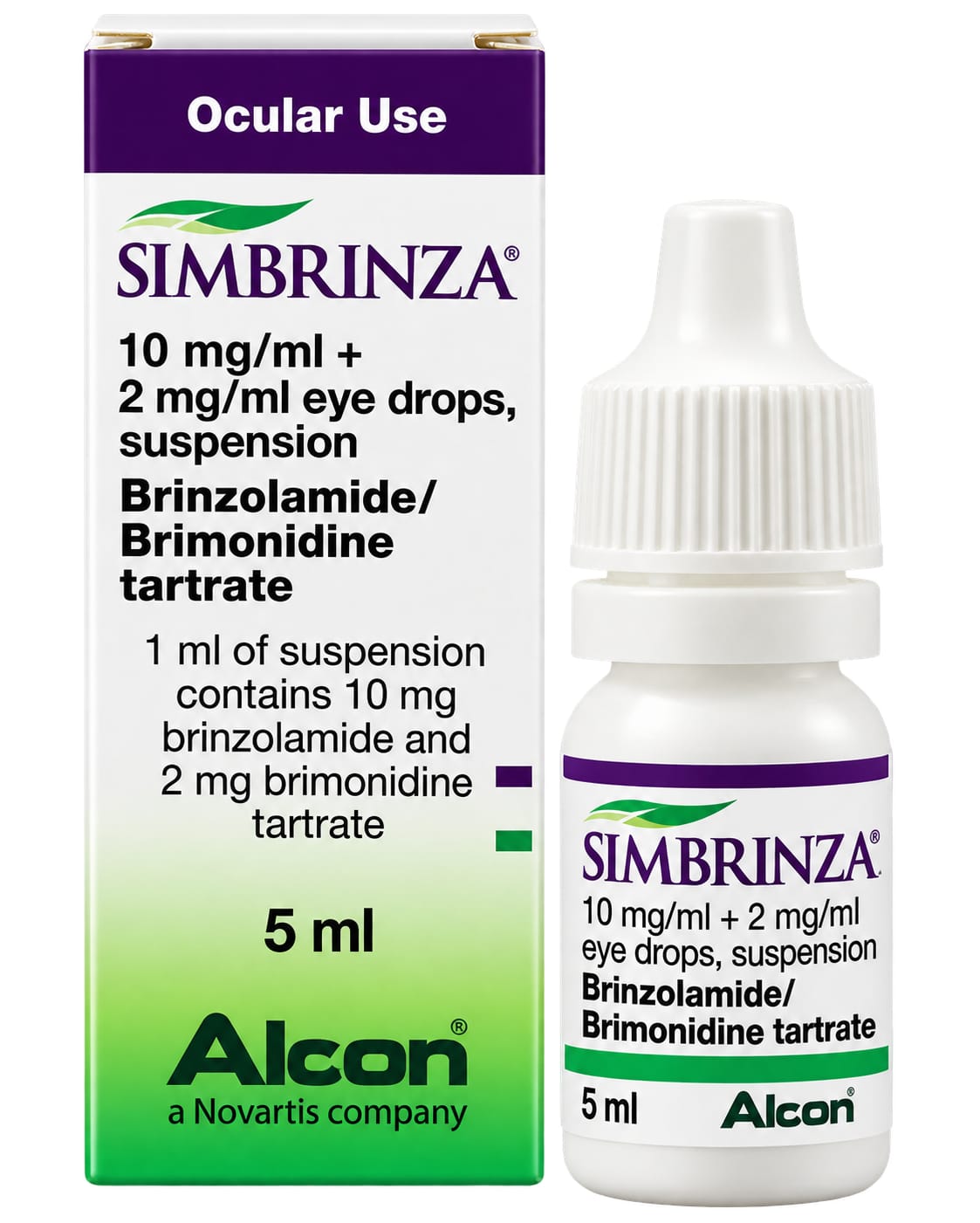
Simbrinza is a prescription eye drop that combines two medicines, brinzolamide and brimonidine tartrate, in one bottle. It is used to lower high pressure inside the eye.
Simbrinza Eye Drops uses
- Open-angle glaucoma
- Ocular hypertension (high pressure inside the eye)
Benefits of Simbrinza Eye Drops
- Lowers eye pressure more than either brinzolamide or brimonidine used alone
- Combines two medicines in one drop, making treatment more convenient
- Can be used in adults and children 2 years and older (per one source)
How Simbrinza Eye Drops works
Simbrinza lowers eye pressure by reducing the amount of fluid the eye makes. One ingredient, brinzolamide, blocks an enzyme that helps produce this fluid. The other ingredient, brimonidine, also reduces fluid production and helps more fluid drain out of the eye.
Simbrinza Eye Drops dosage
Wash your hands before using the eye drops, and shake the bottle well before each use. Remove contact lenses before using the drops; you can put them back in 15 minutes after using the medicine.
Tilt your head back, pull down the lower eyelid to make a small pocket, and place a drop inside without letting the dropper tip touch your eye or any surface. Close your eyes for 2 to 3 minutes after applying the drop, keeping your head tipped down without blinking or squinting. Gently press a finger to the inside corner of the eye for about a minute to stop the medicine draining into the tear duct.
Wait at least 5 minutes before using any other eye drops. Do not touch the dropper tip to your eye, eyelid, or any other surface to avoid contaminating the medicine. Do not use if the liquid has changed color or has particles in it. Try to use the drops at about the same times each day.
| Age group | Dose |
|---|---|
| Under 2 years | Contraindicated — do not use |
| 2–17 years | 1 drop in affected eye(s) 3 times daily, approximately every 8 hours; specialist supervision recommended |
| 18–64 years | 1 drop in affected eye(s) 3 times daily, approximately every 8 hours |
| 65 years and older | 1 drop in affected eye(s) 3 times daily, approximately every 8 hours |
Available forms and strengths
- Eye drops (ophthalmic suspension)
Side effects of Simbrinza Eye Drops
Common
- Blurred vision
- Mild itching, redness, or irritation of the eyes
- Dry mouth
- Unpleasant or changed taste
- Eye allergy
- Dry eyes
- Burning or stinging sensation in the eye
- Headache
- Tiredness or sleepiness
Serious
- Signs of allergic reaction: hives, difficulty breathing, swelling of the face, lips, tongue, or throat
- Sudden liver failure signs: nausea, vomiting, itching, tiredness, loss of appetite, dark urine, clay-colored stools, yellowing of skin or eyes, confusion, rapid weight gain
- Bone marrow suppression signs: sudden weakness, fever, chills, sore throat, mouth sores, red or swollen gums, trouble swallowing, pale skin, feeling light-headed or short of breath, rapid heart rate, trouble concentrating
- Severe skin reaction: fever, sore throat, swelling of face or tongue, burning eyes, skin pain, followed by a spreading red or purple rash with blistering and peeling
- Blurred vision, tunnel vision, eye pain, or seeing halos around lights
- Eye swelling, redness, severe discomfort, crusting, or drainage
- Decreased blood pressure
Warnings and precautions
- It is not known if Simbrinza is safe to use during pregnancy. It should only be used if your doctor decides the benefits outweigh the risks.
- You should not breastfeed while using Simbrinza, since it is not known if it passes into breast milk.
- Simbrinza is not recommended for people with severe kidney disease, since the medicine is removed from the body mainly by the kidneys.
- Simbrinza has not been studied in people with liver problems, so it should be used with caution in this group.
- It's not clear exactly how alcohol interacts with Simbrinza, but using both together may be risky because both can slow breathing and heart rate. Talk to your doctor about how much alcohol is safe for you.
- This medicine can cause blurred vision, drowsiness, or dizziness. Be careful driving or using machinery until you know how it affects you.
- Do not give this medicine to a child younger than 2 years old.
- Be careful not to let the dropper tip touch your eye, the skin around your eye, or your fingers, since this can spread germs into the bottle.
- Since one ingredient is a sulfa-type drug, serious reactions similar to those caused by sulfa medicines can occur, including severe skin reactions.
- People with a low number of cells on the cornea should use this medicine cautiously because of a higher risk of corneal swelling.
- This medicine has not been studied for acute angle-closure glaucoma and should be used with caution in that condition.
- Remove contact lenses before using the drops because a preservative in the medicine can be absorbed into soft lenses and discolor them.
- Contaminated eye drop bottles have been linked to serious bacterial eye infections.
Storage
- Store at room temperature away from moisture and heat
- Do not freeze
- Keep the bottle tightly closed when not in use
- Discard the bottle 4 weeks after opening
When to see a doctor
- Stop using this medicine and call your doctor right away if you have blurred or tunnel vision, eye pain, see halos around lights, eye redness, or severe discomfort.
- Get emergency medical help if you notice signs of an allergic reaction, such as hives, difficulty breathing, or swelling of the face, lips, tongue, or throat.
- Call your doctor if you notice signs that could mean sudden liver failure, such as nausea, vomiting, itching, tiredness, loss of appetite, dark urine, pale stools, yellowing skin or eyes, confusion, or rapid weight gain.
- Call your doctor if you notice signs that could mean bone marrow problems, such as sudden weakness, fever, chills, sore throat, mouth sores, or feeling light-headed.
- Seek emergency care if a severe skin reaction develops, with fever, sore throat, swelling of the face or tongue, burning eyes, skin pain, followed by a spreading rash with blistering and peeling.
- If you think someone has swallowed the medication, seek emergency medical attention right away.
Alternatives
- Combigan
- Dorzolamide ophthalmic
- Bimatoprost
Watch the video
FAQs
What is Simbrinza Eye Drops used for?
Simbrinza is used to lower high pressure inside the eye in open-angle glaucoma and ocular hypertension.
How does Simbrinza Eye Drops work?
It combines brinzolamide, which blocks an enzyme involved in fluid production, and brimonidine, which reduces fluid production and helps more fluid drain out of the eye, together lowering eye pressure.
What is the dosage of Simbrinza Eye Drops?
For ages 2 and older, the usual dose is 1 drop in the affected eye(s) 3 times daily, about every 8 hours. It is contraindicated in children under 2 years.
What are the common side effects of Simbrinza Eye Drops?
Common side effects include blurred vision, mild eye itching, redness or irritation, dry mouth, unpleasant taste, dry eyes, burning or stinging in the eye, headache, and tiredness or sleepiness.
How should Simbrinza Eye Drops be stored?
Store at room temperature away from moisture and heat, do not freeze, keep the bottle tightly closed when not in use, and discard it 4 weeks after opening.
General information, not medical advice
Your prescriber and the leaflet in your pack know your situation. This page does not.
- Follow your prescriber and the leaflet
- Don't start, stop, or change a dose on your own
- Doses and warnings differ by country and product
Sources
- https://www.drugs.com/simbrinza.html
- https://www.ema.europa.eu/en/documents/overview/simbrinza-epar-summary-public_en.pdf
- https://www.medicalnewstoday.com/articles/simbrinza#interactions
- https://www.goodrx.com (GoodRx Simbrinza page)
- https://www.practo.com (Practo Simbrinza Eye Drops page)
- https://www.nps.org.au / Australian Medicine Finder Simbrinza CMI
- FDA prescribing information (accessdata.fda.gov)
Video
Related medicines

Injectafer Injection: Uses, Dosage, Side Effects, Precautions and Alternates
Iron products
Injectafer (ferric carboxymaltose) treats iron deficiency anemia and heart failure-related iron deficiency via IV. Learn uses, dosage, side effects, and

Gliclazide Tablet: Uses, Dosage, Side Effects, Precautions and Alternates
Sulfonylurea (hypoglycemic/antidiabetic agent)
Gliclazide Tablet is a sulfonylurea for type 2 diabetes that boosts insulin release. Learn about dosage, side effects, warnings, and precautions.