
Safety
General information, not medical advice
Your prescriber and the leaflet in your pack know your situation. This page does not.
- Follow your prescriber and the leaflet
- Don't start, stop, or change a dose on your own
- Doses and warnings differ by country and product
Sinarest Tablet: Uses, Dosage, Side Effects, Precautions and Alternates
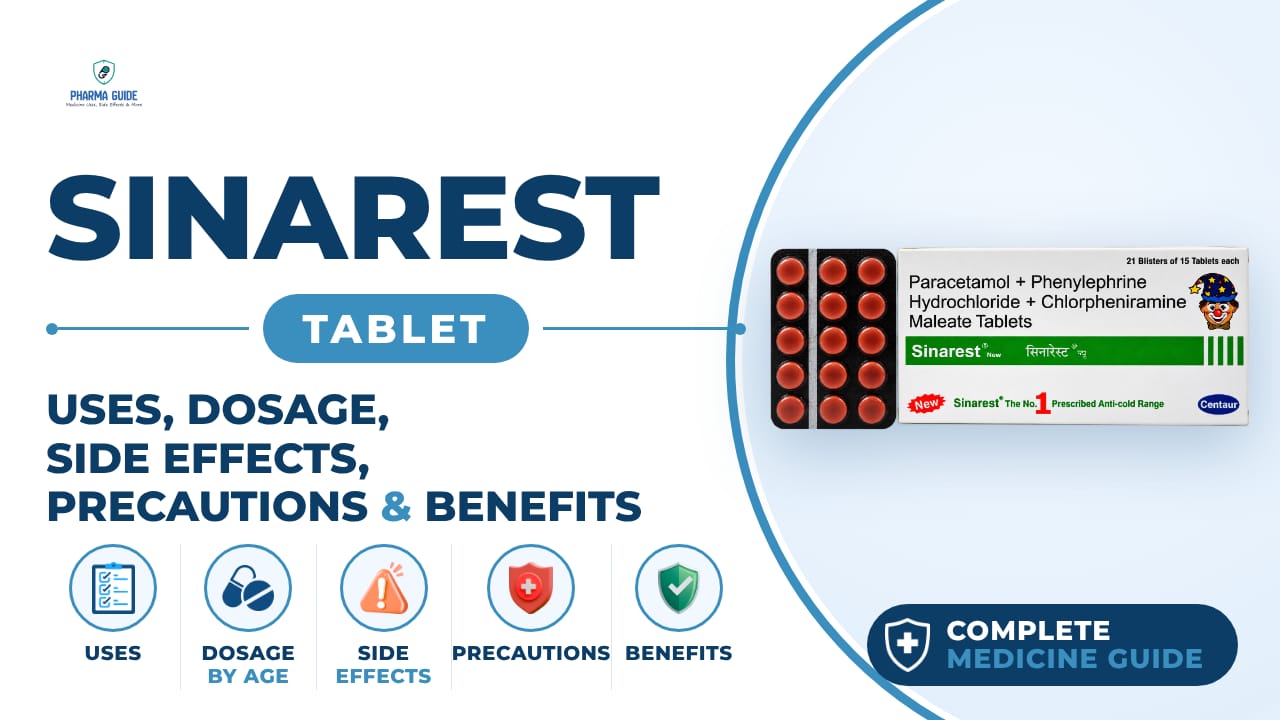
| Generic name | Chlorpheniramine maleate + Paracetamol (Acetaminophen) + Phenylephrine |
|---|---|
| Drug class | Upper respiratory combination (antihistamine + analgesic/antipyretic + decongestant) |
| Forms | Tablet |
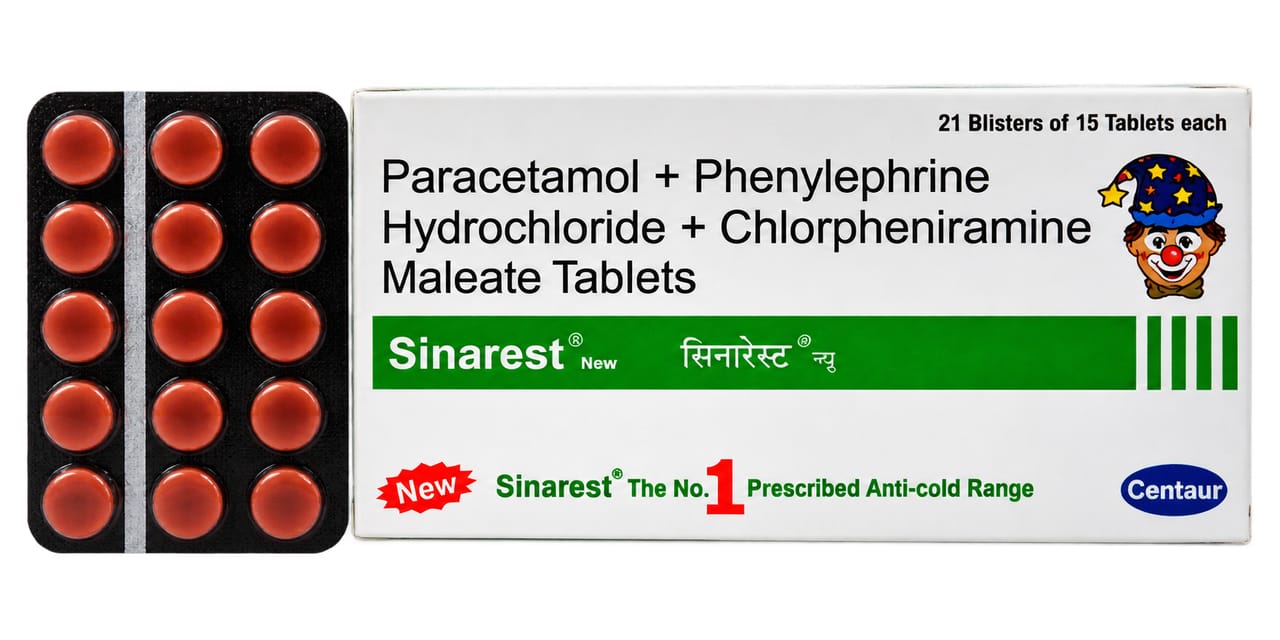
Quick overview
Sinarest Tablet is a combination medicine containing chlorpheniramine maleate, paracetamol, and phenylephrine. It is used for short-term relief of cold, flu, and allergy symptoms such as congestion, sneezing, fever, and sinus pain while the body recovers. It belongs to the upper respiratory combination drug class, acting as an antihistamine, analgesic/antipyretic, and decongestant together.
What is Sinarest Tablet
Sinarest is a combination medicine that contains three ingredients: paracetamol (a pain reliever and fever reducer), phenylephrine (a nasal decongestant), and chlorpheniramine maleate (an antihistamine). It is used for short-term relief of cold, flu, and allergy symptoms while the body recovers.
Sinarest Tablet uses
- Relief of nasal and sinus congestion
- Relief of allergic symptoms of the nose or throat due to upper respiratory tract allergies (sneezing, runny nose, watery/itchy eyes)
- Relief of sinus pain and headache
- Fever, body aches, and shivering from colds and flu
- Used alongside antibiotics in sinusitis, tonsillitis, and middle ear infection (otitis media)
Benefits of Sinarest Tablet
- Provides combined relief for nasal congestion, sinus pressure, fever, and headache in one medicine
- Helps clear blocked nasal passages and reduces sinus pressure for easier breathing
- Helps manage fever, headache, and body discomfort from colds
- May support better rest and recovery by easing respiratory discomfort
How Sinarest Tablet works
Sinarest combines three medicines that each target a different symptom. Paracetamol reduces pain and fever by acting on the brain's pain and temperature control centers. Phenylephrine narrows swollen blood vessels in the nose to relieve stuffiness and reduce mucus. Chlorpheniramine blocks histamine, the substance in the body that causes sneezing, runny nose, and watery eyes.
Sinarest Tablet dosage
Swallow the tablet whole with a full glass of water; do not crush, chew, or break it. It can be taken with or without food, though taking it after a light meal may help if you have a sensitive stomach. Follow the exact dose and duration your doctor or pharmacist prescribes; do not take more than recommended or for longer than advised. This medicine is usually meant for short-term use until symptoms clear up. It is not recommended for children below 4 years of age; consult a doctor before giving it to a child. If a dose is missed, take it as soon as you remember, but skip it if it is almost time for the next dose; do not double up. Stop taking it and consult your doctor if symptoms do not improve within 5 to 7 days, or if fever gets worse.
| Age group | Dose |
|---|---|
| Under 12 Years | Use only if prescribed by a healthcare professional |
| 12 Years and Above | 1 tablet every 8–12 hours (Paracetamol 500 mg + Chlorpheniramine Maleate 2 mg + Phenylephrine HCl 10 mg) |
| Adults (18–64 Years) | 1 tablet every 8–12 hours as needed |
| Older Adults (65+ Years) | 1 tablet every 12 hours; use with caution |
Available forms and strengths
Tablet, containing Paracetamol 500 mg + Chlorpheniramine Maleate 2 mg + Phenylephrine HCl 10 mg.
Side effects of Sinarest Tablet
Common
- Dizziness
- Drowsiness
- Headache
- Dry mouth, nose, or throat
- Blurred vision
- Constipation
- Nausea
- Restlessness/nervousness
- Sleep problems (insomnia)
Serious
- Chest pain, rapid pulse, fast or uneven heart rate
- Confusion, hallucinations, severe nervousness
- Tremor, seizure (convulsions)
- Easy bruising or bleeding, unusual weakness
- Little or no urinating
- Nausea, pain in upper stomach, itching, loss of appetite, dark urine, clay-colored stools, jaundice (yellowing of skin or eyes) — signs of liver damage
- Dangerously high blood pressure (severe headache, blurred vision, buzzing in ears, anxiety, chest pain, shortness of breath, uneven heartbeats, seizure)
Warnings and precautions
- The safety of this medicine in pregnancy is not well established. It should only be used during pregnancy if your doctor believes the benefits outweigh the risks.
- This medicine may pass into breast milk and could affect a nursing baby. It may also reduce milk production, so check with a doctor before taking it while breastfeeding.
- Use this medicine with caution if you have kidney problems, as your doctor may need to adjust your dose.
- Use this medicine with caution if you have liver problems, as your doctor may need to adjust your dose. It should not be used in people with severe liver damage.
- Avoid alcohol completely while taking this medicine, as it raises the risk of severe liver damage and increases drowsiness and dizziness.
- This medicine can cause blurred vision or affect your thinking, so only drive or use machinery once you know how it affects you.
- Do not drive, operate machinery, or do anything hazardous until you know how this medicine affects you, since it may cause significant drowsiness.
- Always check other over-the-counter cold, cough, allergy, or pain medicines to make sure they do not also contain paracetamol, since taking more than one paracetamol product can lead to an accidental overdose.
- Do not take this medicine if you have used a monoamine oxidase inhibitor (MAOI) medicine within the past 14 days, as it can cause a dangerous, sudden rise in blood pressure.
- If you have high blood pressure, monitor it regularly while taking this medicine, since the decongestant ingredient may raise blood pressure further.
- This medicine is not recommended if you have severe high blood pressure or severe heart or liver disease.
Storage
- Store at room temperature, ideally between 15°C and 30°C
- Keep the container tightly closed and store it in a dry place away from direct sunlight and moisture
- Do not store it in the bathroom cabinet
- Store below 30°C in a dark and dry place
- Keep out of reach of children and pets
When to see a doctor
- Stop taking this medicine and see a doctor right away if your symptoms do not improve within 5 to 7 days, or if you develop a high fever or your symptoms get worse.
- Get emergency medical help right away if you notice chest pain, a rapid or uneven heartbeat, confusion, hallucinations, severe nervousness, tremors, or seizures, as these may be signs of an overdose.
- Seek emergency help if you notice signs of an allergic reaction such as hives, trouble breathing, or swelling of the face, lips, tongue, or throat.
- Stop the medicine and call your doctor right away if you develop skin redness or a rash that spreads, blisters, or peels, as this can be a serious reaction to paracetamol.
- Call your doctor right away if you notice nausea, upper stomach pain, itching, loss of appetite, dark urine, pale stools, or yellowing of the skin or eyes, as these can be signs of liver damage.
Alternatives
- D-Cold Total
- T-Minic Tablet
- Vicks Action 500
Watch the video
FAQs
What is Sinarest Tablet used for?
Sinarest is used for short-term relief of nasal and sinus congestion, allergic symptoms like sneezing and runny nose, sinus pain and headache, and fever and body aches from colds and flu. It is also used alongside antibiotics in sinusitis, tonsillitis, and middle ear infection.
What are the ingredients in Sinarest Tablet?
Sinarest contains three ingredients: paracetamol 500 mg (pain reliever and fever reducer), phenylephrine HCl 10 mg (nasal decongestant), and chlorpheniramine maleate 2 mg (antihistamine).
What is the dosage of Sinarest Tablet?
For those 12 years and above, the usual dose is 1 tablet every 8-12 hours. Older adults should take 1 tablet every 12 hours with caution. It is not recommended for children under 4 years, and children under 12 should only use it if prescribed by a doctor.
What are the side effects of Sinarest Tablet?
Common side effects include dizziness, drowsiness, headache, dry mouth or throat, blurred vision, constipation, nausea, restlessness, and sleep problems. Serious side effects include chest pain, rapid heartbeat, confusion, seizures, and signs of liver damage such as jaundice and dark urine.
Can I drink alcohol while taking Sinarest Tablet?
No, alcohol should be avoided completely while taking Sinarest, as it raises the risk of severe liver damage and increases drowsiness and dizziness.
General information, not medical advice
Your prescriber and the leaflet in your pack know your situation. This page does not.
- Follow your prescriber and the leaflet
- Don't start, stop, or change a dose on your own
- Doses and warnings differ by country and product
Sources
- Dailymed. Chlorpheniramine + Paracetamol + Phenylephrine. [Revised in November 2021]
- Arpimed. Chlorpheniramine + Paracetamol + Phenylephrine.
- Laboratorios Cinfa, S.A. Chlorpheniramine + Paracetamol + Phenylephrine. [Revised in February 2017]
- Devlife Corporation Pvt. Ltd. Chlorpheniramine + Paracetamol + Phenylephrine.
- Drugs.com Sinarest monograph, Cerner Multum data
- MedlinePlus Drug Information: Phenylephrine, Chlorpheniramine, Acetaminophen
- iCliniq: Sinarest Tablet - Uses, Dosage, Drug Interactions and Side Effects
Video
Related medicines

Injectafer Injection: Uses, Dosage, Side Effects, Precautions and Alternates
Iron products
Injectafer (ferric carboxymaltose) treats iron deficiency anemia and heart failure-related iron deficiency via IV. Learn uses, dosage, side effects, and

Gliclazide Tablet: Uses, Dosage, Side Effects, Precautions and Alternates
Sulfonylurea (hypoglycemic/antidiabetic agent)
Gliclazide Tablet is a sulfonylurea for type 2 diabetes that boosts insulin release. Learn about dosage, side effects, warnings, and precautions.