
Safety
General information, not medical advice
Your prescriber and the leaflet in your pack know your situation. This page does not.
- Follow your prescriber and the leaflet
- Don't start, stop, or change a dose on your own
- Doses and warnings differ by country and product
Sinequan Capsule: Uses, Dosage, Side Effects, Precautions and Alternates
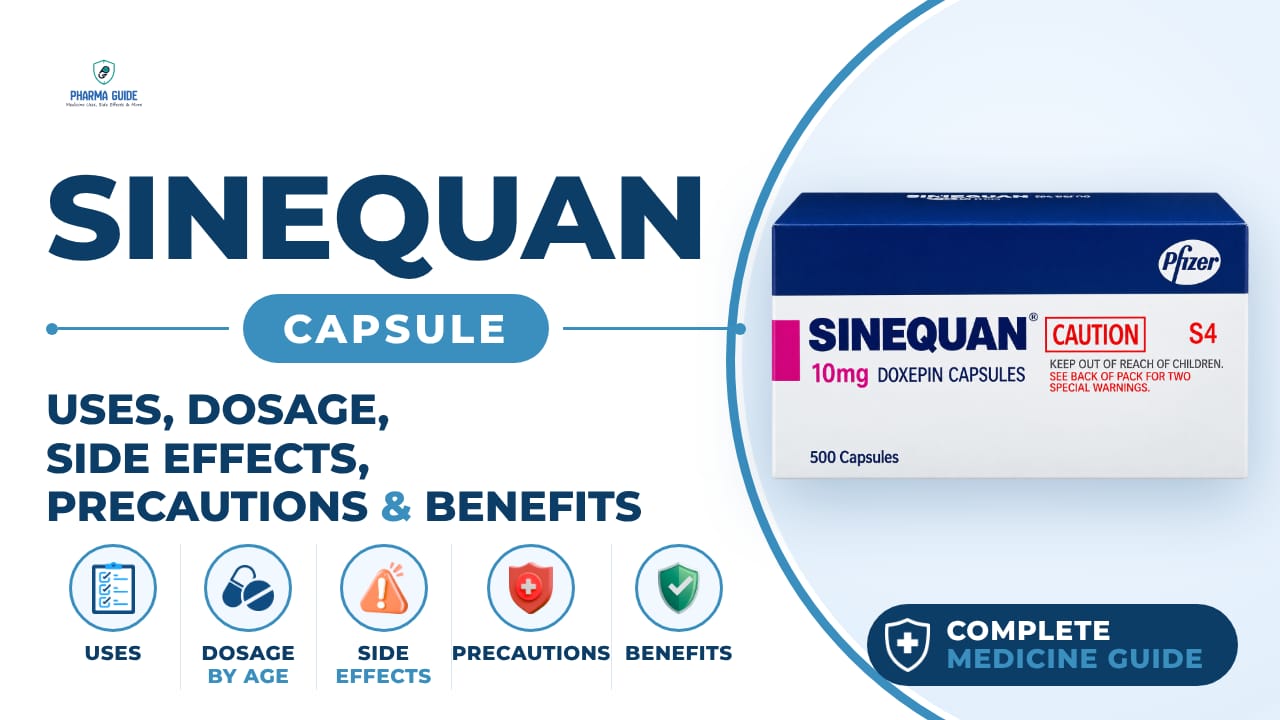
| Generic name | doxepin |
|---|---|
| Drug class | Antidepressants, TCAs |
| Forms | Capsules, Oral concentrate (liquid) |
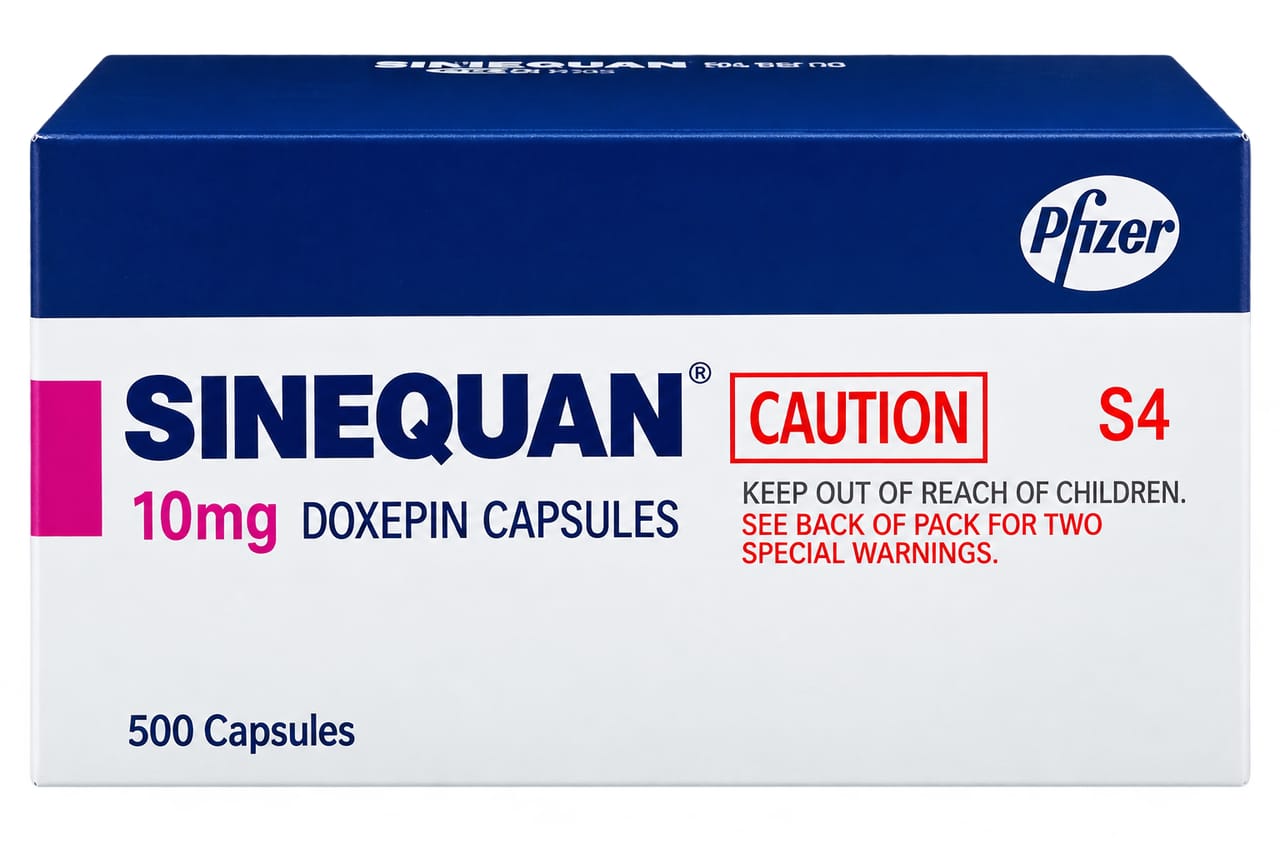
Quick overview
Sinequan Capsule (doxepin) is a tricyclic antidepressant used to treat depression and/or anxiety associated with alcoholism, psychiatric conditions, or manic-depressive conditions. It is thought to work by affecting norepinephrine and other brain chemicals linked to mood and sleep. The brand name Sinequan is discontinued in the U.S., but generic doxepin remains available.
What is Sinequan Capsule
Sinequan (doxepin) is a tricyclic antidepressant used to treat symptoms of depression and/or anxiety associated with alcoholism, psychiatric conditions, or manic-depressive conditions. The brand name Sinequan is discontinued in the U.S., but generic forms are available.
Sinequan Capsule uses
- Psychoneurotic patients with depression and/or anxiety
- Depression and/or anxiety associated with alcoholism (not to be taken along with alcohol)
- Depression and/or anxiety associated with organic disease
- Psychotic depressive disorders with associated anxiety, including involutional depression and manic-depressive disorders
Benefits of Sinequan Capsule
- May improve mood and emotional well-being
- May reduce persistent sadness
- May help relieve anxiety associated with depression
- May improve sleep when depression-related symptoms improve
- May support daily functioning as symptoms improve
How Sinequan Capsule works
The exact way doxepin works is not completely known. It is thought to work by stopping nerve endings in the brain from reabsorbing a chemical called norepinephrine, which affects mood. It may also block histamine and other receptors in the brain, which can affect sleep and mood.
Sinequan Capsule dosage
This medicine can be taken as a single dose or split into multiple doses through the day. If taken once a day, it is usually taken at bedtime. It may take two to three weeks before the full antidepressant effect is noticeable, although anti-anxiety effects happen sooner. Older adults should be started on lower doses and monitored closely by their doctor.
The oral concentrate (liquid) form must be mixed with water, milk, or certain juices right before taking it, and should not be mixed with some carbonated drinks or grape juice. Do not stop taking this medicine suddenly without talking to your doctor, as this can cause withdrawal symptoms like nausea, headache, or a general feeling of illness.
| Age group | Dose |
|---|---|
| Under 18 years | Not recommended |
| 18–64 years | 75 mg, once/day |
| 65+ years | 75 mg, once/day |
Available forms and strengths
- Capsules
- Oral concentrate (liquid)
Side effects of Sinequan Capsule
Common
- Drowsiness
- Dizziness
- Tiredness
- Dry mouth
- Blurred vision
- Ringing in the ears
- Nausea
- Vomiting
- Constipation
- Weight gain
- Increased sweating
- Breast swelling (in men or women)
- Decreased sex drive
- Trouble urinating
Serious
- Mood or behavior changes
- Anxiety, panic attacks, trouble sleeping
- Impulsive behavior, irritability, agitation, hostility, aggressiveness, restlessness
- Being hyperactive mentally or physically
- More depression or suicidal thoughts
- Blurred vision, tunnel vision, eye pain or swelling, seeing halos around lights
- Lightheadedness
- Skin rash, bruising
- Severe tingling, numbness, pain, muscle weakness, tremors
- Restless muscle movements in the eyes, tongue, jaw, or neck
- Confusion, hallucinations, unusual thoughts, seizures
- Painful or difficult urination, or urinating less than usual
- Fast, irregular, or pounding heartbeats; fluttering in the chest; shortness of breath; sudden dizziness or passing out
- Severe headache, confusion, slurred speech, arm or leg weakness, trouble walking, loss of coordination, very stiff muscles, high fever, heavy sweating, or tremors
Warnings and precautions
Antidepressants can increase the risk of suicidal thoughts and behavior in children, teenagers, and young adults, especially in the first few months of treatment. This medicine is not approved for use in children. People taking this medicine should be watched closely for worsening depression, unusual behavior changes, or new or worsening suicidal thoughts, especially at the start of treatment or after a dose change.
This medicine should not be taken with or within two weeks of taking an MAO inhibitor medicine, because the combination can cause a dangerous reaction. It should not be used by people with glaucoma or trouble urinating, since it can make these conditions worse. It can cause the pupils to widen slightly, which can trigger a sudden, serious eye problem called angle closure glaucoma in people who are prone to it.
This medicine should be used with extreme caution in people with heart disease, circulation problems, or in elderly patients, since it can cause heart rhythm problems and other serious heart effects. Deaths have occurred from overdose with this type of medicine, and overdose can be especially dangerous when combined with alcohol or other drugs.
Doxepin should only be used during pregnancy if your doctor prescribes it. Since untreated depression can be serious, do not stop taking this medicine unless your doctor tells you to. Taking it late in pregnancy may cause breathing problems, sluggishness, low muscle tone, feeding problems, or withdrawal symptoms in the baby.
This medicine passes into breast milk and may cause problems in a nursing baby, such as drowsiness and breathing difficulty. Breastfeeding while using this drug is not recommended.
Because older adults are more likely to have reduced kidney function, doctors should be careful when choosing a dose for these patients.
This medicine should be used carefully in people with liver problems or a history of liver damage. Blood counts and liver function tests may be needed regularly for patients on high doses or long-term treatment.
Drinking alcohol while taking this medicine can increase the risk of serious harm, including in cases of accidental or intentional overdose. This medicine can also make the effects of alcohol stronger.
This medicine can cause drowsiness, so patients should be careful about driving a car or using heavy machinery until they know how the medicine affects them.
Storage
- Store at room temperature (20–25°C)
- Protect from moisture and direct sunlight
- Keep in the original packaging
- Keep out of reach of children
- Do not use after the expiry date
When to see a doctor
- Get medical help right away if you have serious eye symptoms such as sudden vision loss, blurred vision, tunnel vision, eye pain or swelling, or seeing halos around lights.
- Seek emergency care right away for serious heart symptoms such as fast, irregular, or pounding heartbeat, fluttering in the chest, shortness of breath, or sudden dizziness, lightheadedness, or passing out.
- Get help right away for a severe headache, confusion, slurred speech, arm or leg weakness, trouble walking, loss of coordination, very stiff muscles, high fever, heavy sweating, or tremors.
- Tell your doctor immediately if you or a family member has new or worsening thoughts about suicide, dying, or suicide attempts, especially when starting treatment or changing the dose.
- Call your doctor right away if you have signs of an overdose, such as confusion, extreme drowsiness, muscle rigidity, vomiting, seizures, or an irregular heartbeat.
Alternatives
- Clomipramine
- Imipramine
- Amitriptyline
Watch the video
FAQs
What is Sinequan Capsule used for?
Sinequan (doxepin) is a tricyclic antidepressant used to treat depression and/or anxiety associated with alcoholism, psychiatric conditions, organic disease, or manic-depressive conditions.
How does Sinequan Capsule work?
It is thought to work by stopping nerve endings in the brain from reabsorbing norepinephrine, a chemical that affects mood. It may also block histamine and other receptors in the brain, affecting sleep and mood.
How long does Sinequan Capsule take to work?
It may take two to three weeks before the full antidepressant effect is noticeable, although anti-anxiety effects happen sooner.
What are the common side effects of Sinequan Capsule?
Common side effects include drowsiness, dizziness, tiredness, dry mouth, blurred vision, ringing in the ears, nausea, vomiting, constipation, weight gain, increased sweating, decreased sex drive, and trouble urinating.
Is Sinequan Capsule safe during pregnancy and breastfeeding?
It should only be used during pregnancy if prescribed by a doctor, as taking it late in pregnancy may cause breathing problems, sluggishness, low muscle tone, feeding problems, or withdrawal symptoms in the baby. It passes into breast milk and breastfeeding while using this drug is not recommended.
General information, not medical advice
Your prescriber and the leaflet in your pack know your situation. This page does not.
- Follow your prescriber and the leaflet
- Don't start, stop, or change a dose on your own
- Doses and warnings differ by country and product
Sources
Video
Related medicines

Injectafer Injection: Uses, Dosage, Side Effects, Precautions and Alternates
Iron products
Injectafer (ferric carboxymaltose) treats iron deficiency anemia and heart failure-related iron deficiency via IV. Learn uses, dosage, side effects, and

Gliclazide Tablet: Uses, Dosage, Side Effects, Precautions and Alternates
Sulfonylurea (hypoglycemic/antidiabetic agent)
Gliclazide Tablet is a sulfonylurea for type 2 diabetes that boosts insulin release. Learn about dosage, side effects, warnings, and precautions.