
Safety
General information, not medical advice
Your prescriber and the leaflet in your pack know your situation. This page does not.
- Follow your prescriber and the leaflet
- Don't start, stop, or change a dose on your own
- Doses and warnings differ by country and product
Sirturo Tablet: Uses, Dosage, Side Effects, Precautions and Alternates
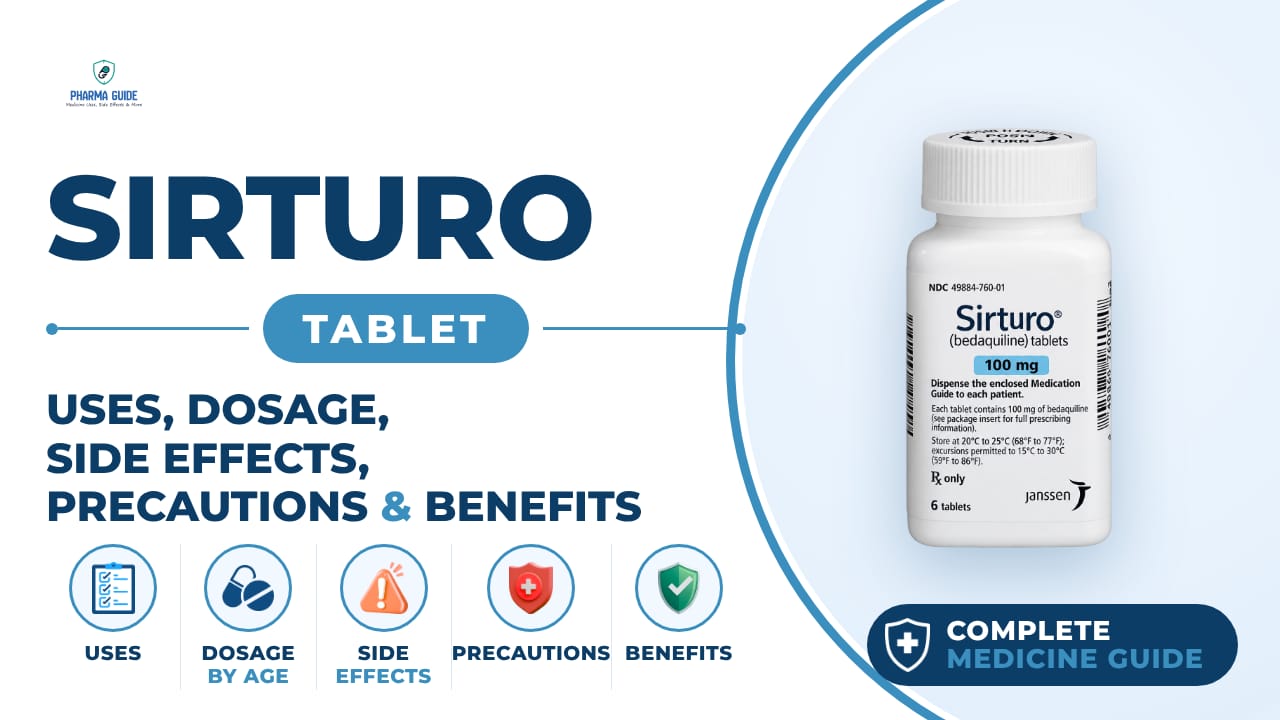
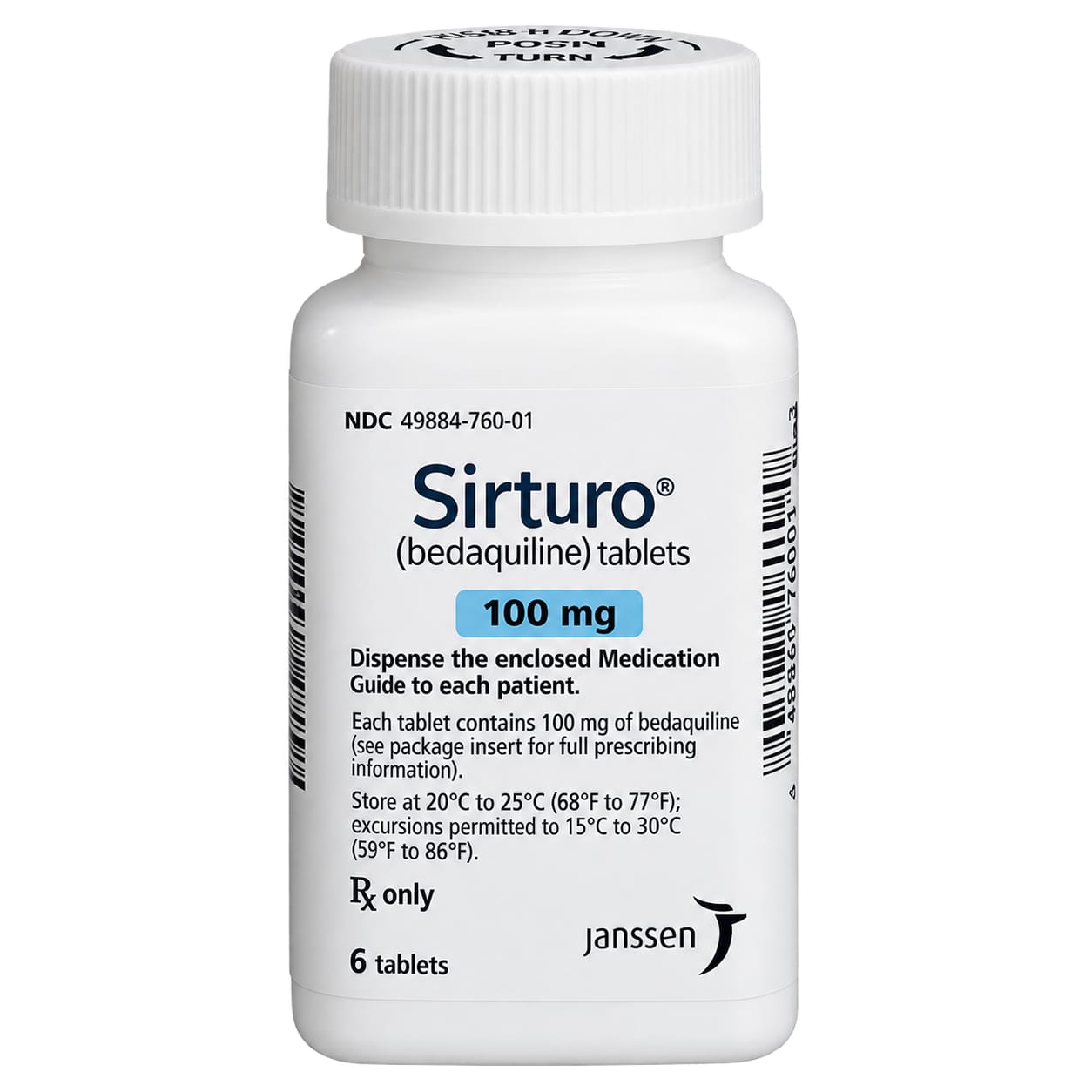
| Generic name | bedaquiline |
|---|---|
| Drug class | Antitubercular agent (diarylquinoline antimycobacterial drug) |
| Forms | 100 mg tablet (swallowed whole) |
Quick overview
Sirturo Tablet (bedaquiline) is a prescription antitubercular agent used together with other TB medicines to treat multi-drug resistant pulmonary tuberculosis. It belongs to the diarylquinoline class of antimycobacterial drugs. Sirturo works by blocking an enzyme TB bacteria need for energy production, helping to kill the bacteria. It is used in adults and children who meet a minimum age and weight requirement, and must always be taken as part of combination therapy.
What is Sirturo Tablet
Sirturo is a prescription antibiotic tablet used together with other TB medicines to treat lung tuberculosis caused by bacteria resistant to the standard drugs rifampin and isoniazid. It is used in adults and children who meet a minimum age and weight requirement. Its generic name is bedaquiline, and it belongs to the antitubercular agent (diarylquinoline antimycobacterial drug) class.
Sirturo Tablet uses
- Treats multi-drug resistant pulmonary tuberculosis (TB) caused by Mycobacterium tuberculosis resistant to at least rifampin and isoniazid, always as part of combination therapy with other TB drugs
- Not for latent TB (infection without symptoms)
- Not for TB that is not drug resistant
- Not for TB outside the lungs
- Not for infections caused by bacteria other than TB
Benefits of Sirturo Tablet
- Treats multidrug-resistant tuberculosis (MDR-TB)
- Helps kill TB-causing bacteria
- Helps control drug-resistant TB infections
- Improves treatment outcomes when combined with other TB medicines
- Helps treat difficult-to-treat TB under specialist supervision
How Sirturo Tablet works
Sirturo works by blocking an enzyme the TB bacteria need to produce energy, called ATP synthase. Without this energy source, the bacteria die, helping the infection clear.
Sirturo Tablet dosage
Take Sirturo with food — this helps your body absorb the medicine properly. It must always be taken together with other TB medicines, never alone. Swallow the 100 mg tablet whole with water. The 20 mg tablet can be swallowed whole, split in half at the score line, dispersed in water (and mixed with a beverage or soft food), crushed and mixed with soft food, or given through a feeding tube for those who have trouble swallowing.
During weeks 1 and 2, take your dose once a day. From week 3 onward, take your dose three times a week with at least 48 hours between doses. Complete the entire course of treatment and do not skip doses, as skipping doses can make treatment less effective and increase the chance the bacteria become resistant.
If you miss a dose in weeks 1–2, skip it and continue with your normal schedule; do not double up. If you miss a dose from week 3 onward, take it as soon as possible and then continue the three-times-a-week schedule, keeping at least 24 hours between doses. Do not take more than your prescribed weekly amount within a 7-day period. Do not stop taking this medicine without talking to your healthcare provider first.
| Age group | Dose |
|---|---|
| Under 18 years | Not recommended |
| 18–64 years | 400 mg, once/day |
| 65+ years | 400 mg, once/day |
Available forms and strengths
- 100 mg tablet (swallowed whole)
Side effects of Sirturo Tablet
Common
- Nausea
- Vomiting
- Joint pain (arthralgia)
- Headache
- Coughing up blood (hemoptysis)
- Chest pain
- Weight loss/loss of appetite
- Rash
- Increased liver enzymes and blood amylase
- Dizziness
- Itching
- Dry skin
- Trouble sleeping
- Heart pounding/palpitations
- Stomach pain
- Diarrhea
Serious
- Hives, difficulty breathing, swelling of face, lips, tongue, or throat (allergic reaction)
- Fast or pounding heartbeats, fluttering in the chest, shortness of breath, sudden dizziness (heart rhythm problems)
- Chest pain
- Coughing up blood
- Vomit that looks like coffee grounds
- Loss of appetite, upper right stomach pain, tiredness, dark urine, pale/clay-colored stools, yellowing of skin or eyes (signs of liver problems)
- Sudden vision loss, blurred vision, tunnel vision, eye pain or swelling, seeing halos around lights
- Severe headache, confusion, slurred speech, arm or leg weakness, trouble walking, loss of coordination, very stiff muscles, high fever, profuse sweating, or tremors
- Increased risk of death was seen in clinical trials with Sirturo compared to placebo
Warnings and precautions
- Sirturo can cause a serious heart rhythm problem (QTc prolongation) that can lead to an abnormal, dangerous heartbeat. Your heart should be checked with an ECG and blood tests before and during treatment.
- Studies found more deaths among people taking Sirturo compared to those taking a placebo. The reason for this difference is not fully understood.
- Sirturo can cause liver damage. Your liver should be checked with blood tests before and regularly during treatment.
- Using Sirturo together with certain other medicines (like rifampin-type antibiotics, some antifungals, or certain HIV medicines) can change how well Sirturo works or increase the risk of side effects.
- Not completing the full course of treatment or skipping doses can make the medicine less effective and increase the chance that the TB bacteria become resistant to treatment.
- It isn't known if Sirturo is safe for an unborn baby. Tell your doctor if you are pregnant or planning to become pregnant.
- Breastfeeding is not recommended during treatment and for about 27.5 months after the last dose, unless infant formula isn't available, since the drug passes into breast milk and could harm the baby's liver.
- People with severe kidney problems or who need dialysis should use this medicine with caution, and their doctor should watch for side effects.
- People with severe liver problems should only use Sirturo with caution if the benefits outweigh the risks, since the drug hasn't been studied in this group and can cause liver damage.
- Avoid drinking alcohol while taking Sirturo, as it can increase the risk of liver damage and other side effects.
- Sirturo can cause dizziness in some people. Do not drive or operate machinery until you know how this medicine affects you.
Storage
- Store SIRTURO 20 mg tablets in the original container; the bottle contains a desiccant packet to keep the medicine dry — do not throw the desiccant away
- Protect from light and moisture; keep the container tightly closed
- Store SIRTURO 100 mg tablets in the original container; if moved to another container, use a tight, light-resistant container and use within 3 months
- Store at room temperature, between 68°F to 77°F (20°C to 25°C), with brief excursions to 59°F–86°F (15°C–30°C) allowed
- Keep out of the sight and reach of children
- Ask your pharmacist what to do with leftover medicine if treatment stops early or the medicine has expired
When to see a doctor
- Get medical help right away if you notice signs of an allergic reaction, such as hives, trouble breathing, or swelling of the face, lips, tongue, or throat.
- Call your healthcare provider right away if you have a change in your heartbeat, such as a fast or irregular heartbeat, or if you feel dizzy or faint.
- Call your healthcare provider right away if you notice signs of liver problems such as nausea, vomiting, stomach pain, fever, weakness, itching, unusual tiredness, loss of appetite, light-colored stools, dark urine, or yellowing of your skin or eyes.
- If you take more Sirturo than prescribed, contact a healthcare provider right away.
- If you faint while taking this medicine, your doctor should check your heart with an ECG.
Alternatives
- Clofazimine
- Delamanid
- Pretomanid
Watch the video
FAQs
What is Sirturo Tablet used for?
Sirturo is used together with other TB medicines to treat multi-drug resistant pulmonary tuberculosis caused by bacteria resistant to at least rifampin and isoniazid. It is not for latent TB, non-resistant TB, TB outside the lungs, or infections caused by other bacteria.
How should I take Sirturo Tablet?
Take Sirturo with food to help absorption, always combined with other TB medicines. During weeks 1 and 2, take it once a day; from week 3 onward, take it three times a week with at least 48 hours between doses. Complete the full course and do not skip doses.
What should I do if I miss a dose of Sirturo?
If you miss a dose during weeks 1–2, skip it and continue your normal schedule without doubling up. If you miss a dose from week 3 onward, take it as soon as possible and continue the three-times-a-week schedule, keeping at least 24 hours between doses.
What are the serious side effects of Sirturo Tablet?
Serious side effects include allergic reactions, heart rhythm problems like fast or pounding heartbeats, liver problems, chest pain, coughing up blood, vision changes, and neurological symptoms like confusion or slurred speech. An increased risk of death was seen in clinical trials compared to placebo.
Can I drink alcohol while taking Sirturo?
No, you should avoid drinking alcohol while taking Sirturo, as it can increase the risk of liver damage and other side effects.
General information, not medical advice
Your prescriber and the leaflet in your pack know your situation. This page does not.
- Follow your prescriber and the leaflet
- Don't start, stop, or change a dose on your own
- Doses and warnings differ by country and product
Sources
Video
Related medicines

Injectafer Injection: Uses, Dosage, Side Effects, Precautions and Alternates
Iron products
Injectafer (ferric carboxymaltose) treats iron deficiency anemia and heart failure-related iron deficiency via IV. Learn uses, dosage, side effects, and

Gliclazide Tablet: Uses, Dosage, Side Effects, Precautions and Alternates
Sulfonylurea (hypoglycemic/antidiabetic agent)
Gliclazide Tablet is a sulfonylurea for type 2 diabetes that boosts insulin release. Learn about dosage, side effects, warnings, and precautions.