
Safety
General information, not medical advice
Your prescriber and the leaflet in your pack know your situation. This page does not.
- Follow your prescriber and the leaflet
- Don't start, stop, or change a dose on your own
- Doses and warnings differ by country and product
Sitavig Tablet: Uses, Dosage, Side Effects, Precautions and Alternates
| Generic name | acyclovir |
|---|---|
| Drug class | Purine nucleosides (synthetic nucleoside analogue antiviral) |
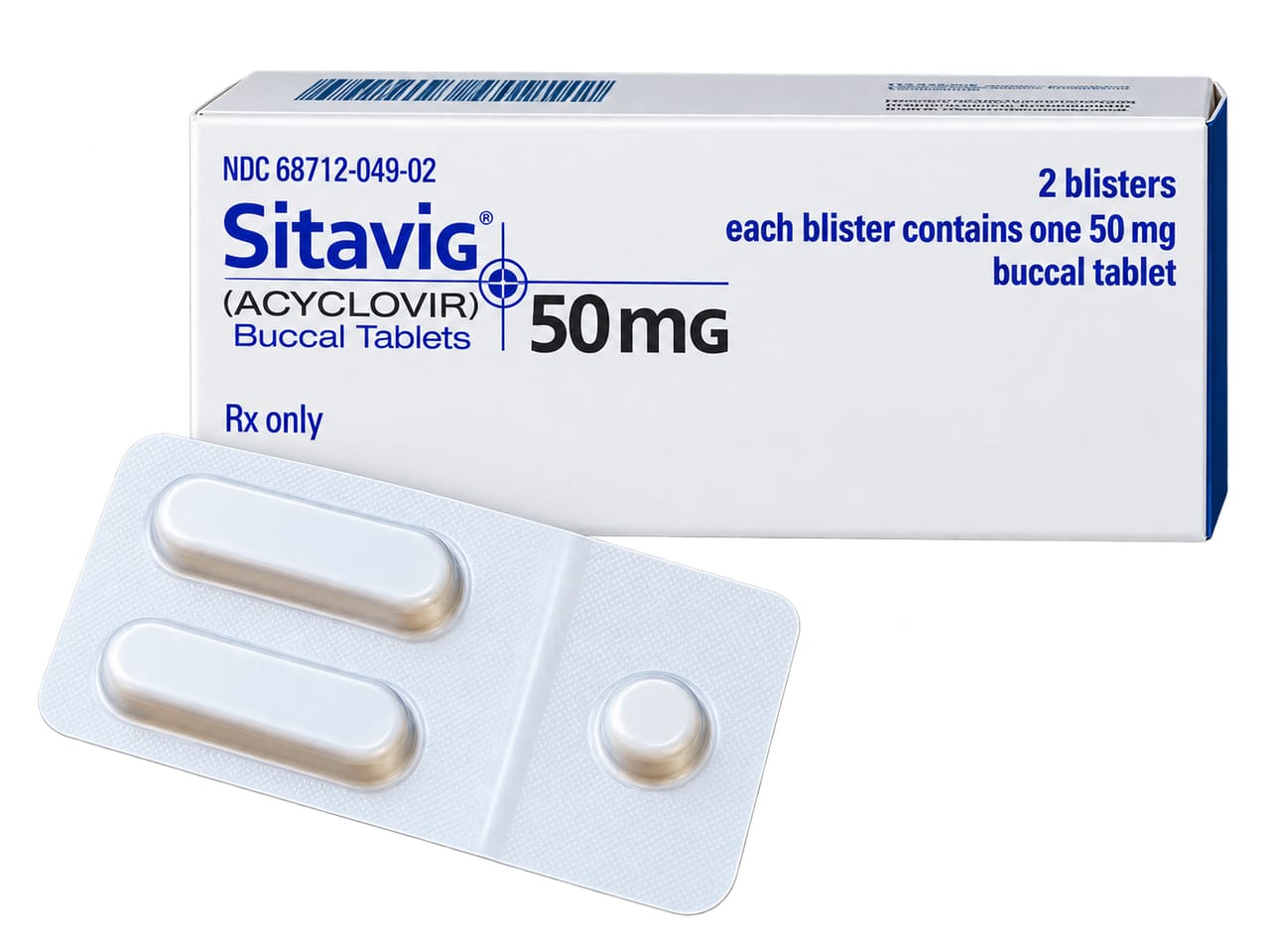
| Forms | Buccal tablet (50 mg) |
Quick overview
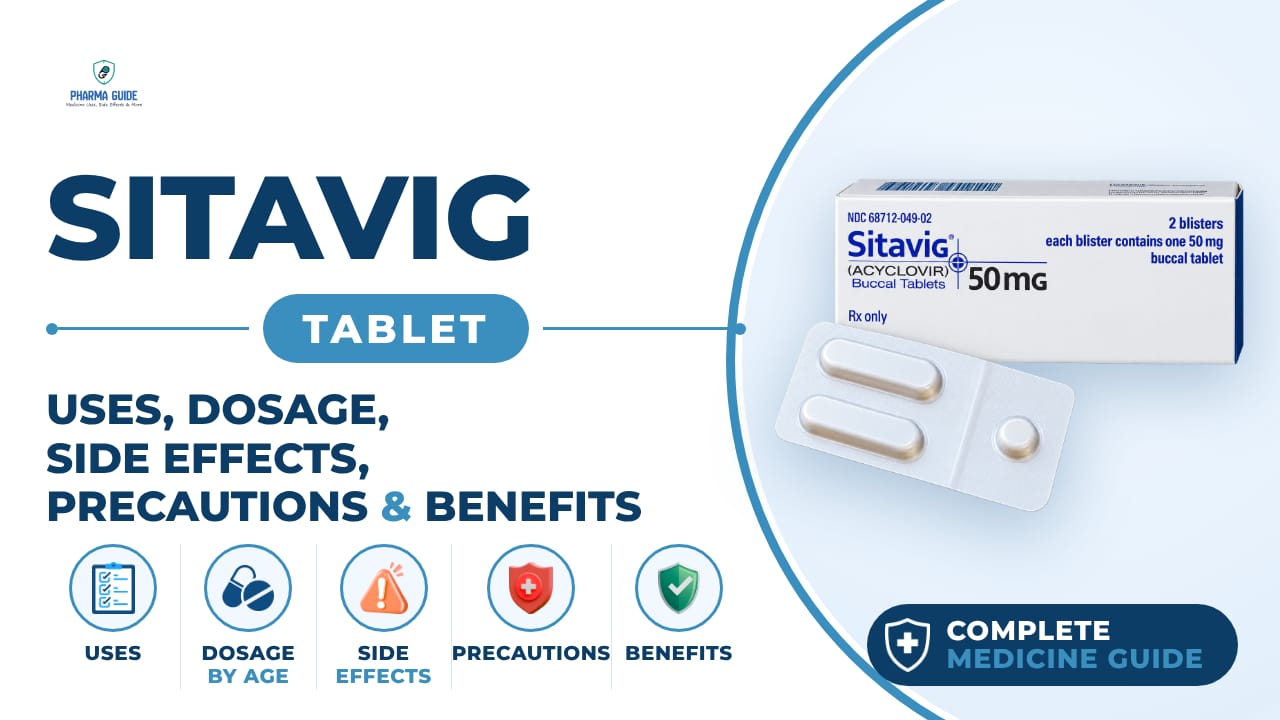
Sitavig Tablet contains acyclovir, a synthetic nucleoside analogue antiviral from the purine nucleoside class. It is a small tablet that sticks to the upper gum and slowly dissolves, used to treat recurrent cold sores in adults with a healthy immune system. It must be applied within one hour of the first warning signs and before a blister appears, and it does not cure the herpes virus.
What is Sitavig Tablet
Sitavig is a prescription antiviral medicine containing acyclovir. It comes as a small tablet that sticks to the upper gum and slowly dissolves, used to treat recurrent cold sores in adults with a healthy immune system.
Sitavig Tablet uses
- Treats recurrent cold sores (herpes labialis) on the lips and around the mouth in adults with normal immune systems
- Must be applied within 1 hour of the first warning signs (tingling, itching, burning, or redness) and before any blister appears
- Does not cure the herpes virus and does not treat genital herpes
Benefits of Sitavig Tablet
- Helps make cold sore outbreaks shorter and less severe
- Speeds up healing of the sores
- Decreases pain and itching
- Delivers medicine directly to the infection site with very low absorption into the rest of the body
How Sitavig Tablet works
Acyclovir is an antiviral medicine that stops the herpes virus from growing and spreading, which helps improve symptoms. It does not cure the infection, and the virus stays in the body between outbreaks.
Sitavig Tablet dosage
Start using Sitavig as soon as possible after the first signs of a cold sore, such as tingling, burning, or redness, and before the cold sore blister appears. Do not crush, chew, suck on, or swallow the tablet.
Place the flat side of the tablet against your upper gum, on the same side of your mouth as the cold sore, just above the incisor tooth. Do not apply it to the inside of your lip or cheek. Hold it in place with gentle pressure on the outside of your upper lip for about 30 seconds to help it stick.
Leave the tablet in place until it fully dissolves; you may eat and drink normally while it is in place. Avoid brushing your teeth, chewing gum, or wearing an upper denture while the tablet is in place; you may rinse your mouth gently.
If the tablet does not stick or falls off within the first six hours, put the same tablet back in place right away, or apply a new tablet if it will not stay. Do not reapply if the tablet falls out or is swallowed after it has been in place for six hours or longer. If you swallow the tablet within the first six hours, drink a glass of water and place a new tablet on your upper gum.
Do not give this tablet to a young child because of the risk of choking. Drink plenty of water while using this medicine to help keep your kidneys working properly.
If you miss applying it at the right time, use it as soon as you can, but do not use two doses at once.
Use exactly as prescribed by your doctor or pharmacist.
Available forms and strengths
- Buccal tablet (50 mg)
Side effects of Sitavig Tablet
Common
- Headache
- Pain, irritation, or gum pain where the tablet is applied
- Dizziness or tiredness
- Nausea, vomiting, or diarrhea
- Abdominal pain
- Mouth ulcers (aphthous stomatitis)
- Rash or itching
Serious
- Signs of a severe allergic reaction: hives, difficulty breathing, swelling of the face, lips, tongue, mouth, or throat, trouble swallowing or throat tightness
- Racing heart, fever, or general ill feeling
- Swollen lymph nodes
- Severe dizziness or fainting
- Easy bruising or bleeding, or purple/red pinpoint spots under the skin
- Changes in behavior, confusion, or hallucinations
- Signs of a kidney problem: little or no urinating, painful or difficult urination, swelling in the feet or ankles, feeling tired or short of breath
Warnings and precautions
- Do not use this medicine if you are allergic to acyclovir, valacyclovir, milk protein, or any other ingredient in the product.
- This medicine contains milk protein concentrate, so a severe allergic reaction can occur in people who are sensitive to it.
- Do not crush, chew, suck on, or swallow the tablet.
- Do not give this tablet to a young child, as it could cause choking.
- This medicine can affect your kidneys, especially if you also take certain other medicines for infections, cancer, osteoporosis, organ transplant rejection, bowel disorders, high blood pressure, or pain and arthritis, including some common over-the-counter pain relievers.
- Even while being treated, cold sores remain contagious. Avoid letting the infected area touch other people, avoid touching the sore and then your eyes, and wash your hands often.
- It is not known if Sitavig could affect pregnancy or harm an unborn baby. Tell your doctor if you are or plan to become pregnant, and use this medicine only if your doctor says it is clearly needed.
- It is not known if this form of the medicine passes into breast milk, though it is thought unlikely to harm a nursing baby. Talk to your doctor before breastfeeding while using this medicine.
- Tell your doctor if you have kidney disease before using this medicine, and drink plenty of water while using it to help protect your kidneys.
- Systemic absorption is low, but significant kidney disease should still be disclosed to the clinician. No routine dose adjustment is generally required for liver function.
- It is not known for certain if alcohol affects this medicine, but heavy drinking can weaken your immune response and make it harder for your body to fight the infection.
Storage
- Store at room temperature away from moisture and heat
- Store at room temperature between 68 F to 77 F (20 C to 25 C); it can be exposed to temperatures between 59 F to 86 F (15 C to 30 C) for shorter periods, such as during transport
- Store in a cool, dry place and protect from moisture
- Do not store in the bathroom
- Keep all medicines away from children and pets
- Do not flush medications down the toilet or pour them into a drain unless instructed; properly discard this product when expired or no longer needed, and consult your pharmacist or local waste disposal company
- Do not remove the tablet from the blister pack until you are ready to use it; once removed, it must be used right away
When to see a doctor
- Get emergency help right away if you have signs of a severe allergic reaction, such as hives, trouble breathing, or swelling of your face, lips, tongue, or throat.
- Call your doctor right away if you notice easy bruising or bleeding, purple or red pinpoint spots under the skin, changes in behavior, confusion, hallucinations, or signs of a kidney problem such as little or no urination, painful urination, swelling in the feet or ankles, or feeling tired or short of breath.
- If someone has used too much of this medicine and has serious symptoms like passing out or trouble breathing, get emergency help right away; otherwise contact a poison control center for advice.
Alternatives
- Famciclovir
- Docosanol cream
- Penciclovir cream
- Acyclovir cream
Watch the video
FAQs
What is Sitavig Tablet used for?
Sitavig treats recurrent cold sores (herpes labialis) on the lips and around the mouth in adults with normal immune systems. It does not cure the herpes virus and does not treat genital herpes.
How do you apply Sitavig Tablet?
Place the flat side of the tablet against your upper gum above the incisor tooth, on the same side as the cold sore, and press gently on your outer lip for about 30 seconds to help it stick. Leave it in place until it fully dissolves, and avoid brushing teeth, chewing gum, or wearing an upper denture while it is in place.
When should Sitavig Tablet be used after cold sore symptoms start?
It must be applied within one hour of the first warning signs, such as tingling, itching, burning, or redness, and before any blister appears.
What are the common side effects of Sitavig Tablet?
Common side effects include headache, pain or irritation where the tablet is applied, dizziness or tiredness, nausea, vomiting, diarrhea, abdominal pain, mouth ulcers, and rash or itching.
Can Sitavig Tablet be given to children?
No, it should not be given to a young child because of the risk of choking.
General information, not medical advice
Your prescriber and the leaflet in your pack know your situation. This page does not.
- Follow your prescriber and the leaflet
- Don't start, stop, or change a dose on your own
- Doses and warnings differ by country and product
Sources
Video
Related medicines

Injectafer Injection: Uses, Dosage, Side Effects, Precautions and Alternates
Iron products
Injectafer (ferric carboxymaltose) treats iron deficiency anemia and heart failure-related iron deficiency via IV. Learn uses, dosage, side effects, and

Gliclazide Tablet: Uses, Dosage, Side Effects, Precautions and Alternates
Sulfonylurea (hypoglycemic/antidiabetic agent)
Gliclazide Tablet is a sulfonylurea for type 2 diabetes that boosts insulin release. Learn about dosage, side effects, warnings, and precautions.