
Safety
General information, not medical advice
Your prescriber and the leaflet in your pack know your situation. This page does not.
- Follow your prescriber and the leaflet
- Don't start, stop, or change a dose on your own
- Doses and warnings differ by country and product
Sivextro Tablet: Uses, Dosage, Side Effects, Precautions and Alternates
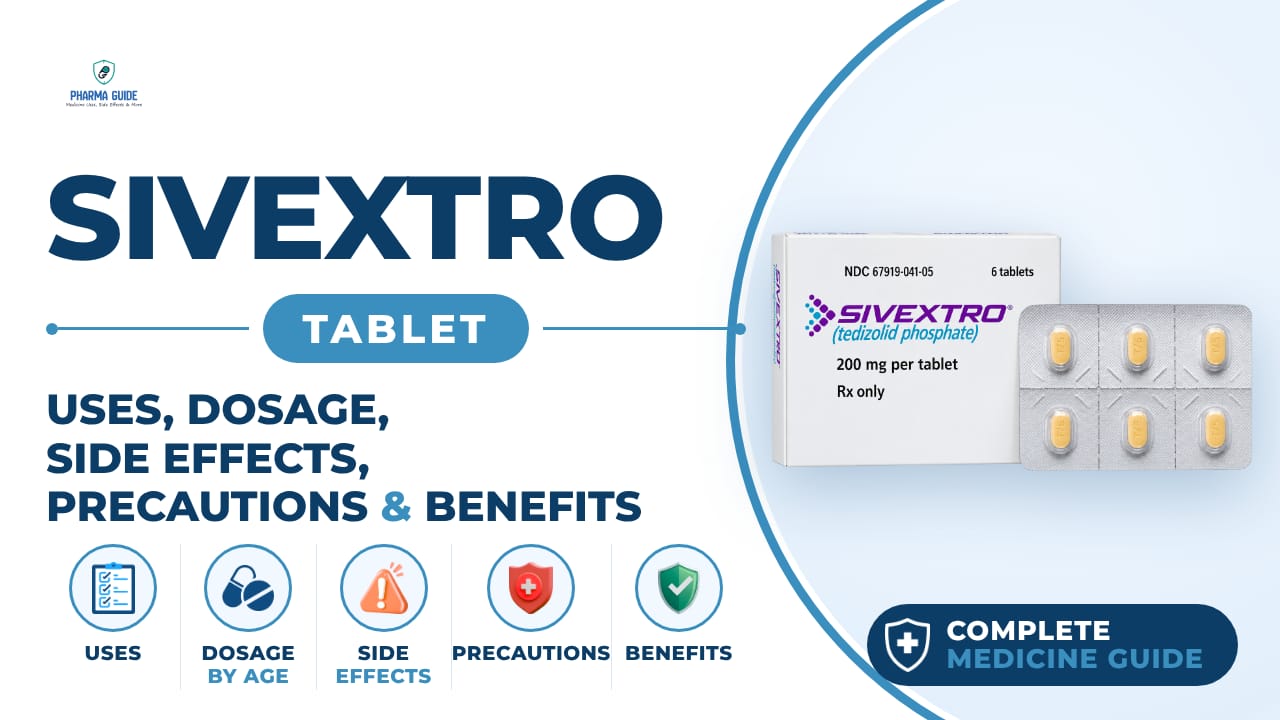
| Generic name | tedizolid phosphate |
|---|---|
| Drug class | Oxazolidinone antibiotic |
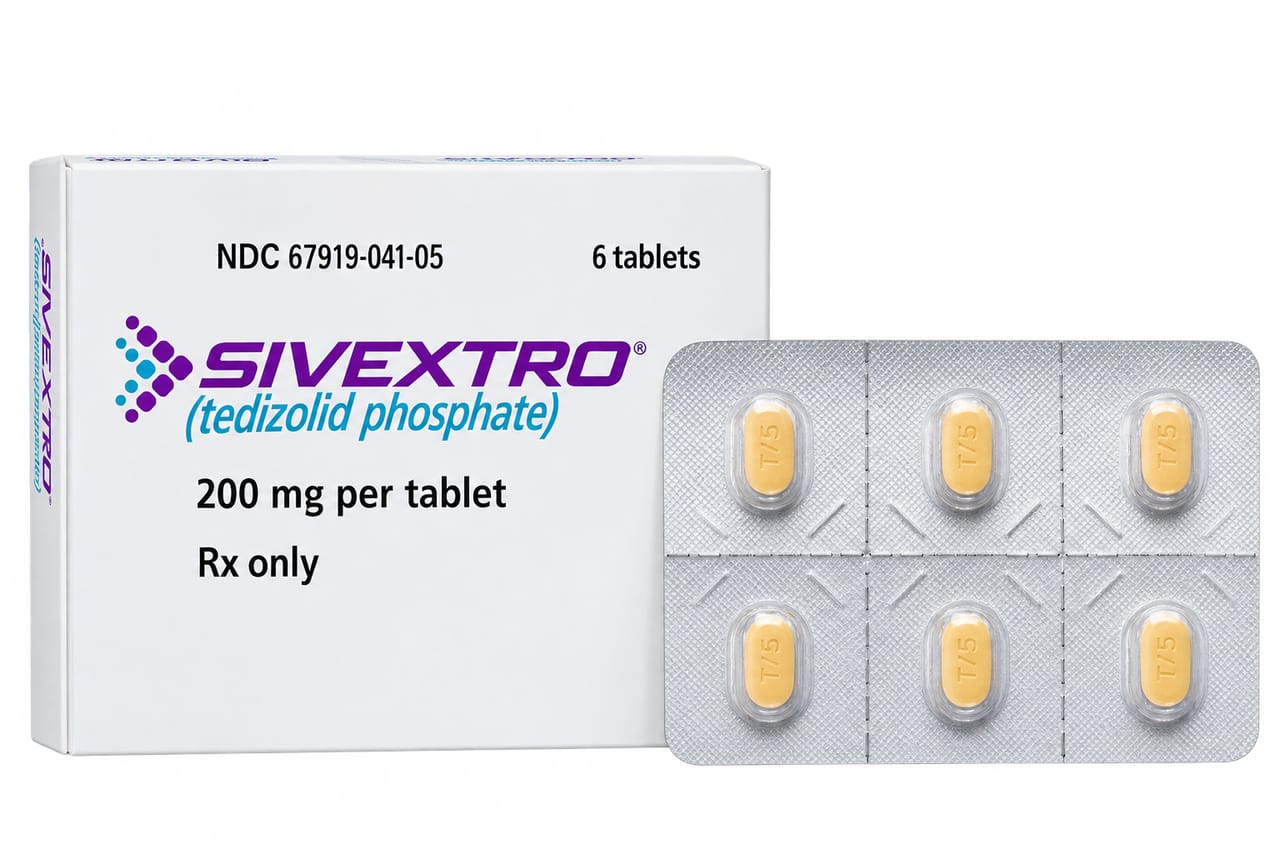
| Forms | Tablet (200 mg, film-coated) |
Quick overview
Sivextro Tablet (tedizolid phosphate) is a prescription oxazolidinone antibiotic used to treat certain bacterial skin infections. It is taken by mouth once daily for 6 days and works by stopping sensitive bacteria from making the proteins they need to grow. As with any antibiotic, it can cause side effects and requires some precautions before use.
What is Sivextro Tablet
Sivextro is a prescription antibiotic used to treat certain skin infections caused by bacteria. It comes as a tablet taken by mouth or as a liquid given through an IV into a vein.
Sivextro Tablet uses
- Acute bacterial skin infections
- Bacterial infections of the skin
- Infections of the tissues beneath the skin
- Infected wounds, when the bacteria are sensitive to this medicine
- Certain bacterial skin infections caused by susceptible Gram-positive bacteria
Benefits of Sivextro Tablet
- Helps treat bacterial skin infections
- Helps control skin and soft tissue infections
- Stops the growth of sensitive bacteria
- Helps reduce redness related to infection
- Helps improve infection symptoms
How Sivextro Tablet works
Sivextro works by stopping certain bacteria from making the proteins they need to grow, which stops the infection from spreading.
Sivextro Tablet dosage
Take Sivextro by mouth, with or without food. Take one tablet one time each day, at the same time every day, for 6 days. Take the full course of treatment, even if you start feeling better or miss a dose, so the infection is fully treated and bacteria don't become harder to treat. Do not give the tablets to children who weigh less than 77 pounds (35 kg).
If you miss a dose, take it as soon as you remember, but if it's less than 8 hours before your next dose, skip the missed dose and take your next tablet at its regular time. Do not take two doses together.
| Age group | Dose |
|---|---|
| Under 18 years | Not recommended |
| 18–64 years | 200 mg, once/day |
| 65+ years | 200 mg, once/day |
Available forms and strengths
- Tablet (200 mg, film-coated)
Side effects of Sivextro Tablet
Common
- Nausea
- Vomiting
- Diarrhea
- Headache
- Dizziness
- Pain, itching, swelling, or redness near the infusion/injection site
- Pain or inflammation of veins (phlebitis)
- Changes in liver function tests
Serious
- Hives, difficulty breathing, or swelling of the face, lips, tongue, or throat (allergic reaction)
- Severe stomach pain, watery or bloody diarrhea (even months after the last dose)
- Numbness or tingling
- Vision problems, severe headache, or pain behind the eyes
- Sores or white patches in the mouth or on the skin
- Vaginal itching or discharge
- Fast or pounding heartbeats
- Fever, chills, tiredness, easy bruising, unusual bleeding, pale skin, cold hands and feet, or lightheadedness (signs of low blood cell counts)
- Signs of serotonin syndrome: high body temperature, sweating, agitation, trouble with coordination, stiff or twitching muscles, unusual eye movements, or tremors
Warnings and precautions
- This medicine can cause a serious intestinal infection called C. diff (Clostridioides difficile) diarrhea, which can range from mild to life-threatening and can happen even two or more months after finishing treatment.
- This medicine hasn't been well studied in people with very low white blood cell counts (neutropenia), so other treatments should be considered for these patients.
- This medicine only treats bacterial infections, not viral infections like the common cold or flu. Taking it when it is not needed can make bacteria harder to treat in the future.
- Tell your doctor about all other medicines you take, since this drug can change how other medicines work, especially methotrexate, topotecan, and rosuvastatin.
- It isn't known if this medicine can harm an unborn baby. Tell your doctor if you are pregnant or planning to become pregnant so you can decide together whether to use this medicine.
- It isn't known if this medicine passes into breast milk. Talk to your doctor before breastfeeding while using it.
- No dose change is needed for people with kidney problems, including those on dialysis. No dose change is needed for people with liver problems.
- There's no known direct interaction between this medicine and alcohol, but heavy drinking can weaken your immune system and make it harder for your body to fight the infection.
- This medicine can affect your alertness or coordination, so avoid driving or other activities that need full attention until you know how it affects you.
Storage
- Store SIVEXTRO at room temperature between 68°F to 77°F (20°C to 25°C)
- Keep SIVEXTRO and all medicines out of the reach of children
- Keep each tablet in its blister pack until you are ready to take it
- Store in a cool, dry place away from moisture and heat
When to see a doctor
Get emergency help right away if you have signs of a serious allergic reaction, such as hives, trouble breathing, or swelling of your face, lips, tongue, or throat.
Call your doctor right away if you have watery or bloody diarrhea, diarrhea that doesn't go away, severe stomach cramps, or fever, since this could be a serious gut infection.
Call your doctor right away if you notice signs of low blood cell counts, such as fever, chills, tiredness, easy bruising, unusual bleeding, pale skin, cold hands and feet, or feeling lightheaded.
Call your doctor right away if you have vision problems, severe headache, or pain behind your eyes.
If you think you or someone else has taken too much of this medicine, get emergency medical help right away or contact a poison control center.
Alternatives
- Ceftaroline
- Vancomycin
- Zyvox
Watch the video
FAQs
What is Sivextro Tablet used for?
Sivextro Tablet is used to treat certain bacterial skin infections, including acute bacterial skin infections, infections of tissues beneath the skin, and infected wounds caused by susceptible Gram-positive bacteria.
How is Sivextro Tablet taken?
Sivextro is taken by mouth, with or without food, as one tablet once daily at the same time each day for 6 days. The full course should be completed even if you start feeling better.
What should I do if I miss a dose of Sivextro?
If you miss a dose, take it as soon as you remember. However, if it's less than 8 hours before your next dose, skip the missed dose and take your next tablet at its regular time. Do not take two doses together.
What are the serious side effects of Sivextro Tablet?
Serious side effects include allergic reactions, severe or bloody diarrhea (even months after stopping), numbness or tingling, vision problems, signs of low blood cell counts, fast heartbeats, and signs of serotonin syndrome.
Can Sivextro Tablet be used in people with kidney or liver problems?
No dose change is needed for people with kidney problems, including those on dialysis, or for people with liver problems.
General information, not medical advice
Your prescriber and the leaflet in your pack know your situation. This page does not.
- Follow your prescriber and the leaflet
- Don't start, stop, or change a dose on your own
- Doses and warnings differ by country and product
Sources
Video
Related medicines
Zyvox Tablet: Uses, Dosage, Side Effects, Precautions and Alternates
Oxazolidinone antibiotic
Zyvox Tablet (linezolid) treats serious bacterial infections like MRSA and VRE. Learn about uses, dosage, side effects, and important drug warnings.
Linezolid Injection: Uses, Dosage, Side Effects, Precautions and Alternates
Oxazolidinone antibiotic
Linezolid Injection is an IV antibiotic for serious bacterial infections like pneumonia and skin infections. Learn uses, dosage, and side effects.