
Safety
General information, not medical advice
Your prescriber and the leaflet in your pack know your situation. This page does not.
- Follow your prescriber and the leaflet
- Don't start, stop, or change a dose on your own
- Doses and warnings differ by country and product
Zyvox Tablet: Uses, Dosage, Side Effects, Precautions and Alternates
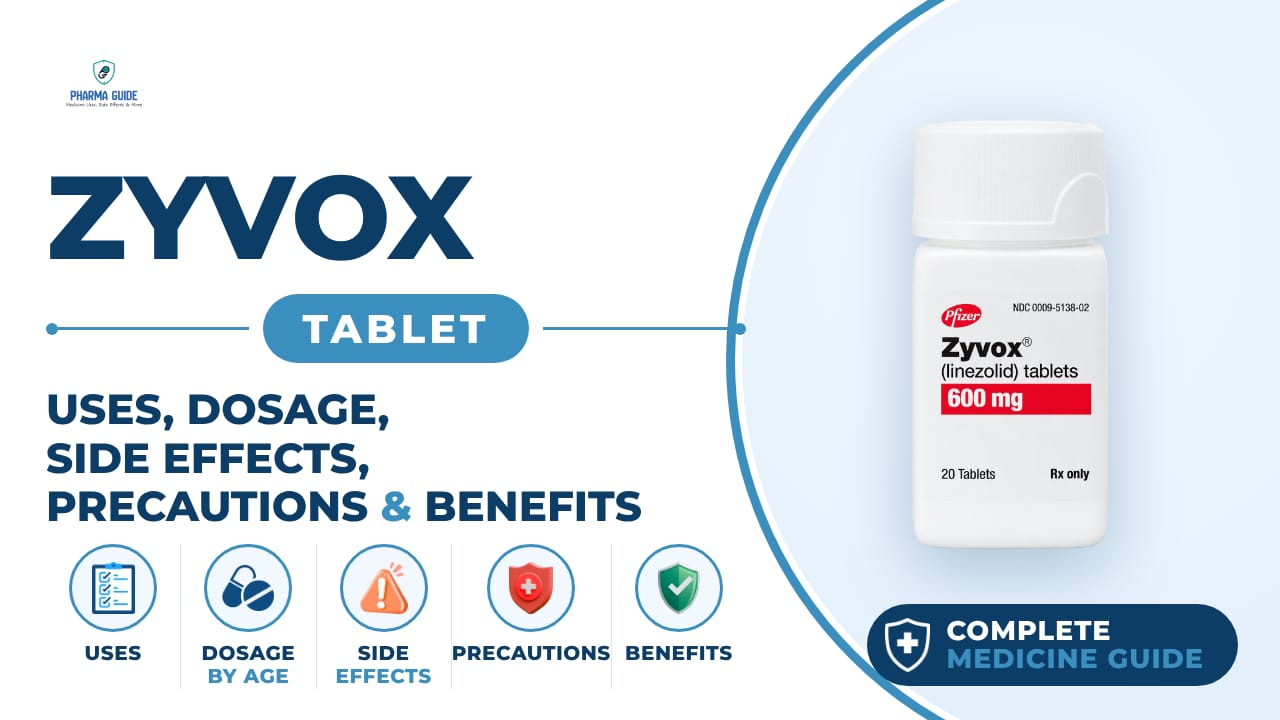
| Generic name | Linezolid |
|---|---|
| Drug class | Oxazolidinone antibiotic |
| Forms | Film-coated tablet, Granules for oral suspension, Solution for infusion (injection) |
Quick overview
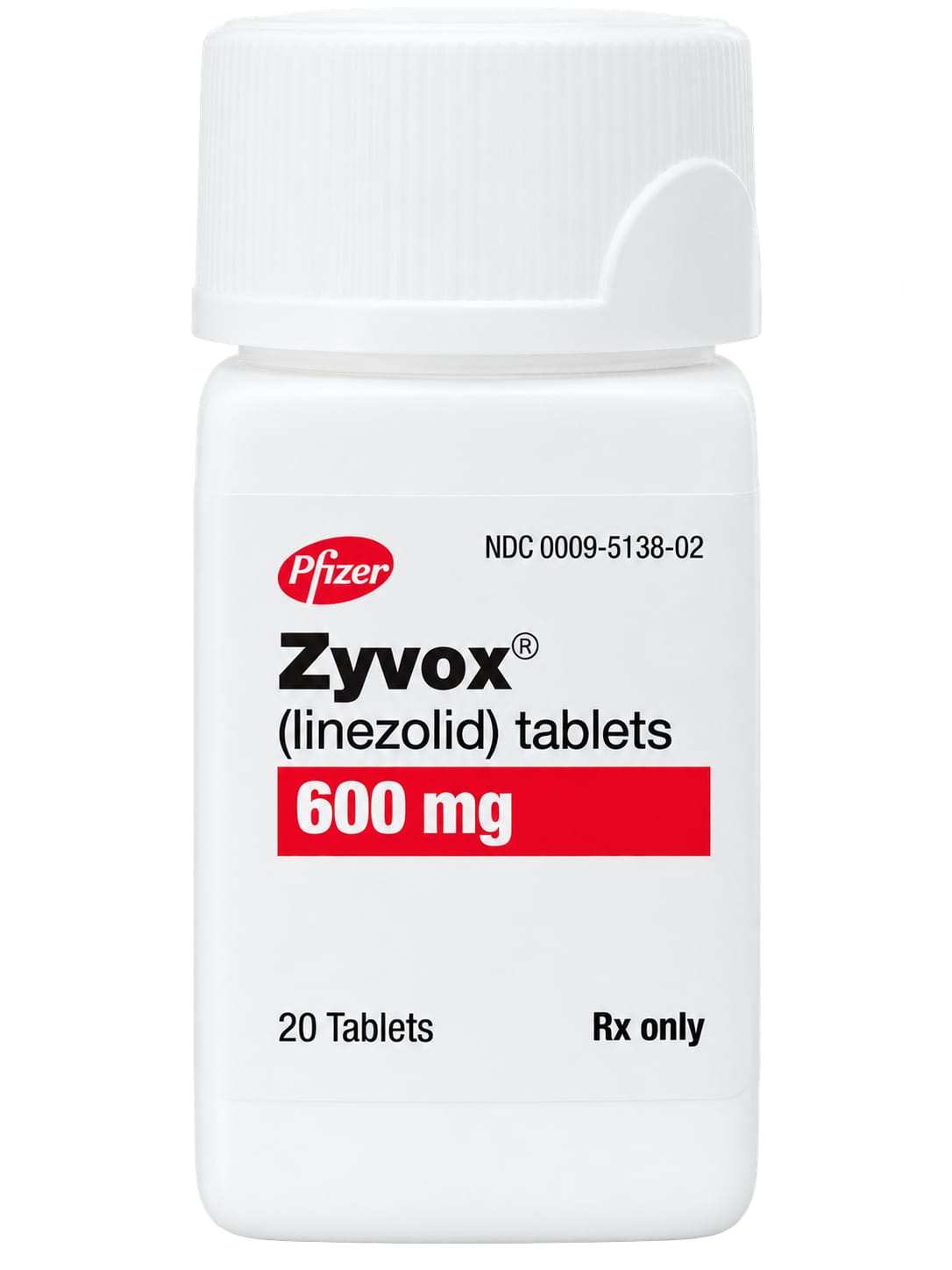
Zyvox Tablet contains linezolid, an oxazolidinone antibiotic used to treat serious bacterial infections. It works against many Gram-positive bacteria, including strains resistant to other antibiotics such as MRSA and vancomycin-resistant enterococci. It can be taken by mouth or given by IV with no dose change needed. Zyvox should be used exactly as prescribed and for the full length of time directed by your doctor.
What is Zyvox Tablet
Zyvox is an antibiotic that contains linezolid. It belongs to a class of medicines called oxazolidinones and is used to treat serious bacterial infections.
Zyvox Tablet uses
- Nosocomial (hospital-acquired) pneumonia
- Community-acquired pneumonia
- Complicated skin and soft tissue infections, including diabetic foot infections, without concomitant osteomyelitis
- Uncomplicated skin and skin structure infections
- Infections caused by vancomycin-resistant Enterococcus faecium, including cases with bloodstream infection
- Infections caused by methicillin-resistant and methicillin-susceptible Staphylococcus aureus
Benefits of Zyvox Tablet
- Active against many Gram-positive bacteria, including strains resistant to other antibiotics such as MRSA and vancomycin-resistant enterococci
- Can be taken by mouth or given by IV with no dose change needed, since it is absorbed into the body almost completely when swallowed
- Works differently from many other antibiotics, so bacteria that resist other drug classes are still usually sensitive to it
How Zyvox Tablet works
Linezolid stops bacteria from making the proteins they need to survive. It attaches to a part of the bacteria's ribosome (the cell's protein-making machinery) and blocks a key step in that process. This usually stops bacteria from multiplying, and for some bacteria it kills them outright.
Zyvox Tablet dosage
Tablets can be taken with or without food. Take this medicine exactly as prescribed and for the full length of time, even if you start feeling better early. Do not skip doses or stop early, since this can make the infection harder to treat and help bacteria become resistant. No dose change is needed if your doctor switches you from the injection form to tablets, or the other way around. Zyvox only treats bacterial infections, not viral infections like the common cold. Tell your doctor if you develop watery or bloody diarrhea, even if it happens weeks after you finish taking this medicine.
| Age group | Dose |
|---|---|
| 12–17 years | Usually 600 mg every 12 hours |
| 18–64 years | Usually 600 mg every 12 hours |
Available forms and strengths
- Film-coated tablet
- Granules for oral suspension
- Solution for infusion (injection)
Side effects of Zyvox Tablet
Common
- Diarrhea
- Headache
- Nausea
- Vomiting
- Insomnia
- Constipation
- Rash
- Dizziness
- Fever
- Taste alteration
- Oral or vaginal yeast infection (candidiasis/moniliasis)
Serious
- Low blood cell counts (anemia, low white cells, low platelets, or pancytopenia)
- Serotonin syndrome (agitation, hallucinations, fever, sweating, fast heart rate, muscle stiffness, twitching, loss of coordination, nausea, vomiting, diarrhea)
- Lactic acidosis (unusual muscle pain, trouble breathing, stomach pain, vomiting, irregular heart rate, feeling very weak or tired)
- Peripheral neuropathy and optic neuropathy, sometimes leading to vision loss, mostly with use longer than 28 days
- Severe diarrhea or colitis caused by Clostridium difficile, which can occur even weeks after stopping the medicine
- Seizures (convulsions)
- Severe allergic reaction (hives, difficulty breathing, swelling of face or throat)
- Severe skin reactions such as Stevens-Johnson syndrome or toxic epidermal necrolysis
- Rhabdomyolysis (muscle breakdown)
- Low sodium levels in the blood (hyponatremia)
Warnings and precautions
- This medicine can lower your blood cell counts, including red cells, white cells, and platelets. Your doctor should check your blood counts weekly, especially if you take it for more than two weeks.
- Taking this medicine with certain antidepressants or other serotonin-affecting drugs can trigger a dangerous condition called serotonin syndrome, with symptoms like confusion, high fever, muscle stiffness, and loss of coordination.
- This medicine can cause severe diarrhea from an overgrowth of bacteria called Clostridium difficile, ranging from mild to life-threatening, and this can happen even up to two months after you stop taking it.
- Nerve damage affecting the eyes or limbs has happened in people taking this medicine, usually after more than 28 days of use, and can sometimes lead to permanent vision loss.
- This medicine is not effective against Gram-negative bacteria, so if that type of infection is suspected along with your current infection, your doctor needs to treat it with a different, specific antibiotic right away.
- This medicine should not be used by people taking certain antidepressants, migraine medicines called triptans, or medicines called MAO inhibitors, because of the risk of dangerous interactions.
- Eating large amounts of foods high in tyramine, like aged cheese, cured meats, and soy sauce, while on this medicine can cause a dangerous spike in blood pressure.
- Seizures have occurred rarely in people taking this medicine, most often in those who already had a history of seizures or risk factors for them.
- In a study of patients with catheter-related bloodstream infections, more people died in the group taking this medicine compared with the comparison antibiotics, particularly when a Gram-negative infection was also present. This medicine is not approved to treat catheter-related bloodstream infections.
- There isn't enough information from studies in pregnant women to know the risks for sure. This medicine should be used in pregnancy only if your doctor decides the benefit is greater than the possible risk to the baby.
- It isn't known for certain whether this medicine passes into human breast milk, but since many drugs do, caution is advised if you are breastfeeding while taking it.
- No dose change is usually needed for kidney problems, but if your kidney function is severely reduced, your doctor will weigh the benefits against possible risks from higher levels of breakdown products of the drug in your body.
- No dose adjustment is usually needed for mild to moderate liver problems. There isn't enough information on severe liver impairment, so your doctor will use this medicine only if they judge the benefit outweighs the risk.
- Avoid alcoholic drinks that are high in tyramine, such as tap beer and red wine, because combining them with this medicine can cause a dangerous rise in blood pressure.
- It isn't known whether this medicine affects your ability to drive or operate machinery, because this hasn't been formally studied.
Storage
- Film-coated tablets: Store below 30°C.
- Keep out of children's reach.
- Store in the original package to protect from light.
- Store at or below 25°C.
When to see a doctor
- Get emergency help right away if you have signs of a severe allergic reaction, such as hives, trouble breathing, or swelling of your face or throat.
- Call your doctor immediately if you notice any changes in your vision or in how you see colors.
- Seek medical care right away if you develop severe stomach pain or diarrhea that is watery or contains blood.
- Get medical help immediately if you have a seizure while taking this medicine.
- Contact your doctor right away if you notice signs of serotonin syndrome, such as agitation, hallucinations, fever, heavy sweating, a fast heartbeat, muscle stiffness or twitching, loss of coordination, nausea, vomiting, or diarrhea.
- Seek medical attention if you develop signs of lactic acidosis, including unusual muscle pain, trouble breathing, stomach pain, vomiting, an irregular heartbeat, or feeling very weak or tired.
- Call your doctor if you notice signs of low blood cell counts, such as fever, chills, tiredness, unusual bruising or bleeding, pale skin, or feeling short of breath.
Alternatives
- Vancomycin
- Daptomycin
- Tedizolid
Watch the video
FAQs
What is Zyvox Tablet used for?
Zyvox treats serious bacterial infections including hospital-acquired and community-acquired pneumonia, complicated and uncomplicated skin infections, and infections caused by vancomycin-resistant Enterococcus faecium and Staphylococcus aureus (including MRSA).
How does Zyvox Tablet work?
Linezolid stops bacteria from making the proteins they need to survive by attaching to a part of the bacteria's ribosome and blocking a key step in protein production, which stops bacteria from multiplying and can kill them outright.
Can Zyvox tablets be taken with food?
Yes, Zyvox tablets can be taken with or without food.
What foods should be avoided while taking Zyvox?
Avoid large amounts of foods high in tyramine, like aged cheese, cured meats, and soy sauce, as well as alcoholic drinks high in tyramine such as tap beer and red wine, since combining them with this medicine can cause a dangerous rise in blood pressure.
What are the serious side effects of Zyvox Tablet?
Serious side effects include low blood cell counts, serotonin syndrome, lactic acidosis, peripheral and optic neuropathy (mostly with use longer than 28 days), severe diarrhea or colitis from Clostridium difficile, seizures, severe allergic reactions, severe skin reactions, rhabdomyolysis, and low sodium levels.
General information, not medical advice
Your prescriber and the leaflet in your pack know your situation. This page does not.
- Follow your prescriber and the leaflet
- Don't start, stop, or change a dose on your own
- Doses and warnings differ by country and product
Sources
Video
Related medicines
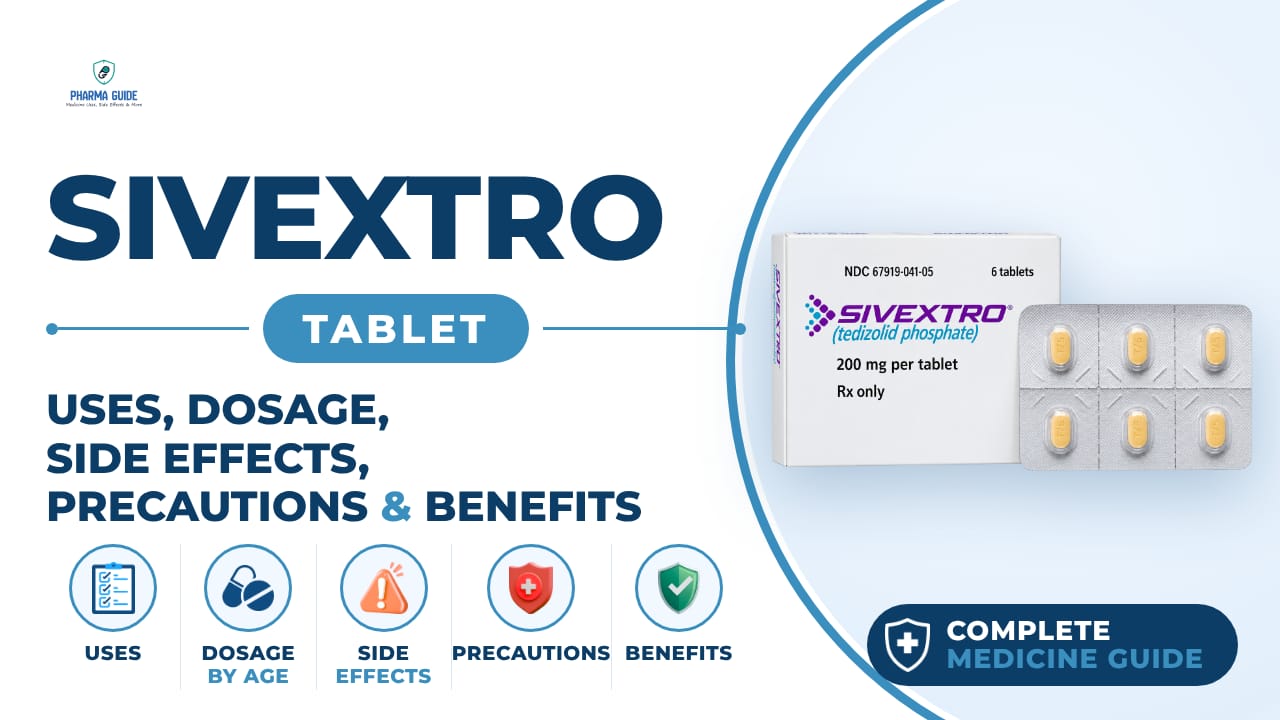
Sivextro Tablet: Uses, Dosage, Side Effects, Precautions and Alternates
Oxazolidinone antibiotic
Sivextro Tablet is a prescription antibiotic for bacterial skin infections, taken once daily for 6 days. Learn about dosage, side effects, and precautions.
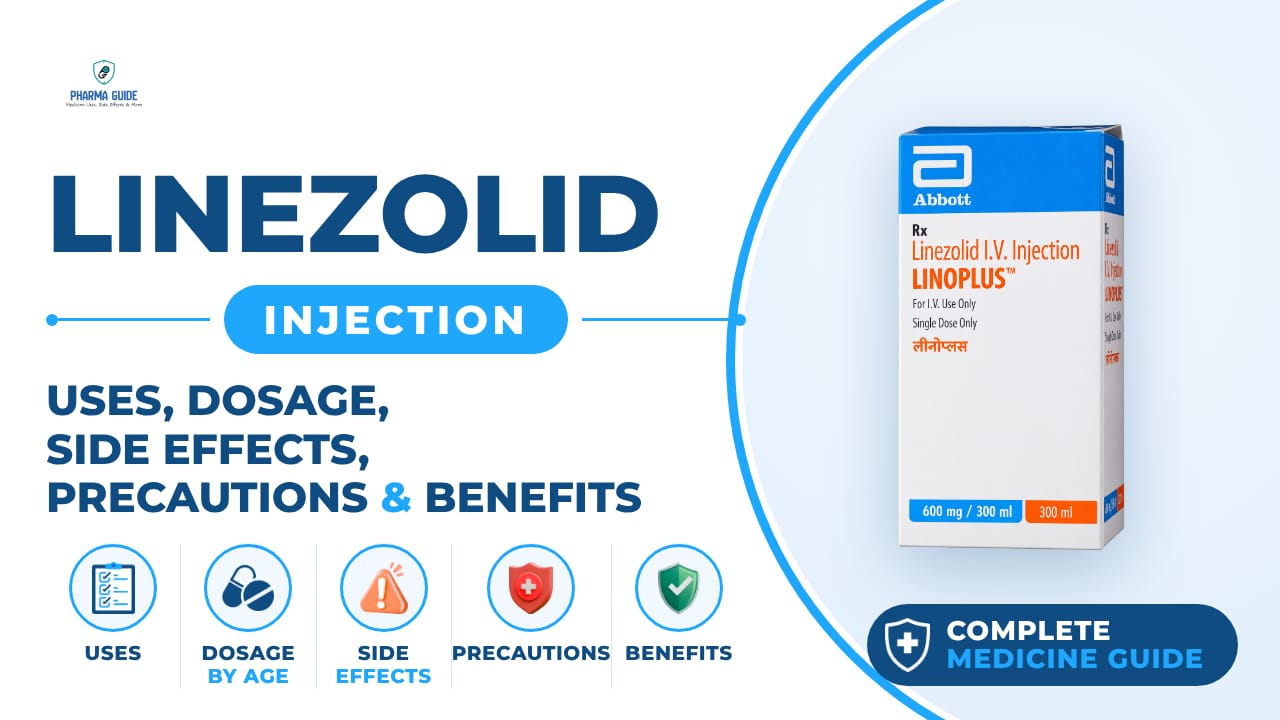
Linezolid Injection: Uses, Dosage, Side Effects, Precautions and Alternates
Oxazolidinone antibiotic
Linezolid Injection is an IV antibiotic for serious bacterial infections like pneumonia and skin infections. Learn uses, dosage, and side effects.