
Safety
General information, not medical advice
Your prescriber and the leaflet in your pack know your situation. This page does not.
- Follow your prescriber and the leaflet
- Don't start, stop, or change a dose on your own
- Doses and warnings differ by country and product
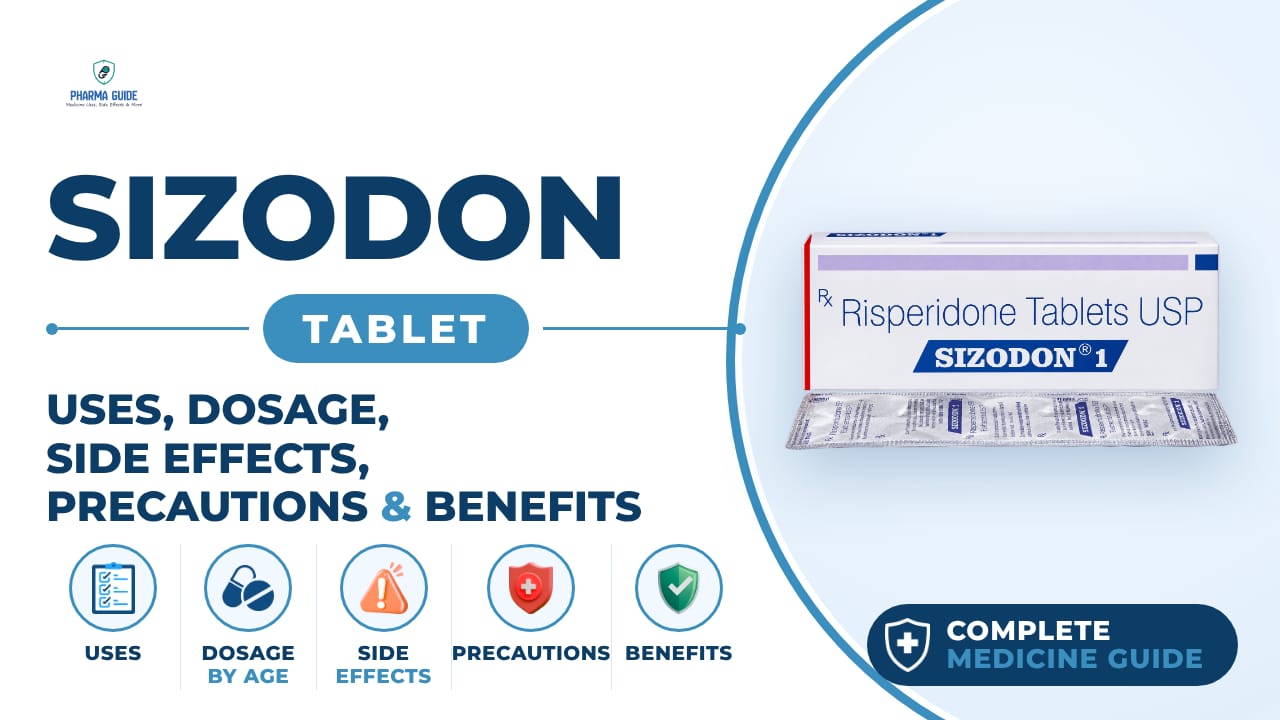
Sizodon Tablet: Uses, Dosage, Side Effects, Precautions and Alternates
| Generic name | Risperidone |
|---|---|
| Drug class | Antipsychotic (atypical antipsychotic) |
| Forms | Tablet, Oral suspension/solution |
Quick overview
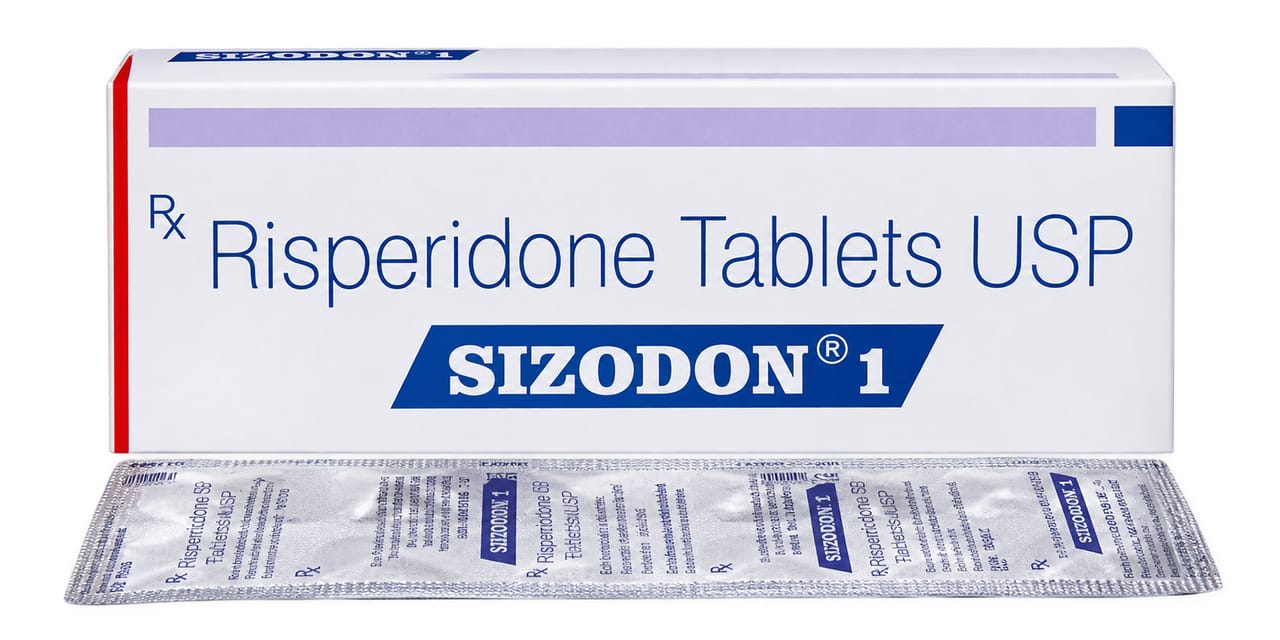
Sizodon Tablet contains Risperidone, an atypical antipsychotic medicine. It is used to treat schizophrenia, bipolar disorder, and irritability associated with autistic disorder, among other related conditions. Sizodon works by changing the effects of certain brain chemicals to help restore balance in mood, thinking, and behavior. It is available as a tablet and as an oral suspension/solution.
What is Sizodon Tablet
Sizodon is an antipsychotic medicine that contains Risperidone. It is used to treat mental health conditions like schizophrenia, bipolar disorder, and autism. It works by changing the effects of certain brain chemicals to help restore balance in mood, thinking, and behavior.
Sizodon Tablet uses
- Schizophrenia
- Bipolar disorder
- Autism (irritability associated with autistic disorder)
- Parkinson's disease (manages certain side effects of antipsychotic treatment, in combination forms)
- Restlessness and anxiety
- Mood swings
- Acute manic or mixed episodes
- Prevention of relapse in bipolar disorder
Benefits of Sizodon Tablet
- Effectively reduces psychotic symptoms like delusions and hallucinations
- Stabilizes mood swings in bipolar disorder
- Improves behavioral issues in autism spectrum disorder
- Enhances overall mental clarity and social functioning
How Sizodon Tablet works
Sizodon contains Risperidone, which blocks certain brain receptors (dopamine and serotonin) to help balance brain chemicals, reducing symptoms like hallucinations, delusions, and mood swings.
Sizodon Tablet dosage
Sizodon Tablet may be taken with or without food, as instructed by your doctor. Swallow the tablet whole with a glass of water; do not break, chew, or crush it. Take the medication at the same time every day to maintain consistent levels in your body. Some combination forms are preferably taken at night at the same time every day.
Do not stop taking the medicine suddenly without consulting your doctor, as it may worsen symptoms. It may take several weeks of regular use to show full effect. Avoid missing a scheduled dose; if a dose is missed, take it as soon as remembered unless it is almost time for the next dose, in which case skip the missed dose and do not double up.
| Age group | Dose |
|---|---|
| Under 13 years | Not recommended |
| 13–17 years | 0.5–1 mg, once daily |
| 18–60 years | 1–2 mg, once or twice daily |
| 60+ years | 0.5–1 mg, once daily |
Available forms and strengths
- Tablet
- Oral suspension/solution
Side effects of Sizodon Tablet
Common
- Drowsiness
- Sedation
- Sleeplessness
- Tremors
- Change in speech patterns
- Headaches
- Abdominal pain
- Weight gain
- Loss of balance
- Changes in vision
- Back pain
- Confusion
- Dizziness
- Constipation
- Dry mouth
- Body pain
- Decrease in libido
- Nausea
- Increased appetite
- Restlessness
- Fatigue
Serious
- Skin rashes, hives, itching/swelling (especially of the face/tongue/throat)
- Severe dizziness
- Difficulty breathing
- Neuroleptic Malignant Syndrome (high body temperature, muscle stiffness, altered consciousness)
- Tardive dyskinesia (involuntary movements of tongue, lips, and face)
- Irregular heartbeat
- Low blood pressure
Warnings and precautions
- This medicine may increase the risk of Neuroleptic Malignant Syndrome, a serious condition with high fever, muscle stiffness, and altered consciousness. Tell your doctor right away if these symptoms occur.
- This medicine may cause tardive dyskinesia, involuntary movements of the tongue, lips, and face. Report these symptoms to your doctor.
- This medicine may raise blood sugar and cholesterol levels, so regular monitoring may be needed.
- Use with caution if you have a history of seizures or conditions that increase seizure risk.
- Not recommended for young children: under thirteen years for schizophrenia, under ten years for bipolar disorder, and under five years for autism, due to lack of safety data.
- Elderly patients should use this medicine with caution due to higher risk of a sudden drop in blood pressure on standing and kidney damage.
- This medicine is not recommended for elderly patients with dementia-related psychosis, as it may raise the risk of heart failure or infections like pneumonia.
- There is an increased risk of stroke in elderly patients with dementia-related psychosis.
- Consult your doctor before using this medicine if you are pregnant or trying to get pregnant. It is not recommended unless necessary, as the doctor must weigh risks and benefits.
- This medicine is not recommended while breastfeeding. Talk to your doctor first.
- Tell your doctor if you have or had kidney problems, as this medicine should be used with caution and may need monitoring or dose adjustment.
- Tell your doctor if you have or had liver problems, as this medicine should be used with caution and may need monitoring or dose adjustment.
- Avoid alcohol while taking this medicine, as it increases the risk of severe side effects like dizziness, difficulty concentrating, and impaired judgment.
- This medicine may cause dizziness or drowsiness. Avoid driving or operating machinery if you experience these symptoms.
Storage
- Store below 30° C
- Store in a cool and dry place, protected from direct sunlight and moisture
- Keep out of the reach of children and pets
- Use the medicine before the expiry date mentioned on the packaging
- Store at room temperature, away from light and moisture, in its original container, tightly closed
When to see a doctor
- Get emergency medical help right away if you have skin rashes, hives, itching or swelling (especially of the face, tongue, or throat), severe dizziness, or difficulty breathing.
- Contact your doctor right away if you suspect an overdose, which can cause drowsiness, sedation, irregular heartbeat, low blood pressure, or convulsions.
- If you accidentally take too much, contact your doctor or visit a nearby hospital right away.
Alternatives
- Risperdal
- Risnia
- Respidon
Watch the video
FAQs
What is Sizodon Tablet used for?
Sizodon Tablet is used to treat schizophrenia, bipolar disorder, irritability associated with autistic disorder, mood swings, restlessness, anxiety, and acute manic or mixed episodes, and to prevent relapse in bipolar disorder.
How does Sizodon Tablet work?
Sizodon contains Risperidone, which blocks certain brain receptors (dopamine and serotonin) to help balance brain chemicals, reducing symptoms like hallucinations, delusions, and mood swings.
What are the common side effects of Sizodon Tablet?
Common side effects include drowsiness, sedation, sleeplessness, tremors, headaches, weight gain, dizziness, constipation, dry mouth, nausea, increased appetite, and fatigue.
Can Sizodon Tablet be taken during pregnancy or breastfeeding?
Sizodon is not recommended during pregnancy unless necessary, as the doctor must weigh risks and benefits, and it is also not recommended while breastfeeding. Consult your doctor before use in these situations.
Is alcohol safe to consume while taking Sizodon Tablet?
No, alcohol should be avoided while taking Sizodon Tablet as it increases the risk of severe side effects like dizziness, difficulty concentrating, and impaired judgment.
General information, not medical advice
Your prescriber and the leaflet in your pack know your situation. This page does not.
- Follow your prescriber and the leaflet
- Don't start, stop, or change a dose on your own
- Doses and warnings differ by country and product
Sources
Video
Related medicines

Injectafer Injection: Uses, Dosage, Side Effects, Precautions and Alternates
Iron products
Injectafer (ferric carboxymaltose) treats iron deficiency anemia and heart failure-related iron deficiency via IV. Learn uses, dosage, side effects, and

Gliclazide Tablet: Uses, Dosage, Side Effects, Precautions and Alternates
Sulfonylurea (hypoglycemic/antidiabetic agent)
Gliclazide Tablet is a sulfonylurea for type 2 diabetes that boosts insulin release. Learn about dosage, side effects, warnings, and precautions.