
Safety
General information, not medical advice
Your prescriber and the leaflet in your pack know your situation. This page does not.
- Follow your prescriber and the leaflet
- Don't start, stop, or change a dose on your own
- Doses and warnings differ by country and product
Skyrizi Injection: Uses, Dosage, Side Effects, Precautions and Alternates
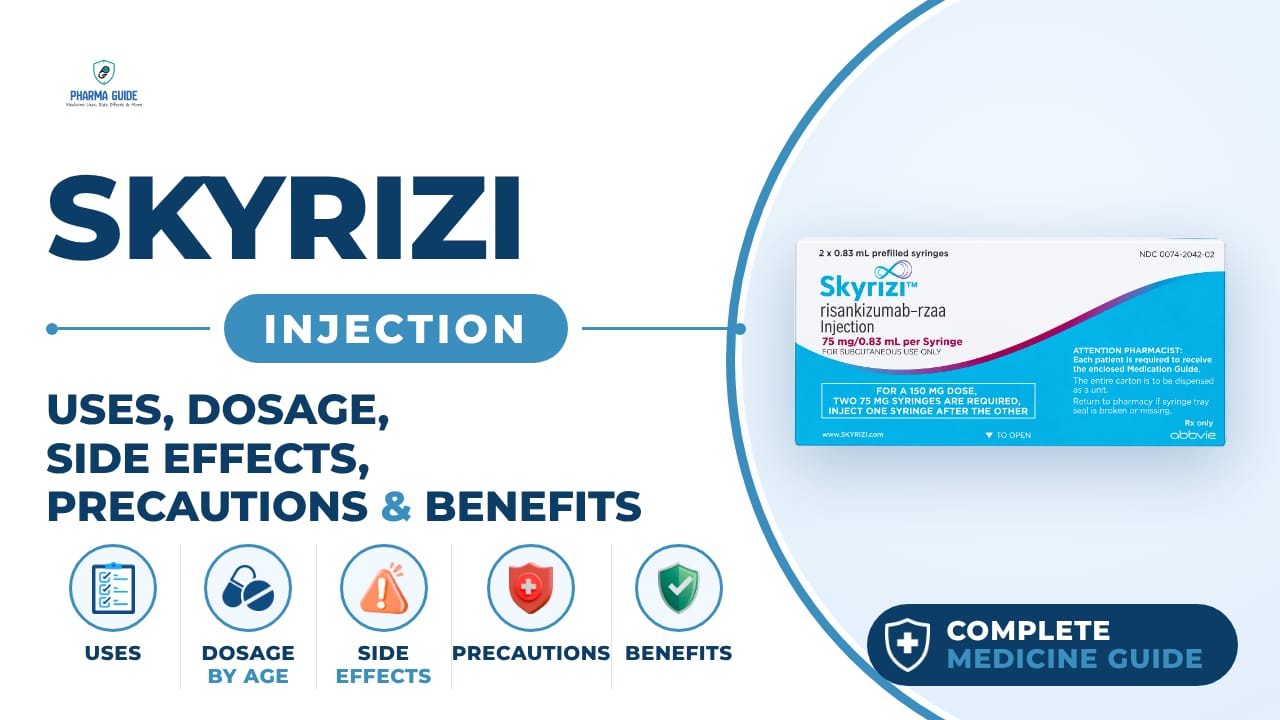
| Generic name | risankizumab-rzaa |
|---|---|
| Drug class | Interleukin-23 (IL-23) inhibitor / Interleukin inhibitors |
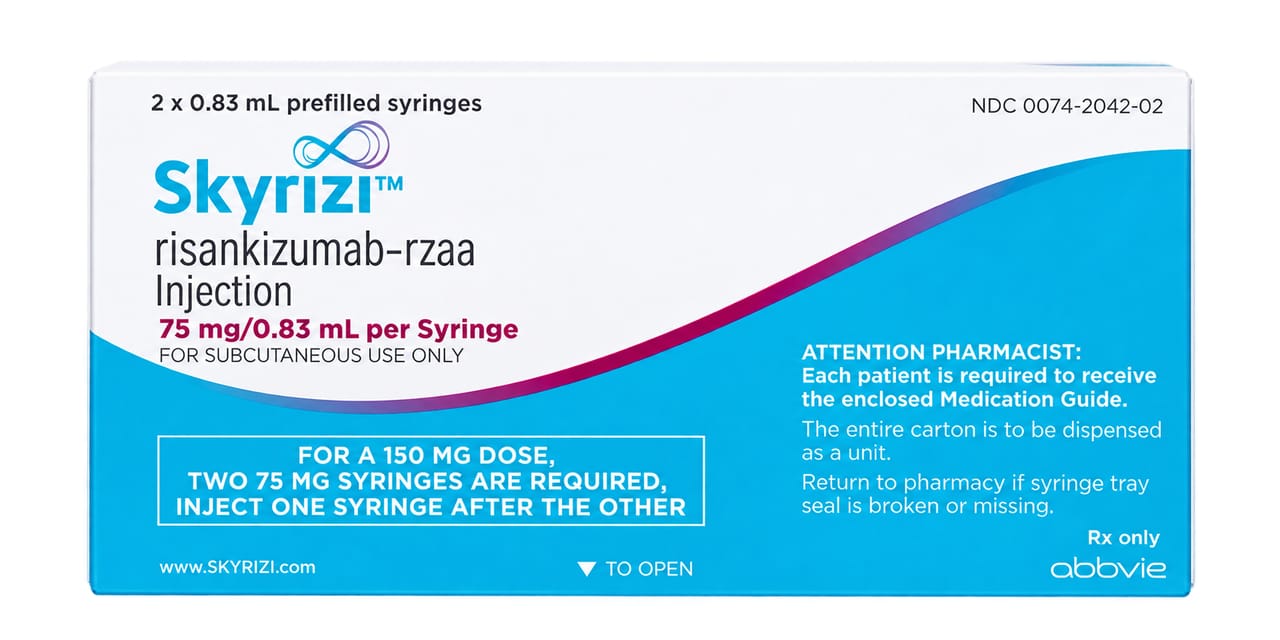
| Forms | Prefilled pen (subcutaneous injection), Prefilled syringe (subcutaneous injection), Prefilled cartridge with supplied on-body injector (subcutaneous injection), Vial for IV infusion |
Quick overview
Skyrizi Injection (risankizumab-rzaa) is a brand-name biologic that belongs to the interleukin-23 (IL-23) inhibitor class. It is given by injection or IV infusion to calm an overactive immune system in conditions such as psoriasis, psoriatic arthritis, Crohn's disease, and ulcerative colitis. By blocking IL-23, it reduces inflammation and related symptoms like skin plaques, joint pain, and abdominal pain.
What is Skyrizi Injection
Skyrizi is a brand-name biologic medicine. It is given by injection to calm down an overactive immune system in conditions like psoriasis, psoriatic arthritis, Crohn's disease, and ulcerative colitis.
Skyrizi Injection uses
- Moderate to severe plaque psoriasis in people 6 years and older
- Active psoriatic arthritis in people 6 years and older
- Moderately to severely active Crohn's disease in adults
- Moderately to severely active ulcerative colitis in adults
Benefits of Skyrizi Injection
- Reduces swelling, itching, and rashes from psoriasis
- Reduces inflammation in psoriatic arthritis, Crohn's disease, and ulcerative colitis
- Can help bring about remission (a period without noticeable symptoms) in Crohn's disease and ulcerative colitis
How Skyrizi Injection works
Skyrizi blocks a protein called interleukin-23 (IL-23), which the immune system makes too much of in these conditions and which causes inflammation. By attaching to IL-23 and stopping it from working, Skyrizi calms the overactive immune response and reduces symptoms like skin plaques, joint pain, and abdominal pain.
Skyrizi Injection dosage
This medication is injected under the skin or given as an IV infusion into a vein. It may be given by your care team in a clinic, or you may be taught how to prepare and give the injection yourself at home. If you use a pen, take off the outer needle cover before giving the dose.
Adults can give the injection to themselves. For children 10 years and older, the pen or syringe should be given by an adult or with an adult supervising. For children 6 years to under 10 years old, an adult should give the injection. IV infusions are given in a clinic or infusion center by a healthcare professional. Some maintenance doses use a wearable on-body injector that a nurse or provider will show you how to use.
Use the medication exactly as your care team directs, and do not change your dose or stop treatment without talking to them first. Put used needles and syringes in a special sharps container, not in a regular trash can. Before injecting a refrigerated dose, let it warm up out of the carton for the time your product instructions specify before use.
Use exactly as prescribed by your doctor or pharmacist.
Available forms and strengths
- Prefilled pen (subcutaneous injection)
- Prefilled syringe (subcutaneous injection)
- Prefilled cartridge with supplied on-body injector (subcutaneous injection)
- Vial for IV infusion
Side effects of Skyrizi Injection
Common
- Upper respiratory infections (colds, sinus infections)
- Headache
- Joint pain
- Fungal infections (such as athlete's foot or ringworm)
- Injection site reactions (redness, pain, bruising, swelling)
- Fatigue
- Runny or stuffy nose
- Sore throat
- Anemia (low red blood cell count)
- Fever
Serious
- Allergic reactions—skin rash, itching, hives, swelling of the face, lips, tongue, or throat
- Infection—fever, chills, cough, sore throat, wounds that don't heal, pain or trouble when passing urine, general feeling of discomfort or being unwell
- Liver injury—right upper belly pain, loss of appetite, nausea, light-colored stool, dark yellow or brown urine, yellowing skin or eyes, unusual weakness or fatigue
Warnings and precautions
- Tell your doctor if you are pregnant or planning to become pregnant.
- It isn't known if this medicine can harm an unborn baby. If you are pregnant, you may be able to join a pregnancy registry that tracks the medicine's effects on the baby.
- Tell your doctor before starting this medicine if you are breastfeeding or planning to breastfeed. It isn't known if this medicine passes into breast milk.
- Tell your doctor about liver disease; liver-function monitoring may be needed, particularly during inflammatory bowel-disease treatment. This medicine has been linked to liver injury, mainly in people treated for Crohn's disease or ulcerative colitis. Your provider will check your liver enzymes before you start and during at least the first 12 weeks of treatment.
- Avoid live vaccines during treatment unless specifically approved by your healthcare professional. Tell your doctor about all medicines and supplements you take.
- This medicine can increase your risk of serious bacterial, viral, or fungal infections. Do not start it if you have an active infection that matters clinically.
- Your provider will test you for tuberculosis (TB) before you start this medicine. Do not use it if you have active TB; if you have latent TB, TB treatment will be started first.
- This medicine can cause serious allergic reactions, including a severe whole-body reaction called anaphylaxis.
- Make sure your vaccines are up to date before starting, and do not get live vaccines while using this medicine.
- This medicine can decrease how well vaccines work. Tell your care team you are on this medicine if you need to be vaccinated, since extra booster doses may be needed.
Storage
- Store in a refrigerator. Do not freeze. Discard if it has been frozen.
- Do not shake Skyrizi.
- Protect from light. Keep it in the original carton until you are ready to use it.
- Remove the dose from the carton about 30 to 45 minutes before it is time to take it (specific warm-up time depends on the product, from 15 to 90 minutes).
- Diluted IV solutions can be stored refrigerated for up to 20 hours, or at room temperature below 77°F (25°C) for up to 8 hours after preparation.
- Do not use after the expiration date on the carton.
- Keep out of the reach of children and pets.
- Dispose of unused medication through a medication take-back program; if none is available, ask your pharmacist or care team how to safely get rid of it.
When to see a doctor
- Get emergency medical help right away if you have swelling of the face, lips, tongue, or throat, trouble breathing, or a sudden widespread rash.
- Stop using this medicine and get emergency help right away for signs of a serious allergic reaction, such as fainting, dizziness, swelling of the face or throat, trouble breathing, chest tightness, rash, hives, or itching.
- Call your doctor right away if you have signs of infection, such as fever, night sweats, chills, sore throat, mouth sores, easy bruising, chest discomfort, wheezing, rapid weight loss, burning when you urinate, or unusual skin sores.
- Tell your healthcare provider right away if you have signs of liver problems, such as unexplained rash, nausea, vomiting, loss of appetite, upper right stomach pain, tiredness, itching, dark urine, clay-colored stools, or yellowing of the skin or eyes.
- If you think you have taken too much of this medicine, contact a poison control center or go to an emergency room right away.
Alternatives
- Adalimumab
- Secukinumab
- Tildrakizumab
- Guselkumab
Watch the video
FAQs
What is Skyrizi Injection used for?
Skyrizi is used for moderate to severe plaque psoriasis and active psoriatic arthritis in people 6 years and older, and for moderately to severely active Crohn's disease and ulcerative colitis in adults.
How does Skyrizi Injection work?
Skyrizi blocks a protein called interleukin-23 (IL-23), which the immune system overproduces in these conditions and which causes inflammation. By stopping IL-23 from working, it calms the overactive immune response and reduces symptoms like skin plaques, joint pain, and abdominal pain.
How is Skyrizi Injection given?
It is injected under the skin or given as an IV infusion into a vein. It may be given by your care team or you may be taught to prepare and give the injection yourself at home using a prefilled pen, syringe, or on-body injector.
What are the common side effects of Skyrizi Injection?
Common side effects include upper respiratory infections, headache, joint pain, fungal infections, injection site reactions, fatigue, runny or stuffy nose, sore throat, anemia, and fever.
Can I get vaccines while using Skyrizi Injection?
You should avoid live vaccines during treatment unless specifically approved by your healthcare professional, and make sure your vaccines are up to date before starting, since this medicine can decrease how well vaccines work.
General information, not medical advice
Your prescriber and the leaflet in your pack know your situation. This page does not.
- Follow your prescriber and the leaflet
- Don't start, stop, or change a dose on your own
- Doses and warnings differ by country and product
Sources
Video
Related medicines

Injectafer Injection: Uses, Dosage, Side Effects, Precautions and Alternates
Iron products
Injectafer (ferric carboxymaltose) treats iron deficiency anemia and heart failure-related iron deficiency via IV. Learn uses, dosage, side effects, and

Gliclazide Tablet: Uses, Dosage, Side Effects, Precautions and Alternates
Sulfonylurea (hypoglycemic/antidiabetic agent)
Gliclazide Tablet is a sulfonylurea for type 2 diabetes that boosts insulin release. Learn about dosage, side effects, warnings, and precautions.