
Safety
General information, not medical advice
Your prescriber and the leaflet in your pack know your situation. This page does not.
- Follow your prescriber and the leaflet
- Don't start, stop, or change a dose on your own
- Doses and warnings differ by country and product
Slow-K Tablet: Uses, Dosage, Side Effects, Precautions and Alternates
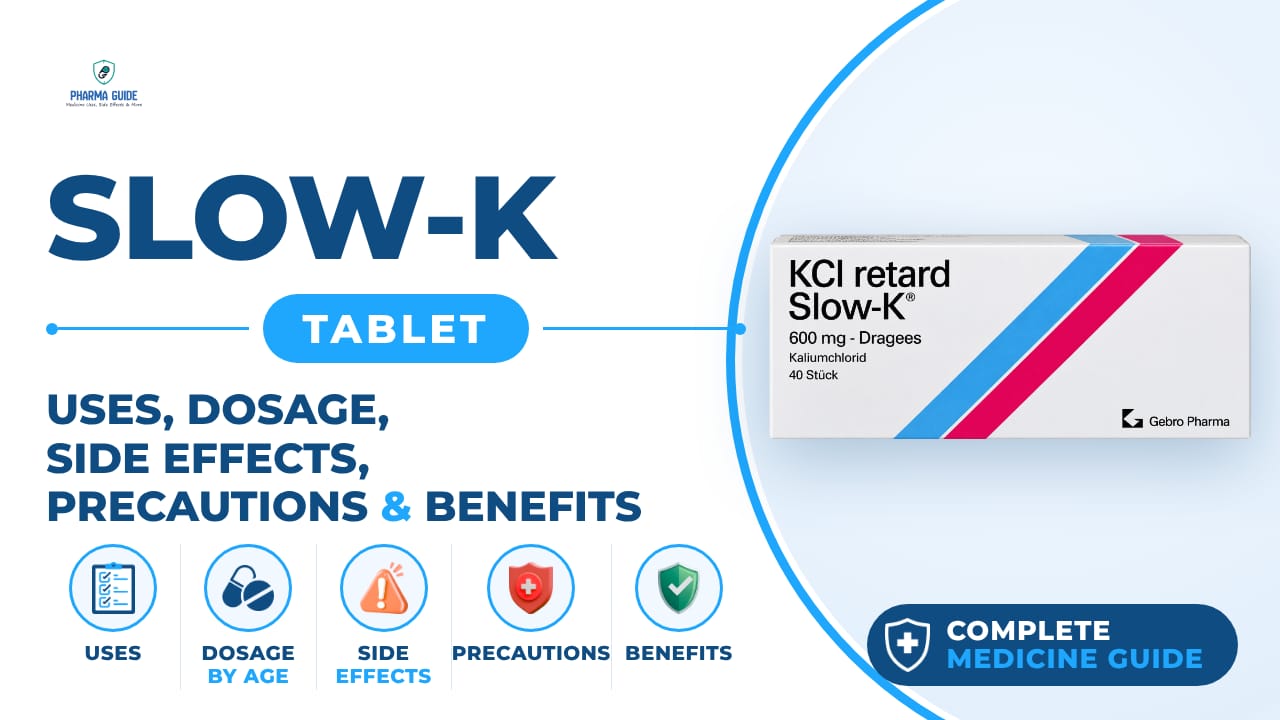
| Generic name | potassium chloride |
|---|---|
| Drug class | minerals and electrolytes (potassium supplement) |
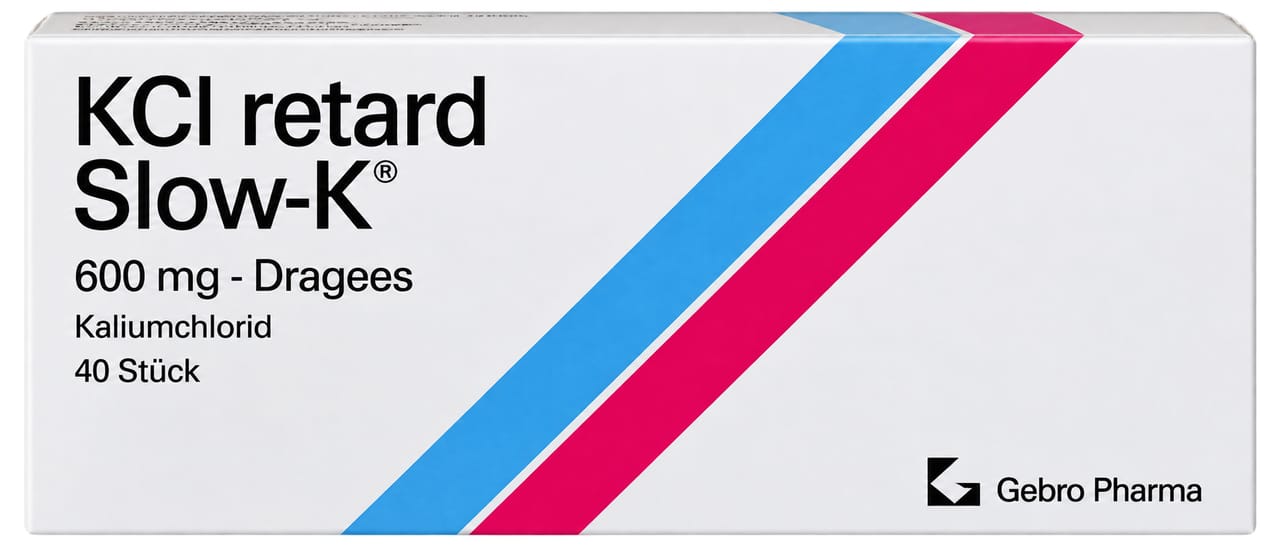
| Forms | Extended-release (slow-release) sugar-coated tablet |
Quick overview
Slow-K is an extended-release tablet containing potassium chloride, used to prevent or treat low potassium levels (hypokalemia) in the blood. It releases potassium gradually as it passes through the digestive tract, helping support normal muscle, nerve, and heart function. It is commonly prescribed for people at risk of low potassium, such as those taking diuretics or digitalis medicines.
What is Slow-K Tablet
Slow-K is an electrolyte replenisher, a mineral supplement used to prevent or treat low levels of potassium in the blood. It is a slow-release tablet that releases potassium chloride gradually as it moves through the digestive tract.
Slow-K Tablet uses
- Treating potassium depletion (hypokalemia), with or without metabolic alkalosis
- Preventing low potassium levels in people at risk, such as those taking digitalis or diuretics, or with significant heart rhythm problems
- Treating digitalis intoxication
- Treating hypokalemic familial periodic paralysis
- Preventing potassium deficiency caused by certain drugs (like digitalis or water pills) or diseases (like kidney disease or diarrhea/vomiting)
Benefits of Slow-K Tablet
- Helps prevent and treat low potassium levels (hypokalemia)
- Replaces potassium lost through diuretics ("water pills"), vomiting, diarrhea, or certain medical conditions
- Supports normal muscle and nerve function
- Helps maintain a normal heart rhythm when potassium deficiency is present
- Supports proper fluid and electrolyte balance in the body
- The prolonged-release formulation provides potassium gradually over time, which can help reduce sudden high concentrations in the stomach
How Slow-K Tablet works
Potassium is a mineral your body needs for nerve signals, muscle contraction (including the heart), and normal kidney function. Slow-K slowly releases potassium chloride as it passes through the intestine so it can be absorbed steadily over several hours instead of all at once.
Slow-K Tablet dosage
Take each dose with meals and with a full glass of water or other liquid. Do not take on an empty stomach, since this can irritate the stomach. Swallow tablets whole; never crush, chew, or suck them. Take while sitting upright.
Take your dose following the frequency and amount your doctor prescribed, especially if you are also taking diuretics or digitalis medicines. Take the medicine at the same time each day to help you remember. If you have trouble swallowing tablets or they seem to stick in your throat, contact your doctor right away.
If you miss a dose and remember within a couple of hours, take it right away with a full glass of liquid, then continue your regular schedule; if you remember later, skip the missed dose and do not double up. You may notice the empty wax matrix in your stool after the potassium has been absorbed — this is normal.
| Age group | Dose |
|---|---|
| Under 18 years | Dose is individualized according to potassium levels and body weight; specialist supervision recommended |
| 18–64 years – Prevention | Commonly 2–3 tablets daily, divided according to the prescribed regimen |
| 18–64 years – Treatment | Commonly 5–12 tablets daily in divided doses, adjusted according to blood potassium |
| 65+ years | Individualize carefully according to kidney function and serum potassium |
Available forms and strengths
- Extended-release (slow-release) sugar-coated tablet
Side effects of Slow-K Tablet
Common
- Stomach pain or upset
- Nausea
- Vomiting
- Gas (flatulence)
- Diarrhea
- Skin rash (rare)
Serious
- Difficult or painful swallowing, or feeling like the tablet is stuck in the throat
- Signs of an allergic reaction, such as rash, hives, itching, swollen or blistered skin, wheezing, chest or throat tightness, trouble breathing or swallowing, or swelling of the mouth, face, lips, tongue, or throat
- Signs of a high potassium level, such as an irregular heartbeat, confused thinking, feeling weak, lightheaded, or dizzy, feeling like passing out, numbness or tingling, or shortness of breath
- Slow heartbeat
- Chest pain or pressure
- Signs of bowel problems such as black, tarry, or bloody stools, fever, mucus in stools, vomiting blood or material that looks like coffee grounds, or severe stomach pain, constipation, or diarrhea
- Swelling of the belly
- Bowel obstruction, bleeding, ulceration, or perforation of the stomach or intestine
Warnings and precautions
High potassium levels (hyperkalemia) can cause dangerous heart rhythm problems and cardiac arrest, and can develop quickly without symptoms. Do not take Slow-K together with potassium-sparing water pills (such as spironolactone, triamterene, or amiloride), since this combination can cause severely high potassium levels.
Solid potassium tablets can cause ulcers, blockage, or bleeding in the stomach or intestines. Stop taking the medicine and get medical help right away if you have severe vomiting, stomach pain, bloating, or gastrointestinal bleeding.
This medicine should not be used by people who cannot pass tablets normally through the esophagus or gut, such as those with esophageal narrowing or blockage, since the tablet could become stuck and cause injury. Slow-K contains sucrose and should not be used by people with certain rare sugar intolerance conditions.
Certain other medicines, including ACE inhibitors, angiotensin receptor blockers, NSAIDs, beta-blockers, heparin, digoxin, and cyclosporine, can increase the risk of high potassium levels when taken with Slow-K. Safety and effectiveness of Slow-K have not been established in children, so it is not recommended for pediatric use.
Slow-K should only be used during pregnancy if prescribed by a doctor, since pregnancy can slow down movement of the gut and no drug should generally be taken in the first trimester without careful consideration. Potassium passes into breast milk, so Slow-K should only be used while breastfeeding if the benefit to the mother outweighs any potential risk to the baby.
People with kidney problems are at higher risk of dangerously high potassium levels because the kidneys normally remove excess potassium. Careful monitoring of blood potassium and dose adjustment is needed in kidney disease. No specific dose adjustment is established for liver impairment, but medical supervision is recommended when significant liver disease is present. No specific direct interaction with alcohol is established for Slow-K. This medicine is not expected to impair the ability to drive or operate machinery.
Storage
- Store at room temperature, according to the specific product label
- Keep in a cool, dry place away from excessive heat
- Protect tablets from moisture and direct sunlight
- Keep tablets in the original, tightly closed container until use
- Avoid storing in bathrooms or other hot and humid areas
- Keep out of reach and sight of children
When to see a doctor
- Get medical help right away if you have signs of an allergic reaction, such as rash, hives, itching, swollen or peeling skin, wheezing, tight chest or throat, trouble breathing or swallowing, or swelling of the face, lips, tongue, or throat
- Get medical help right away if you notice signs of a high potassium level, such as an irregular heartbeat, trouble thinking clearly, weakness, dizziness, feeling like you might pass out, numbness or tingling, or shortness of breath
- Get medical help right away for a slow heartbeat or chest pain or pressure
- Get medical help right away if you have signs of bowel problems, like black, tarry, or bloody stools, fever, mucus in the stools, vomiting blood or material that looks like coffee grounds, or severe stomach pain, constipation, or diarrhea
- Contact your doctor if you have trouble swallowing the tablets or if they feel like they are stuck in your throat
- Contact your doctor right away if you notice tarry stools or other signs of gastrointestinal bleeding
- If you think you have taken too much Slow-K, or someone else has taken it by accident, contact a doctor, hospital, or your local poison control center for advice right away
Alternatives
- Potassium Chloride Oral Solution
- Micro-K
- Klor-Con
- K-Dur
- Potassium Chloride Extended-Release Tablets
Watch the video
FAQs
What is Slow-K Tablet used for?
Slow-K is used to treat and prevent potassium depletion (hypokalemia), including in people taking diuretics or digitalis, and to treat digitalis intoxication and hypokalemic familial periodic paralysis.
How should I take Slow-K Tablet?
Take each dose with meals and a full glass of water, sitting upright. Swallow tablets whole without crushing, chewing, or sucking them, and do not take on an empty stomach.
What should I do if I miss a dose of Slow-K?
If you remember within a couple of hours, take it right away with a full glass of liquid and continue your schedule. If you remember later, skip the missed dose and do not double up.
What are the serious side effects of Slow-K Tablet?
Serious side effects include difficulty swallowing, signs of an allergic reaction, signs of high potassium levels such as irregular heartbeat or confusion, slow heartbeat, chest pain, and signs of bowel problems like bloody stools or severe stomach pain.
Can Slow-K be taken with other medicines?
Slow-K should not be taken with potassium-sparing diuretics like spironolactone, triamterene, or amiloride, and caution is needed with ACE inhibitors, ARBs, NSAIDs, beta-blockers, heparin, digoxin, and cyclosporine due to increased risk of high potassium levels.
General information, not medical advice
Your prescriber and the leaflet in your pack know your situation. This page does not.
- Follow your prescriber and the leaflet
- Don't start, stop, or change a dose on your own
- Doses and warnings differ by country and product
Sources
Video
Related medicines

Injectafer Injection: Uses, Dosage, Side Effects, Precautions and Alternates
Iron products
Injectafer (ferric carboxymaltose) treats iron deficiency anemia and heart failure-related iron deficiency via IV. Learn uses, dosage, side effects, and

Gliclazide Tablet: Uses, Dosage, Side Effects, Precautions and Alternates
Sulfonylurea (hypoglycemic/antidiabetic agent)
Gliclazide Tablet is a sulfonylurea for type 2 diabetes that boosts insulin release. Learn about dosage, side effects, warnings, and precautions.