
Safety
General information, not medical advice
Your prescriber and the leaflet in your pack know your situation. This page does not.
- Follow your prescriber and the leaflet
- Don't start, stop, or change a dose on your own
- Doses and warnings differ by country and product
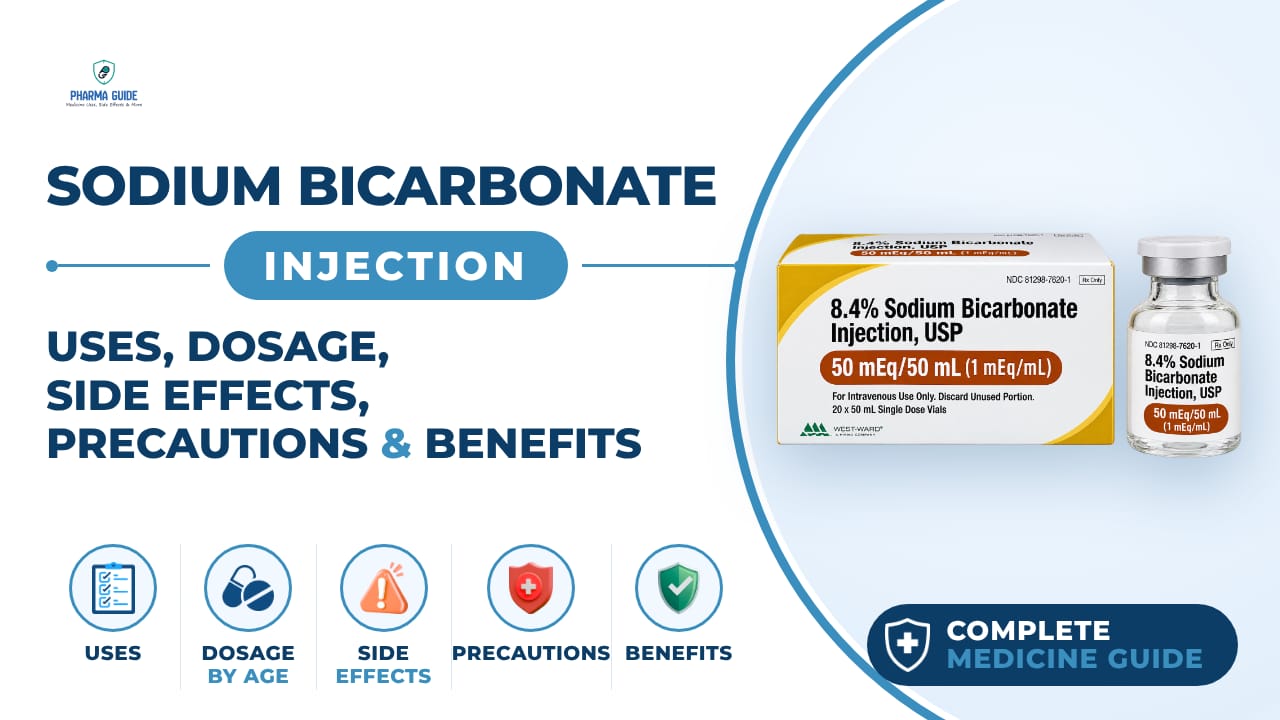
Sodium Bicarbonate Injection: Uses, Dosage, Side Effects, Precautions and Alternates
| Generic name | Sodium bicarbonate |
|---|---|
| Drug class | Alkalinizing agent / Electrolyte |
| Forms | Solution for injection, Solution for infusion, Tablet |
Quick overview
Sodium Bicarbonate Injection is a sterile solution given into a vein to treat conditions caused by too much acid in the blood. It is used to raise blood pH in metabolic acidosis, help manage certain cases of high potassium levels and drug poisoning, and support treatment during cardiac arrest with pre-existing metabolic acidosis. It is given by a doctor or nurse in a hospital setting, with dosing and administration carefully controlled based on age and condition.
What is Sodium Bicarbonate Injection
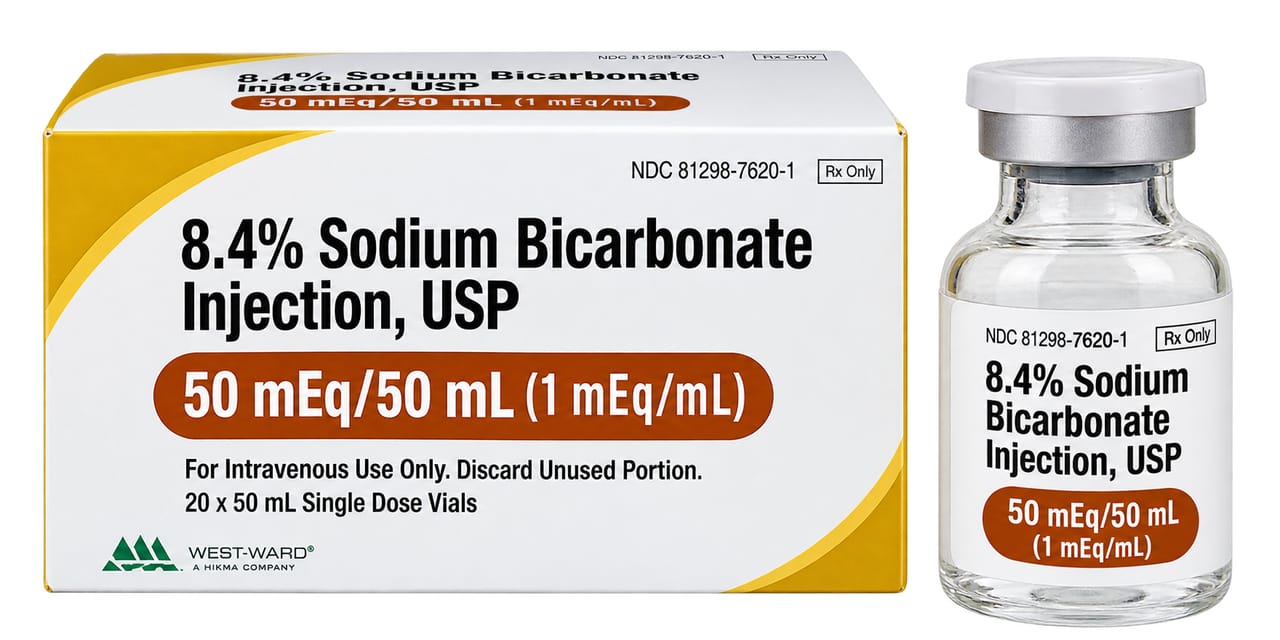
Sodium bicarbonate injection is a sterile solution given into a vein to treat conditions caused by too much acid in the blood. The generic name is sodium bicarbonate, and it belongs to the alkalinizing agent / electrolyte drug class.
Sodium Bicarbonate Injection uses
- Raise blood pH in adults and children with significant metabolic acidosis
- Alkalinize the urine in drug poisoning to help the body get rid of certain drugs
- Correct metabolic acidosis associated with cardiac arrest in patients with pre-existing metabolic acidosis
- Treat cardiac arrest associated with high potassium levels with pre-existing metabolic acidosis
- Treat life-threatening high potassium levels with pre-existing metabolic acidosis
- Treat tricyclic antidepressant overdose, after other resuscitation methods have been tried
- Restore bicarbonate levels after severe diarrhea
Benefits of Sodium Bicarbonate Injection
- Helps correct metabolic acidosis.
- Helps increase blood pH when bicarbonate levels are critically low.
- Used in certain cases of severe hyperkalemia.
- May be used for tricyclic antidepressant poisoning.
- Helps restore acid–base balance in selected emergency conditions.
How Sodium Bicarbonate Injection works
The medicine adds bicarbonate to your blood, which soaks up extra acid and raises your blood's pH back toward normal.
Sodium Bicarbonate Injection dosage
Sodium Bicarbonate Injection is given by slow injection or infusion into a vein by a doctor or nurse in a hospital setting. The ready-to-use infusion bag form should not be diluted before use. It should not be given quickly in situations like cardiac arrest unless using a more concentrated solution meant for that purpose. Rapid or bolus injection should be avoided in infants and young children. For premature infants and newborns, the more concentrated solution should be diluted with dextrose solution before use. You should continue your normal diet unless your doctor tells you otherwise.
| Age group | Dose |
|---|---|
| Under 18 years | 50 mEq/day |
| 18–60 years | 50–100 mEq/day |
| 60+ years | 50–100 mEq/day |
Available forms and strengths
- Solution for injection
- Solution for infusion
- Tablet
Side effects of Sodium Bicarbonate Injection
Common
- Vomiting
- Diarrhea
- Feeling thirsty
- Redness, swelling, or pain at the injection site
Serious
- Muscle twitching or movements you can't control
- Decreased urination
- Irritability or confusion
- Seizures
- Headache
- Metabolic alkalosis (muscle twitches, irritability, tetany)
- Swelling from fluid retention (edema)
- High sodium levels in the blood
- Low potassium or low calcium levels
- Skin damage or tissue death if the medicine leaks out of the vein (extravasation)
- New born babies may have bleeding inside the skull
Warnings and precautions
- There is not enough information to say for sure whether this medicine is safe in pregnancy, but available data over many years of use have not shown it causes birth defects or pregnancy problems. It will only be given if your doctor decides it's necessary.
- There isn't enough information about whether this medicine passes into breast milk or affects a nursing baby. Your doctor will weigh the benefits of breastfeeding against your need for this medicine.
- People with kidney disease should be monitored closely because this medicine can cause the body to retain fluid, which can worsen kidney problems.
- This medicine is unlikely to affect your ability to drive or use machines.
- Do not use this medicine in emergencies needing very fast treatment, like cardiac arrest — a more concentrated solution is used for that instead.
- This medicine should not be used if you are losing chloride from vomiting or continuous stomach suction, or if you are taking certain water pills that can cause a specific type of alkalosis.
- The medicine can cause your body to hold onto extra sodium and fluid, which can be dangerous for people with heart failure, high blood pressure, kidney disease, or swelling.
- Too much of this medicine can cause an imbalance of your blood chemicals, leading to muscle twitching, irritability, muscle spasms, and high sodium levels in the blood.
- If the medicine leaks out of the vein into surrounding tissue, it can cause skin irritation, tissue damage, or skin breakdown at the injection site.
- Giving this medicine too quickly to babies under two years old can cause serious nervous system problems due to electrolyte imbalances.
Storage
- Store at 20°C to 25°C (68°F to 77°F); brief changes between 15°C to 30°C (59°F to 86°F) are allowed
- Avoid excessive heat. Protect from freezing
- Keep covered in the pouch until time of use
- Once removed from the pouch, use within 24 hours and discard any unused portion
- Do not use this medicine after the expiry date
- This medicinal product does not require any special storage conditions (ampoule form)
- Do not use this medicine if you notice visible particles
- Discard container and any unused content after use
- Do not throw away medicines via wastewater or household waste; ask your pharmacist how to dispose of medicines you no longer use
- Keep this medicine out of the sight and reach of children
When to see a doctor
- Tell your doctor right away if you notice signs of fluid buildup, such as swelling or shortness of breath, or signs of electrolyte problems.
- Let your doctor or nurse know right away if you notice redness, pain, swelling, or other signs that the medicine is leaking from the injection site.
- Contact your doctor immediately if you have muscle twitching you can't control, decreased urination, confusion, irritability, or seizures.
- Contact your healthcare provider right away if you develop a headache, feel irritated, or notice muscle twitches, which may be signs of too much bicarbonate in your blood.
Alternatives
- Tromethamine Injection
- Sodium Citrate
- Potassium Bicarbonate
Watch the video
FAQs
What is Sodium Bicarbonate Injection used for?
It is used to raise blood pH in metabolic acidosis, alkalinize urine in drug poisoning, correct acidosis during cardiac arrest, treat severe hyperkalemia, manage tricyclic antidepressant overdose, and restore bicarbonate levels after severe diarrhea.
How is Sodium Bicarbonate Injection given?
It is given by slow injection or infusion into a vein by a doctor or nurse in a hospital setting. The ready-to-use infusion bag should not be diluted, and rapid or bolus injection should be avoided in infants and young children.
What are the common side effects of Sodium Bicarbonate Injection?
Common side effects include vomiting, diarrhea, feeling thirsty, and redness, swelling, or pain at the injection site.
What are the serious side effects of Sodium Bicarbonate Injection?
Serious side effects include muscle twitching, decreased urination, irritability or confusion, seizures, headache, metabolic alkalosis, fluid retention, high sodium levels, low potassium or calcium, and tissue damage if the medicine leaks from the vein.
Who should avoid Sodium Bicarbonate Injection?
It should not be used in emergencies needing very fast treatment like cardiac arrest, in people losing chloride from vomiting or stomach suction, or those taking certain water pills that can cause alkalosis.
General information, not medical advice
Your prescriber and the leaflet in your pack know your situation. This page does not.
- Follow your prescriber and the leaflet
- Don't start, stop, or change a dose on your own
- Doses and warnings differ by country and product
Sources
Video
Related medicines

Injectafer Injection: Uses, Dosage, Side Effects, Precautions and Alternates
Iron products
Injectafer (ferric carboxymaltose) treats iron deficiency anemia and heart failure-related iron deficiency via IV. Learn uses, dosage, side effects, and

Gliclazide Tablet: Uses, Dosage, Side Effects, Precautions and Alternates
Sulfonylurea (hypoglycemic/antidiabetic agent)
Gliclazide Tablet is a sulfonylurea for type 2 diabetes that boosts insulin release. Learn about dosage, side effects, warnings, and precautions.