
Safety
General information, not medical advice
Your prescriber and the leaflet in your pack know your situation. This page does not.
- Follow your prescriber and the leaflet
- Don't start, stop, or change a dose on your own
- Doses and warnings differ by country and product
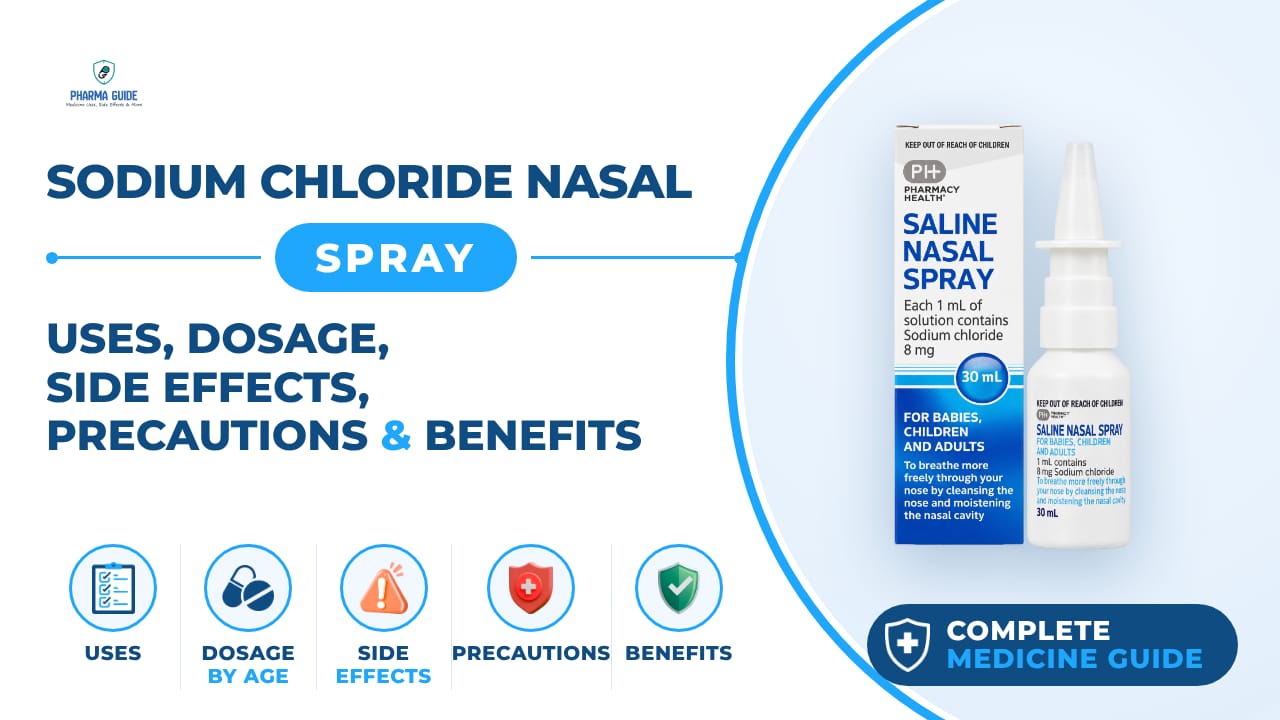
Sodium Chloride Nasal Spray: Uses, Dosage, Side Effects, Precautions and Alternates
| Generic name | Sodium chloride (nasal) |
|---|---|
| Drug class | Nasal lubricants and irrigations |
| Forms | Nasal spray |
Quick overview
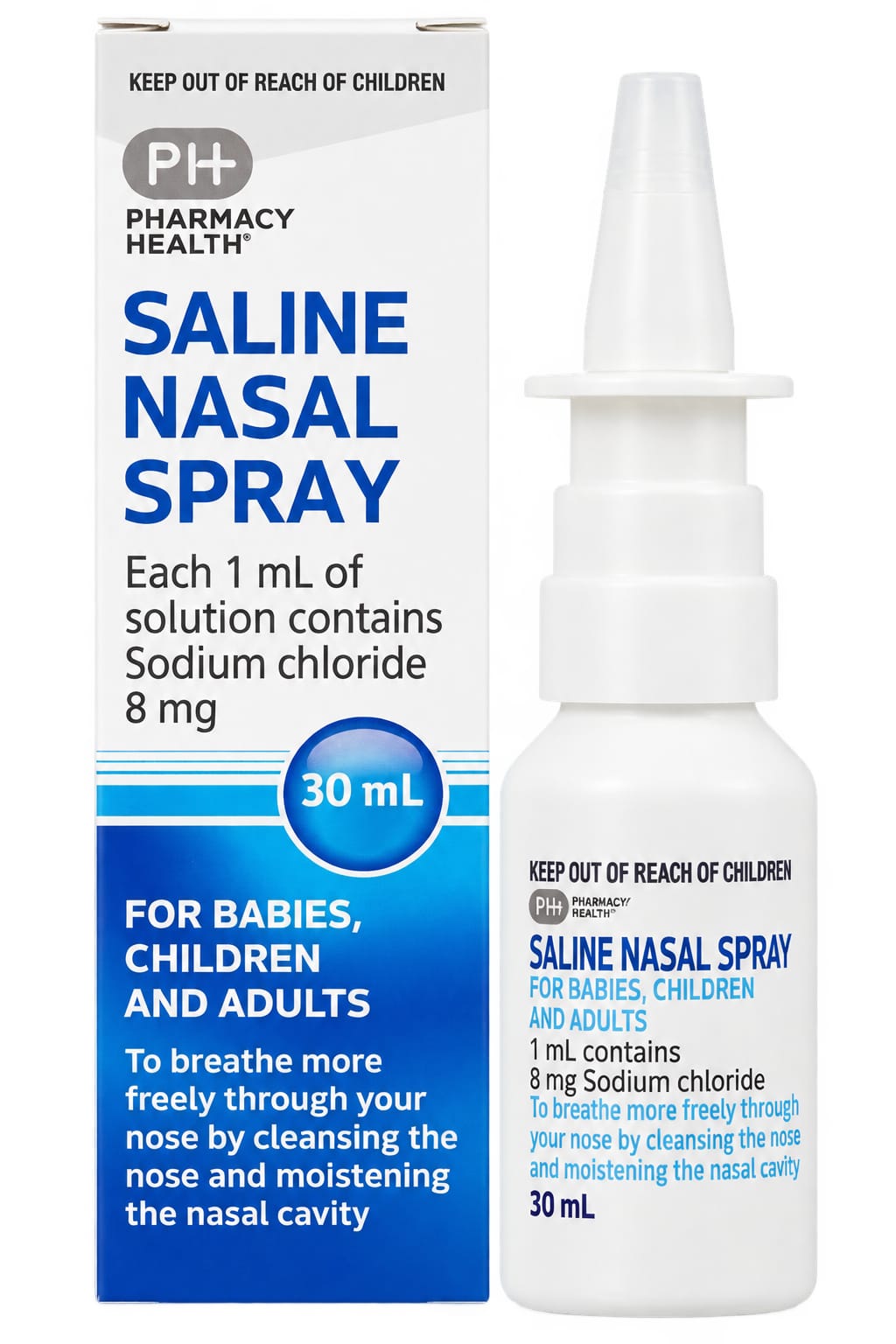
Sodium Chloride Nasal Spray is a purified, gentle salt water (saline) solution used in the nose. It does not contain any active drug or medicine. It is used to relieve nasal stuffiness, post-nasal drip, dryness, and irritation, and to help loosen and soften mucus. It is available over the counter in different concentrations, including strengths gentle enough for infants.
What is Sodium Chloride Nasal Spray
Sodium Chloride Nasal Spray, generically known as sodium chloride (nasal), belongs to the drug class of nasal lubricants and irrigations. It is a purified, gentle salt water solution used in the nose and does not contain any active drug or medicine.
Sodium Chloride Nasal Spray uses
- Treats a stuffy nose
- Treats post-nasal drip
- Relieves dryness inside the nose and nasal passages
- Relieves nasal irritation caused by colds, flu, allergies, or pollutants
- Adds moisture inside the nose to dissolve and soften thick or crusty mucus
- Helps make mucus easier to remove with a nasal bulb syringe in babies and young children who cannot blow their nose
- Flushes dirt or allergens from the nose
Benefits of Sodium Chloride Nasal Spray
- Available over the counter
- Typically well-tolerated with few side effects
- Available in different concentrations to meet different needs
- Some strengths are gentle enough for infants
How Sodium Chloride Nasal Spray works
The saline solution adds moisture inside the nose, which helps loosen and soften dried or thick mucus and eases irritation and dryness.
Sodium Chloride Nasal Spray dosage
Use exactly as directed on the product label or as prescribed by your doctor. Follow the directions on the label when giving this product to a child. Do not swallow this product; nasal products are for use only in the nose. This product comes in different forms such as spray, gel, swab, or powder to mix with water for a nasal rinse. Read and follow any instructions for use that come with your product.
You may need to gently blow your nose before using this product. Before using the spray, blow your nose and wash your hands with soap and water. Shake the bottle gently before each use and remove the cap. Press one nostril closed with your finger, tilt your head slightly forward, and place the tip in the other nostril aimed toward the back of your head. Squeeze the bottle with firm, quick pressure while breathing in for each dose.
Some spray bottles deliver a spray when upright or a drop when turned upside down; check your product label. It is normal for some spray or drops to drip out of the nose after each dose; keep a tissue handy. If flushing dust or allergens from the nose, tilt your head to the side over a sink to make clean-up easier.
Try not to touch the bottle tip to the inside of your nose; if this happens, rinse the tip with hot water and dry with a clean tissue before recapping. Wipe or rinse the tip of the bottle after each use, following the directions on the label. Do not share this product with others, since sharing a nasal container or applicator can spread infection.
Call your doctor if the condition you are treating does not improve or gets worse while using this product. Since this product is often used as needed, you may not be on a set dosing schedule; skip a missed dose if it is almost time for the next one, and do not use two doses at once.
| Age group | Dose |
|---|---|
| Infants (0–1 Year) | 1–2 sprays or drops in each nostril as needed |
| Children (1–12 Years) | 1–2 sprays in each nostril as needed |
| Adolescents (13–17 Years) | 1–2 sprays in each nostril several times daily if required |
| Adults (18–64 Years) | 1–2 sprays in each nostril as needed |
Available forms and strengths
- Nasal spray
Side effects of Sodium Chloride Nasal Spray
Common
- Discomfort in the nose
- Stinging if the inside of the nose is very dry and irritated
- Temporary stinging or sneezing right after use
Serious
- Allergic reaction: hives, itching, rash, swelling of the face, lips, tongue, or throat
- Difficulty breathing
- Severe dizziness
- Change in vision
- Eye pain
Warnings and precautions
- This product is for use in the nose only. It should not be used any other way.
- Do not swallow this product. It is only meant for use in the nose.
- Avoid getting the solution in your eyes.
- Do not share nasal spray containers or applicators with other people, since this can spread infections or disease.
- If the spray comes in a pressurized canister, keep it away from open flame or high heat, as it may explode if too hot; do not puncture or burn an empty canister.
- This product is safe to use during pregnancy. This product is safe to use if you are breastfeeding.
- Kidney: Use only as directed and avoid sharing the spray bottle.
- Liver: Clean the nozzle regularly to prevent contamination.
- Alcohol: Avoid touching the nozzle tip to the nose or other surfaces.
- Driving: Stop use if severe irritation, nosebleeds, or discomfort occurs.
Storage
- Store at room temperature away from moisture and heat.
- Do not put the spray in the refrigerator or freezer.
- If your product comes in a spray canister, keep it away from open flame or high heat, since it may explode if it gets too hot; do not puncture or burn an empty canister.
- Follow all directions on the label about when to replace the product; you may need to throw away the container after a certain time even if some product is left.
- Refer to the storage information printed on the package; ask your pharmacist if you have questions.
- Do not flush medications down the toilet or pour them into a drain unless instructed to do so; properly discard this product when expired or no longer needed, and consult your pharmacist or local waste disposal company.
When to see a doctor
- Get emergency medical help right away if you have signs of a serious allergic reaction, such as hives, difficulty breathing, or swelling of your face, lips, tongue, or throat.
- Get medical help right away if you notice signs of a serious allergic reaction, including rash, itching or swelling especially of the face, tongue, or throat, severe dizziness, or trouble breathing.
- If your condition lasts, gets worse, or you think you may have a serious medical problem, get medical help right away.
- If someone swallows this product and has serious symptoms such as passing out or trouble breathing, call for emergency help right away; otherwise contact a poison control center.
Alternatives
- Fluticasone Nasal Spray
- Oxymetazoline Nasal Spray
- Xylometazoline Nasal Spray
- Sterile Saline Nasal Drops
Watch the video
FAQs
What is Sodium Chloride Nasal Spray used for
It is used to treat a stuffy nose, post-nasal drip, dryness and irritation inside the nose, and to loosen and soften thick or crusty mucus. It also helps flush dirt or allergens from the nose and can make mucus easier to remove with a nasal bulb syringe in babies and young children.
Is Sodium Chloride Nasal Spray safe for infants
Yes, it is available in strengths gentle enough for infants. The recommended dose for infants aged 0 to 1 year is 1 to 2 sprays or drops in each nostril as needed.
What are the common side effects of Sodium Chloride Nasal Spray
Common side effects include discomfort in the nose, stinging if the nose is very dry and irritated, and temporary stinging or sneezing right after use.
Is Sodium Chloride Nasal Spray safe during pregnancy and breastfeeding
Yes, this product is safe to use during pregnancy and while breastfeeding.
How should Sodium Chloride Nasal Spray be stored
Store it at room temperature away from moisture and heat, and do not put it in the refrigerator or freezer. If it comes in a pressurized canister, keep it away from open flame or high heat since it may explode if too hot.
General information, not medical advice
Your prescriber and the leaflet in your pack know your situation. This page does not.
- Follow your prescriber and the leaflet
- Don't start, stop, or change a dose on your own
- Doses and warnings differ by country and product
Sources
Video
Related medicines

Injectafer Injection: Uses, Dosage, Side Effects, Precautions and Alternates
Iron products
Injectafer (ferric carboxymaltose) treats iron deficiency anemia and heart failure-related iron deficiency via IV. Learn uses, dosage, side effects, and

Gliclazide Tablet: Uses, Dosage, Side Effects, Precautions and Alternates
Sulfonylurea (hypoglycemic/antidiabetic agent)
Gliclazide Tablet is a sulfonylurea for type 2 diabetes that boosts insulin release. Learn about dosage, side effects, warnings, and precautions.