
Safety
General information, not medical advice
Your prescriber and the leaflet in your pack know your situation. This page does not.
- Follow your prescriber and the leaflet
- Don't start, stop, or change a dose on your own
- Doses and warnings differ by country and product
Sodium Valproate Tablet: Uses, Dosage, Side Effects, Precautions and Alternates
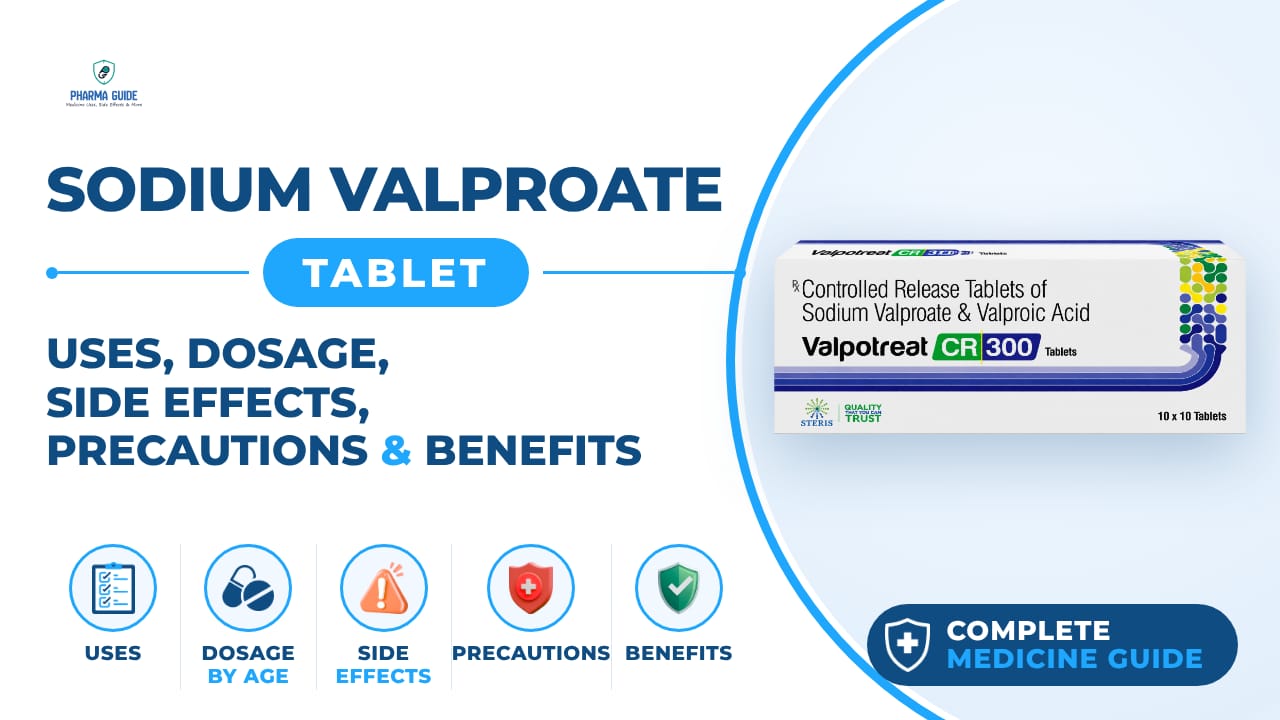
| Generic name | sodium valproate |
|---|---|
| Drug class | Anticonvulsant (antiepileptic, fatty acid derivative) |
| Forms | Gastro-resistant (enteric-coated) tablets, Crushable tablets, Syrup, Sugar-free oral liquid solution |
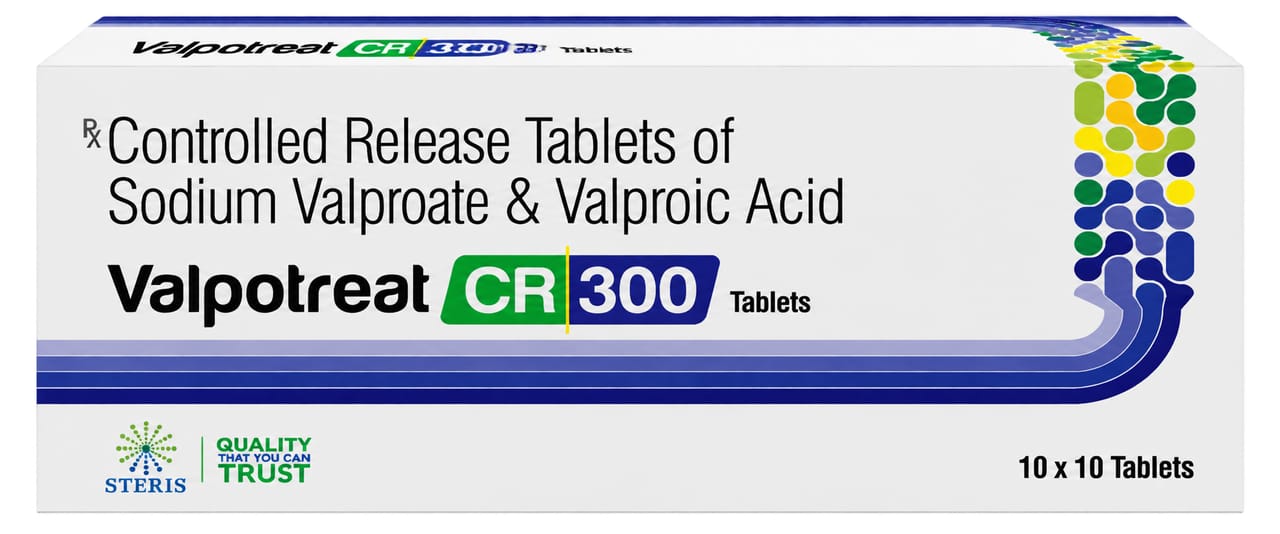
Quick overview
Sodium Valproate Tablet (sodium valproate) is a prescription-only anticonvulsant medicine used to control seizures in epilepsy and to help manage manic episodes in bipolar disorder. It is thought to work by increasing levels of a calming brain chemical called GABA and by affecting sodium and calcium channels in nerve cells. It comes in several forms, including gastro-resistant tablets, crushable tablets, and liquid preparations, and carries important warnings, particularly around pregnancy and liver health.
What is Sodium Valproate Tablet
Sodium valproate is a prescription-only medicine that belongs to a group of medicines called anticonvulsants. It is used to control seizures in epilepsy and to help manage manic episodes in bipolar disorder.
Sodium Valproate Tablet uses
- Treating epilepsy, including generalized seizures, partial (focal) seizures, and mixed seizure patterns, in adults and children
- Controlling mania (a mental condition with episodes of overactivity, elation or irritability) in adults with bipolar disorder
- Preventing migraine attacks (mentioned as an additional use in one source)
Benefits of Sodium Valproate Tablet
- Can significantly reduce how often seizures happen
- Can help control manic episodes within weeks of starting treatment
- May reduce the frequency of migraine attacks
How Sodium Valproate Tablet works
Sodium valproate is thought to work by increasing levels of a brain chemical called GABA, which calms overactive nerve signals, and by affecting sodium and calcium channels in nerve cells. This helps control the abnormal electrical activity in the brain that causes seizures, and this same effect may also help with mood stabilization.
Sodium Valproate Tablet dosage
Take at about the same time each day to get the best effect and help you remember your doses. Take with or after food to reduce stomach upset. Swallow the enteric-coated (gastro-resistant) tablets whole with a glass of water or other liquid — do not crush or chew them, as this destroys the special coating. Uncoated tablets may be crushed or chewed if necessary and swallowed with water, unlike the coated tablets.
Continue taking the medicine every day as prescribed, even if you feel well, because it controls the condition but does not cure it. Do not stop taking this medicine suddenly or change the dose without checking with your doctor, as this may cause seizures or symptoms to return.
If a dose is missed, take it as soon as you remember; if it is almost time for the next dose, skip the missed one and continue as normal — do not double up doses. Contact your doctor if you miss several doses in a row. Keep regular check-up and monitoring appointments with your doctor.
| Age group | Dose |
|---|---|
| Under 2 Years | Dose only under specialist supervision |
| 2–17 Years | Usually 10–15 mg/kg/day initially; adjusted based on response |
| Adults (18–64 Years) | Usually 10–15 mg/kg/day initially; maintenance often 20–60 mg/kg/day |
| Older Adults (65+ years) | Usually lower starting dose; adjusted carefully based on response |
Available forms and strengths
- Gastro-resistant (enteric-coated) tablets
- Crushable tablets
- Syrup
- Sugar-free oral liquid solution
Side effects of Sodium Valproate Tablet
Common
- Nausea, vomiting, or stomach cramps/abdominal pain
- Drowsiness, dizziness or light-headedness
- Tremor or shaking
- Changes in appetite or weight gain
- Diarrhoea or constipation
- Hair loss (usually temporary)
- Headache
- Bleeding, tender or swollen gums, mouth ulcers
- Irregular menstrual periods
- Restlessness or irritability
Serious
- Signs of liver problems: severe vomiting, loss of appetite, extreme tiredness, yellowing of skin or eyes, dark urine, abdominal pain, general feeling of being unwell
- Signs of pancreas problems: severe upper stomach pain, nausea, vomiting
- Unusual bleeding or bruising
- Signs of low blood cell counts: fever, infections, breathing difficulty
- Signs of high ammonia levels: problems with balance and coordination, feeling lethargic or less alert, vomiting
- Seizures becoming worse or more frequent
- Thoughts of self-harm or suicide
- Severe allergic reaction: rash, swelling of face/lips/throat, difficulty breathing, hives
- Severe skin reactions: blistering, peeling skin, rash with fever (may indicate Stevens-Johnson syndrome, DRESS, or toxic epidermal necrolysis)
- Confusion, drowsiness progressing to coma, or unusual behaviour
- Swelling of legs or feet with weight gain (fluid retention)
- Signs of underactive thyroid: tiredness, weight gain
Warnings and precautions
- This medicine has a high risk of causing birth defects and developmental problems in babies exposed during pregnancy, including neural tube defects, facial and skull differences, heart and limb defects, and lower IQ or learning difficulties later in life.
- Men taking valproate in the months before conceiving a child may have a higher chance of their child developing developmental disorders, so doctors recommend effective contraception during treatment and for 3 months after stopping.
- Never stop this medicine suddenly or lower the dose without talking to your doctor, as this can cause seizures to return or worsen.
- This medicine can cause severe liver damage, sometimes leading to death, especially in young children under 3 years old.
- This medicine can cause pancreatitis (inflammation of the pancreas), which can be life-threatening.
- Antiepileptic medicines like this one can increase the risk of suicidal thoughts or behaviour. Tell your doctor immediately if you experience mood changes or thoughts of self-harm.
- Male patients should not donate sperm during treatment with this medicine or for at least 3 months after stopping it.
- Sodium valproate can seriously harm an unborn baby if taken during pregnancy, increasing the risk of birth defects and problems with the child's development.
- It should not be used in pregnancy unless doctors have determined that no other treatment will work, and effective contraception must be used at all times if you could become pregnant.
- Sodium valproate passes into breast milk in small amounts. You and your doctor must decide together whether to breastfeed or continue valproate treatment, weighing the benefits of breastfeeding against the benefits of your treatment.
- If you have kidney problems, your doctor may need to monitor your valproate levels and adjust your dose, since lower doses may be needed.
- Sodium valproate can cause serious liver damage, which can sometimes be fatal, and should not be used if you have liver disease or a family history of severe hepatitis.
- Tell your doctor immediately about any signs of liver problems.
- Avoid alcohol while taking sodium valproate, as combining them can make you more sleepy, dizzy or lightheaded.
- Sodium valproate may cause drowsiness or light-headedness, especially at the start of treatment or when combined with other medicines. Know how this medicine affects you before driving or using machinery.
Storage
- Store tablets in a cool dry place below 30°C
- Keep tablets in the blister pack until it is time to take them
- Store away from moisture, heat or sunlight — do not store in the bathroom, near a sink, in the car, or on a windowsill
- Keep out of reach and sight of children, ideally in a locked cupboard at least one-and-a-half metres above the ground
- Do not use after the expiry date printed on the pack
- Do not use if the packaging is torn or shows signs of tampering
- If no longer needed or out of date, take the medicine to a pharmacy for safe disposal
When to see a doctor
- Get medical help right away if you or your child suddenly become unwell with repeated vomiting, extreme tiredness, stomach pain, drowsiness, weakness, loss of appetite, yellowing of skin or eyes, leg swelling, or worsening seizures.
- Seek urgent medical care if you or your child have problems with balance and coordination, feel lethargic or less alert, or have vomiting, as these could be signs of a serious reaction.
- Contact your doctor immediately if seizures become worse or happen more often than before.
- Get help immediately if you have any thoughts of harming yourself or suicide.
- Tell your doctor immediately if you think you might be pregnant while taking this medicine.
- If you think you have taken too much of this medicine, get urgent medical attention even if you feel fine, by contacting your doctor or going to the emergency department.
- Call your doctor straight away if you or your child develop an allergic reaction, especially affecting the skin or mouth, and/or fever.
Alternatives
- Lamotrigine
- Levetiracetam
- Oxcarbazepine
Watch the video
FAQs
What is Sodium Valproate Tablet used for?
It is used to control seizures in epilepsy, including generalized, partial, and mixed seizure patterns, and to help manage manic episodes in bipolar disorder. It has also been mentioned as a use for preventing migraine attacks.
How does Sodium Valproate Tablet work?
It is thought to work by increasing levels of a calming brain chemical called GABA and by affecting sodium and calcium channels in nerve cells, which helps control abnormal electrical activity in the brain and may also help stabilize mood.
Can I crush or chew Sodium Valproate Tablets?
Gastro-resistant (enteric-coated) tablets should be swallowed whole and not crushed or chewed, as this destroys the special coating. Uncoated, crushable tablets may be crushed or chewed if necessary.
Is Sodium Valproate Tablet safe during pregnancy?
No, it has a high risk of causing birth defects and developmental problems in babies, including neural tube defects, facial and skull differences, heart and limb defects, and lower IQ or learning difficulties. It should not be used in pregnancy unless no other treatment will work, and effective contraception must be used.
What are the serious side effects of Sodium Valproate Tablet?
Serious side effects include signs of liver problems, pancreas problems, unusual bleeding or bruising, low blood cell counts, high ammonia levels, worsening seizures, thoughts of self-harm, severe allergic reactions, and severe skin reactions.
General information, not medical advice
Your prescriber and the leaflet in your pack know your situation. This page does not.
- Follow your prescriber and the leaflet
- Don't start, stop, or change a dose on your own
- Doses and warnings differ by country and product
Sources
Video
Related medicines

Injectafer Injection: Uses, Dosage, Side Effects, Precautions and Alternates
Iron products
Injectafer (ferric carboxymaltose) treats iron deficiency anemia and heart failure-related iron deficiency via IV. Learn uses, dosage, side effects, and

Gliclazide Tablet: Uses, Dosage, Side Effects, Precautions and Alternates
Sulfonylurea (hypoglycemic/antidiabetic agent)
Gliclazide Tablet is a sulfonylurea for type 2 diabetes that boosts insulin release. Learn about dosage, side effects, warnings, and precautions.