
Safety
General information, not medical advice
Your prescriber and the leaflet in your pack know your situation. This page does not.
- Follow your prescriber and the leaflet
- Don't start, stop, or change a dose on your own
- Doses and warnings differ by country and product
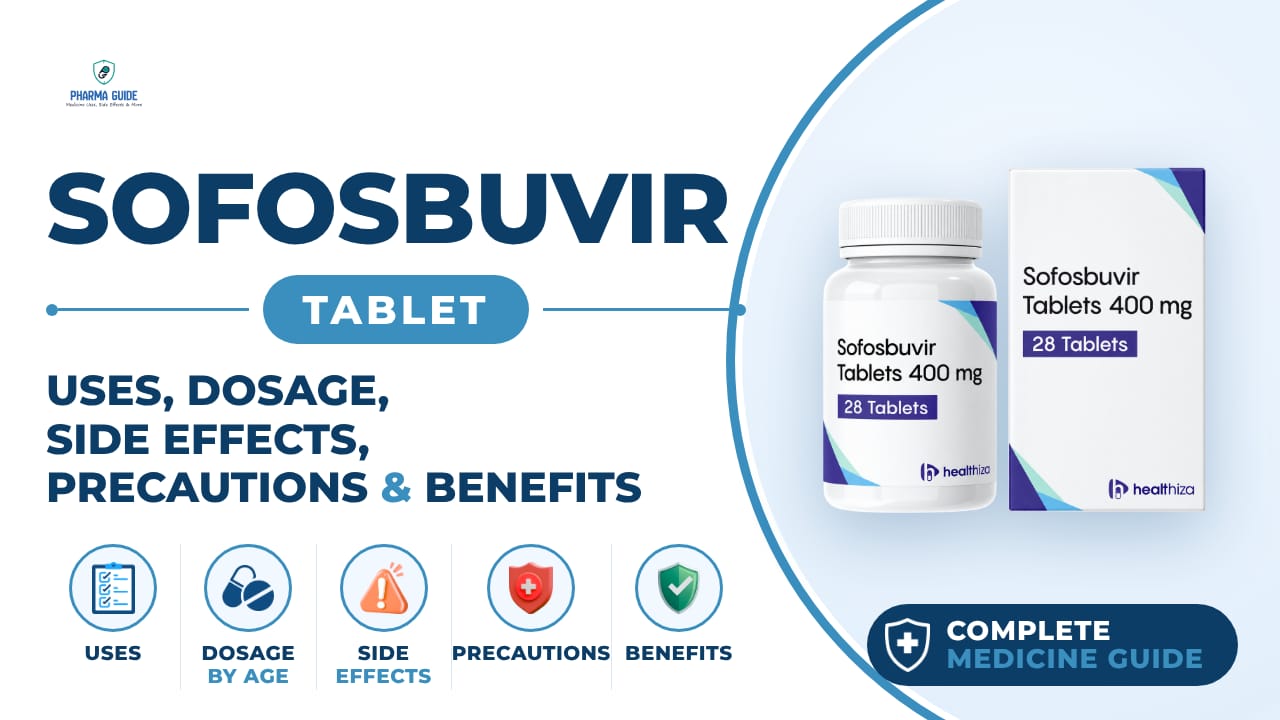
Sofosbuvir Tablet: Uses, Dosage, Side Effects, Precautions and Alternates
| Generic name | sofosbuvir |
|---|---|
| Drug class | Direct-acting antiviral (HCV NS5B polymerase inhibitor) |
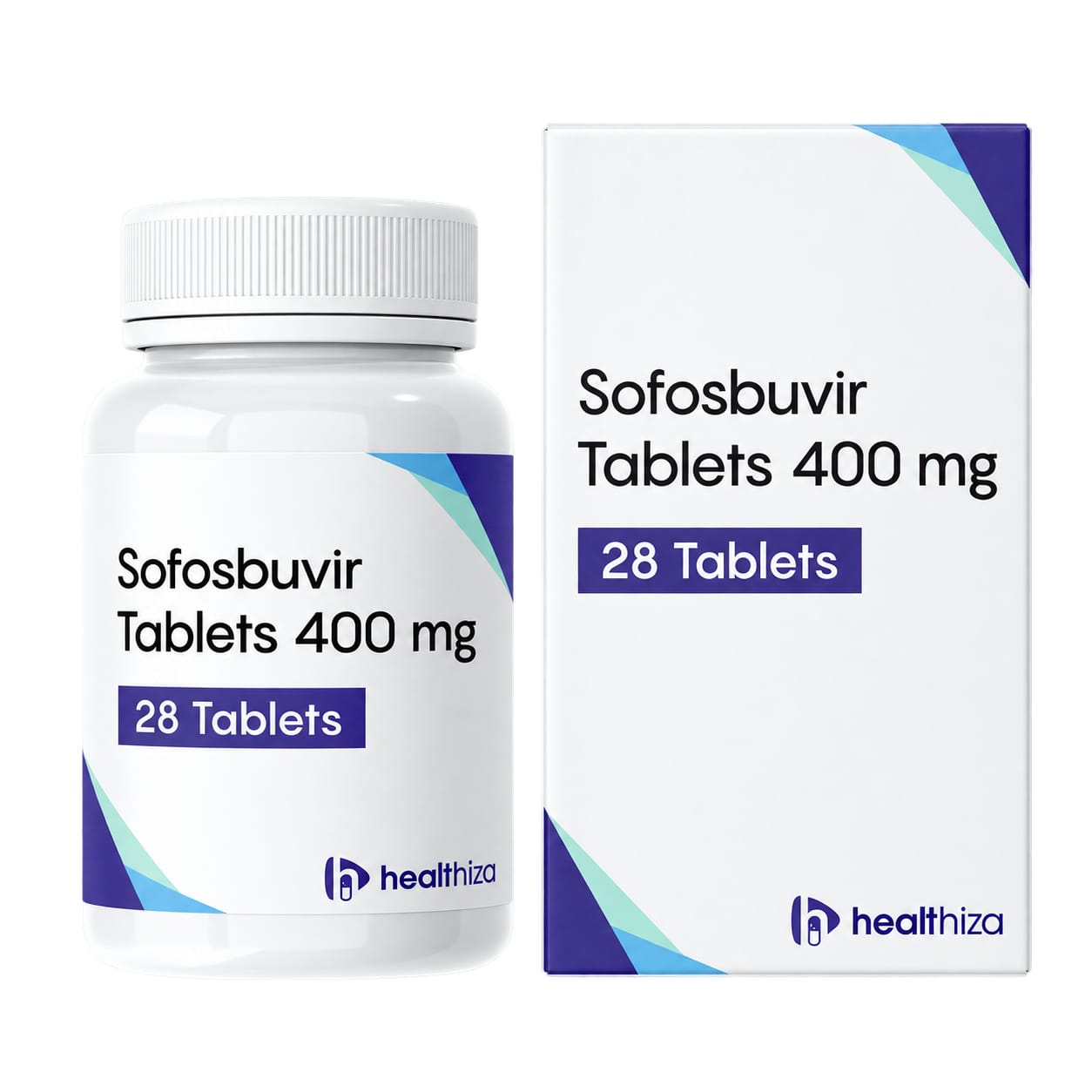
| Forms | Film-coated tablet (400 mg), Oral pellets (for younger children, per Drugs.com) |
Quick overview
Sofosbuvir Tablet is a prescription antiviral medicine from the direct-acting antiviral class, specifically an HCV NS5B polymerase inhibitor. It is used together with other hepatitis C medicines to treat chronic hepatitis C virus infection in adults and some children, and is never used by itself. It works by blocking a protein the virus needs to copy itself, helping the body achieve sustained viral clearance as part of a combination regimen.
What is Sofosbuvir Tablet
Sofosbuvir is a prescription antiviral medicine used together with other hepatitis C medicines to treat long-term (chronic) hepatitis C virus infection in adults and in some children. It is not used by itself.
Sofosbuvir Tablet uses
- Treats chronic hepatitis C
- Helps reduce HCV viral load
- Used as part of combination antiviral therapy
- Helps achieve sustained viral clearance
Benefits of Sofosbuvir Tablet
- Provides convenient once-daily oral treatment
- Supports long-term clearance of hepatitis C when used in an effective regimen
- Can be used in eligible pediatric and adult patients
How Sofosbuvir Tablet works
Sofosbuvir blocks a protein the hepatitis C virus needs (called NS5B polymerase) to copy itself, stopping the virus from multiplying.
Sofosbuvir Tablet dosage
Take one tablet once a day, with food (EU label) or with or without food (US label and Drugs.com). Swallow the tablet whole; do not chew, crush, or split it because it has a very bitter taste. Always take sofosbuvir together with other medicines for hepatitis C — it should never be taken alone (monotherapy).
If you vomit within 2 hours of taking a dose, take another tablet; if you vomit more than 2 hours after dosing, no extra dose is needed. If you miss a dose and remember within 18 hours of your usual time, take it as soon as possible, then take the next dose at the normal time; if more than 18 hours have passed, skip the missed dose and take the next one at the usual time; do not double up doses.
Do not stop taking this medicine unless your doctor tells you to, as stopping early may make the infection harder to treat. Children's oral pellets should not be chewed; they may be mixed with a cold or room-temperature non-acidic soft food and swallowed without chewing within 30 minutes of mixing.
| Age group | Dose |
|---|---|
| Under 3 years | Safety and effectiveness not established |
| 3–17 years, <17 kg | 150 mg once daily |
| 3–17 years, 17 to <35 kg | 200 mg once daily |
| 18–64 years | 400 mg once daily |
Available forms and strengths
- Film-coated tablet (400 mg)
- Oral pellets (for younger children)
Side effects of Sofosbuvir Tablet
Common
- Fatigue (tiredness)
- Headache
- Nausea
- Insomnia (trouble sleeping)
- Irritability
- Decreased appetite
- Rash, itchy skin (pruritus)
- Muscle aches and joint pain (arthralgia, myalgia)
- Chills, flu-like symptoms, fever
- Cough, shortness of breath
- Diarrhoea, vomiting
- Dizziness
- Low red blood cell count (anaemia)
- Low white blood cell count (neutropenia)
- Hair loss, dry skin
- Back pain, muscle spasms
- Getting a cold (nasopharyngitis)
Serious
- Severe bradycardia (very slow heartbeat) and heart block, especially when combined with amiodarone and another direct-acting antiviral
- Hepatitis B virus reactivation, sometimes fatal, in people with current or past hepatitis B infection
- Severe depression, including suicidal thoughts, particularly in people with a history of psychiatric illness
- Pancytopenia (severe drop in blood cell counts), especially with peginterferon
- Signs of liver problems such as right-sided upper stomach pain, vomiting, loss of appetite, dark urine, pale stools, or yellowing of skin or eyes
Warnings and precautions
- Do not take this medicine with certain other drugs (such as rifampicin, rifabutin, St. John's wort, carbamazepine, phenobarbital, and phenytoin) because they can make this medicine not work properly.
- Serious, sometimes life-threatening, slow heartbeat and heart block can occur when this medicine is combined with another hepatitis C antiviral plus the heart medicine amiodarone.
- People with current or past hepatitis B infection should be tested before starting treatment because the hepatitis B virus can reactivate, sometimes with fatal results.
- This medicine should not be used alone; it must always be combined with other hepatitis C medicines, and stopping those other medicines means this one should also be stopped.
- This medicine is not recommended for children under 12 years old (per EU label) as safety and effectiveness have not been established in that age group.
- It's best to avoid this medicine during pregnancy. If it's taken together with ribavirin, pregnancy must be strictly avoided because ribavirin can severely harm an unborn baby, so effective birth control is required during and after treatment.
- It isn't known whether this medicine passes into breast milk, so it should not be used while breastfeeding.
- No dose change is needed for mild or moderate kidney problems, but safety has not been established for people with severe kidney impairment or those on dialysis.
- No dose adjustment is needed for mild, moderate, or severe liver impairment, but safety and effectiveness haven't been established in people with decompensated cirrhosis.
- Alcohol is best avoided because it can worsen liver damage.
- This medicine, when taken with other hepatitis C medicines, can cause tiredness, dizziness, blurred vision, and reduced attention, so avoid driving or using machines if you experience these effects.
Storage
- This medicinal product does not require any special storage conditions.
- Keep this medicine out of the sight and reach of children.
- Do not use this medicine after the expiry date which is stated on the bottle and carton.
- Do not throw away any medicines via wastewater or household waste. Ask your pharmacist how to throw away medicines you no longer use.
- Store at room temperature below 30°C (86°F).
- Dispense only in original container; do not use if seal over bottle opening is broken or missing.
When to see a doctor
- Get medical help right away if you notice signs of a slow or irregular heartbeat, such as chest pain, confusion, memory problems, dizziness, fainting, shortness of breath, or extreme tiredness, especially if you also take amiodarone.
- Tell your doctor immediately if you or your partner become pregnant during treatment or in the months afterward.
- Call your doctor right away if you notice signs of liver problems such as pain in the upper right stomach area, vomiting, loss of appetite, dark urine, pale stools, or yellowing of the skin or eyes.
- Get emergency help immediately for signs of an allergic reaction, such as hives, difficulty breathing, or swelling of the face, lips, tongue, or throat.
Alternatives
- Glecaprevir
- Ledipasvir
- Velpatasvir
Watch the video
FAQs
What is Sofosbuvir Tablet used for?
It is a prescription antiviral used together with other hepatitis C medicines to treat chronic hepatitis C virus infection in adults and some children. It is never used alone.
How is Sofosbuvir Tablet taken?
Take one tablet once a day, with food (EU label) or with or without food (US label), swallowed whole without chewing, crushing, or splitting, always combined with other hepatitis C medicines.
What should I do if I miss a dose of Sofosbuvir?
If you remember within 18 hours of your usual time, take it as soon as possible and then continue your normal schedule. If more than 18 hours have passed, skip the missed dose and take the next one at the usual time without doubling up.
What are the serious side effects of Sofosbuvir Tablet?
Serious effects include severe bradycardia and heart block (especially with amiodarone and another direct-acting antiviral), hepatitis B reactivation, severe depression, pancytopenia, and signs of liver problems.
Can Sofosbuvir Tablet be used during pregnancy?
It is best to avoid this medicine during pregnancy. If combined with ribavirin, pregnancy must be strictly avoided due to the risk of severe harm to an unborn baby, so effective birth control is required during and after treatment.
General information, not medical advice
Your prescriber and the leaflet in your pack know your situation. This page does not.
- Follow your prescriber and the leaflet
- Don't start, stop, or change a dose on your own
- Doses and warnings differ by country and product
Sources
Video
Related medicines

Injectafer Injection: Uses, Dosage, Side Effects, Precautions and Alternates
Iron products
Injectafer (ferric carboxymaltose) treats iron deficiency anemia and heart failure-related iron deficiency via IV. Learn uses, dosage, side effects, and

Gliclazide Tablet: Uses, Dosage, Side Effects, Precautions and Alternates
Sulfonylurea (hypoglycemic/antidiabetic agent)
Gliclazide Tablet is a sulfonylurea for type 2 diabetes that boosts insulin release. Learn about dosage, side effects, warnings, and precautions.