
Safety
General information, not medical advice
Your prescriber and the leaflet in your pack know your situation. This page does not.
- Follow your prescriber and the leaflet
- Don't start, stop, or change a dose on your own
- Doses and warnings differ by country and product
Soliqua Injection: Uses, Dosage, Side Effects, Precautions and Alternates
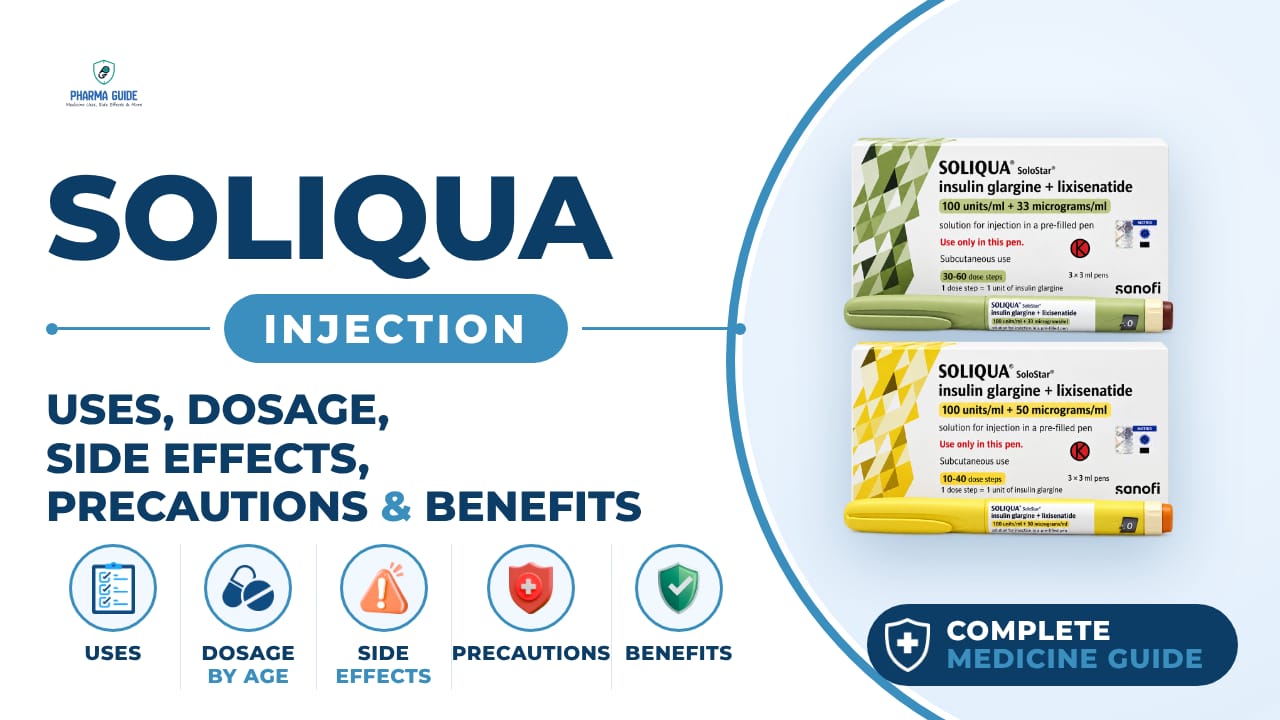
| Generic name | insulin glargine and lixisenatide |
|---|---|
| Drug class | long-acting insulin combined with a GLP-1 receptor agonist |
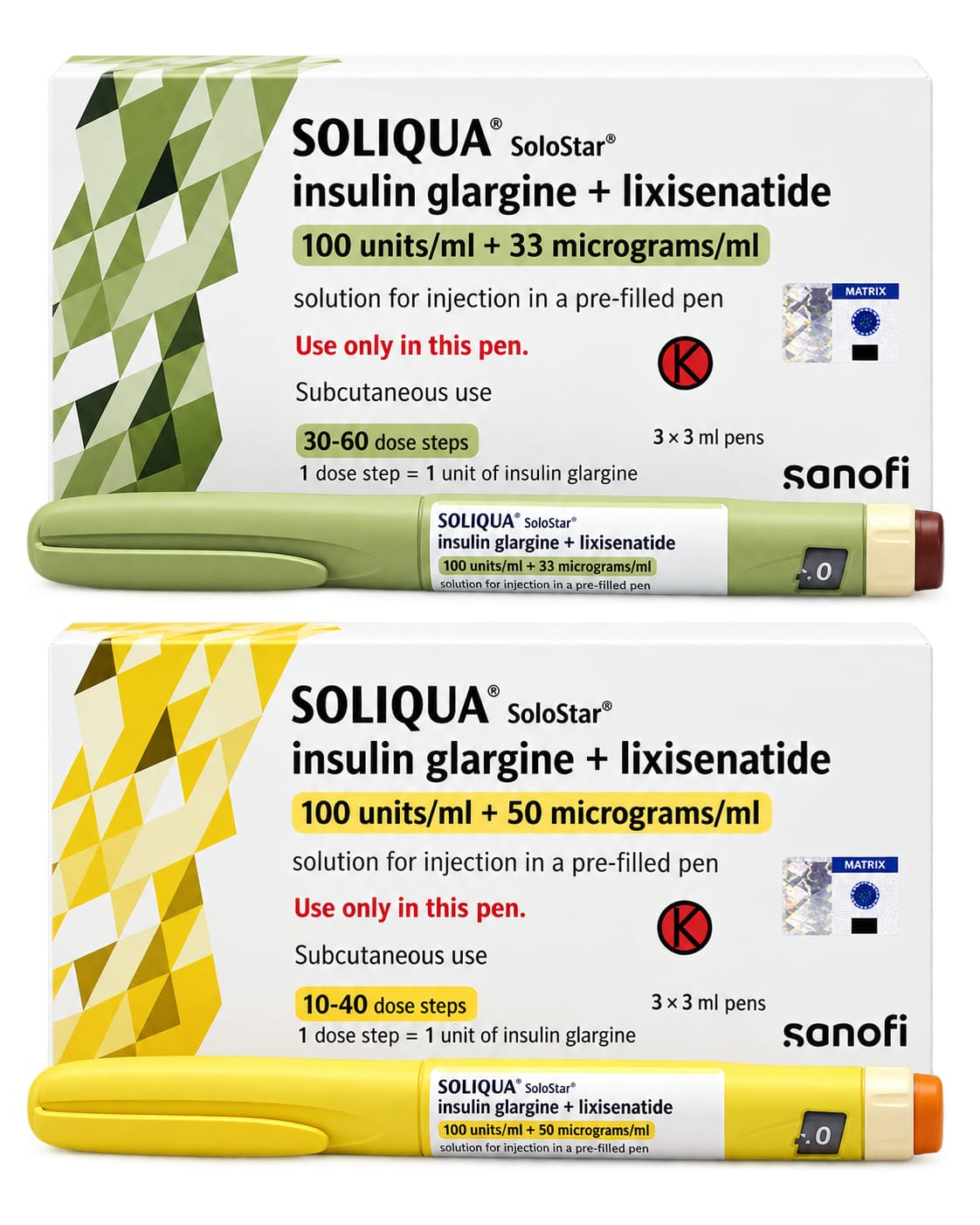
| Forms | Solution for injection in a pre-filled pen (SoloStar pen) |
Quick overview
Soliqua Injection is a prescription medicine that combines insulin glargine, a long-acting insulin, with lixisenatide, a GLP-1 receptor agonist, in one pre-filled pen. It is used by adults with type 2 diabetes, alongside diet and exercise, to help improve blood sugar control. Soliqua is injected once daily and works through two mechanisms to target both fasting and after-meal blood sugar.
What is Soliqua Injection
Soliqua is an injectable prescription medicine that combines two diabetes medicines, insulin glargine (a long-acting insulin) and lixisenatide (a GLP-1 analogue), in one pre-filled pen.
Soliqua Injection uses
- Treatment of adults with type 2 diabetes to improve blood sugar control, used along with diet and exercise and other diabetes medicines such as metformin
- Treats type 2 diabetes
- Helps lower fasting blood glucose
- Helps reduce post-meal glucose
- Improves HbA1c
- Combines basal insulin with a GLP-1 receptor agonist
Benefits of Soliqua Injection
- Helps control blood sugar throughout the day and after meals
- Can help lower A1c, in clinical studies nearly 3 out of 4 patients reached an A1c below 7%
- Combines two mechanisms to target both fasting and after-meal blood sugar
How Soliqua Injection works
Soliqua combines a long-acting insulin that helps muscles store sugar for energy and slows the liver's release of sugar, with a GLP-1 medicine that helps the pancreas release more insulin, slows how fast sugar leaves the stomach into the blood, and reduces sugar buildup in the bloodstream.
Soliqua Injection dosage
Inject Soliqua once a day, up to one hour before your first meal of the day. It is best to inject before the same meal each day, choosing the most convenient time. Change (rotate) the injection site within the area you choose each time you inject, to reduce the risk of skin problems. Inject under the skin into the thigh, upper arm, or abdomen (stomach area). Do not inject into skin that is pitted, thickened, lumpy, tender, bruised, scaly, hard, scarred, or damaged.
Always use a new needle for each injection and never share your pen with another person. Do not remove the medicine from the pen with a syringe. If you miss a dose, you may inject it before your next meal, but do not double the dose or inject twice in a day. Do not change your dose without talking to your doctor first. Always check the pen label before each injection to make sure you have the correct medicine and strength.
| Age group | Dose |
|---|---|
| Under 18 years | Safety and effectiveness are not established |
| 18–64 years | Starting dose commonly 15 units once daily or 30 units once daily, depending on previous basal-insulin or GLP-1 therapy; dose is then titrated |
| 65–74 years | Same adult starting options may be used, with closer glucose and kidney monitoring |
Available forms and strengths
- Solution for injection in a pre-filled pen (SoloStar pen)
Side effects of Soliqua Injection
Common
- Low blood sugar (hypoglycaemia)
- Nausea
- Diarrhea
- Vomiting
- Upper respiratory tract infection
- Stuffy or runny nose and sore throat
- Headache
- Dizziness
- Indigestion (dyspepsia)
- Stomach ache
- Tiredness
- Injection site reactions such as redness, pain, swelling, or itching
Serious
- Severe allergic reaction, with swelling of the face, lips, tongue or throat, trouble breathing or swallowing, severe rash or itching, fainting, or very rapid heartbeat
- Inflammation of the pancreas (pancreatitis), which can be severe and lead to death
- Severe low blood sugar that can cause loss of consciousness, seizures, or be life-threatening
- Dehydration leading to kidney problems
- Low potassium in the blood (hypokalemia)
- Heart failure, especially when taken with certain diabetes pills called TZDs
- Gallbladder problems, including gallstones and inflammation
- Skin changes at the injection site such as lumps or pitting (lipodystrophy or cutaneous amyloidosis)
- Bowel obstruction (severe constipation with stomach pain, bloating, vomiting)
Warnings and precautions
- Do not use Soliqua if you have type 1 diabetes or diabetic ketoacidosis, as it is not right for you.
- Do not use Soliqua together with other GLP-1 receptor agonist medicines.
- Never share your pen with another person, even if you change the needle, because of infection risk.
- Never use a syringe to draw medicine out of the pen, as this can cause dosing errors and potential overdose.
- Tell your doctor if you have had pancreatitis, gallstones, or a history of alcoholism, as these increase the risk of pancreatitis.
- Do not use if you have severe stomach or gut problems such as slow stomach emptying (gastroparesis), as Soliqua has not been studied in these patients.
- Soliqua should not be used during pregnancy, as its effects on an unborn baby are not known. Soliqua should not be used while breastfeeding.
- If you have kidney problems, you may need a lower dose, and Soliqua is not recommended for people with severe kidney problems or those on dialysis. If you have liver problems, you may need a lower dose; talk to your doctor.
- Drinking alcohol can make your blood sugar rise or fall and you should check your blood sugar more often if you drink.
- Soliqua itself does not affect your ability to drive, but low or high blood sugar can affect concentration and reaction time, which may make driving unsafe.
Storage
- Before first use: store between 2°C and 8°C in a refrigerator
- Do not freeze or place next to the freezer compartment or a freezer pack
- Keep the pen in the outer carton to protect it from light
- After first use, the pen may be stored for a maximum of 28 days out of the refrigerator, but at or below 25°C, then should be discarded
- Do not return the pen to the refrigerator after first use and do not freeze it
- Store the pen away from direct heat or direct light, and keep the cap on when not in use
- Do not leave the pen in a car on an exceptionally warm or cold day
- Do not store the pen with the needle attached
- Do not use if you notice visible particles in the solution
- Return all unused medicine to your pharmacist; do not dispose of unused medicine in drains or sewerage systems
When to see a doctor
- Stop using Soliqua and get medical help right away if you have severe stomach pain that does not go away, with or without vomiting, as this could be a sign of pancreatitis.
- Get emergency help right away if you have signs of a severe allergic reaction, such as swelling of the face, lips, tongue, or throat, trouble breathing or swallowing, or fainting.
- Contact your doctor right away if you have symptoms of gallbladder problems, such as pain in the upper stomach, fever, or yellowing of the skin or eyes.
- Contact your doctor straight away if you have severe high blood sugar or signs of ketoacidosis, which must always be treated by a doctor, normally in hospital.
- If you cannot control low blood sugar or it keeps coming back, speak to a doctor straight away.
Alternatives
- Insulin glargine
- Insulin degludec
- Semaglutide
Watch the video
FAQs
What is Soliqua Injection used for?
Soliqua is used by adults with type 2 diabetes, along with diet and exercise, to improve blood sugar control. It helps lower fasting blood glucose, reduce post-meal glucose, and improve HbA1c.
How does Soliqua Injection work?
Soliqua combines a long-acting insulin that helps muscles store sugar for energy and slows the liver's release of sugar, with a GLP-1 medicine that helps the pancreas release more insulin, slows how fast sugar leaves the stomach, and reduces sugar buildup in the bloodstream.
How is Soliqua Injection dosed?
Soliqua is injected once a day, up to one hour before your first meal, ideally before the same meal each day. Injection sites should be rotated within the chosen area, and the pen should never be used with a syringe or shared with another person.
What are the common side effects of Soliqua Injection?
Common side effects include low blood sugar, nausea, diarrhea, vomiting, upper respiratory tract infection, headache, dizziness, indigestion, stomach ache, tiredness, and injection site reactions.
How should Soliqua Injection be stored?
Before first use, store the pen between 2°C and 8°C in a refrigerator. After first use, it may be stored for up to 28 days at or below 25°C, away from direct heat or light, and should not be returned to the refrigerator or frozen.
General information, not medical advice
Your prescriber and the leaflet in your pack know your situation. This page does not.
- Follow your prescriber and the leaflet
- Don't start, stop, or change a dose on your own
- Doses and warnings differ by country and product
Sources
Video
Related medicines

Injectafer Injection: Uses, Dosage, Side Effects, Precautions and Alternates
Iron products
Injectafer (ferric carboxymaltose) treats iron deficiency anemia and heart failure-related iron deficiency via IV. Learn uses, dosage, side effects, and

Gliclazide Tablet: Uses, Dosage, Side Effects, Precautions and Alternates
Sulfonylurea (hypoglycemic/antidiabetic agent)
Gliclazide Tablet is a sulfonylurea for type 2 diabetes that boosts insulin release. Learn about dosage, side effects, warnings, and precautions.