
Safety
General information, not medical advice
Your prescriber and the leaflet in your pack know your situation. This page does not.
- Follow your prescriber and the leaflet
- Don't start, stop, or change a dose on your own
- Doses and warnings differ by country and product
Soliris Injection: Uses, Dosage, Side Effects, Precautions and Alternates
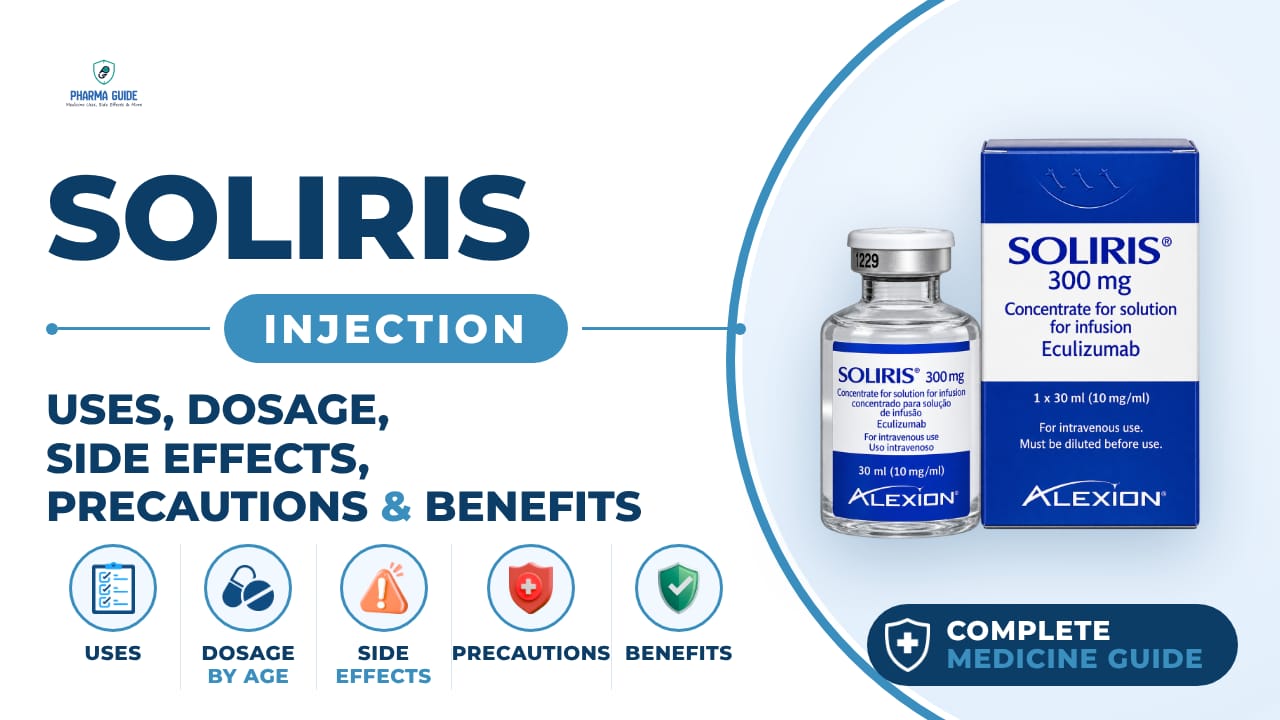
| Generic name | eculizumab |
|---|---|
| Drug class | Complement inhibitor |
| Forms | Injection for intravenous infusion |
Quick overview
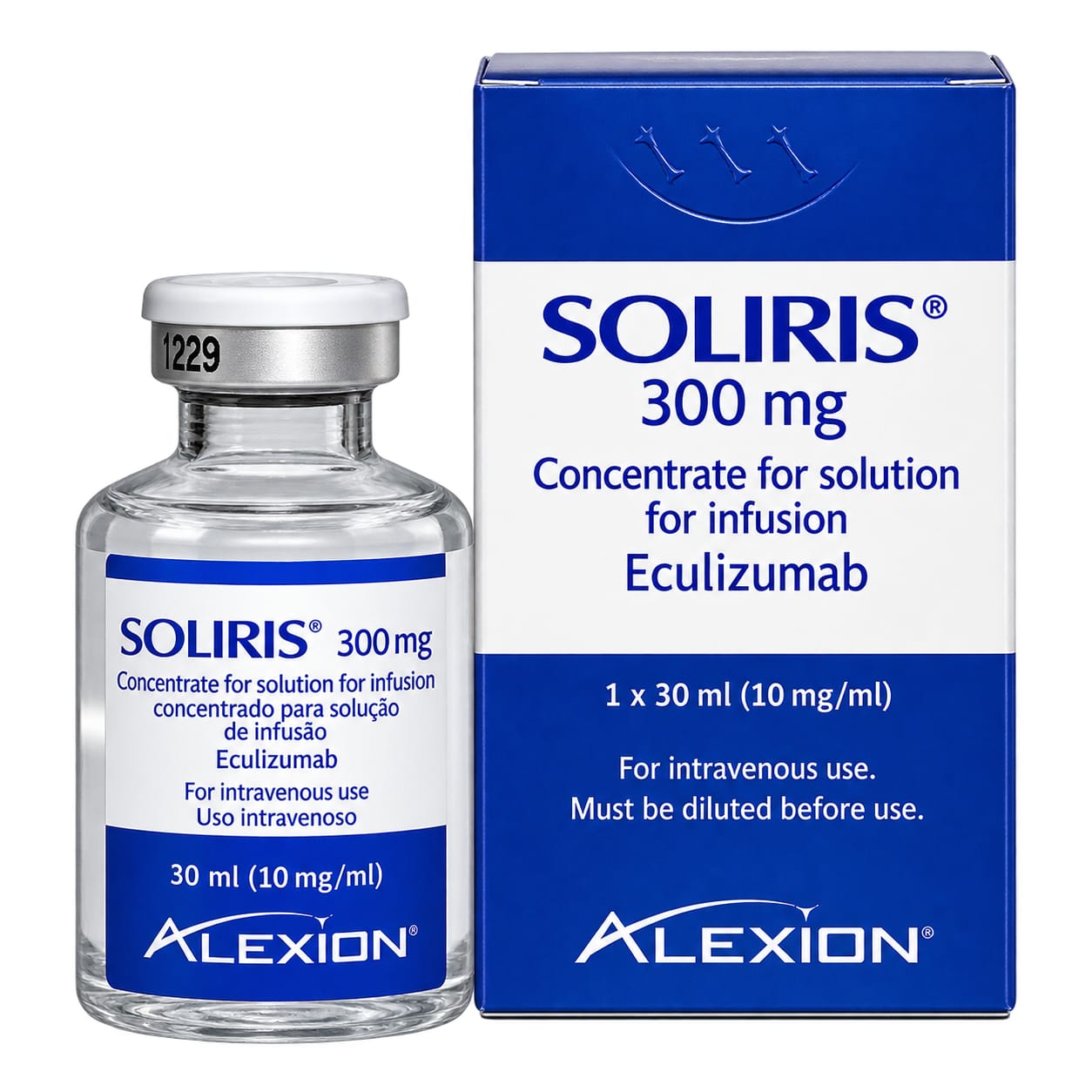
Soliris Injection (eculizumab) is a brand-name monoclonal antibody from the complement inhibitor drug class, given as an IV infusion. It is used to treat rare, serious immune system conditions affecting the blood, kidneys, muscles, or nerves, including PNH, aHUS, generalized myasthenia gravis, and NMOSD. It works by blocking a specific immune protein involved in these conditions. Because it raises the risk of serious infections, it carries the FDA's strongest warning and is available only through a restricted program.
What is Soliris Injection
Soliris is a brand-name injectable medicine given through an IV infusion. It is a monoclonal antibody used to treat certain rare and serious immune system conditions that affect the blood, kidneys, muscles, or nerves.
Soliris Injection uses
- Paroxysmal nocturnal hemoglobinuria (PNH) in adults, to reduce the breakdown of red blood cells
- Atypical hemolytic uremic syndrome (aHUS) in adults and children, to block abnormal blood clotting that damages blood vessels and organs such as the kidneys
- Generalized myasthenia gravis (gMG) in adults and children 6 years and older who test positive for anti-acetylcholine receptor (AChR) antibodies
- Neuromyelitis optica spectrum disorder (NMOSD) in adults who test positive for anti-aquaporin-4 (AQP4) antibodies
Benefits of Soliris Injection
- Can reduce the breakdown of red blood cells in PNH
- Can help people with aHUS avoid needing dialysis
- Can improve muscle strength and daily activities in generalized myasthenia gravis
- Can reduce the risk of relapse and hospital stays in NMOSD
How Soliris Injection works
Soliris attaches tightly to a protein in the immune system called complement protein C5. By blocking this protein, it stops the immune system from forming a substance that destroys red blood cells (in PNH), causes abnormal blood clotting (in aHUS), or damages the connection between nerves and muscles (in gMG) or nerve cells (in NMOSD).
Soliris Injection dosage
Soliris is given by a healthcare provider as an infusion into a vein; it must not be given as a quick injection. Adults usually get the infusion over about 35 minutes; children's infusions may take longer. Doses are usually given weekly at first, then spaced out to every two weeks, though the schedule can differ for children based on body weight. Doses should be given on schedule, or within two days of the scheduled time. You will be watched for at least an hour after each infusion in case of a reaction. Do not stop receiving this medicine without talking to your healthcare provider first, since stopping can cause serious problems. If you take a blood thinner, do not stop or change it because you are receiving this medicine unless your healthcare provider tells you to.
| Age group | Dose |
|---|---|
| Pediatric, 5 to <10 kg | 300 mg once, then 300 mg at Week 2 and every 3 weeks thereafter |
| Pediatric, 10 to <20 kg | 600 mg once, then 300 mg at Week 2 and every 2 weeks thereafter |
| Pediatric, 20 to <30 kg | 600 mg weekly for 2 weeks, then 600 mg at Week 3 and every 2 weeks thereafter |
| Adults – PNH | 600 mg weekly for 4 weeks, then 900 mg at Week 5 and every 2 weeks thereafter |
Available forms and strengths
- Injection for intravenous infusion
Side effects of Soliris Injection
Common
- Headache
- Back pain
- Common cold or nasopharyngitis (nose/throat pain or swelling)
- Nausea and vomiting
- Diarrhea
- Upper respiratory infection or sore throat
- Abdominal/stomach pain
- Dizziness
- Muscle or joint (musculoskeletal) pain
- High blood pressure
- Low red blood cell count (anemia)
- Cough
- Fluid retention/swelling in legs, feet, ankles, or arms
- Kidney or bladder infection (urinary tract infection)
- Fever
- Flu-like symptoms
- Bruising
- Fatigue
Serious
- Serious meningococcal infections, which can be life-threatening
- Other serious infections such as meningitis, pneumonia, sepsis, and gonorrhea
- Severe allergic reactions, including swelling of the face, lips, tongue, or throat, and trouble breathing
- Serious infusion-related reactions, including chest pain, trouble breathing, or fainting
- Liver problems with raised liver enzymes and bilirubin
- Worsening of PNH or aHUS symptoms if Soliris is stopped, including blood clots, kidney problems, confusion, chest pain, or difficulty breathing
Warnings and precautions
- Soliris carries the FDA's strongest warning (a boxed warning) because it raises the risk of serious, potentially life-threatening meningococcal infections. You must be up to date on meningococcal vaccinations at least two weeks before starting treatment, and you should watch for signs of infection during and for weeks after treatment.
- Because of this infection risk, Soliris is only available through a special restricted program that ensures patients are vaccinated and monitored.
- Do not stop this medicine without talking to your doctor first, because stopping can cause serious problems related to your underlying condition.
- You should not receive this medicine if you currently have a serious meningococcal infection.
- It is not known for certain if this medicine will harm an unborn baby, but data from hundreds of pregnancies have not shown clear safety concerns.
- Untreated PNH and aHUS during pregnancy carry serious risks for both mother and baby. Tell your doctor if you are pregnant or planning to become pregnant.
- It is not known for certain if this medicine passes into breast milk, though limited data have not found detectable levels. Talk with your doctor about the best way to feed your baby while being treated.
- No routine age-based renal dose adjustment is specified; specialist monitoring is required.
- Cases of liver injury with raised liver enzymes and bilirubin have been reported in people with aHUS, usually within a few weeks of starting treatment, and these generally got better within about 3 weeks.
- It isn't known if alcohol affects this medicine, but drinking alcohol may increase the risk of feeling dizzy or tired while being treated.
- Usually no direct restriction on driving, but avoid driving if dizziness or illness affects alertness.
Storage
- Store Soliris vials in the refrigerator at 36°F to 46°F (2°C to 8°C) in the original carton to protect from light.
- Vials may be kept in the original carton at room temperature (no higher than 77°F/25°C) for a single period of up to 3 days.
- Do not freeze. Do not shake.
- Once diluted, Soliris can be stored for up to 24 hours in the refrigerator or at room temperature.
When to see a doctor
- Get emergency medical help right away if you have symptoms of a serious infection, such as fever, rash, severe headache with nausea or vomiting, stiff neck or back, confusion, or eyes becoming sensitive to light.
- Tell your healthcare provider right away if you have chest pain, trouble breathing, swelling of your face, tongue, or throat, or feel faint during or after your infusion, as this could be a serious reaction.
- If you develop signs of a meningococcal infection, get medical help right away even if you have already been vaccinated.
- If you miss an infusion, call your healthcare provider right away, since missed doses have led to serious clotting problems in people with aHUS.
Alternatives
- Ultomiris (ravulizumab)
- Empaveli (pegcetacoplan)
- Fabhalta (iptacopan)
Watch the video
FAQs
What is Soliris Injection used for?
Soliris treats paroxysmal nocturnal hemoglobinuria (PNH), atypical hemolytic uremic syndrome (aHUS), generalized myasthenia gravis in those positive for anti-AChR antibodies, and NMOSD in those positive for anti-AQP4 antibodies.
How does Soliris Injection work?
Soliris attaches to complement protein C5, blocking the immune system from forming a substance that destroys red blood cells, causes abnormal blood clotting, or damages nerve-muscle connections or nerve cells, depending on the condition being treated.
What is the boxed warning for Soliris?
Soliris carries the FDA's strongest warning because it raises the risk of serious, potentially life-threatening meningococcal infections. Patients must be up to date on meningococcal vaccinations at least two weeks before starting treatment and are monitored through a restricted program.
Can I stop taking Soliris Injection on my own?
No, you should not stop this medicine without talking to your doctor first, since stopping can cause serious problems, including worsening of PNH or aHUS symptoms such as blood clots, kidney problems, confusion, chest pain, or difficulty breathing.
How is Soliris Injection given?
Soliris is given by a healthcare provider as an IV infusion, not a quick injection. Adults usually receive it over about 35 minutes, starting weekly and then spaced to every two weeks, with monitoring for at least an hour afterward.
General information, not medical advice
Your prescriber and the leaflet in your pack know your situation. This page does not.
- Follow your prescriber and the leaflet
- Don't start, stop, or change a dose on your own
- Doses and warnings differ by country and product
Sources
Video
Related medicines
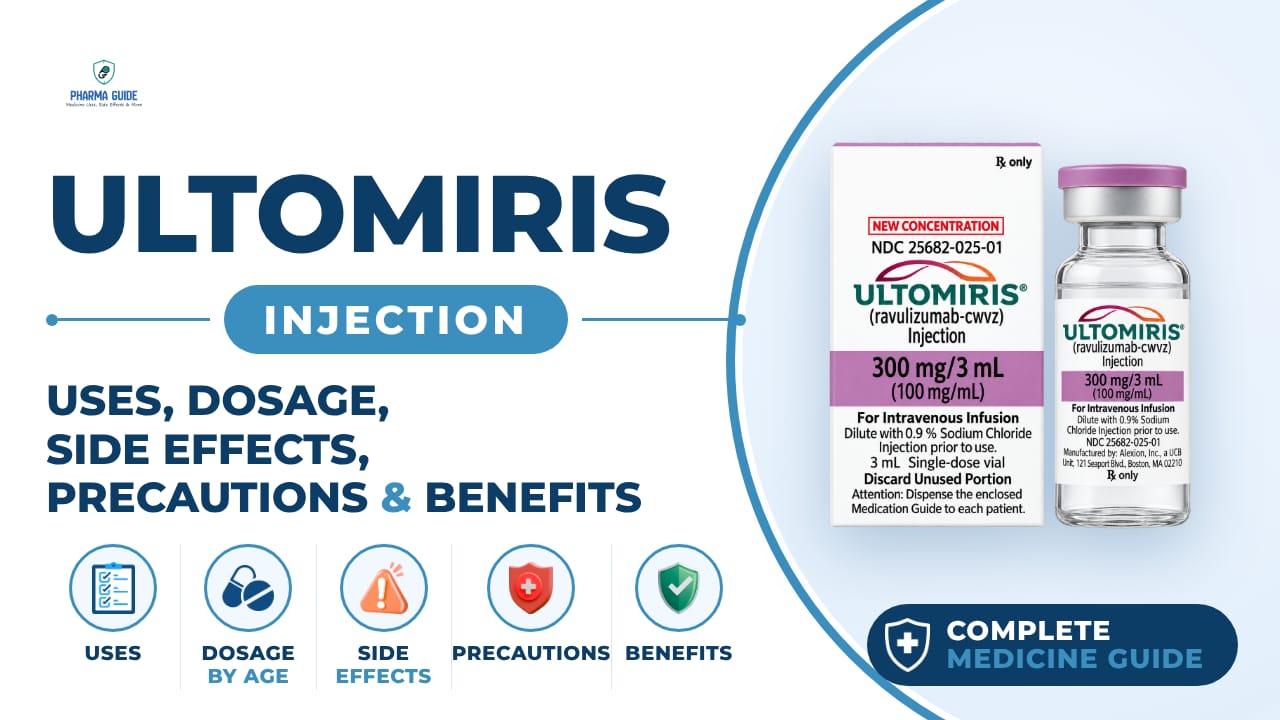
Ultomiris Injection: Uses, Dosage, Side Effects, Precautions and Alternates
Complement inhibitor
Ultomiris Injection (ravulizumab) treats PNH, aHUS, gMG, and NMOSD by blocking C5. Learn dosing, side effects, boxed warning, and safety precautions.

Injectafer Injection: Uses, Dosage, Side Effects, Precautions and Alternates
Iron products
Injectafer (ferric carboxymaltose) treats iron deficiency anemia and heart failure-related iron deficiency via IV. Learn uses, dosage, side effects, and