
Safety
General information, not medical advice
Your prescriber and the leaflet in your pack know your situation. This page does not.
- Follow your prescriber and the leaflet
- Don't start, stop, or change a dose on your own
- Doses and warnings differ by country and product
Ultomiris Injection: Uses, Dosage, Side Effects, Precautions and Alternates
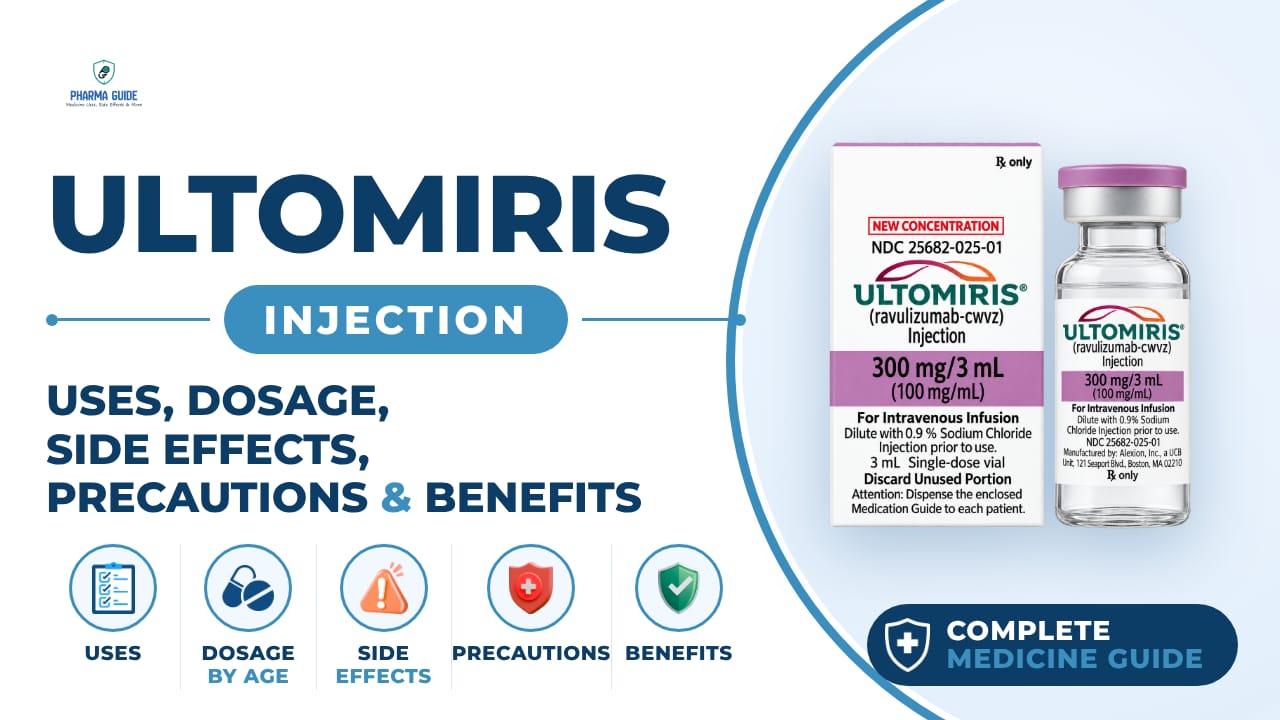
| Generic name | ravulizumab |
|---|---|
| Drug class | Complement inhibitor |
| Forms | Intravenous infusion, Subcutaneous injection (on-body injector, for adults) |
Quick overview
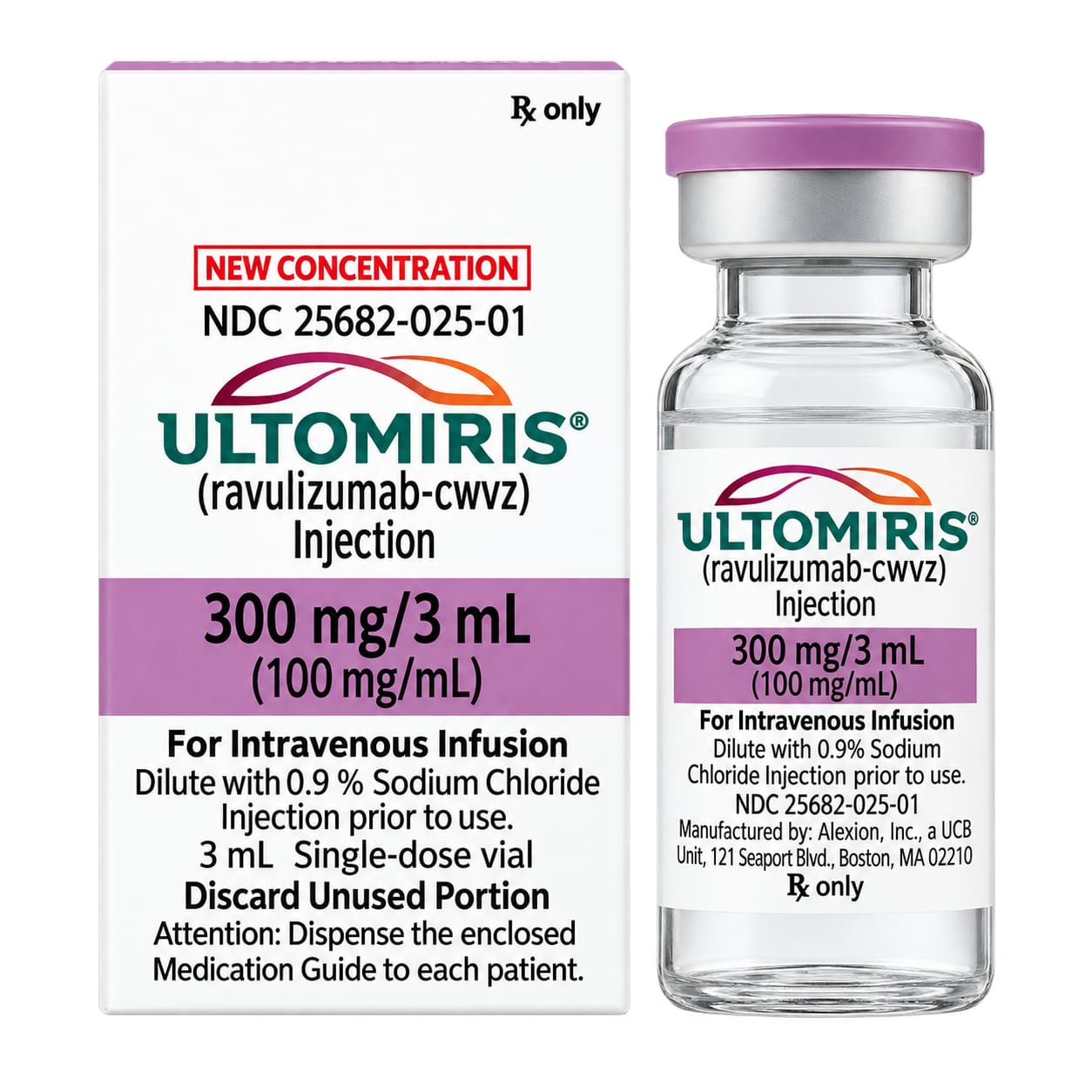
Ultomiris Injection (ravulizumab) is a prescription monoclonal antibody medicine from the complement inhibitor drug class. It is given as an infusion into a vein or, for adults, as an injection under the skin, and is used to treat certain rare, serious conditions caused by the immune system attacking the body's own cells. It works by blocking a protein called C5, which helps reduce symptoms and prevent disease progression. Because it can increase the risk of serious meningococcal infections, it carries a boxed warning and must be prescribed through a special safety program.
What is Ultomiris Injection
Ultomiris is a prescription monoclonal antibody medicine given as an infusion into a vein or as an injection under the skin. It is used to treat certain rare, serious conditions caused by the immune system attacking the body's own cells.
Ultomiris Injection uses
- Paroxysmal nocturnal hemoglobinuria (PNH), a condition caused by the immune system killing red blood cells
- Atypical hemolytic uremic syndrome (aHUS), a condition caused by the immune system killing red blood cells, often linked to a genetic problem
- Generalized myasthenia gravis (gMG) in people who test positive for anti-acetylcholine receptor (AChR) antibodies
- Neuromyelitis optica spectrum disorder (NMOSD) in people who test positive for anti-aquaporin-4 (AQP4) antibodies
Benefits of Ultomiris Injection
- Can reduce symptoms of generalized myasthenia gravis, such as improved daily activity scores in clinical trials
- Helps stop the immune system from mistakenly attacking healthy cells, which can reduce symptoms and slow disease progression
How Ultomiris Injection works
Ultomiris attaches to a protein in the immune system called C5, stopping it from being activated. This blocks part of the immune response (the complement system) that would otherwise attack the body's own blood or nerve cells, which helps reduce symptoms and prevent the disease from getting worse.
Ultomiris Injection dosage
Ultomiris is given by a healthcare professional as an infusion into a vein, or for adults, as an injection under the skin through an on-body injector. Adults usually receive a maintenance infusion every 8 weeks, while younger patients may receive it every 4 to 8 weeks. The first two infusions are usually given 2 weeks apart before switching to the regular maintenance schedule. Dosing is based on body weight, so your dose may change if your weight changes.
You will be monitored for at least an hour after each infusion to check for allergic reaction signs. If you switch from eculizumab (Soliris), you must wait 2 weeks after your last eculizumab dose before starting Ultomiris. If you miss a dose or appointment, contact your healthcare provider or clinic right away to reschedule.
| Age group | Dose |
|---|---|
| Under 1 month | Safety and effectiveness not established |
| 10 to <20 kg | 600 mg loading dose, then 600 mg every 4 weeks |
| 20 to <30 kg | 900 mg loading dose, then 2,100 mg every 8 weeks |
Available forms and strengths
- Intravenous infusion
- Subcutaneous injection (on-body injector, for adults)
Side effects of Ultomiris Injection
Common
- Infection in the nose or throat, sore throat, or common cold symptoms
- Diarrhea
- Nausea and vomiting
- Headache
- High blood pressure
- Fever
- Back or joint pain
- Kidney or bladder infection
- Stomach pain
- Dizziness
Serious
- Severe allergic reactions, including breathing problems, swelling of the face, lips, mouth, tongue, or throat, hives, or fainting
- Serious infections such as meningitis or blood infection (septicemia), which can be life-threatening
- Signs of gonorrhea, such as pain or burning when urinating, pain or swelling in the genital or rectal area, unusual vaginal bleeding, or unusual discharge
Warnings and precautions
- This medicine carries a boxed warning (the FDA's most serious type of warning) because it can cause serious, life-threatening meningococcal infections such as bacterial meningitis.
- Because of this infection risk, the medicine can only be prescribed through a special safety program, and you must usually be vaccinated against meningococcal disease at least 2 weeks before starting treatment.
- This medicine should not be used in people with an unresolved, serious Neisseria meningitidis infection.
- You must carry a Patient Safety Card describing symptoms of meningococcal infection at all times during treatment and for at least 8 months after your last dose, since infection risk can last for months after stopping.
- Some people may have a higher risk of gonorrhea while using this medicine; ask your doctor about safe practices to prevent infection.
- It isn't known if this medicine can harm an unborn baby. Tell your doctor if you are or plan to become pregnant, since untreated conditions like PNH during pregnancy can also cause serious problems.
- It isn't known if this medicine passes into breast milk. You should not breastfeed during treatment and for 8 months after your last dose.
- This medicine isn't known to interact with alcohol, but alcohol could worsen side effects like headaches or dizziness. Ask your doctor how much, if any, alcohol is safe during treatment.
- Avoid driving if dizziness, weakness, or illness affects alertness.
Storage
- Keep refrigerated at 2°C - 8°C (36°F - 46°F)
- Store in the original carton to protect from light
- Do not freeze or shake the vial
- If the prepared infusion is not used right away, store it in the refrigerator at 2°C - 8°C (36°F - 46°F)
- Do not store the prepared infusion for more than 24 hours, including the expected infusion time
When to see a doctor
- Get help right away if you have signs of a serious allergic reaction, such as trouble breathing or wheezing, a racing heart, swelling of the face, lips, mouth, tongue or throat, trouble swallowing, hives, dizziness, fainting, chest pain, or stomach cramps.
- Call your healthcare provider right away if you have signs of infection, such as fever, cold symptoms, rash, headache, nausea and vomiting, stiffness in the back or neck, confusion, muscle soreness, or eyes becoming sensitive to light.
- Seek emergency medical care right away if you have signs of a serious meningococcal infection, such as high fever with rapid heart rate, severe headache with fever, confusion, muscle aches with flu-like symptoms, fever with rash, headache with nausea or vomiting, stiff neck or back, or sensitivity to light.
- If you stop using this medicine, tell your doctor about any new or worsening symptoms such as tiredness, confusion, stomach pain, chest pain, trouble breathing or swallowing, trouble getting an erection, blood in your urine, a seizure, or loss of consciousness.
- If you accidentally use too much of this medicine, get medical help right away or contact your local poison control center.
Alternatives
- Soliris (eculizumab)
- Empaveli (pegcetacoplan)
- Fabhalta (iptacopan)
Watch the video
FAQs
What is Ultomiris Injection used for?
Ultomiris is used to treat paroxysmal nocturnal hemoglobinuria (PNH), atypical hemolytic uremic syndrome (aHUS), generalized myasthenia gravis (gMG) in people positive for anti-AChR antibodies, and neuromyelitis optica spectrum disorder (NMOSD) in people positive for anti-AQP4 antibodies.
How does Ultomiris work?
Ultomiris attaches to a protein called C5, stopping it from being activated. This blocks part of the immune response (the complement system) that would otherwise attack the body's own blood or nerve cells, helping reduce symptoms and prevent disease progression.
How is Ultomiris given and how often?
Ultomiris is given by a healthcare professional as an infusion into a vein, or for adults, as an injection under the skin through an on-body injector. Adults usually receive a maintenance infusion every 8 weeks, while younger patients may receive it every 4 to 8 weeks, with the first two doses given 2 weeks apart.
What is the boxed warning for Ultomiris?
Ultomiris carries a boxed warning because it can cause serious, life-threatening meningococcal infections such as bacterial meningitis. It can only be prescribed through a special safety program, and patients must usually be vaccinated against meningococcal disease at least 2 weeks before starting treatment.
What are the common side effects of Ultomiris?
Common side effects include infection in the nose or throat, diarrhea, nausea and vomiting, headache, high blood pressure, fever, back or joint pain, kidney or bladder infection, stomach pain, and dizziness.
General information, not medical advice
Your prescriber and the leaflet in your pack know your situation. This page does not.
- Follow your prescriber and the leaflet
- Don't start, stop, or change a dose on your own
- Doses and warnings differ by country and product
Sources
Video
Related medicines
Soliris Injection: Uses, Dosage, Side Effects, Precautions and Alternates
Complement inhibitor
Soliris Injection (eculizumab) treats PNH, aHUS, myasthenia gravis, and NMOSD by blocking complement protein C5. Learn uses, dosage, and serious risks.

Injectafer Injection: Uses, Dosage, Side Effects, Precautions and Alternates
Iron products
Injectafer (ferric carboxymaltose) treats iron deficiency anemia and heart failure-related iron deficiency via IV. Learn uses, dosage, side effects, and