
Safety
General information, not medical advice
Your prescriber and the leaflet in your pack know your situation. This page does not.
- Follow your prescriber and the leaflet
- Don't start, stop, or change a dose on your own
- Doses and warnings differ by country and product
Solu-Medrol Injection: Uses, Dosage, Side Effects, Precautions and Alternates
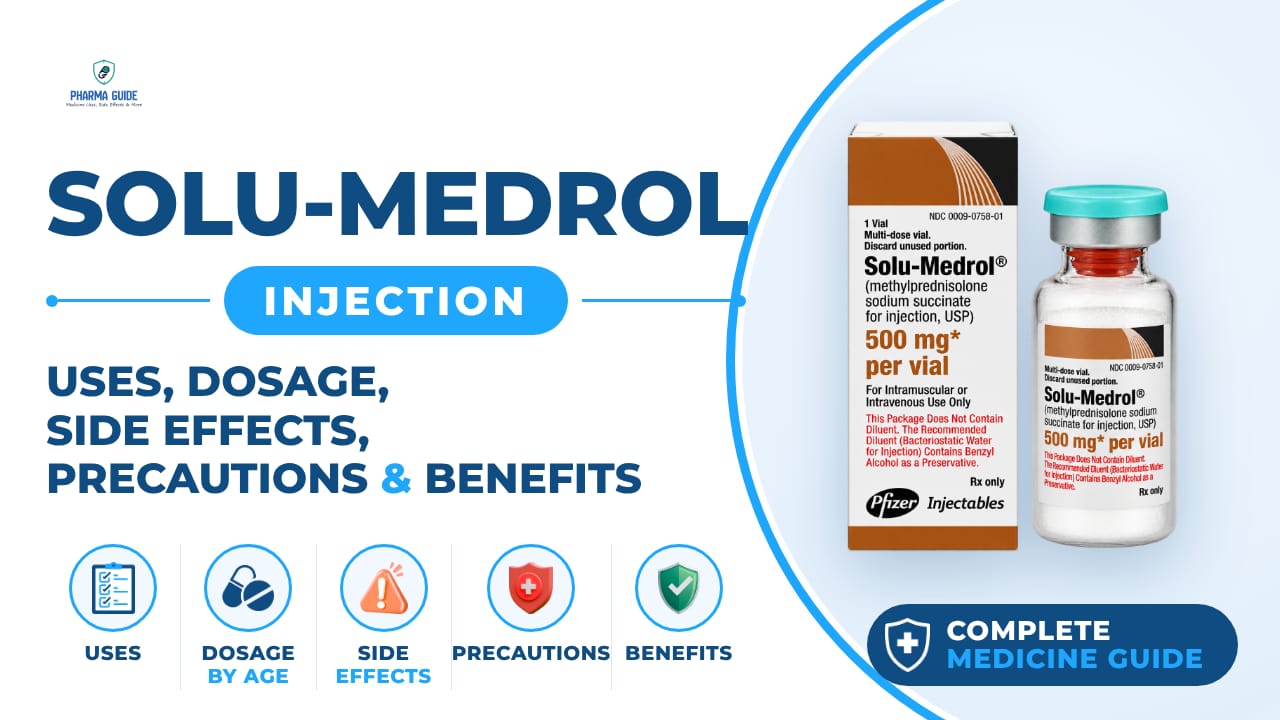
| Generic name | Methylprednisolone (as methylprednisolone sodium succinate) |
|---|---|
| Drug class | Glucocorticoids (corticosteroid) |
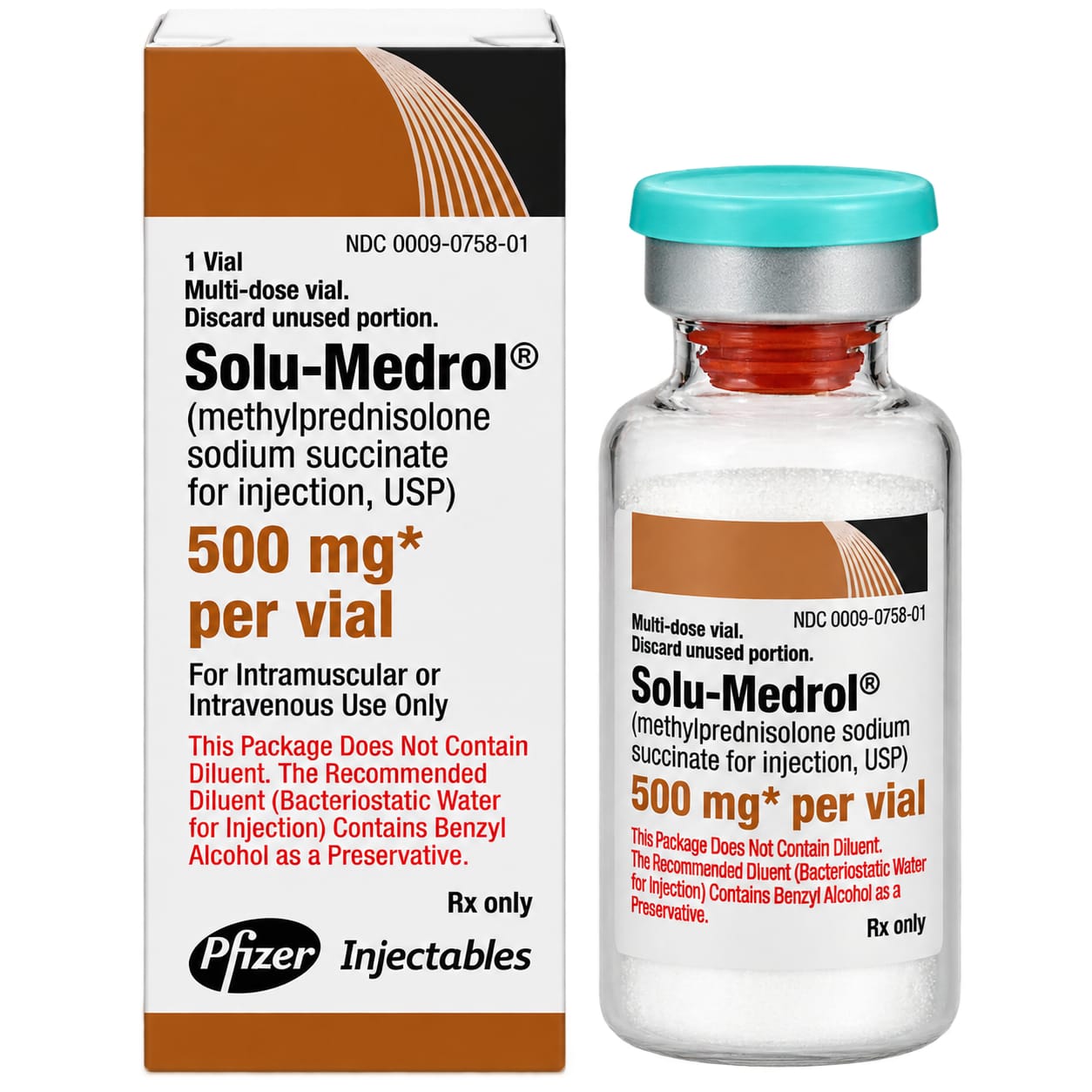
| Forms | Solution for injection (Act-O-Vial system) |
Quick overview
Solu-Medrol Injection contains methylprednisolone (as methylprednisolone sodium succinate), a corticosteroid (glucocorticoid) medicine. It is given by injection to reduce inflammation and calm an overactive immune response across a wide range of conditions, from arthritis and severe allergies to multiple sclerosis flare-ups and certain blood disorders. It is administered by a healthcare provider and dosed according to the condition being treated.
What is Solu-Medrol Injection
Solu-Medrol is a man-made steroid medicine given by injection. It is used for many different conditions where the body's inflammation or immune response needs to be reduced quickly.
Solu-Medrol Injection uses
- Arthritis and rheumatic disorders such as rheumatoid arthritis, gout, and ankylosing spondylitis
- Lupus and other collagen or immune complex diseases
- Severe allergic conditions such as asthma, drug reactions, and severe hives
- Skin conditions such as pemphigus, severe eczema, and severe psoriasis
- Eye conditions caused by inflammation or allergy
- Gut conditions such as ulcerative colitis and regional enteritis
- Blood disorders such as autoimmune hemolytic anemia and low platelet count
- Certain cancers of the blood, including leukemias and lymphomas, as part of palliative care
- Brain swelling caused by tumors or surgery
- Multiple sclerosis flare-ups
- Spinal cord injury when treatment starts soon after the injury
- Hormone (endocrine) gland disorders, including adrenal gland problems
- Prevention of nausea and vomiting caused by cancer chemotherapy
- Organ transplant rejection prevention
Benefits of Solu-Medrol Injection
- Reduces swelling, redness, heat, and pain caused by inflammation
- Can provide rapid relief during severe or life-threatening flare-ups of disease
- Helps control the immune system in autoimmune conditions
- May help speed recovery from acute multiple sclerosis attacks
How Solu-Medrol Injection works
Solu-Medrol is a steroid that reduces inflammation by acting inside cells to change how genes are turned on and off, which lowers the production of substances that cause swelling and immune activity. It also affects how the body handles sugar, protein, and fat.
Solu-Medrol Injection dosage
This medicine is given as an injection into a muscle, into a vein, into a joint space, into a skin lesion, or as an infusion into a vein by a healthcare provider. It should not be mixed with other medicines in the same syringe or bag whenever possible.
If you are on long-term treatment and need to stop, your doctor will lower your dose gradually rather than stopping suddenly. Children's doses are based on the condition being treated and their response, not just their age or weight. Elderly patients usually start at the lower end of the dosing range because of a higher chance of liver, kidney, or heart problems.
If you need surgery, have a severe injury, or get a serious infection while on this medicine, your care team needs to know you are using it, as your dose may need to change.
| Age group | Dose |
|---|---|
| Children | Dose based on body weight and medical condition (as prescribed) |
| Adults (18–64 Years) | 10–500 mg depending on condition and severity |
| Older Adults (65+ years) | Lowest effective dose; adjusted based on health condition |
| Emergency Conditions | High doses may be used under medical supervision |
Available forms and strengths
- Solution for injection (Act-O-Vial system)
Side effects of Solu-Medrol Injection
Common
- Weight gain, especially in the face, upper back, or torso
- Slow wound healing
- Muscle pain or weakness
- Thinning skin and increased sweating
- Stomach discomfort or bloating
- Headache
- Changes in menstrual periods
- Acne
- Increased appetite
- Mood swings, irritability, or trouble sleeping
Serious
- Signs of allergic reaction: hives, difficulty breathing, swelling of the face, lips, tongue, or throat
- Blurred vision, tunnel vision, eye pain, or seeing halos around lights
- Shortness of breath, swelling, or rapid weight gain
- Severe depression, personality changes, unusual thoughts or behavior, or suicidal thoughts
- New or unusual pain in an arm, leg, or back
- Severe stomach pain spreading to the back, with nausea and vomiting (possible pancreatitis)
- Bloody or tarry stools, or vomit that looks like coffee grounds
- Seizures (convulsions)
- Signs of low potassium: leg cramps, constipation, irregular heartbeat, fluttering in the chest, increased thirst or urination, numbness or tingling, muscle weakness
- Slowed growth in children
- Signs of infection: fever, chills, body aches
- Irregular or fast heartbeat, or heart failure symptoms
- Bone problems such as fractures or osteoporosis with long-term use
Warnings and precautions
- You may not be able to receive this medicine if you have a fungal infection affecting the whole body.
- This medicine can weaken your immune system, making infections more likely, worse, or reactivating past infections.
- Do not receive live vaccines while using this medicine, as it can make live vaccines unsafe.
- Avoid close contact with people who are sick or have infections, since chickenpox and measles can be serious or even fatal in people using this medicine.
- Injections into the shoulder muscle should be avoided due to a high risk of skin and tissue thinning at the injection site.
- This medicine should not be used to treat traumatic brain injury, as studies showed higher death rates in patients given this type of medicine after brain injury.
- Giving high doses too quickly by vein can cause dangerous heart rhythm problems or cardiac arrest.
- Some formulations contain benzyl alcohol, which should not be used in premature babies or newborns unless absolutely necessary, due to risk of a serious and sometimes fatal condition called gasping syndrome.
- It is not known if this medicine will harm an unborn baby. Tell your doctor if you are pregnant or planning to become pregnant so the benefits and risks can be weighed. You should not breastfeed while using this medicine.
- Tell your doctor if you have kidney disease, as this medicine should be used with caution in people with kidney problems.
- Tell your doctor if you have cirrhosis or other liver disease, since the effect of this medicine may be stronger in people with liver problems.
- This medicine has a minor effect on your ability to drive or use machines. It can cause dizziness, vertigo, blurred vision, or tiredness. Do not drive or use machinery if you are affected.
Storage
- Store unreconstituted product at controlled room temperature and protect from light
- Do not store above 30°C; do not freeze the unreconstituted powder
- Store reconstituted solution below 25°C and use immediately, or store at refrigerator temperature (about 2°C to 8°C) and use within 48 hours
- Once further diluted for infusion, use within the timeframes given by your healthcare provider based on storage temperature
- Keep out of the sight and reach of children
- Dispose of any unused medicine according to local requirements
When to see a doctor
- Get emergency help right away if you have signs of a serious allergic reaction, such as hives, trouble breathing, or swelling of the face, lips, tongue, or throat.
- Call your doctor right away if you have vision changes, shortness of breath, sudden swelling, rapid weight gain, severe mood or behavior changes, new pain in an arm, leg or back, severe stomach pain, blood in stool or vomit, seizures, or signs of low potassium such as muscle cramps or irregular heartbeat.
- Seek medical attention if you or a caregiver notice new or worsening mood or mental changes, especially depressed mood or thoughts of suicide, during treatment or while lowering the dose.
- If you are exposed to chickenpox or measles while on this medicine, contact your doctor promptly for preventive treatment, as these infections can be serious or fatal.
- If you think you have taken too much of this medicine, get emergency medical help or contact your local poison control center right away.
Alternatives
- Prednisolone
- Prednisone
- Betamethasone
Watch the video
FAQs
What is Solu-Medrol Injection used for?
It is used to treat conditions involving inflammation or an overactive immune response, including arthritis, lupus, severe allergies, asthma, skin conditions, ulcerative colitis, blood disorders, certain cancers, brain swelling, multiple sclerosis flare-ups, spinal cord injury, hormone gland disorders, chemotherapy-induced nausea, and organ transplant rejection prevention.
How is Solu-Medrol Injection given?
It is given by a healthcare provider as an injection into a muscle, vein, joint space, or skin lesion, or as an infusion into a vein. It should not be mixed with other medicines in the same syringe or bag whenever possible.
What are the common side effects of Solu-Medrol Injection?
Common side effects include weight gain, slow wound healing, muscle pain or weakness, thinning skin, increased sweating, stomach discomfort, headache, changes in menstrual periods, acne, increased appetite, and mood swings.
Can Solu-Medrol Injection be used with live vaccines?
No, live vaccines should not be given while using this medicine, as it can make live vaccines unsafe.
Is Solu-Medrol Injection safe during pregnancy or breastfeeding?
It is not known if this medicine will harm an unborn baby, so pregnancy should be discussed with a doctor. Breastfeeding should be avoided while using this medicine.
General information, not medical advice
Your prescriber and the leaflet in your pack know your situation. This page does not.
- Follow your prescriber and the leaflet
- Don't start, stop, or change a dose on your own
- Doses and warnings differ by country and product
Sources
Video
Related medicines
Uceris Tablet: Uses, Dosage, Side Effects, Precautions and Alternates
Glucocorticoids (corticosteroid)
Uceris Tablet (budesonide) is a corticosteroid used to help bring active, mild to moderate ulcerative colitis under control in adults, taken once daily.

Injectafer Injection: Uses, Dosage, Side Effects, Precautions and Alternates
Iron products
Injectafer (ferric carboxymaltose) treats iron deficiency anemia and heart failure-related iron deficiency via IV. Learn uses, dosage, side effects, and