
Safety
General information, not medical advice
Your prescriber and the leaflet in your pack know your situation. This page does not.
- Follow your prescriber and the leaflet
- Don't start, stop, or change a dose on your own
- Doses and warnings differ by country and product
Uceris Tablet: Uses, Dosage, Side Effects, Precautions and Alternates
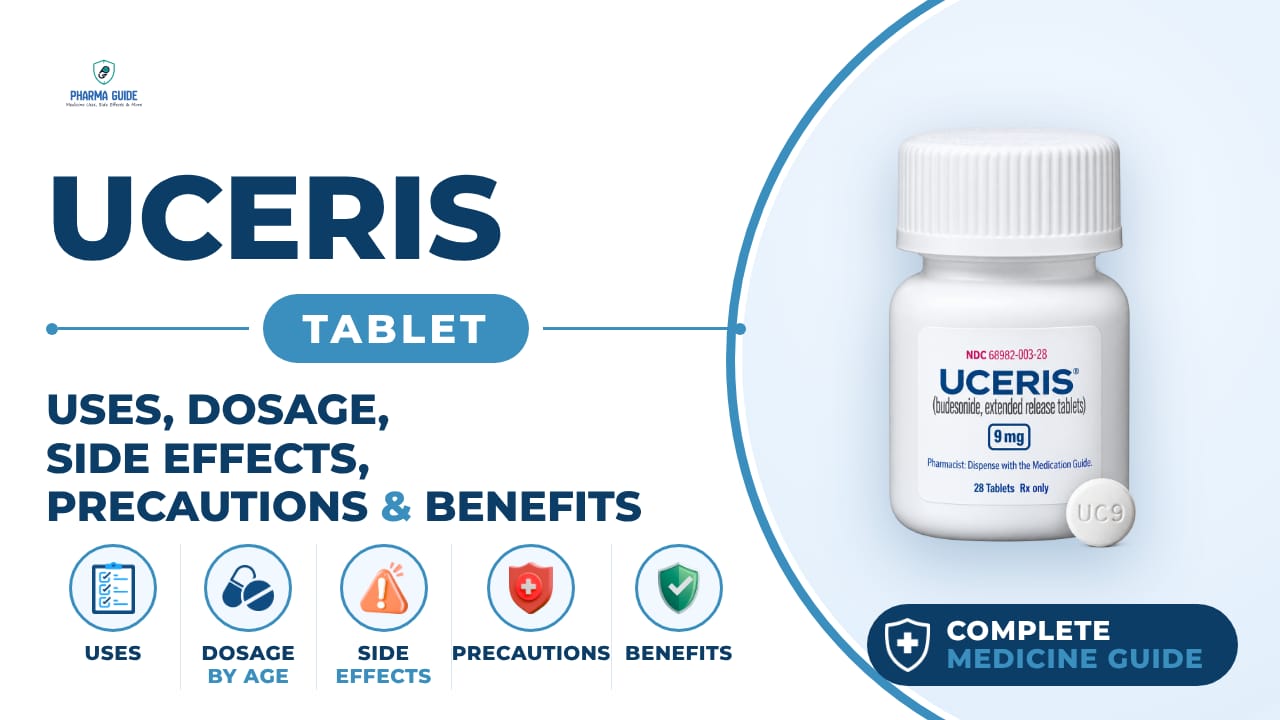
| Generic name | budesonide |
|---|---|
| Drug class | Glucocorticoids (corticosteroid) |
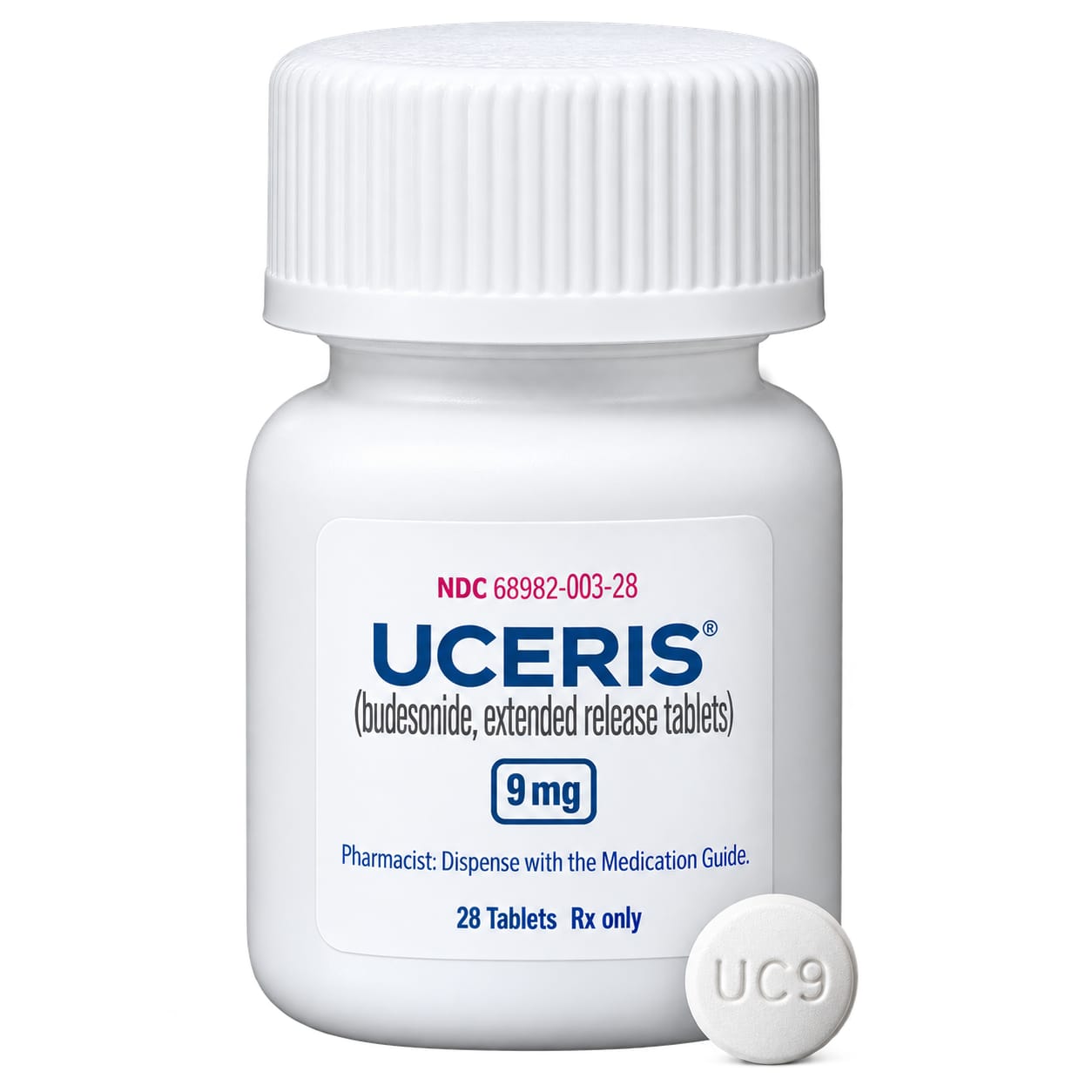
| Forms | Extended-release tablet |
Quick overview
Uceris Tablet (budesonide) is a prescription extended-release corticosteroid used to help bring active, mild to moderate ulcerative colitis under control in adults. It works by reducing inflammation in the intestines and can help bring on remission within 8 weeks of treatment. It is taken once daily in the morning and must be swallowed whole without crushing, breaking, or chewing.
What is Uceris Tablet
Uceris is an extended-release corticosteroid tablet that reduces inflammation in the body. It is a prescription medicine used to help bring active, mild to moderate ulcerative colitis under control in adults.
Uceris Tablet uses
- Helps induce remission in adults with active, mild to moderate ulcerative colitis
Benefits of Uceris Tablet
- Reduces inflammation in the intestines, which can ease ulcerative colitis symptoms
- Can help bring on remission (a period with few or no symptoms) within 8 weeks of treatment
How Uceris Tablet works
Uceris is a corticosteroid that reduces swelling (inflammation) in the intestines. The tablet has a special coating that delays release of the medicine until it reaches the small intestine, where it is released slowly over time.
Uceris Tablet dosage
Take this medicine in the morning with a full glass of water. You may take it with or without food. Swallow the tablet whole; do not crush, break, dissolve, or chew it. Do not stop taking this medicine suddenly; your doctor may want you to lower your dose gradually. Avoid grapefruit or grapefruit juice while taking this medicine. This medicine is not established as safe and effective for use in children.
| Age group | Dose |
|---|---|
| Under 18 years | Safety and effectiveness are not established; no standard pediatric dose |
| 18–39 years | 9 mg once daily in the morning for up to 8 weeks |
| 65–74 years | Usually 9 mg once daily for up to 8 weeks; closer monitoring may be appropriate |
| 75 years and older | No separate age-specific dose is established; treatment is individualized with closer monitoring |
Available forms and strengths
- Extended-release tablet
Side effects of Uceris Tablet
Common
- Headache
- Dizziness
- Indigestion, nausea, vomiting, stomach pain, bloating, gas, constipation
- Feeling tired
- High blood pressure
- Back pain, muscle cramps, joint pain
- Swelling of the face, lower legs, ankles, and feet
- Pain and burning when urinating
- Acne
- Thicker or increased hair on the body and face
- Cold symptoms such as stuffy nose, sneezing, sore throat
- Decreased adrenal gland hormones
Serious
- Signs of an allergic reaction such as hives, difficulty breathing, or swelling of the face, lips, tongue, or throat
- Increased adrenal gland hormones (hypercorticism) leading to Cushing's syndrome and adrenal suppression
- Decreased adrenal gland hormones (adrenal insufficiency)
- Signs of a new or worsening infection, including flu-like symptoms, fever, chills, cough, or stomach pain
- Reactivation of tuberculosis, hepatitis B, or amebiasis
- Serious or fatal chickenpox or measles infection in people exposed while on this medicine
- Decreased growth rate in children
- Kaposi's sarcoma
Warnings and precautions
- Avoid being near people who are sick or have infections, since this medicine weakens the immune system. Call your doctor right away if you are exposed to chickenpox or measles, since these can be serious or even fatal while taking this medicine.
- Do not crush, break, dissolve, or chew the tablet. Swallow it whole, since this affects how the medicine is released in your body.
- Avoid grapefruit and grapefruit juice while taking this medicine, since it can raise the amount of medicine in your blood.
- Do not stop taking this medicine suddenly; your doctor will guide you on tapering the dose safely.
- This medicine can increase the risk of serious infections, including tuberculosis, hepatitis B reactivation, and amebiasis, and may mask signs of infection.
- Kaposi's sarcoma has occurred in people taking corticosteroids, most often for long-lasting conditions.
- This medicine may cause harm to an unborn baby. Talk to your doctor about the risks and benefits of taking it during pregnancy, and tell your doctor right away if you become pregnant while taking it.
- This medicine passes into breast milk and may affect your baby. Talk with your doctor about whether to take this medicine or breastfeed, since you should not do both.
- The effects of this medicine have not been specifically studied in people with kidney problems.
- People with liver disease, especially moderate to severe, may need closer monitoring because this medicine can build up more in the body and increase the risk of steroid-related side effects.
- There are no known direct interactions between this medicine and alcohol, but alcohol may worsen ulcerative colitis symptoms, so it may be best to avoid it during treatment.
- Uceris does not usually directly impair driving, although dizziness or weakness can occur.
Storage
- Store tightly closed at room temperature, away from moisture and heat
- Keep the bottle tightly closed to protect the tablets from light and moisture
- Keep out of the reach of children
When to see a doctor
- Get emergency help right away if you have signs of an allergic reaction, such as hives, trouble breathing, or swelling of your face, lips, tongue, or throat.
- Call your doctor if you have signs of too much corticosteroid in your body, such as thinning skin, easy bruising, changes in body fat, increased acne or facial hair, menstrual problems, impotence, or loss of interest in sex.
- Tell your healthcare provider right away about any signs of a new or worsening infection, including fever, chills, stomach pain, cough, feeling tired, aches, nausea, vomiting, or diarrhea.
- Tell your doctor right away if you come into contact with anyone who has chickenpox or measles.
- If you think you've taken too much of this medicine, call your doctor right away or go to the nearest hospital emergency room.
- Tell your doctor if your symptoms do not improve or if they get worse.
- Tell your doctor if a child taking this medicine is not growing at a normal rate.
Alternatives
- Mesalamine
- Balsalazide
- Olsalazine
- Sulfasalazine
Watch the video
FAQs
What is Uceris Tablet used for?
Uceris Tablet is used to help bring active, mild to moderate ulcerative colitis under control in adults by reducing inflammation in the intestines.
How long does it take for Uceris Tablet to work?
Uceris Tablet can help bring on remission, a period with few or no symptoms, within 8 weeks of treatment.
How should I take Uceris Tablet?
Take Uceris Tablet once daily in the morning with a full glass of water, with or without food. Swallow it whole and do not crush, break, dissolve, or chew it.
Can I drink grapefruit juice while taking Uceris Tablet?
No, you should avoid grapefruit or grapefruit juice while taking Uceris Tablet, since it can raise the amount of medicine in your blood.
What are the common side effects of Uceris Tablet?
Common side effects include headache, dizziness, indigestion, nausea, vomiting, stomach pain, bloating, gas, constipation, tiredness, high blood pressure, back pain, muscle cramps, joint pain, swelling, acne, and cold symptoms.
General information, not medical advice
Your prescriber and the leaflet in your pack know your situation. This page does not.
- Follow your prescriber and the leaflet
- Don't start, stop, or change a dose on your own
- Doses and warnings differ by country and product
Sources
Video
Related medicines
Solu-Medrol Injection: Uses, Dosage, Side Effects, Precautions and Alternates
Glucocorticoids (corticosteroid)
Solu-Medrol Injection is a corticosteroid given by a healthcare provider to reduce inflammation and calm immune responses. Learn uses, dosage, and side effects.

Injectafer Injection: Uses, Dosage, Side Effects, Precautions and Alternates
Iron products
Injectafer (ferric carboxymaltose) treats iron deficiency anemia and heart failure-related iron deficiency via IV. Learn uses, dosage, side effects, and