
Safety
General information, not medical advice
Your prescriber and the leaflet in your pack know your situation. This page does not.
- Follow your prescriber and the leaflet
- Don't start, stop, or change a dose on your own
- Doses and warnings differ by country and product
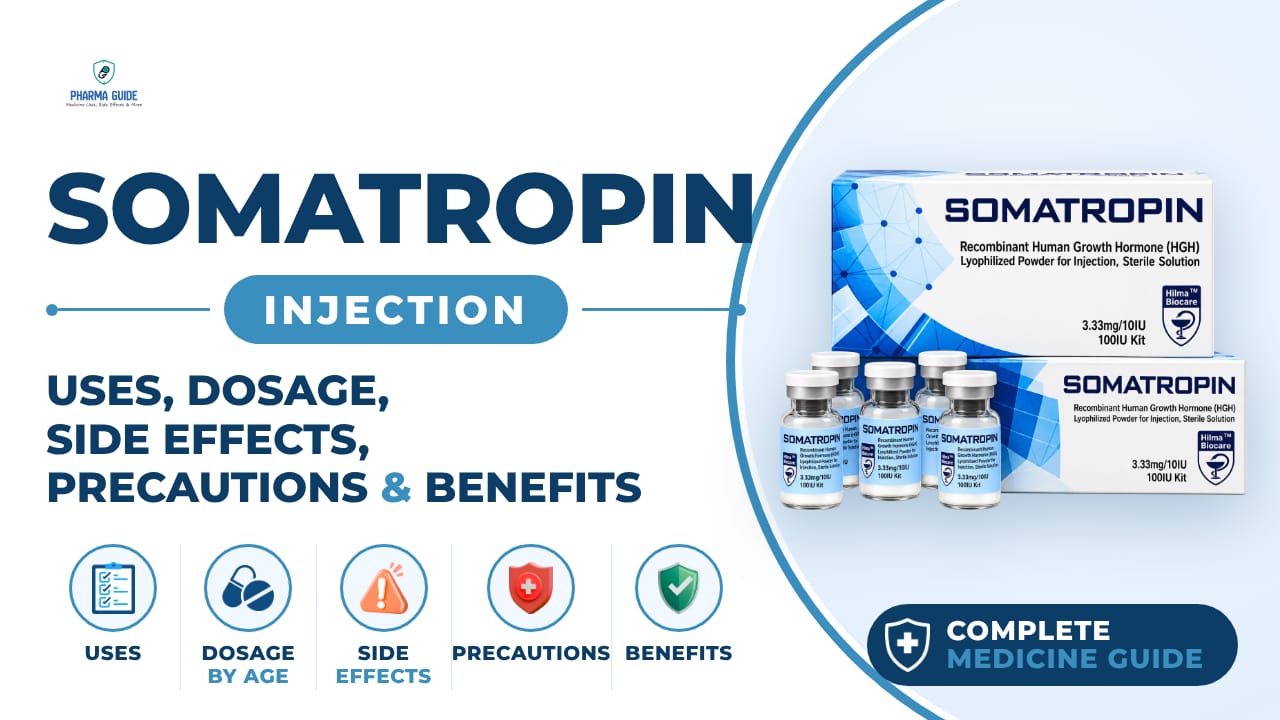
Somatropin Injection: Uses, Dosage, Side Effects, Precautions and Alternates
| Generic name | Somatropin |
|---|---|
| Drug class | Growth hormones (pituitary and hypothalamic hormones and analogues; human growth hormone) |
| Forms | Injection |
Quick overview
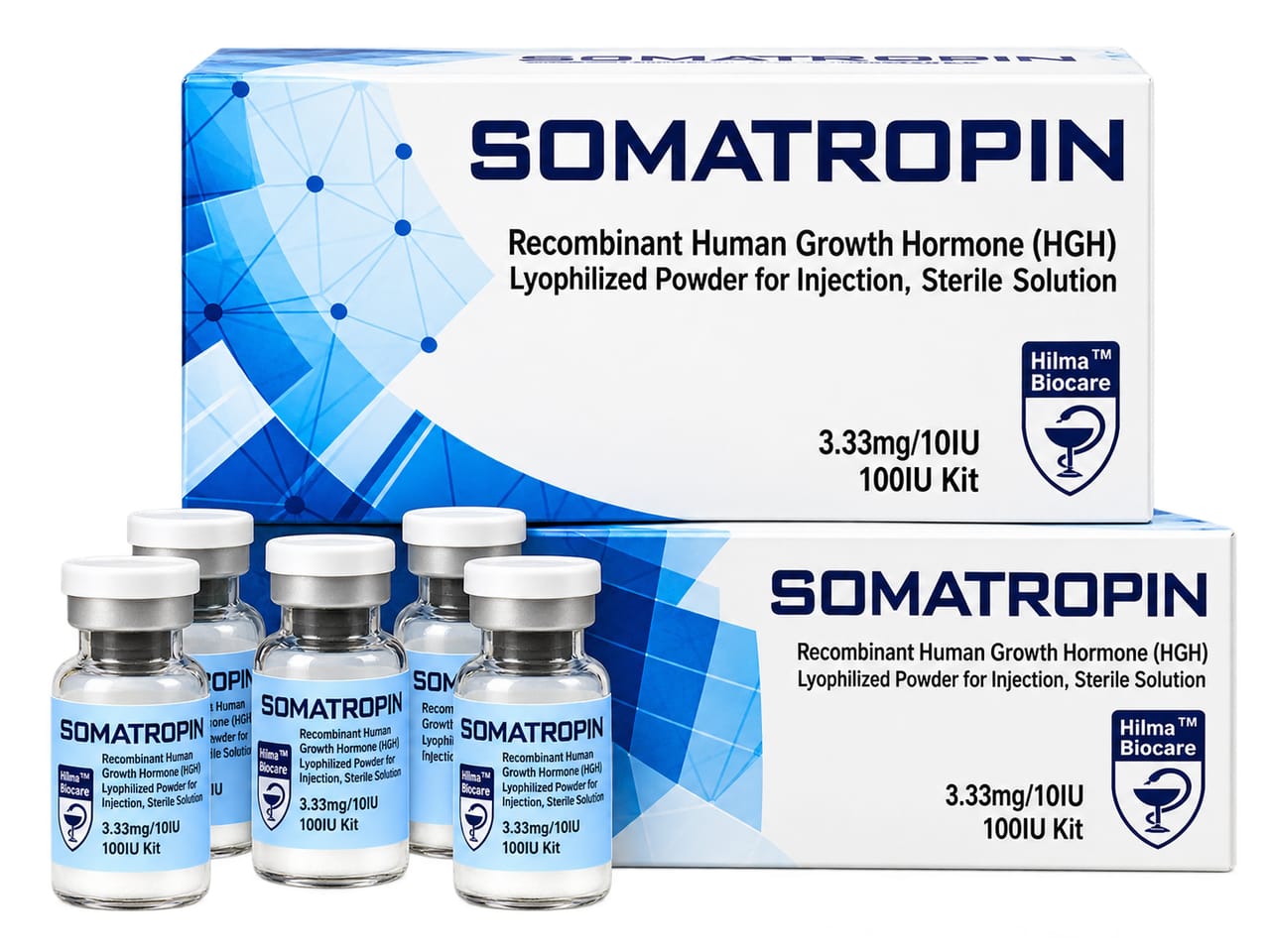
Somatropin Injection contains Somatropin, a man-made version of human growth hormone that is identical in structure to the hormone made naturally by the pituitary gland. It is given by injection to treat growth failure in children with certain hormone or genetic conditions, and as replacement therapy for adults with growth hormone deficiency. It helps increase height in children and improves muscle mass, body fat, and wellbeing in adults who lack enough natural growth hormone. It belongs to the growth hormones drug class.
What is Somatropin Injection
Somatropin is a man-made version of human growth hormone, made using recombinant DNA technology. Its structure is identical to the natural growth hormone made by the pituitary gland. It is given as an injection to people whose bodies do not make enough growth hormone on their own, or who have certain growth disorders.
Somatropin Injection uses
- Long-term treatment of children with growth failure due to the body not making enough natural growth hormone
- Treatment of short stature in girls with Turner syndrome
- Treatment of growth failure in children due to chronic kidney (renal) failure
- Treatment of growth problems in children born small for their gestational age who have not caught up in growth
- Treatment of idiopathic short stature (short stature with no identified cause) in some products
- Treatment of short stature due to SHOX gene deficiency
- Replacement therapy for adults with growth hormone deficiency (from childhood-onset or adult-onset causes)
Benefits of Somatropin Injection
- Increases the rate of growth (height) in children with growth hormone deficiency and certain other growth disorders
- Helps more children reach a height closer to the normal range for their age
- Increases muscle (lean body) mass and reduces body fat in people with growth hormone deficiency
- May improve cholesterol (HDL) levels and overall body composition in adults with growth hormone deficiency
- Can improve feelings of energy, mobility and wellbeing in some adults with growth hormone deficiency
How Somatropin Injection works
Somatropin acts like the body's own growth hormone. It helps bones grow longer at the growth plates, helps muscles and organs grow, and affects how the body uses sugar, fat and protein. Growth hormone also triggers the body to make another hormone called IGF-1, which helps drive growth.
Somatropin Injection dosage
This medicine is given as an injection under the skin (subcutaneous); some forms can also be given into a muscle. It is usually injected in the evening or at bedtime. Depending on the brand and condition being treated, it may be injected once daily, several times a week, or in some newer products once a week.
Change (rotate) the injection site each time - for example between arms, legs, abdomen and buttocks - to help prevent skin or fat changes at the injection site. Do not inject into a site that is bruised, scarred, hard, red or sore.
Do not shake the mixed solution; mix gently by swirling or rolling between your hands as instructed. Do not use if the solution looks cloudy, discoloured, or contains particles after mixing.
Use a new needle and syringe for each injection and never share injection pens or cartridges with another person, even if the needle is changed. If a dose is missed, do not double up the next dose; simply take the next dose as scheduled.
In children, treatment is usually continued until final adult height is reached or the growth plates (epiphyses) have closed. In adults, the lowest effective dose is used, and older or overweight adults often need a lower dose. Oral estrogen use in women may mean a higher dose of this medicine is needed.
| Age group | Dose |
|---|---|
| Under 18 years | Not recommended |
| 18–64 years | 0.2 mg, once/day |
| 65+ years | 0.1–0.2 mg, once/day |
Available forms and strengths
- Injection
Side effects of Somatropin Injection
Common
- Redness, itching, pain or swelling at the injection site
- Swelling (fluid retention), especially in hands and feet
- Headache
- Muscle or joint pain (arthralgia, myalgia)
- Numbness or tingling sensations (paraesthesia)
- Fatigue or feeling unwell
- Cold-like symptoms - stuffy nose, sore throat, ear infections
- Stomach pain, nausea, vomiting, diarrhea
- Mild increase in blood sugar
Serious
- Signs of increased pressure in the skull (intracranial hypertension) - severe or recurring headache, vision changes, nausea and/or vomiting
- Signs of diabetes or high blood sugar - increased thirst, increased urination, unusual tiredness
- Development of a limp, or hip or knee pain, which may signal a slipped growth plate or bone/joint problem in children
- Signs of an allergic reaction - rash, hives, itching, swelling of the face/lips/tongue/throat, difficulty breathing, wheezing (can rarely be severe or life-threatening)
- Signs of pancreatitis - severe pain in the upper stomach spreading to the back, with nausea and vomiting
- Signs of low thyroid function - unusual tiredness, weight gain, feeling cold
- Signs of adrenal gland problems - extreme weakness, severe dizziness, weight loss, changes in skin color
- New lump, growth, or signs that a tumour has come back or is growing
- Carpal tunnel syndrome - numbness, tingling, or pain in the hand/wrist
- Breathing problems, especially snoring or pauses in breathing during sleep (particularly important in Prader-Willi syndrome)
- Unexplained or worsening curvature of the spine (scoliosis) in children who are growing quickly
Warnings and precautions
- This medicine should not be started in people who are critically ill after major heart or stomach surgery, major trauma, or sudden breathing failure, as high doses of growth hormone have been linked to a higher risk of death in these patients.
- This medicine should not be given to children with Prader-Willi syndrome who are severely obese, have severe breathing problems, or a history of blocked airway or sleep apnea, because of reports of sudden death in this group.
- This medicine should not be used if there is any sign of an active tumour; it should only be used once a tumour is inactive and any necessary cancer treatment is finished, and should be stopped again if the tumour seems to be growing or coming back.
- People who survived cancer as children may have a higher chance of developing a new tumour (including benign and cancerous growths, and especially brain tumours after head radiation) while on this medicine.
- A small number of children with growth hormone deficiency have developed leukemia, whether or not they were treated with growth hormone; it isn't proven that growth hormone itself causes this.
- This medicine can affect blood sugar control and may unmask or worsen diabetes, so blood sugar should be monitored, especially in people with risk factors for diabetes.
- Should not be used in people allergic to somatropin or any ingredient in the formulation, including specific concerns about sensitivity to benzyl alcohol or other preservatives in some diluents.
- Growth hormone treatment should be stopped at the time of a kidney transplant in children being treated for kidney-related growth failure.
- This medicine is generally not recommended during pregnancy. It should only be used if your doctor decides it is clearly necessary, with careful monitoring.
- It isn't known for certain whether this medicine passes into breast milk in a way that could affect a nursing baby, but caution is advised while breastfeeding.
- There isn't enough information on use in people with kidney problems, so specific dosing advice cannot be given, though in some children growth hormone is used specifically to treat growth failure caused by chronic kidney disease, under close medical supervision.
- There isn't enough information on use in people with liver problems, so specific dosing advice cannot be given, and growth hormone dose may need to be adjusted in people with liver or biliary conditions.
- This medicine is not expected to affect your ability to drive or operate machinery.
Storage
- Store unopened vials, cartridges and pens in a refrigerator (2°C to 8°C); do not freeze
- Protect from light - keep in the original package
- Some lyophilized (freeze-dried) powder forms can be stored at room temperature (not above 25°C) before mixing, but check your specific product's instructions
- Once mixed (reconstituted), storage time varies by product - for example, some solutions can be kept in the refrigerator for up to 14 or up to 21 or 28 days, while others must be used within 3 hours or used immediately; follow the instructions for your specific product
- Do not freeze the reconstituted (mixed) solution
- Discard any unused solution after the recommended storage period or if it becomes cloudy or contains particles
- Keep out of the sight and reach of children
- Dispose of used needles and syringes in a proper puncture-proof sharps container; ask your pharmacist how to safely dispose of medicines and sharps you no longer need
When to see a doctor
- Get medical help right away if you have a severe allergic reaction, such as sudden difficulty breathing, wheezing, or swelling of the face, lips, tongue or throat.
- Contact your doctor if you (or your child) get a bad or recurring headache, vision changes, nausea or vomiting, which could be signs of increased pressure in the skull (intracranial hypertension).
- Tell your doctor promptly if your child develops a limp, or complains of hip or knee pain during treatment, as this could indicate a problem with the hip joint.
- Seek medical advice if a child being treated for Prader-Willi syndrome shows signs of airway blockage, such as new or louder snoring, or pauses in breathing during sleep.
- Contact your doctor if your child (especially one with Turner syndrome) develops symptoms of an ear infection, such as ear pain or discharge.
- Seek medical attention if you or your child develops severe abdominal pain, which could be a sign of pancreatitis, a rare but serious side effect.
- If you think you have used too much of this medicine, contact a healthcare professional, hospital emergency department, or your regional poison control centre right away, even if you do not notice any symptoms.
Alternatives
- Genotropin
- Humatrope
- Norditropin
Watch the video
FAQs
What is Somatropin Injection used for?
It treats growth failure in children due to growth hormone deficiency, Turner syndrome, chronic kidney failure, being born small for gestational age, SHOX gene deficiency, or idiopathic short stature, and is used as replacement therapy for adults with growth hormone deficiency.
How is Somatropin Injection given?
It is given as an injection under the skin, and some forms can be injected into a muscle. It is usually injected in the evening or at bedtime, with frequency ranging from once daily to once weekly depending on the brand and condition.
How should Somatropin Injection be stored?
Unopened vials, cartridges and pens should be stored in a refrigerator between 2°C and 8°C and not frozen, protected from light in the original package. Some freeze-dried powder forms can be stored at room temperature before mixing. Once reconstituted, storage time varies by product, so check specific instructions.
What are the serious side effects of Somatropin Injection?
Serious side effects include signs of increased pressure in the skull, signs of diabetes or high blood sugar, slipped growth plate in children, allergic reactions, pancreatitis, low thyroid function, adrenal gland problems, tumour growth or recurrence, carpal tunnel syndrome, breathing problems during sleep, and worsening scoliosis in growing children.
Who should not use Somatropin Injection?
It should not be started in critically ill patients after major heart or stomach surgery, major trauma, or sudden breathing failure, in children with Prader-Willi syndrome who are severely obese or have severe breathing problems, or in anyone with an active tumour or allergy to somatropin or its ingredients.
General information, not medical advice
Your prescriber and the leaflet in your pack know your situation. This page does not.
- Follow your prescriber and the leaflet
- Don't start, stop, or change a dose on your own
- Doses and warnings differ by country and product
Sources
Video
Related medicines

Injectafer Injection: Uses, Dosage, Side Effects, Precautions and Alternates
Iron products
Injectafer (ferric carboxymaltose) treats iron deficiency anemia and heart failure-related iron deficiency via IV. Learn uses, dosage, side effects, and

Gliclazide Tablet: Uses, Dosage, Side Effects, Precautions and Alternates
Sulfonylurea (hypoglycemic/antidiabetic agent)
Gliclazide Tablet is a sulfonylurea for type 2 diabetes that boosts insulin release. Learn about dosage, side effects, warnings, and precautions.