
Safety
General information, not medical advice
Your prescriber and the leaflet in your pack know your situation. This page does not.
- Follow your prescriber and the leaflet
- Don't start, stop, or change a dose on your own
- Doses and warnings differ by country and product
Sorbitrate Sublingual Tablet: Uses, Dosage, Side Effects, Precautions and Alternates
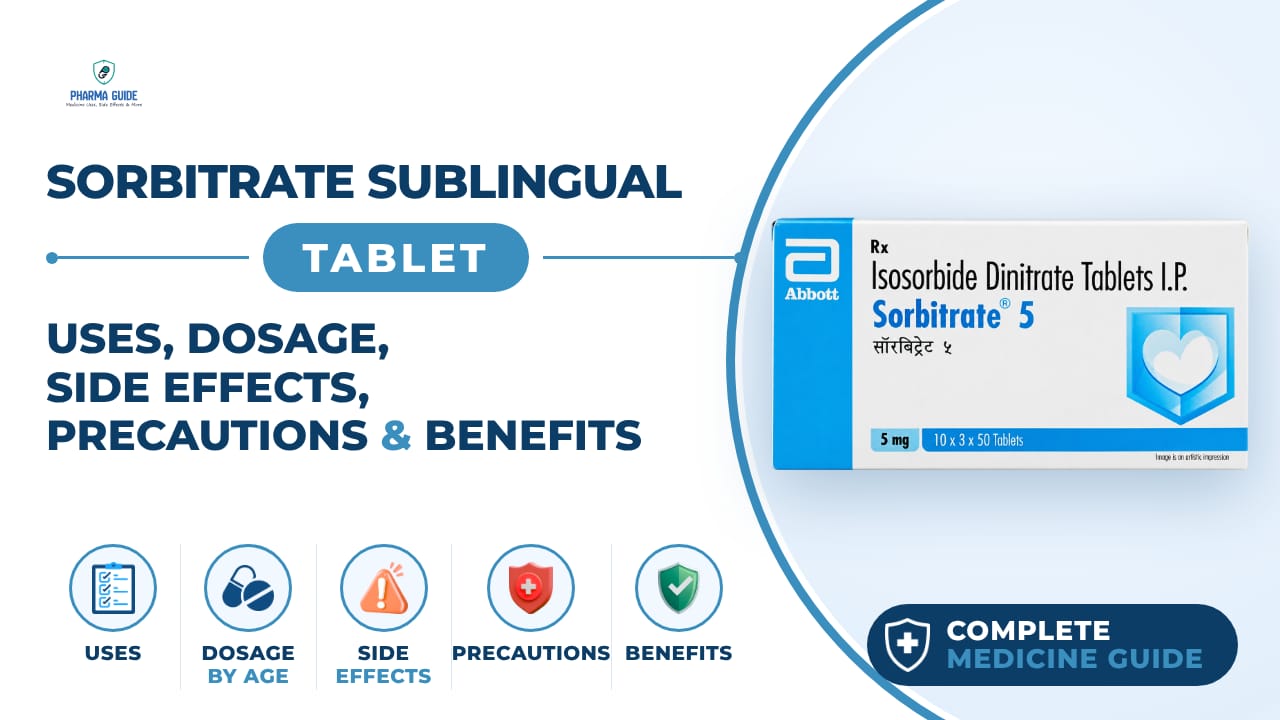
| Generic name | Isosorbide Dinitrate |
|---|---|
| Drug class | Nitrate (Antianginal agent) |
| Forms | Tablet |
Quick overview
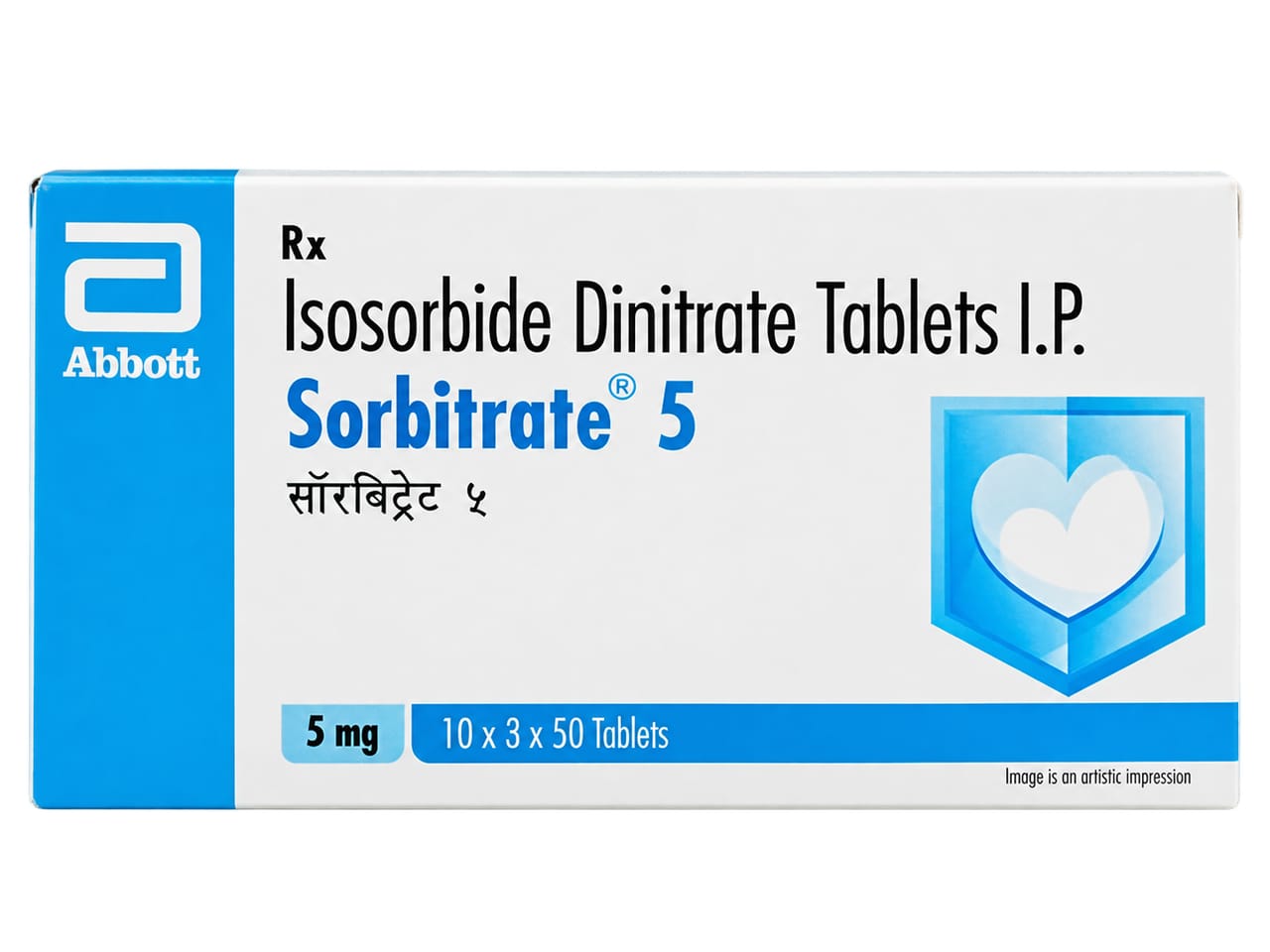
Sorbitrate Sublingual Tablet contains isosorbide dinitrate, a nitrate medicine (antianginal agent) that widens blood vessels, making it easier for blood to flow and reducing the workload on the heart. It is used to prevent and relieve angina (chest pain) caused by reduced blood flow to the heart. It is taken under the tongue and works quickly to help manage angina symptoms.
What is Sorbitrate Sublingual Tablet
Sorbitrate is a nitrate medicine that widens blood vessels, making it easier for blood to flow and reducing the workload on the heart. It is used to prevent and relieve angina (chest pain) caused by reduced blood flow to the heart.
Sorbitrate Sublingual Tablet uses
- Prevent and relieve angina (chest pain) caused by reduced blood flow to the heart
- Ease the workload on the heart
- Improve how much physical activity a person can manage
- Chronic heart failure
Benefits of Sorbitrate Sublingual Tablet
- Helps reduce how often and how severely angina attacks happen
- Helps improve how much activity you can manage
- Improves blood flow and oxygen supply to the heart
How Sorbitrate Sublingual Tablet works
Isosorbide dinitrate causes the body to release nitric oxide, which relaxes the smooth muscles of blood vessels. This widens (dilates) the blood vessels, allowing more oxygen-rich blood to reach the heart and helping to prevent angina attacks.
Sorbitrate Sublingual Tablet dosage
Take this medicine exactly as prescribed by your doctor; do not take more or for longer than recommended. If possible, rest or stay seated when you use this medicine, since it can cause dizziness or fainting.
To treat an angina attack, use the medicine at the first sign of chest pain. Place the sublingual tablet under your tongue and let it dissolve slowly; do not chew or swallow it. It can also be dissolved between the cheek and gum. It may be taken 5 to 10 minutes before physical activity or at the first sign of angina. This medicine is not meant for stopping an angina attack that is already happening.
You may take additional tablets every 5 minutes, but do not exceed the recommended limit within 15 minutes. Seek emergency medical help if chest pain gets worse or lasts more than 5 minutes, especially with trouble breathing, weakness, dizziness, nausea, or lightheadedness.
If taken regularly to prevent angina, do not stop suddenly, as this could cause a severe angina attack. Do not change brands without your doctor's approval. This medicine may be taken on an empty stomach. Keep this medicine on hand at all times in case of an angina attack, and refill your prescription before running out. Stand up slowly if you feel light-headed.
If you miss a dose and are on a regular schedule, take it as soon as you remember unless your next dose is due soon, in which case skip the missed dose. Do not take extra medicine to make up for a missed dose.
| Age group | Dose |
|---|---|
| Under 18 Years | Not routinely recommended; use only under specialist supervision |
| 18–64 Years | 5–10 mg under the tongue at the onset of angina, as prescribed |
| 65+ Years | 5 mg under the tongue initially, adjusted according to medical advice |
Available forms and strengths
Tablet
Side effects of Sorbitrate Sublingual Tablet
Common
- Headache
- Dizziness and light-headedness
- Flushing (redness of the face or neck)
- Low blood pressure
- Palpitations (change in heartbeat)
- Nausea
- Tiredness/weakness
- Warmth, redness, or tingly feeling under the skin
Serious
- Fast, slow, pounding, or uneven heart rate
- Blurred vision or dry mouth
- Nausea, vomiting, sweating, pale skin, feeling like you might pass out
- Difficulty in breathing
- Signs of allergic reaction: hives, difficulty breathing, swelling of face, lips, tongue, or throat
Warnings and precautions
- Do not take this medicine if you are using sildenafil (Viagra) or similar erectile dysfunction drugs, as this combination can cause serious, life-threatening side effects from a severe drop in blood pressure.
- This medicine can cause severe headaches, especially when you first start taking it. These usually lessen over time. Do not stop taking the medicine because of headaches, and ask your doctor before using any headache medication.
- Do not use this medicine if you are allergic to isosorbide dinitrate, isosorbide mononitrate, or nitroglycerin.
- An overdose of this medicine can be fatal. Seek emergency medical attention right away if you think you have taken too much.
- Do not stop taking this medicine suddenly if you use it regularly to prevent angina, as this could trigger a severe angina attack.
- This medicine may worsen symptoms of glaucoma, so tell your doctor if you have this condition.
- Safety and effectiveness in children have not been established.
- Older patients may be more sensitive to the effects of this medicine, so your doctor will monitor you closely and adjust the dose if needed.
- This medicine may be harmful to an unborn baby. Tell your doctor if you are pregnant or planning to become pregnant, and discuss the risks and benefits before use.
- It is not known whether this medicine passes into breast milk or could harm a nursing baby. Talk to your doctor before using it while breastfeeding.
- Tell your doctor about any kidney problems before taking this medicine, since you may need dosage adjustment or special monitoring.
- Tell your doctor about any liver problems before taking this medicine, as they will decide if it is safe for you.
- Avoid drinking alcohol while taking this medicine, as it can increase dizziness, drowsiness, light-headedness, or fainting.
- This medicine can affect your thinking or reactions. Be careful driving or doing anything that requires alertness, especially if you feel dizzy or drowsy.
Storage
- Store isosorbide dinitrate at room temperature, away from moisture, heat, and light
- Keep the medicine in its original container
- Throw away any leftover medicine on the expiration date
- Store below 30°C
- Store in a cool, dry place, protected from light and moisture
- Keep out of reach of children
- Use the product before its expiry date
When to see a doctor
- Get emergency medical help if you have signs of an allergic reaction, such as hives, difficulty breathing, or swelling of your face, lips, tongue, or throat.
- Seek emergency medical help if your chest pain gets worse or lasts more than 5 minutes, especially if you also have trouble breathing, weakness, dizziness, nausea, or lightheadedness.
- Call your doctor right away if you have a fast, slow, pounding, or uneven heart rate, blurred vision, dry mouth, or feel like you might pass out along with nausea, vomiting, sweating, or pale skin.
- Seek emergency medical attention if you think you have taken too much of this medicine, as an overdose can be fatal.
Alternatives
- Other nitrate medicines prescribed for angina
- Isosorbide Mononitrate
- Nitroglycerin (Glyceryl Trinitrate) sublingual tablet
Watch the video
FAQs
What is Sorbitrate Sublingual Tablet used for?
It is used to prevent and relieve angina (chest pain) caused by reduced blood flow to the heart, ease the heart's workload, and improve physical activity tolerance.
How should I take Sorbitrate Sublingual Tablet?
Place the tablet under your tongue and let it dissolve slowly; do not chew or swallow it. It can also be dissolved between the cheek and gum, and may be taken 5 to 10 minutes before physical activity or at the first sign of angina.
Can I take Sorbitrate with erectile dysfunction medicines?
No, you should not take this medicine with sildenafil (Viagra) or similar drugs, as the combination can cause a severe, life-threatening drop in blood pressure.
What are the common side effects of Sorbitrate Sublingual Tablet?
Common side effects include headache, dizziness and light-headedness, flushing, low blood pressure, palpitations, nausea, and tiredness.
What should I do if I miss a dose of Sorbitrate?
If you are on a regular schedule and miss a dose, take it as soon as you remember unless your next dose is due soon, in which case skip the missed dose. Do not take extra medicine to make up for it.
General information, not medical advice
Your prescriber and the leaflet in your pack know your situation. This page does not.
- Follow your prescriber and the leaflet
- Don't start, stop, or change a dose on your own
- Doses and warnings differ by country and product
Sources
Video
Related medicines

Injectafer Injection: Uses, Dosage, Side Effects, Precautions and Alternates
Iron products
Injectafer (ferric carboxymaltose) treats iron deficiency anemia and heart failure-related iron deficiency via IV. Learn uses, dosage, side effects, and

Gliclazide Tablet: Uses, Dosage, Side Effects, Precautions and Alternates
Sulfonylurea (hypoglycemic/antidiabetic agent)
Gliclazide Tablet is a sulfonylurea for type 2 diabetes that boosts insulin release. Learn about dosage, side effects, warnings, and precautions.