
Safety
General information, not medical advice
Your prescriber and the leaflet in your pack know your situation. This page does not.
- Follow your prescriber and the leaflet
- Don't start, stop, or change a dose on your own
- Doses and warnings differ by country and product
Sotyktu Tablet: Uses, Dosage, Side Effects, Precautions and Alternates
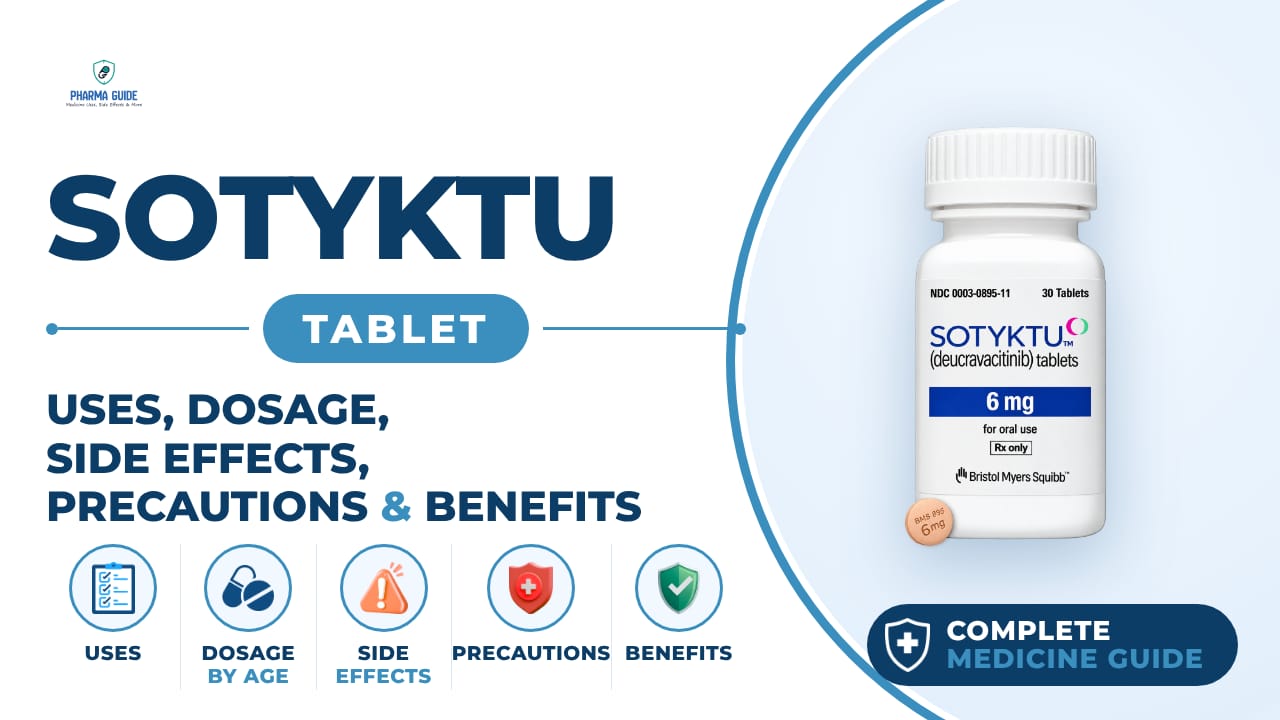
| Generic name | deucravacitinib |
|---|---|
| Drug class | Selective Immunosuppressant (tyrosine kinase 2 blocker) |
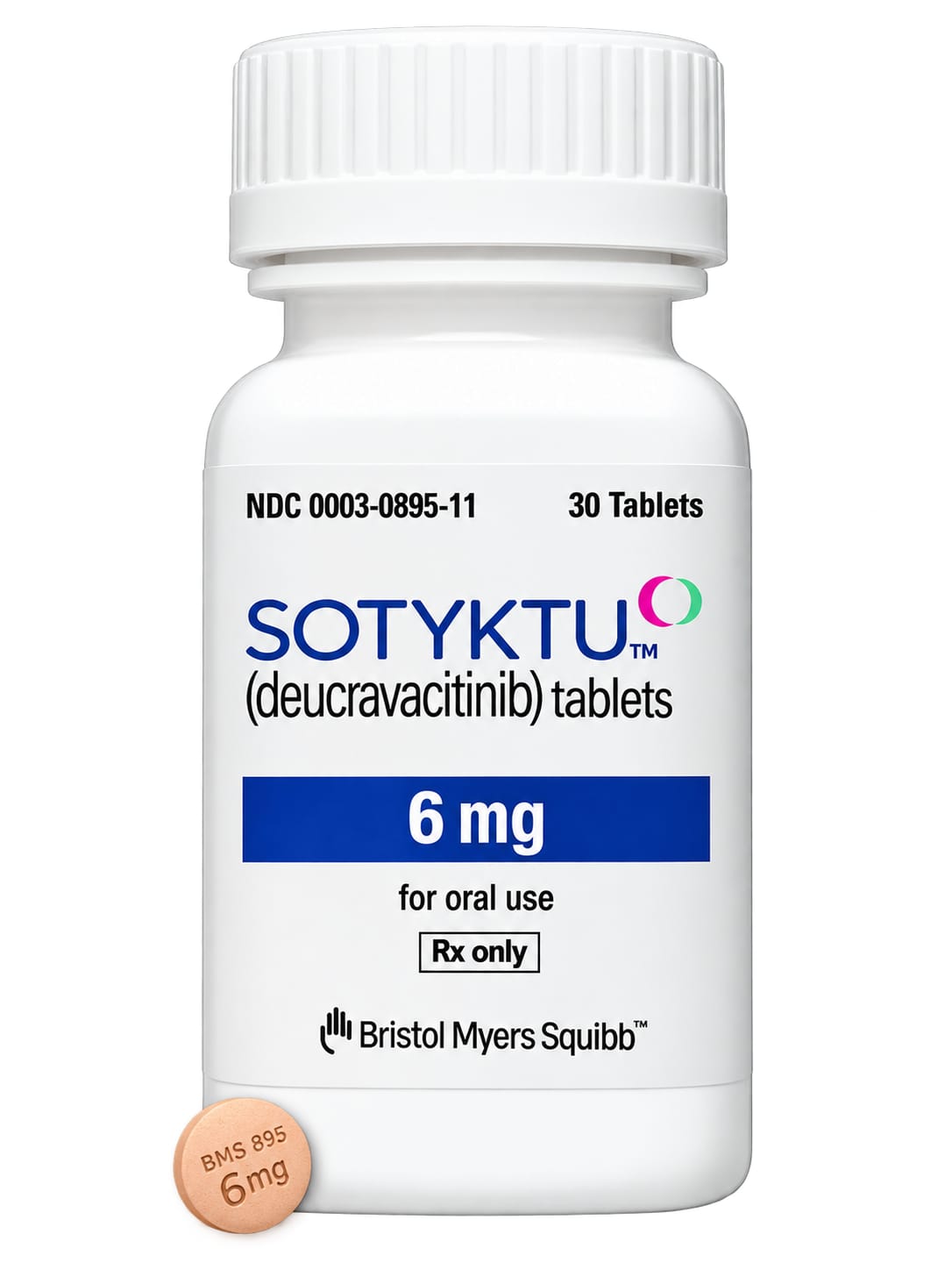
| Forms | Tablet (6 mg film-coated tablet) |
Quick overview
Sotyktu Tablet contains deucravacitinib, a selective immunosuppressant that blocks tyrosine kinase 2 (TYK2). It is a prescription tablet used to treat adults with moderate to severe plaque psoriasis who are candidates for systemic therapy or phototherapy. It works by reducing inflammation involved in psoriasis. The usual adult dose is 6 mg once daily, taken whole with water.
What is Sotyktu Tablet
Sotyktu is a prescription tablet containing deucravacitinib. It is a small molecule drug (not a biologic) that blocks a protein called TYK2 that is involved in inflammation.
Sotyktu Tablet uses
- Treatment of adults with moderate to severe plaque psoriasis who are candidates for systemic therapy or phototherapy
Benefits of Sotyktu Tablet
- Improves skin clearance
- Reduces symptoms of psoriasis such as itch, pain, stinging, burning and skin tightness
- Treats moderate-to-severe plaque psoriasis
- Treats active psoriatic arthritis in adults
- Blocks TYK2 signaling
How Sotyktu Tablet works
Sotyktu blocks a protein called TYK2 that helps drive inflammation involved in psoriasis. By blocking this protein, it reduces inflammation and helps clear skin and relieve symptoms.
Sotyktu Tablet dosage
Swallow the tablet whole with water. Do not crush, cut, or chew the tablets. It can be taken with or without food. Take exactly as your healthcare professional tells you to. If you forget a dose, do not take a double dose to make up for a missed dose - just take your usual dose at the next scheduled time. There is no best time of day to take it; take your dose once daily.
| Age group | Dose |
|---|---|
| Under 18 years | Safety and effectiveness have not been established |
| 18–39 years | 6 mg once daily |
| 40–64 years | 6 mg once daily |
Available forms and strengths
- Tablet (6 mg film-coated tablet)
Side effects of Sotyktu Tablet
Common
- Mild upper respiratory tract infection (like a cold or sinus infection)
- Mouth sores (oral ulcers)
- Cold sores / herpes simplex reactivation
- Acne-like rash
- Folliculitis (inflamed hair follicles)
- Increased triglycerides (a blood fat)
- Increased liver enzymes
Serious
- Increased risk of serious infections, including pneumonia, COVID-19, and tuberculosis
- Certain cancers, including lymphoma
- Shingles (herpes zoster)
- Muscle damage (rhabdomyolysis) with markedly elevated muscle enzyme levels
- Severe allergic reaction
Warnings and precautions
- This medicine can increase your risk of infections. Do not start taking it if you have an active infection that is clinically important. You must be checked for tuberculosis (TB) before starting this medicine.
- You should not take it if you have active TB. Do not receive live vaccines while taking this medicine. This medicine is not recommended for use together with other strong immune-suppressing medicines because it raises infection risk.
- This medicine contains lactose and should not be taken by people with certain rare inherited conditions affecting sugar processing.
- Cases of muscle breakdown (rhabdomyolysis) have occurred; report any unexplained muscle pain, tenderness or weakness. Certain cancers, including lymphoma, have been reported in people taking this medicine, though it is not known if the drug increases cancer risk.
- It is not known if Sotyktu is safe to use during pregnancy. There is not enough information to know how it may affect an unborn baby. Talk to your doctor if you are pregnant, think you might be, or are planning to become pregnant.
- Sotyktu passes into breast milk. It is not known how this affects a breastfeeding baby, so talk to your doctor about the benefits and risks before breastfeeding while taking this medicine.
- No dose change is needed for people with kidney problems, including those on dialysis.
- People with mild or moderate liver problems do not need a dose change, but this medicine is not recommended for people with severe liver problems.
- It is not known how alcohol affects this medicine, as this has not been studied.
- Use caution when driving or operating machinery, since studies on this medicine's effect on driving ability have not been done.
Storage
- Store at room temperature between 15°C and 30°C
- Keep out of reach and sight of children
When to see a doctor
Get medical help right away if you have signs of a serious allergic reaction, such as swelling or trouble breathing. Tell your healthcare professional right away if you have signs of an infection, such as fever, chills, flu-like symptoms, muscle aches, weight loss, cough, sore throat, shortness of breath, blood in mucus, warm or red or painful skin sores different from your psoriasis, diarrhea or stomach pain, burning or frequent urination, or feeling very tired. If you think you or someone you are caring for has taken too much of this medicine, contact a healthcare professional, hospital emergency department, or your regional poison control center right away, even if there are no symptoms.
Alternatives
- Skyrizi
- Tremfya
- Ilumya
- Cosentyx
Watch the video
FAQs
What is Sotyktu Tablet used for?
Sotyktu Tablet is used to treat adults with moderate to severe plaque psoriasis who are candidates for systemic therapy or phototherapy.
How does Sotyktu Tablet work?
Sotyktu blocks a protein called TYK2 that helps drive inflammation involved in psoriasis, reducing inflammation and helping clear skin and relieve symptoms.
What is the usual dose of Sotyktu Tablet?
The usual adult dose is 6 mg once daily, taken whole with water, with or without food. Do not crush, cut, or chew the tablets.
What are the common side effects of Sotyktu Tablet?
Common side effects include mild upper respiratory tract infection, mouth sores, cold sores, acne-like rash, folliculitis, increased triglycerides, and increased liver enzymes.
Is Sotyktu Tablet safe during pregnancy or breastfeeding?
It is not known if Sotyktu is safe during pregnancy, and there is not enough information on its effects on an unborn baby. Sotyktu also passes into breast milk, so you should discuss benefits and risks with your doctor before breastfeeding.
General information, not medical advice
Your prescriber and the leaflet in your pack know your situation. This page does not.
- Follow your prescriber and the leaflet
- Don't start, stop, or change a dose on your own
- Doses and warnings differ by country and product
Sources
Video
Related medicines

Injectafer Injection: Uses, Dosage, Side Effects, Precautions and Alternates
Iron products
Injectafer (ferric carboxymaltose) treats iron deficiency anemia and heart failure-related iron deficiency via IV. Learn uses, dosage, side effects, and

Gliclazide Tablet: Uses, Dosage, Side Effects, Precautions and Alternates
Sulfonylurea (hypoglycemic/antidiabetic agent)
Gliclazide Tablet is a sulfonylurea for type 2 diabetes that boosts insulin release. Learn about dosage, side effects, warnings, and precautions.