
Safety
General information, not medical advice
Your prescriber and the leaflet in your pack know your situation. This page does not.
- Follow your prescriber and the leaflet
- Don't start, stop, or change a dose on your own
- Doses and warnings differ by country and product
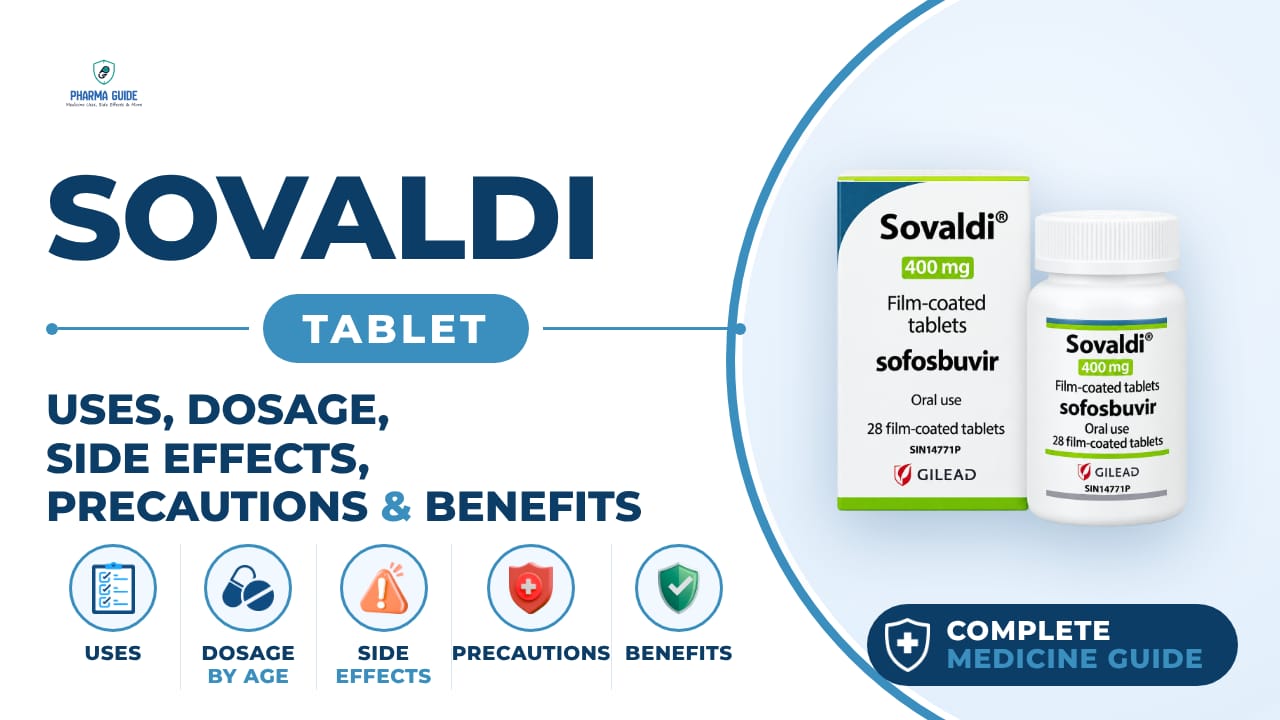
Sovaldi Tablet: Uses, Dosage, Side Effects, Precautions and Alternates
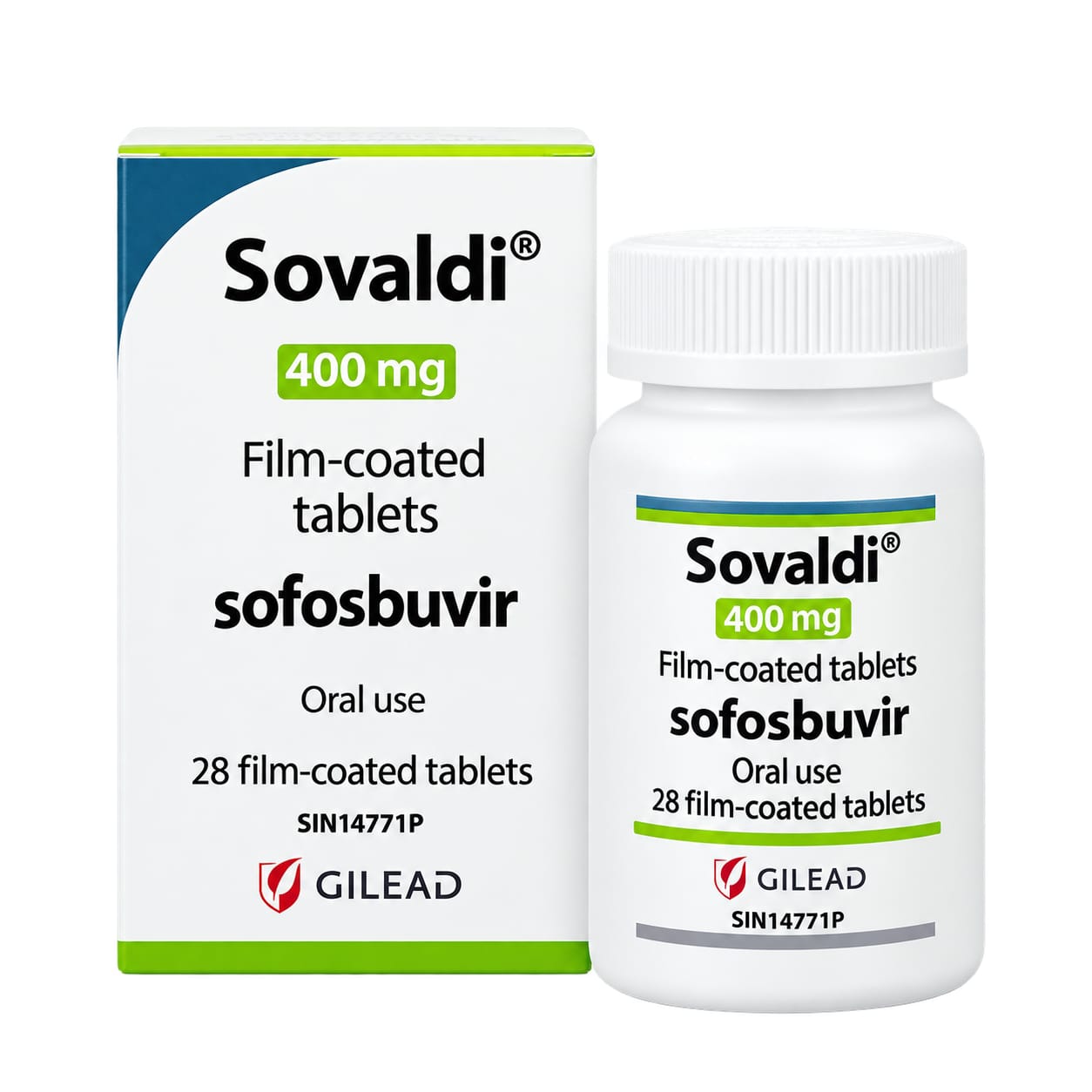
| Generic name | sofosbuvir |
|---|---|
| Drug class | Hepatitis C virus (HCV) nucleotide analog NS5B polymerase inhibitor |
| Forms | Tablets (400 mg) |
Quick overview
Sovaldi Tablet (sofosbuvir) is a prescription antiviral medicine that belongs to the hepatitis C virus nucleotide analog NS5B polymerase inhibitor drug class. It stops the hepatitis C virus from multiplying in the body and must always be given together with other antiviral medicines, never used alone. It is used in adults and certain children to treat chronic hepatitis C infection and in specific other situations involving HCV.
What is Sovaldi Tablet
Sovaldi is a prescription antiviral medicine that stops the hepatitis C virus from multiplying in the body. It must always be given together with other antiviral medicines and should not be used alone.
Sovaldi Tablet uses
- Treats chronic hepatitis C virus (HCV) genotype 1, 2, 3, or 4 infection in adults without cirrhosis or with compensated cirrhosis, as part of a combination antiviral regimen
- Treats chronic HCV genotype 2 or 3 infection in children 3 years and older (or 12 years and older/at least 35 kg depending on label version), in combination with ribavirin
- Used in adults with hepatocellular carcinoma awaiting liver transplantation, in combination with ribavirin, to help prevent HCV infection of the new liver
- Can be used in people who also have HIV-1 infection, following the same dosing guidance
Benefits of Sovaldi Tablet
- Helps clear hepatitis C virus from the body when combined with other antiviral medicines
- Studied and shown effective across multiple HCV genotypes (1, 2, 3, and 4)
- Can be used in patients with HIV/HCV coinfection or hepatocellular carcinoma awaiting transplant
How Sovaldi Tablet works
Sofosbuvir is a direct-acting antiviral that blocks an enzyme the hepatitis C virus needs to copy itself, which stops the virus from multiplying.
Sovaldi Tablet dosage
Take one tablet by mouth one time each day, with or without food, at the same time each day. Do not change your dose or stop taking it without talking to your doctor first. Sovaldi must be taken together with other antiviral medicines such as ribavirin, with or without peginterferon alfa; it should not be used alone. If the other medicines in your combination treatment are permanently stopped, Sovaldi should also be stopped.
Do not chew the oral pellet form; it can be mixed with certain soft foods and swallowed without chewing within a short time of mixing, and the mixture should not be saved for later use.
If you miss a dose, take it as soon as you remember the same day, but do not take extra tablets to make up for a missed dose, and continue your regular schedule the next day.
| Age group | Dose |
|---|---|
| Under 3 years | Safety and effectiveness not established |
| 3–17 years, <17 kg | 150 mg once daily |
| 3–17 years, 17 to <35 kg | 200 mg once daily |
Available forms and strengths
- Tablets (400 mg)
Side effects of Sovaldi Tablet
Common
- Fatigue/tiredness
- Headache
- Nausea
- Insomnia (trouble sleeping)
- Anemia (low red blood cell count)
- Decreased appetite
Serious
- Hepatitis B virus reactivation, which can cause serious liver problems including liver failure and death
- Serious slow heart rate (bradycardia), especially when taken with amiodarone, which can require a pacemaker or be fatal
- Severe depression, including suicidal thoughts
- Low white blood cells and platelets (pancytopenia)
- Skin rash, sometimes with blisters or swelling (angioedema)
- Allergic reaction with swelling of face, lips, tongue, or throat, or difficulty breathing
Warnings and precautions
- If you have ever had hepatitis B, it can become active again during or after Sovaldi treatment, which in some cases has led to serious liver failure and death. Your doctor will test you for hepatitis B before starting treatment and monitor you during and after.
- Taking amiodarone (a heart rhythm medicine) together with a sofosbuvir-containing regimen is not recommended because it can cause a dangerously slow heart rate, which has led to the need for a pacemaker or death in some cases.
- Certain drugs, including rifampin and St. John's wort, can lower the amount of Sovaldi in your body and make it less effective, so these should not be taken together with Sovaldi.
- If you take warfarin, your doctor should check your blood clotting levels (INR) often while you are on Sovaldi, since levels can change.
- If Sovaldi is used with ribavirin, this combination can cause birth defects or death to an unborn baby and must not be used during pregnancy, or if a male partner's partner is pregnant. Effective birth control is needed during and for a period after treatment.
- It is not known if Sovaldi passes into breast milk. Talk with your healthcare provider about the best way to feed your baby during treatment.
- No dose adjustment is needed for mild or moderate kidney problems, but Sovaldi has not been studied and no dose can be recommended for people with severe kidney impairment or kidney failure needing dialysis.
- No dose adjustment is needed for mild, moderate, or severe liver impairment, but safety has not been established in patients with decompensated cirrhosis.
- Alcohol is best avoided because it can worsen liver damage.
- Sovaldi usually does not directly impair driving; avoid driving if fatigue or dizziness occurs.
Storage
- Store at room temperature below 30°C (86°F)
- Keep in the original container
- Do not use if the seal over the bottle opening is broken or missing
- Keep out of the reach of children
When to see a doctor
- Get medical help right away if you have symptoms of a slow heart rate such as fainting or near-fainting, dizziness, weakness, extreme tiredness, shortness of breath, chest pain, confusion, or memory problems, especially if you are also taking amiodarone.
- Call your doctor right away if you notice signs of liver problems, such as pain in the upper right side of your stomach, vomiting, loss of appetite, dark urine, pale stools, or yellowing of the skin or eyes.
- Get emergency help right away for signs of a severe allergic reaction, such as hives, difficulty breathing, or swelling of the face, lips, tongue, or throat.
- Tell your healthcare provider right away if you become pregnant while you or your partner are being treated with Sovaldi and ribavirin.
Alternatives
- Epclusa
- Harvoni
Watch the video
FAQs
What is Sovaldi Tablet used for?
Sovaldi is used to treat chronic hepatitis C virus (HCV) genotype 1, 2, 3, or 4 infection in adults, and genotype 2 or 3 in certain children, always in combination with other antiviral medicines. It is also used in adults with hepatocellular carcinoma awaiting liver transplantation and in people with HIV-1/HCV coinfection.
Can Sovaldi be taken alone?
No, Sovaldi must always be given together with other antiviral medicines such as ribavirin, with or without peginterferon alfa. It should not be used alone, and if the other medicines in the regimen are permanently stopped, Sovaldi should also be stopped.
What are the common side effects of Sovaldi Tablet?
Common side effects include fatigue, headache, nausea, insomnia, anemia, and decreased appetite.
What serious warnings are associated with Sovaldi Tablet?
Sovaldi can cause hepatitis B virus reactivation, serious slow heart rate (especially with amiodarone), severe depression including suicidal thoughts, pancytopenia, and severe skin or allergic reactions. If combined with ribavirin, it can cause birth defects or death to an unborn baby, so it must not be used during pregnancy.
Is Sovaldi safe for people with kidney or liver problems?
No dose adjustment is needed for mild or moderate kidney problems or for mild, moderate, or severe liver impairment. However, Sovaldi has not been studied in severe kidney impairment or dialysis patients, and safety has not been established in decompensated cirrhosis.
General information, not medical advice
Your prescriber and the leaflet in your pack know your situation. This page does not.
- Follow your prescriber and the leaflet
- Don't start, stop, or change a dose on your own
- Doses and warnings differ by country and product
Sources
Video
Related medicines

Injectafer Injection: Uses, Dosage, Side Effects, Precautions and Alternates
Iron products
Injectafer (ferric carboxymaltose) treats iron deficiency anemia and heart failure-related iron deficiency via IV. Learn uses, dosage, side effects, and

Gliclazide Tablet: Uses, Dosage, Side Effects, Precautions and Alternates
Sulfonylurea (hypoglycemic/antidiabetic agent)
Gliclazide Tablet is a sulfonylurea for type 2 diabetes that boosts insulin release. Learn about dosage, side effects, warnings, and precautions.