
Safety
General information, not medical advice
Your prescriber and the leaflet in your pack know your situation. This page does not.
- Follow your prescriber and the leaflet
- Don't start, stop, or change a dose on your own
- Doses and warnings differ by country and product
Spiriva Inhaler: Uses, Dosage, Side Effects, Precautions and Alternates
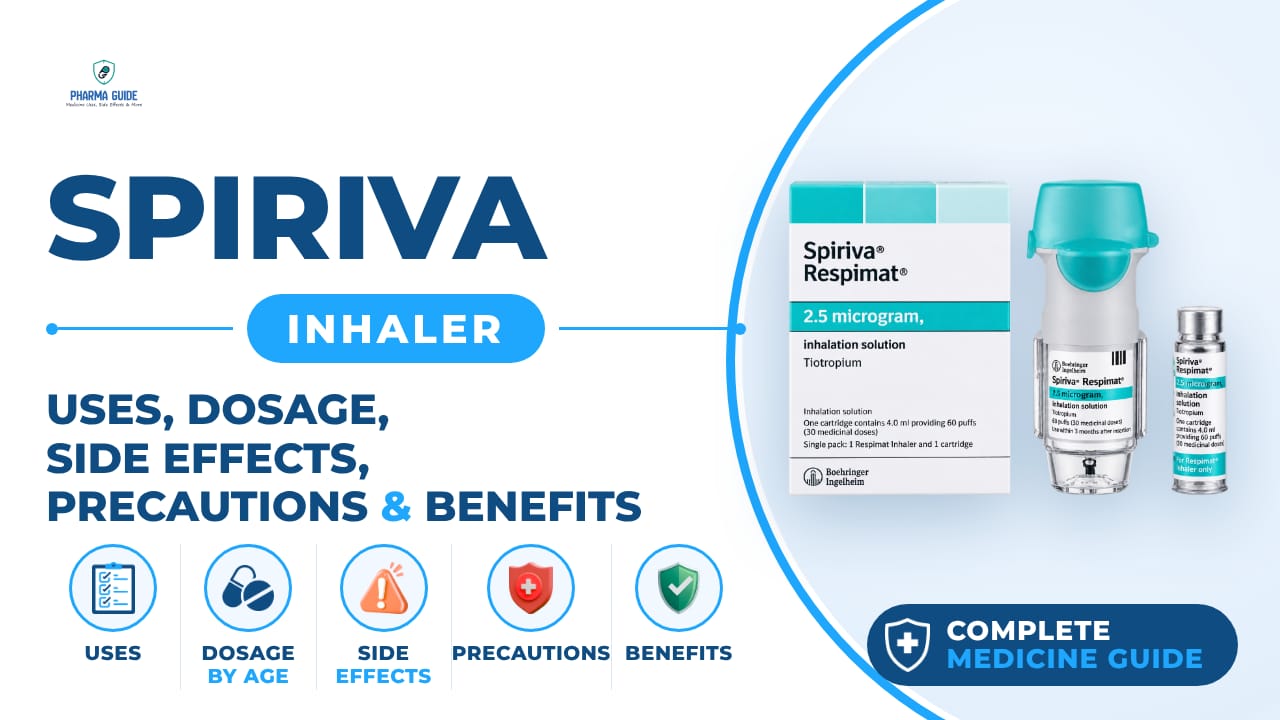
| Generic name | tiotropium (tiotropium bromide) |
|---|---|
| Drug class | Anticholinergic bronchodilator (long-acting muscarinic antagonist, LAMA) |
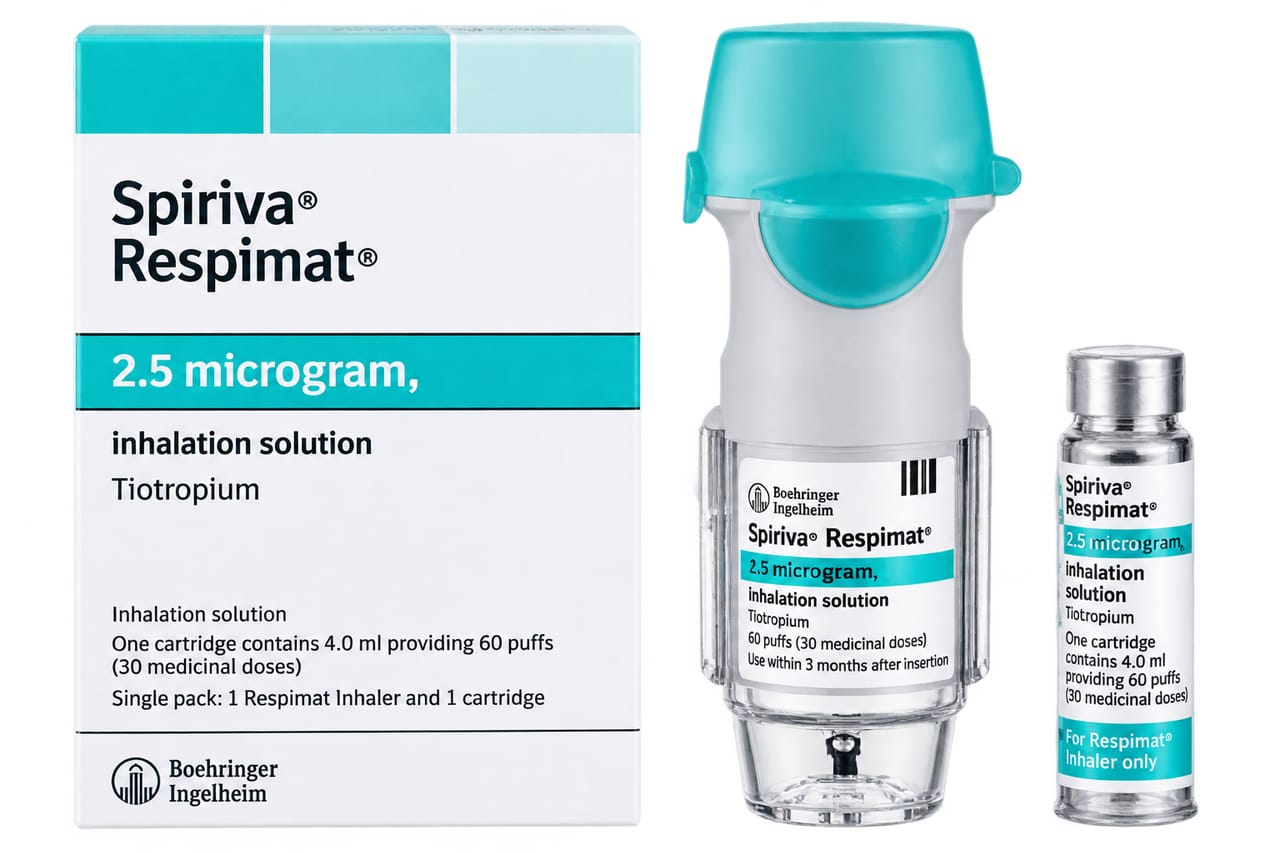
| Forms | Capsules for inhalation (18 mcg) used with the HandiHaler device, Inhalation spray/solution (1.25 mcg and 2.5 mcg per puff) used with the Respimat device |
Quick overview
Spiriva Inhaler (tiotropium, tiotropium bromide) is a long-acting anticholinergic bronchodilator (LAMA) used once daily for the long-term maintenance treatment of COPD and, with the Respimat device, asthma. It comes in two devices, the HandiHaler (dry-powder capsule) and the Respimat (fine mist spray). It is not a rescue inhaler and will not treat a sudden breathing attack.
What is Spiriva Inhaler
Spiriva is a long-acting prescription inhaler medicine that helps keep the airways in the lungs open. It comes in two devices: the HandiHaler, which uses a dry-powder capsule, and the Respimat, which sprays a fine mist. It is not a rescue inhaler and will not treat a sudden breathing attack.
Spiriva Inhaler uses
- Long-term, once-daily maintenance treatment of bronchospasm (narrowed airways) linked to COPD, including chronic bronchitis and emphysema, in adults
- Reducing COPD flare-ups (exacerbations) in adults
- Maintenance treatment of asthma in adults and children 6 years and older (Spiriva Respimat only)
- Spiriva HandiHaler is not approved for asthma or for use in anyone younger than 18 years old
Benefits of Spiriva Inhaler
- Helps improve lung function and breathing for people with COPD
- Reduces the number of COPD flare-ups
- Helps prevent asthma symptoms like wheezing and shortness of breath when used with an inhaled corticosteroid
- Works for about 24 hours, so it is usually only needed once a day
How Spiriva Inhaler works
Spiriva blocks a natural body chemical (acetylcholine) from reaching receptors on the muscles around the airways. Because the message to tighten is blocked, the muscles around the airways relax and stay open longer, usually for 24 hours or more.
Spiriva Inhaler dosage
Use Spiriva exactly as prescribed and follow all directions on your prescription label; do not use more or less than recommended or for longer than recommended. Spiriva is not a rescue medicine and will not work fast enough to treat a sudden breathing problem; keep a fast-acting rescue inhaler on hand for sudden symptoms.
For the HandiHaler: do not swallow the capsules; use them only with the HandiHaler device, and take two inhalations from the same capsule to get a full dose. Use only one capsule at a time, and throw away any capsule not used right away after taking it out of the blister pack.
For the Respimat: you need two puffs to get a full dose; turn, open, and press the device as instructed for each puff. If you have not used the Respimat inhaler for more than 3 days, release one puff toward the ground before using it; if unused for more than 21 days, repeat the full priming steps. Children should use the Respimat only with an adult's help.
Use the medicine at about the same time each day so it works best and to help you remember. If you miss a dose, take it as soon as you remember, but do not use it more than once every 24 hours and do not take a double dose. If prescribed for asthma, keep using your inhaled corticosteroid as directed, even if you feel better. Do not stop using Spiriva or lower the dose without checking with your doctor, as symptoms may get worse.
No dosage adjustment is generally needed for older adults, though people with moderate to severe kidney problems should be watched closely for side effects.
| Age group | Dose |
|---|---|
| Under 6 Years | Use only if prescribed by a doctor |
| 6–17 Years | Use only if prescribed; dose depends on condition and product strength |
| Adults (18–64 Years) | 2 inhalations of 1.25 mcg once daily (asthma) or 2 inhalations of 2.5 mcg once daily (COPD) |
| Older Adults (65+ years) | Same adult dose; adjustment may be needed based on health condition |
Available forms and strengths
- Capsules for inhalation (18 mcg) used with the HandiHaler device
- Inhalation spray/solution (1.25 mcg and 2.5 mcg per puff) used with the Respimat device
Side effects of Spiriva Inhaler
Common
- Upper respiratory tract infection
- Dry mouth
- Sinusitis
- Sore throat (pharyngitis)
- Non-specific chest pain
- Urinary tract infection
- Indigestion (dyspepsia)
- Runny nose (rhinitis)
- Constipation
- Increased heart rate
- Blurred vision
- Cough
- Dizziness
- Fast heart rate
- Thrush (fungal infection in the mouth)
- Hoarseness
- Headache
- Bronchitis
Serious
- Severe allergic reactions: hives, itching, rash, swelling of the lips, tongue, or throat that may cause difficulty breathing or swallowing
- Sudden narrowing and blockage of the airways (bronchospasm), where breathing suddenly worsens
- New or worsened acute narrow-angle glaucoma: eye pain, blurred vision, seeing halos or colored images with red eyes
- New or worsened urinary retention: difficulty passing urine or painful urination, especially with an enlarged prostate
- Fast or irregular heartbeat, palpitations
Warnings and precautions
- Spiriva is not a rescue medicine and should not be used to treat sudden breathing problems; a doctor may prescribe another fast-acting medicine for emergencies.
- Do not swallow Spiriva HandiHaler capsules; they should only be used with the HandiHaler device and inhaled through the mouth.
- Do not spray Spiriva Respimat into your eyes.
- People with a severe allergy to milk proteins should not use the Spiriva HandiHaler, since its capsules contain lactose that may contain milk proteins.
- Spiriva can worsen narrow-angle glaucoma and should be used with caution in people who have this condition.
- Spiriva can worsen urinary retention and should be used with caution in people with an enlarged prostate or bladder-neck obstruction.
- Inhaled medicines like Spiriva can sometimes cause sudden airway tightening (paradoxical bronchospasm) right after use.
- Do not use Spiriva Respimat to treat an acute asthma attack or sudden episode of breathlessness, wheezing, or coughing; a different medicine is needed for this.
- Pregnancy: It is not known if Spiriva could harm an unborn baby. Spiriva is not generally recommended for use in pregnant women; talk to your doctor about the risks and benefits.
- Breastfeeding: It is not known if Spiriva passes into breast milk. You and your doctor will decide if Spiriva is right for you while breastfeeding.
- Kidney: If your kidneys are not working well, Spiriva can build up in your body and increase your risk of side effects. Your doctor will monitor you closely if you have moderate to severe kidney disease.
- Liver: Tell your doctor if you have liver problems before using Spiriva.
- Alcohol: There are no known interactions between Spiriva and alcohol, but talk with your doctor about whether it is safe for you to drink alcohol while using this medicine.
- Driving: Spiriva may cause dizziness or blurred vision in some people. Avoid driving or operating machinery until you know how it affects you.
Storage
- Store Spiriva capsules in the sealed blister package at room temperature 68°F to 77°F (20°C to 25°C)
- Do not store Spiriva capsules in the HandiHaler device
- Keep Spiriva capsules away from heat and cold; do not freeze
- Store Spiriva capsules in a dry place; throw away any unused capsules that have been open to the air
- Store Spiriva Respimat at room temperature 68°F to 77°F (20°C to 25°C); avoid freezing
- After assembly, discard the Respimat inhaler within 3 months of first use or when the locking mechanism engages, whichever comes first
- Keep out of reach of children; do not spray Respimat into the eyes
- Clean the Respimat mouthpiece, including the metal part inside, with a damp cloth or tissue only, at least once a week
When to see a doctor
- Stop taking Spiriva and get emergency help right away if you have signs of a serious allergic reaction, such as hives, rash, itching, or swelling of the face, lips, tongue, or throat that causes trouble breathing or swallowing.
- Stop taking Spiriva and seek emergency care if your breathing suddenly gets worse after using it.
- Call your doctor right away if you notice eye pain, blurred vision, or seeing halos or colored images with red eyes, as this may be worsening glaucoma; eye drops alone may not help.
- Call your doctor right away if you have difficulty passing urine or painful urination, which may signal urinary retention.
- If you think you or someone else may have used too much Spiriva, contact your doctor or a poison control center right away, even if there are no symptoms; go to the emergency room if symptoms are severe.
Alternatives
- Atrovent
- Ipratropium Bromide
- Tudorza Pressair
Watch the video
FAQs
What is Spiriva Inhaler used for?
Spiriva is used for long-term, once-daily maintenance treatment of COPD, including chronic bronchitis and emphysema, and to reduce COPD flare-ups in adults. Spiriva Respimat is also used for maintenance treatment of asthma in adults and children 6 years and older.
Is Spiriva a rescue inhaler?
No, Spiriva is not a rescue inhaler and will not treat a sudden breathing attack. A fast-acting rescue inhaler should be kept on hand for sudden symptoms.
What is the difference between Spiriva HandiHaler and Respimat?
The HandiHaler is a dry-powder capsule device not approved for asthma or for use in anyone younger than 18, while the Respimat is a fine mist spray device approved for both COPD and asthma maintenance treatment, including in children 6 and older.
What are the common side effects of Spiriva Inhaler?
Common side effects include dry mouth, sinusitis, sore throat, upper respiratory tract infection, indigestion, constipation, headache, cough, dizziness, and increased or fast heart rate.
What should I do if I miss a dose of Spiriva?
If you miss a dose, take it as soon as you remember, but do not use it more than once every 24 hours and do not take a double dose.
General information, not medical advice
Your prescriber and the leaflet in your pack know your situation. This page does not.
- Follow your prescriber and the leaflet
- Don't start, stop, or change a dose on your own
- Doses and warnings differ by country and product
Sources
- https://www.drugs.com/spiriva.html
- https://www.medicalnewstoday.com/articles/spiriva#warnings
- https://www.goodrx.com/spiriva-respimat/what-is
- Spiriva Handihaler Prescribing Information
- Spiriva Respimat Prescribing Information
- Spiriva Respimat NZ Consumer Medicine Information
- RxList Spiriva monograph
Video
Related medicines
Yupelri Inhaler: Uses, Dosage, Side Effects, Precautions and Alternates
Anticholinergic bronchodilator (long-acting muscarinic antagonist, LAMA)
Yupelri Inhaler (revefenacin) is a once-daily nebulizer solution for COPD maintenance. Learn how it works, dosage, side effects, and warnings.

Injectafer Injection: Uses, Dosage, Side Effects, Precautions and Alternates
Iron products
Injectafer (ferric carboxymaltose) treats iron deficiency anemia and heart failure-related iron deficiency via IV. Learn uses, dosage, side effects, and