
Safety
General information, not medical advice
Your prescriber and the leaflet in your pack know your situation. This page does not.
- Follow your prescriber and the leaflet
- Don't start, stop, or change a dose on your own
- Doses and warnings differ by country and product
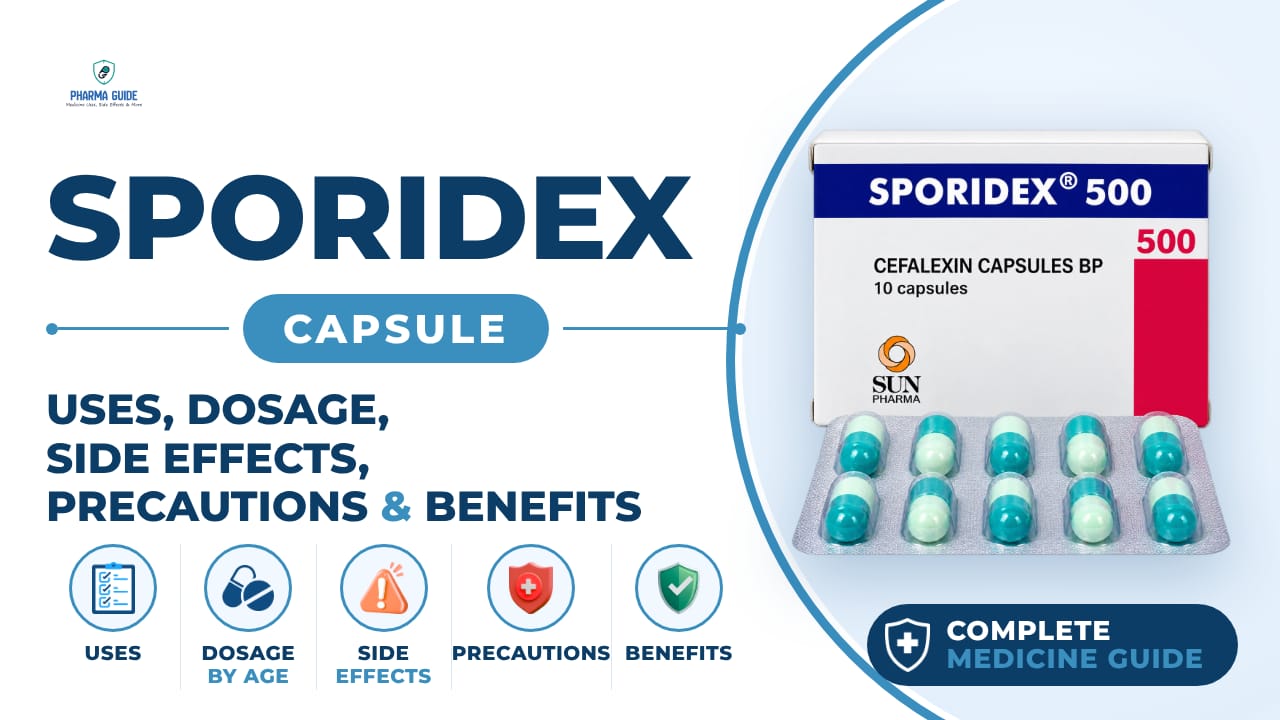
Sporidex Capsule: Uses, Dosage, Side Effects, Precautions and Alternates
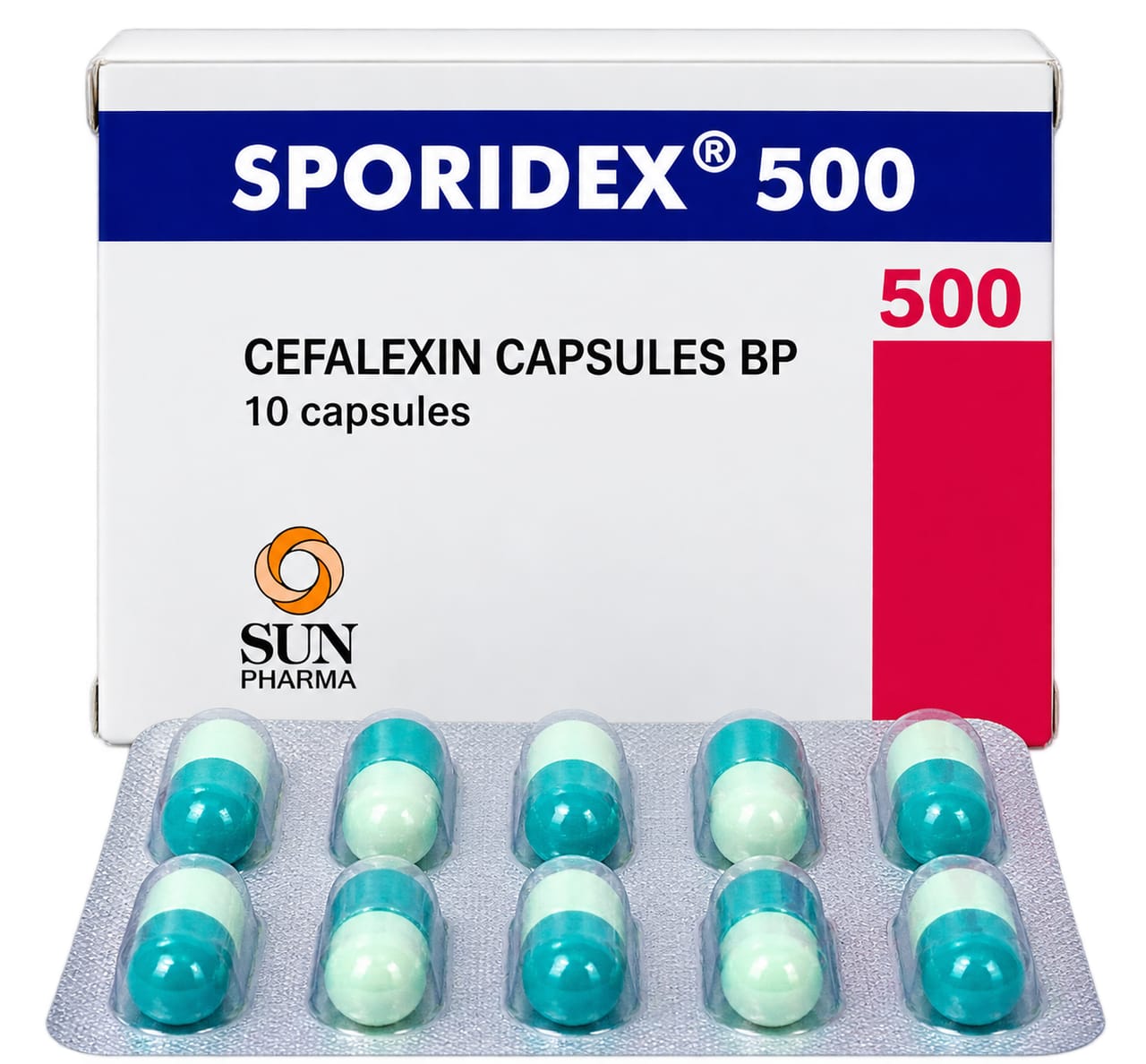
| Generic name | Cefalexin |
|---|---|
| Drug class | First generation Cephalosporins, Antibiotics |
| Forms | Capsule, Tablet, Tablet DT, Syrup, Drops |
Quick overview
Sporidex Capsule contains Cefalexin, a first generation Cephalosporin antibiotic. It is used to treat bacterial infections affecting the skin, bone, ears, throat, lungs, and urinary tract, and is not effective against viral infections. It works by stopping bacteria from building their protective cell wall, which weakens and eventually kills them. It is available in several forms and strengths, and should be used exactly as prescribed by a doctor.
What is Sporidex Capsule
Sporidex Capsule is an antibiotic used to treat bacterial infections in different parts of the body including the skin, bone, ears, throat, lungs, and urinary tract. It is not effective against infections caused by viruses.
Sporidex Capsule uses
- Acute bacterial otitis media (ear infection)
- Pharyngitis/Tonsilitis (throat infection)
- Cystitis (bladder infection)
- Osteomyelitis (bone infection)
- Skin and soft tissue infections
- Pneumonia
- Pyelonephritis (kidney infection)
- Prevention of infection after minor dental or surgical procedures
Benefits of Sporidex Capsule
- Effective in treating a wide range of bacterial infections
- Works against both gram-positive and gram-negative bacteria
- Helps prevent the spread of bacterial infections and promotes faster recovery
- Can be used for infections in various body parts, including the respiratory system, urinary tract, and skin
How Sporidex Capsule works
Sporidex works by stopping bacteria from building their protective cell wall. This weakens the bacteria's structure, stopping them from growing and multiplying, and eventually kills them.
Sporidex Capsule dosage
This medicine can be taken with or without food, though taking it with food may reduce stomach upset. Take it around the same time every day to help you remember. Swallow the capsule whole with a glass of water; do not crush or chew it. Complete the entire course of treatment even if you feel better, to prevent the infection from returning or becoming resistant. Do not share your medicine with others even if their condition seems similar to yours.
Keep a gap of at least three hours between taking this medicine and any multivitamin with minerals, as zinc may reduce its effectiveness. If you miss a dose, take it as soon as you remember, but skip it if it is almost time for your next dose; do not double up doses. Use in children should be done under the guidance of a paediatrician.
| Age group | Dose |
|---|---|
| Children | Dose based on body weight and infection type (as prescribed) |
| Adolescents (12+ Years) | Usually 250–500 mg every 6–12 hours depending on infection |
| Adults (18–64 Years) | Usually 250–500 mg every 6–12 hours as prescribed |
| Older Adults (65+ Years) | Adult dose; adjustment may be needed with kidney problems |
Available forms and strengths
- Capsule
- Tablet
- Tablet DT
- Syrup
- Drops
Side effects of Sporidex Capsule
Common
- Diarrhoea
- Stomach pain
- Indigestion
- Nausea
- Vomiting
- Headache
- Weakness
- Dizziness
- Itching or rash
- Joint pain
- Loss of appetite
- Dark or clay coloured stools
Serious
- Severe allergic reactions (anaphylaxis)
- Liver dysfunction
- Blood disorders (such as thrombocytopenia or low platelet count)
- Severe, watery or bloody diarrhoea
Warnings and precautions
- Avoid this medicine if you are allergic to it or to penicillin antibiotics. Get emergency help if you notice signs of an allergic reaction such as rash, itching or swelling of the face, tongue or throat, severe dizziness, or trouble breathing.
- This medicine should not be used by people with acute porphyria, a disorder affecting the skin and nervous system.
- This medicine can kill helpful bacteria in your gut and cause diarrhoea; use it with extra caution if you have colitis or other digestive disorders, as it may make your condition worse.
- If you have a seizure disorder, use this medicine with caution as it may trigger seizures; keep taking your seizure medications and your doctor may need to adjust your dose.
- Long-term use of antibiotics like this one can lead to antibiotic resistance, meaning bacteria become harder to treat. Tell your doctor if you still feel unwell after finishing the course.
- Do not take multivitamins containing minerals at the same time as this medicine, since zinc can reduce how well the medicine is absorbed. Leave a gap of at least three hours between the two.
- Sporidex is generally considered safe to use in pregnancy, but you should always check with your doctor before taking it.
- Small amounts of the medicine pass into breast milk, so check with your doctor before taking it while breastfeeding, and watch your baby for diarrhoea or stomach upset.
- People with kidney problems should use this medicine with caution and talk to their doctor, as it is removed from the body through the kidneys and may need a dose adjustment.
- If you have liver problems, use this medicine with caution as it may raise liver enzyme levels, cause liver swelling, and worsen your condition; your dose may need adjusting.
- The interaction between this medicine and alcohol is not well known, so it's best to check with your doctor before drinking alcohol while taking it. Some sources also advise avoiding alcohol as it may increase side effects.
- This medicine may cause dizziness and drowsiness in some people, so avoid driving or operating machinery if you feel affected.
Storage
- Store below 25°C in a cool, dry place
- Keep the medicine away from moisture and direct sunlight
- Store in a clean area, free from any contamination
- Keep out of reach of children and pets
- Do not use after the expiry date mentioned on the packaging
When to see a doctor
- Seek immediate medical help if you notice signs of an allergic reaction such as rash, itching, swelling of the face, tongue or throat, severe dizziness, or breathing difficulties.
- Get emergency medical attention if you have severe diarrhoea that is watery or bloody.
- If you think you or someone else has taken too much of this medicine, seek immediate medical attention, such as going to the emergency department of your local hospital.
- Contact your doctor if diarrhoea does not stop or if you notice blood in your stools.
- Tell your doctor right away if you get a rash, itchy skin, swelling of the face and mouth, or difficulty breathing, and stop taking the medicine.
Alternatives
- Cefpodoxime
- Azithromycin
- Cefdinir
Watch the video
FAQs
What is Sporidex Capsule used for?
It is used to treat bacterial infections such as ear infections, throat infections, bladder and kidney infections, bone infections, skin and soft tissue infections, pneumonia, and to prevent infection after minor dental or surgical procedures.
How does Sporidex Capsule work?
It works by stopping bacteria from building their protective cell wall, which weakens their structure, stops them from growing and multiplying, and eventually kills them.
Can I take multivitamins with Sporidex Capsule?
You should keep a gap of at least three hours between taking Sporidex and any multivitamin containing minerals, as zinc may reduce the medicine's effectiveness.
What are the common side effects of Sporidex Capsule?
Common side effects include diarrhoea, stomach pain, indigestion, nausea, vomiting, headache, weakness, dizziness, itching or rash, joint pain, loss of appetite, and dark or clay coloured stools.
Is Sporidex Capsule safe during pregnancy and breastfeeding?
Sporidex is generally considered safe in pregnancy, but you should check with your doctor first. Small amounts pass into breast milk, so consult your doctor before use while breastfeeding and watch the baby for diarrhoea or stomach upset.
General information, not medical advice
Your prescriber and the leaflet in your pack know your situation. This page does not.
- Follow your prescriber and the leaflet
- Don't start, stop, or change a dose on your own
- Doses and warnings differ by country and product
Sources
- https://medlineplus.gov/druginfo/meds/a682733.html
- https://www.accessdata.fda.gov/drugsatfda_docs/label/2006/050405s097lbl.pdf
- https://dailymed.nlm.nih.gov/dailymed/drugInfo.cfm?setid=19307ff0-71de-477b-965d-ea243e5ede3a
- https://india-pharma.gsk.com/media/701321/phexin-oral-formulations.pdf
- https://dailymed.nlm.nih.gov/dailymed/fda/fdaDrugXsl.cfm?setid=37ec3f8b-51d1-4d74-a4ee-9240c734b1a6&type=display
- https://pubmed.ncbi.nlm.nih.gov/31747187/
- https://www.medicines.org.uk/emc/product/3996
- https://www.medicines.org.uk/emc/product/9143/smpc#gref
Video
Related medicines

Injectafer Injection: Uses, Dosage, Side Effects, Precautions and Alternates
Iron products
Injectafer (ferric carboxymaltose) treats iron deficiency anemia and heart failure-related iron deficiency via IV. Learn uses, dosage, side effects, and

Gliclazide Tablet: Uses, Dosage, Side Effects, Precautions and Alternates
Sulfonylurea (hypoglycemic/antidiabetic agent)
Gliclazide Tablet is a sulfonylurea for type 2 diabetes that boosts insulin release. Learn about dosage, side effects, warnings, and precautions.