
Safety
General information, not medical advice
Your prescriber and the leaflet in your pack know your situation. This page does not.
- Follow your prescriber and the leaflet
- Don't start, stop, or change a dose on your own
- Doses and warnings differ by country and product
Stamlo Tablet: Uses, Dosage, Side Effects, Precautions and Alternates
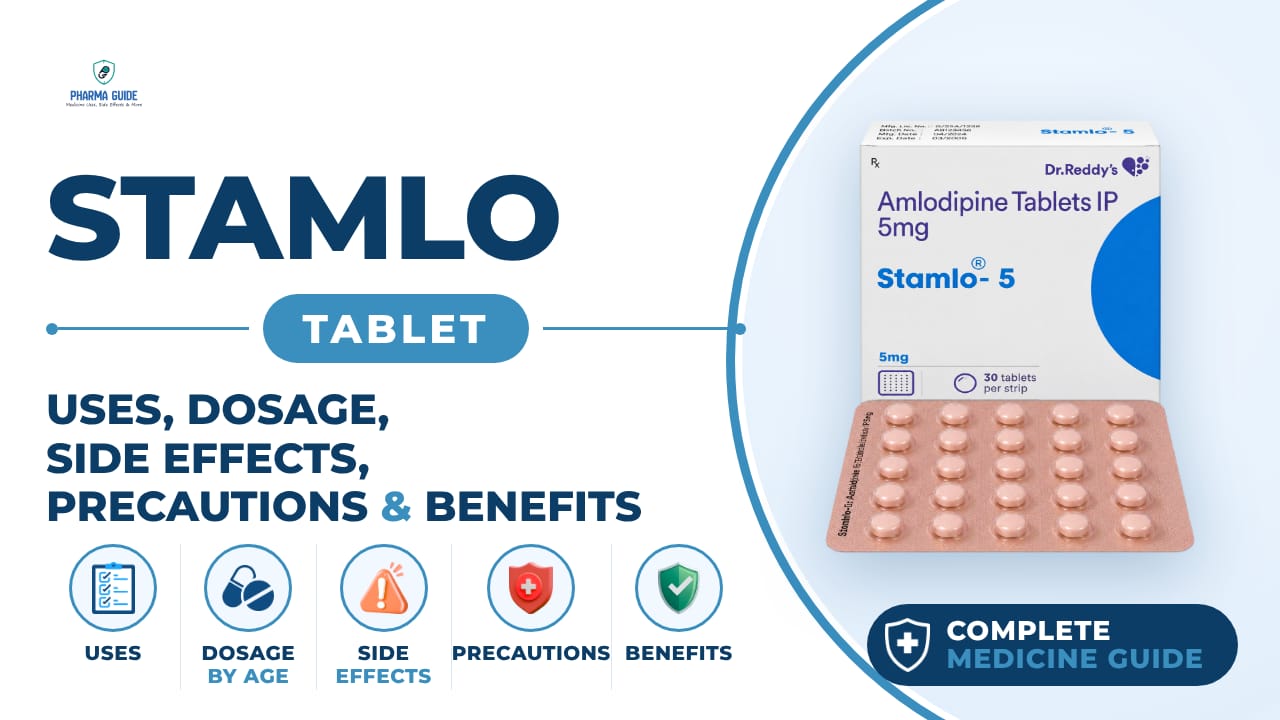
| Generic name | Amlodipine |
|---|---|
| Drug class | Calcium channel blocker |
| Forms | Tablet |
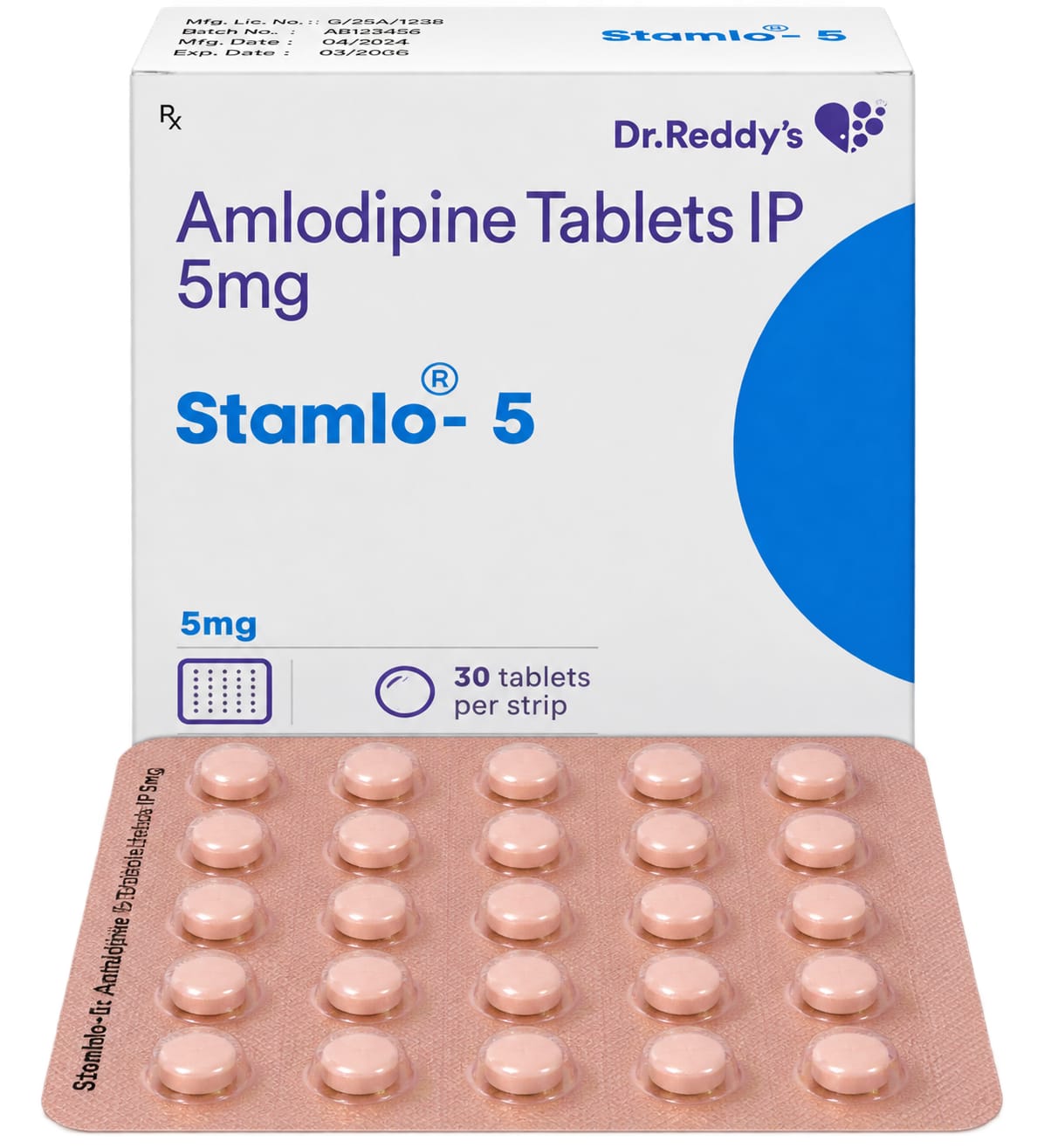
Quick overview
Stamlo Tablet contains amlodipine, a calcium channel blocker used to treat high blood pressure and angina (chest pain). It works by relaxing and widening blood vessels, improving blood flow and reducing strain on the heart. It is taken once daily and should not be stopped suddenly without a doctor's advice.
What is Stamlo Tablet
Stamlo Tablet is a medicine used to treat high blood pressure and angina (chest pain). It contains amlodipine, which relaxes and widens blood vessels to improve blood flow and reduce strain on the heart.
Stamlo Tablet uses
- Hypertension (high blood pressure)
- Angina pectoris (chest pain, including Prinzmetal's or variant angina)
Benefits of Stamlo Tablet
- Relaxes and widens blood vessels, improving overall circulation and making it easier for the heart to pump blood
- Helps prevent chest pain caused by reduced blood flow to the heart
- Reduces the chances of heart attacks, strokes, and other serious cardiovascular events in people with hypertension and angina
How Stamlo Tablet works
This medicine blocks calcium channels in the walls of blood vessels, which stops calcium from entering the cells there. This relaxes the smooth muscles in the vessel walls so they widen, letting blood pass through more easily and lowering blood pressure. It also increases blood flow through the arteries that supply the heart, giving the heart muscle more oxygen and reducing chest pain over time. It does not relieve angina chest pain immediately.
Stamlo Tablet dosage
Stamlo Tablet can be taken with or without food. Take it at the same time every day to keep a steady level of medicine in your body. Swallow the tablet whole with a glass of water; do not crush or chew it. Keep taking it regularly even if you feel well, since high blood pressure often has no symptoms. Do not stop taking this medicine suddenly without talking to your doctor, as this can cause your blood pressure to rise again or cause other problems.
If you miss a dose, take it as soon as you remember, but if it is almost time for your next dose, skip the missed one; do not take two doses together. This medicine is not usually recommended for children under 6 years unless your doctor prescribes it. Older adults may need closer monitoring by their doctor while taking this medicine.
| Age group | Dose |
|---|---|
| Children (6–17 Years) | 2.5–5 mg once daily (as prescribed) |
| Adults (18–64 Years) | 5 mg once daily, may be increased up to 10 mg/day |
| Older Adults (65+ Years) | 2.5–5 mg once daily initially, adjusted according to response |
Available forms and strengths
- Tablet
Side effects of Stamlo Tablet
Common
- Headache
- Dizziness
- Sleepiness/drowsiness
- Swelling of ankles or feet
- Flushing (redness of face, neck, arms and chest)
- Tiredness/fatigue
- Increased heartbeat (palpitations)
- Muscle pain or cramps
- Heartburn or acid stomach
- Stomach pain
- Diarrhoea
- Constipation
- Sweating
- Nausea
- Stomach upset
- Indigestion
- Altered bowel habits
- Visual disturbances, double vision
- Vomiting
- Joint or back pain
Serious
- Difficulty in breathing or sudden wheeziness
- Chest pain or shortness of breath
- Swelling of the tongue and throat causing difficulty breathing
- Severe skin reactions including intense rash, hives, widespread reddening of the skin, severe itching, blistering, peeling and swelling of the skin, or inflammation of mucous membranes (Stevens-Johnson syndrome, toxic epidermal necrolysis)
Warnings and precautions
- Do not take this medicine if you are allergic to amlodipine or any of its other ingredients. This medicine is not recommended if you have narrowing of the aortic heart valve, cardiogenic shock, or heart failure following a heart attack. Use it with caution if you have had a recent heart attack, heart failure, or a severe rise in blood pressure.
- This medicine should not be used if you have severe low blood pressure.
- Avoid grapefruit and grapefruit juice while taking this medicine, since they can raise the medicine's level in your blood and cause an unpredictable drop in blood pressure. Do not stop taking this medicine suddenly without your doctor's advice, as this can cause your blood pressure to rise again or lead to other problems.
- This medicine is not recommended during pregnancy as it may harm the baby. Do not take it while pregnant unless your doctor prescribes it, and talk to your doctor if you are pregnant or planning to become pregnant.
- Small amounts of this medicine can pass into breast milk. Talk to your doctor before taking it while breastfeeding.
- Tell your doctor if you have kidney problems, as they may need to adjust your dose or suggest a different treatment.
- This medicine should be used with caution if you have liver disease, so tell your doctor about any liver problems before starting treatment.
- It's best to avoid alcohol while taking this medicine, as it may increase the risk of side effects like dizziness or drowsiness.
- Do not drive or use machinery if this medicine makes you feel dizzy, tired, sick, or gives you a headache.
Storage
- Store below 30°C
- Protect it from light and moisture
- Keep the medicine out of the reach of children
- Use the product before its expiry date
When to see a doctor
Get emergency medical help right away if you have sudden wheezing, chest pain, shortness of breath, or trouble breathing. Get emergency medical help right away if your tongue or throat swells and makes breathing very difficult. Get emergency medical help right away if you develop a severe skin reaction such as an intense rash, hives, widespread skin redness, severe itching, blistering, peeling or swelling of the skin, or inflammation of the mucous membranes. If you think you have taken too much of this medicine, get immediate medical attention or contact your doctor or nearest hospital.
Alternatives
- Felodipine
- Nifedipine
- Amlopres Tablet
- Amlong Tablet
Watch the video
FAQs
What is Stamlo Tablet used for?
Stamlo Tablet is used to treat high blood pressure (hypertension) and angina pectoris, including Prinzmetal's or variant angina.
How does Stamlo Tablet work?
It blocks calcium channels in blood vessel walls, relaxing the smooth muscles so vessels widen, improving blood flow, lowering blood pressure, and increasing oxygen supply to the heart, which reduces chest pain over time.
What is the dosage of Stamlo Tablet for adults?
Adults aged 18-64 years are usually given 5 mg once daily, which may be increased up to 10 mg per day based on response.
What are the common side effects of Stamlo Tablet?
Common side effects include headache, dizziness, drowsiness, swelling of ankles or feet, flushing, fatigue, palpitations, muscle pain, stomach upset, and nausea.
Can I drink grapefruit juice while taking Stamlo Tablet?
No, grapefruit and grapefruit juice should be avoided as they can raise the medicine's level in your blood and cause an unpredictable drop in blood pressure.
General information, not medical advice
Your prescriber and the leaflet in your pack know your situation. This page does not.
- Follow your prescriber and the leaflet
- Don't start, stop, or change a dose on your own
- Doses and warnings differ by country and product
Sources
Video
Related medicines
Calan Tablet: Uses, Dosage, Side Effects, Precautions and Alternates
Calcium channel blocker
Calan Tablet (verapamil) treats high blood pressure, angina, and irregular heart rhythms by relaxing blood vessels and slowing heart conduction. Learn uses,
Flunarizine Tablet: Uses, Dosage, Side Effects, Precautions and Alternates
Calcium channel blocker
Flunarizine Tablet prevents migraine and treats vertigo by relaxing blood vessels. Learn its dosage, benefits, side effects, and precautions.