
Safety
General information, not medical advice
Your prescriber and the leaflet in your pack know your situation. This page does not.
- Follow your prescriber and the leaflet
- Don't start, stop, or change a dose on your own
- Doses and warnings differ by country and product
Starlix Tablet: Uses, Dosage, Side Effects, Precautions and Alternates
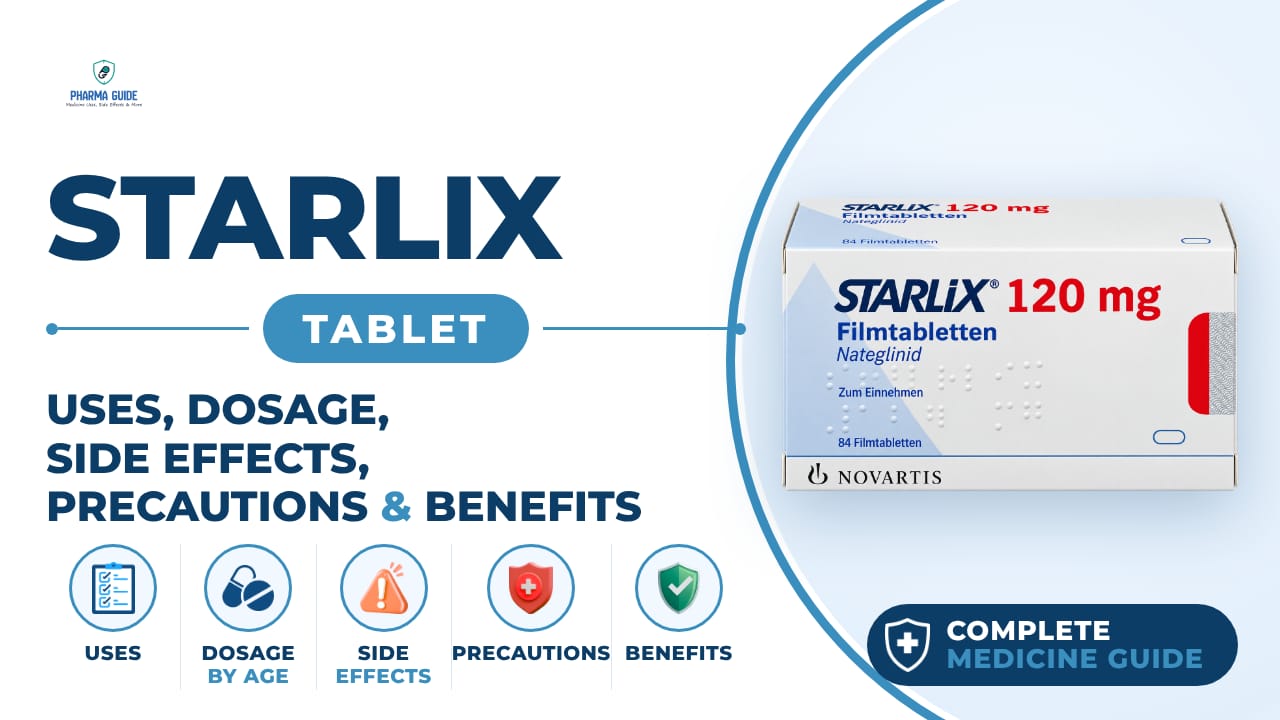
| Generic name | nateglinide |
|---|---|
| Drug class | Meglitinides (oral antidiabetic agent) |
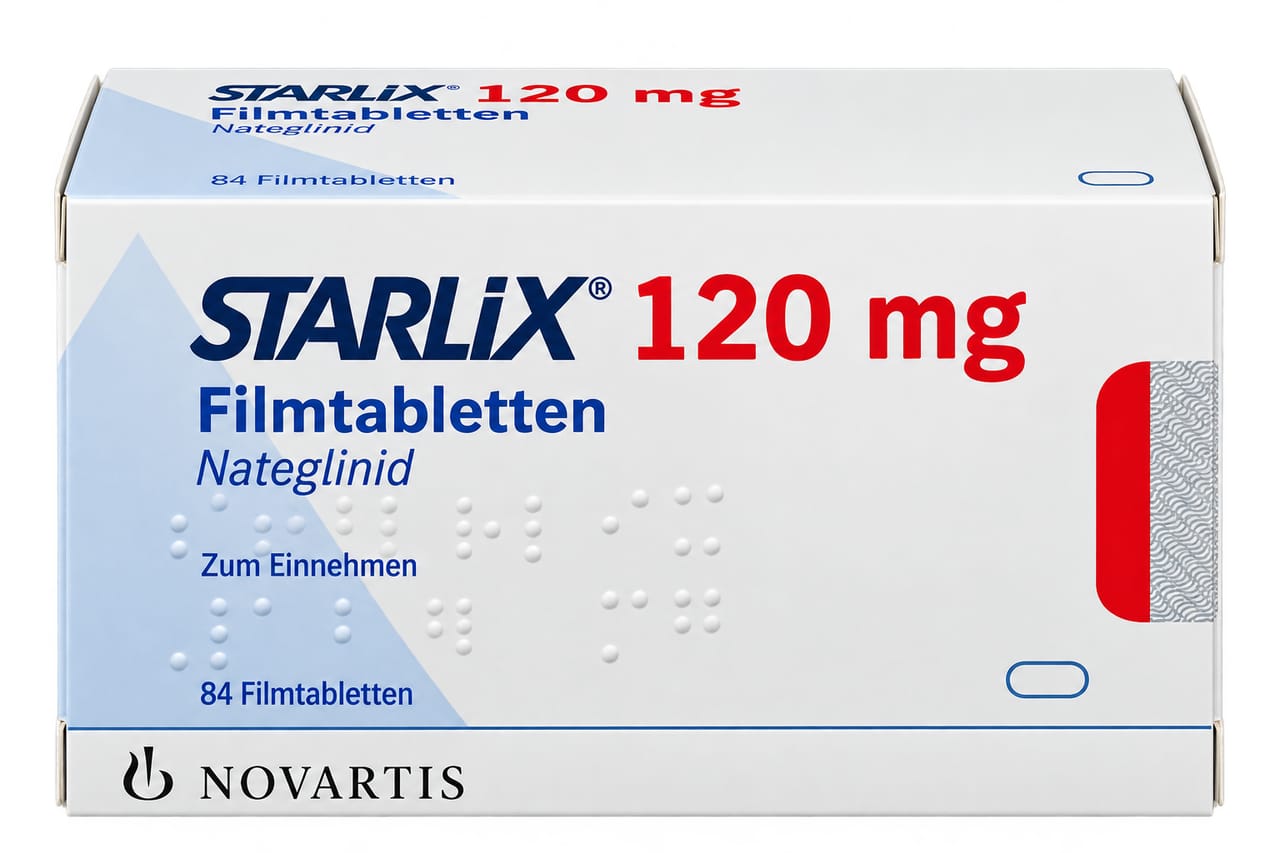
| Forms | 60 mg tablets, 120 mg tablets |
Quick overview
Starlix Tablet (generic name nateglinide) is an oral medicine belonging to the meglitinide class, used to treat type 2 diabetes. It is used along with diet and exercise to improve blood sugar control, either alone or combined with metformin or a thiazolidinedione. Starlix works by helping the pancreas release insulin more quickly after meals, which helps control the rise in blood sugar that occurs after eating.
What is Starlix Tablet
Starlix is an oral medicine used to treat type 2 diabetes. It helps your body respond better to the insulin made by your pancreas, which lowers blood sugar levels.
Starlix Tablet uses
- Used along with diet and exercise to improve blood sugar control in adults with type 2 diabetes
- Can be used alone or together with metformin or a thiazolidinedione when one medicine alone does not control blood sugar well enough
- Not for use in type 1 diabetes or diabetic ketoacidosis
Benefits of Starlix Tablet
- Helps lower blood sugar levels after meals
- Restores the body's early insulin release in response to eating
- May be combined with other diabetes medicines for greater blood sugar control
- Acts quickly around meals
- Helps control post-meal glucose spikes
- Provides meal-related dosing flexibility
- Can be combined with selected other diabetes medicines
How Starlix Tablet works
Starlix works by helping the pancreas release insulin more quickly after you eat, which helps control the rise in blood sugar that happens after meals. It only triggers insulin release in a way that depends on your current blood sugar level.
Starlix Tablet dosage
Take before meals, usually right before eating, but it can be taken up to 30 minutes before a meal. Swallow the tablet whole with a glass of water. If you skip a meal, skip the dose for that meal — do not take it without eating. Do not take a double dose to make up for a missed one; just take your next dose before your next meal. Continue taking it daily before meals as long as your doctor recommends, and keep following your prescribed diet and exercise plan while taking this medicine. No special dose change is usually needed for elderly patients. Starlix is not recommended for use in children or adolescents.
| Age group | Dose |
|---|---|
| Under 18 years | Safety and effectiveness are not established; no standard pediatric dose |
| 18–64 years | Usually 120 mg three times daily before meals |
| 65–74 years | Same adult dose may be used, but closer glucose monitoring is advisable |
| 75 years and older | Individualized cautiously because hypoglycemia risk may be higher |
Available forms and strengths
- 60 mg tablets
- 120 mg tablets
Side effects of Starlix Tablet
Common
- Upper respiratory infection symptoms (runny or stuffy nose, sneezing, cough, cold or flu symptoms)
- Back pain
- Dizziness
- Joint pain or stiffness (arthropathy)
- Diarrhea
- Weight gain
- Low blood sugar (hypoglycemia) symptoms such as sweating, trembling, dizziness, increased appetite, palpitations, nausea, fatigue, and weakness
- Nausea, vomiting, constipation, abdominal pain
- High blood sugar (hyperglycemia) symptoms such as increased urination, thirst, dry skin and dry mouth
- Visual disturbances
Serious
- Allergic reactions: hives, difficulty breathing, swelling of face, lips, tongue, or throat
- Seizures (convulsions)
- Jaundice (yellowing of skin or eyes)
- Liver problems including elevated liver enzymes, cholestatic hepatitis
- Severe hypoglycemia with loss of consciousness or seizures
- Sudden severe headache or worsening headache, dizziness, fatigue, or increased sweating
Warnings and precautions
- Starlix can cause low blood sugar (hypoglycemia), which can be serious, cause seizures, or even be life-threatening in severe cases.
- Elderly patients, malnourished patients, and those with adrenal or pituitary gland problems or severe kidney impairment are more likely to experience low blood sugar from this medicine.
- If you are sick, have an infection, surgery, or injury, your blood sugar control may be temporarily lost, and you may need insulin for a while instead of Starlix.
- Do not take Starlix if you have type 1 diabetes or diabetic ketoacidosis.
- Recognizing low blood sugar may be harder for elderly patients and those taking beta-blocker medicines.
- Starlix should not be used during pregnancy. If you become pregnant while taking this medicine, contact your doctor right away, since uncontrolled blood sugar during pregnancy can cause complications for both mother and baby.
- Do not breastfeed while taking Starlix, as it is not known if it passes into human breast milk and could affect the baby.
- No dose adjustment is usually needed for mild to severe kidney problems, but people with severe kidney impairment may be more sensitive to low blood sugar effects.
- Starlix should be used carefully in people with moderate to severe liver disease, since this group has not been studied.
- Avoid alcohol while taking Starlix, since it can increase the risk of low blood sugar and may interfere with how the medicine works.
- If you have symptoms of low blood sugar, do not drive or operate machinery, since hypoglycemia can affect concentration and reaction time.
Storage
- Keep out of the reach and sight of children
- Store in the original package
- Store between 15-30°C
- Do not use after the expiry date shown on the box
- Do not use any pack that is damaged or shows signs of tampering
- Store at room temperature away from moisture and heat
When to see a doctor
- Get emergency help right away for signs of an allergic reaction such as hives, trouble breathing, or swelling of the face, lips, tongue, or throat.
- Call your doctor right away if you have a seizure or yellowing of the skin or eyes (jaundice).
- Seek urgent medical help if you think you are about to have a severe low blood sugar episode with loss of consciousness or seizure.
- If you think you've taken too much of this medicine, get emergency help or contact a poison control center right away, even if you have no symptoms.
Alternatives
- Glimepiride
- Glipizide
- Gliclazide
Watch the video
FAQs
What is Starlix Tablet used for?
Starlix is used along with diet and exercise to improve blood sugar control in adults with type 2 diabetes, either alone or combined with metformin or a thiazolidinedione.
How should Starlix Tablet be taken?
Take it before meals, usually right before eating, but it can be taken up to 30 minutes before a meal. Swallow the tablet whole with water. If you skip a meal, skip that dose.
What is the usual dose of Starlix Tablet?
The usual adult dose is 120 mg three times daily before meals. Elderly patients may use the same dose but with closer glucose monitoring.
What are the common side effects of Starlix Tablet?
Common side effects include upper respiratory infection symptoms, back pain, dizziness, joint pain, diarrhea, weight gain, nausea, vomiting, constipation, and low or high blood sugar symptoms.
Can Starlix Tablet cause low blood sugar?
Yes, Starlix can cause hypoglycemia, which can be serious and, in severe cases, lead to seizures or be life-threatening, especially in elderly or malnourished patients.
General information, not medical advice
Your prescriber and the leaflet in your pack know your situation. This page does not.
- Follow your prescriber and the leaflet
- Don't start, stop, or change a dose on your own
- Doses and warnings differ by country and product
Sources
Video
Related medicines

Injectafer Injection: Uses, Dosage, Side Effects, Precautions and Alternates
Iron products
Injectafer (ferric carboxymaltose) treats iron deficiency anemia and heart failure-related iron deficiency via IV. Learn uses, dosage, side effects, and

Gliclazide Tablet: Uses, Dosage, Side Effects, Precautions and Alternates
Sulfonylurea (hypoglycemic/antidiabetic agent)
Gliclazide Tablet is a sulfonylurea for type 2 diabetes that boosts insulin release. Learn about dosage, side effects, warnings, and precautions.