
Safety
General information, not medical advice
Your prescriber and the leaflet in your pack know your situation. This page does not.
- Follow your prescriber and the leaflet
- Don't start, stop, or change a dose on your own
- Doses and warnings differ by country and product
Steglatro Tablet: Uses, Dosage, Side Effects, Precautions and Alternates
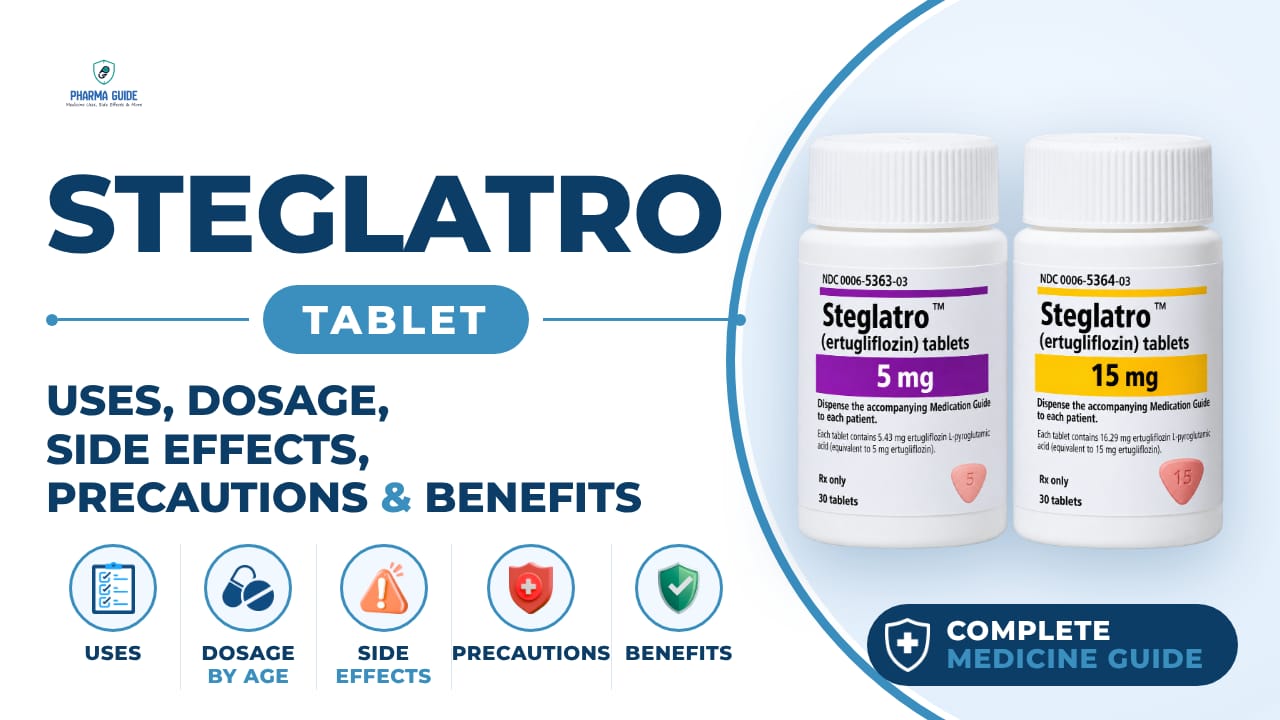
| Generic name | ertugliflozin |
|---|---|
| Drug class | Sodium glucose co-transporter 2 (SGLT2) inhibitor |
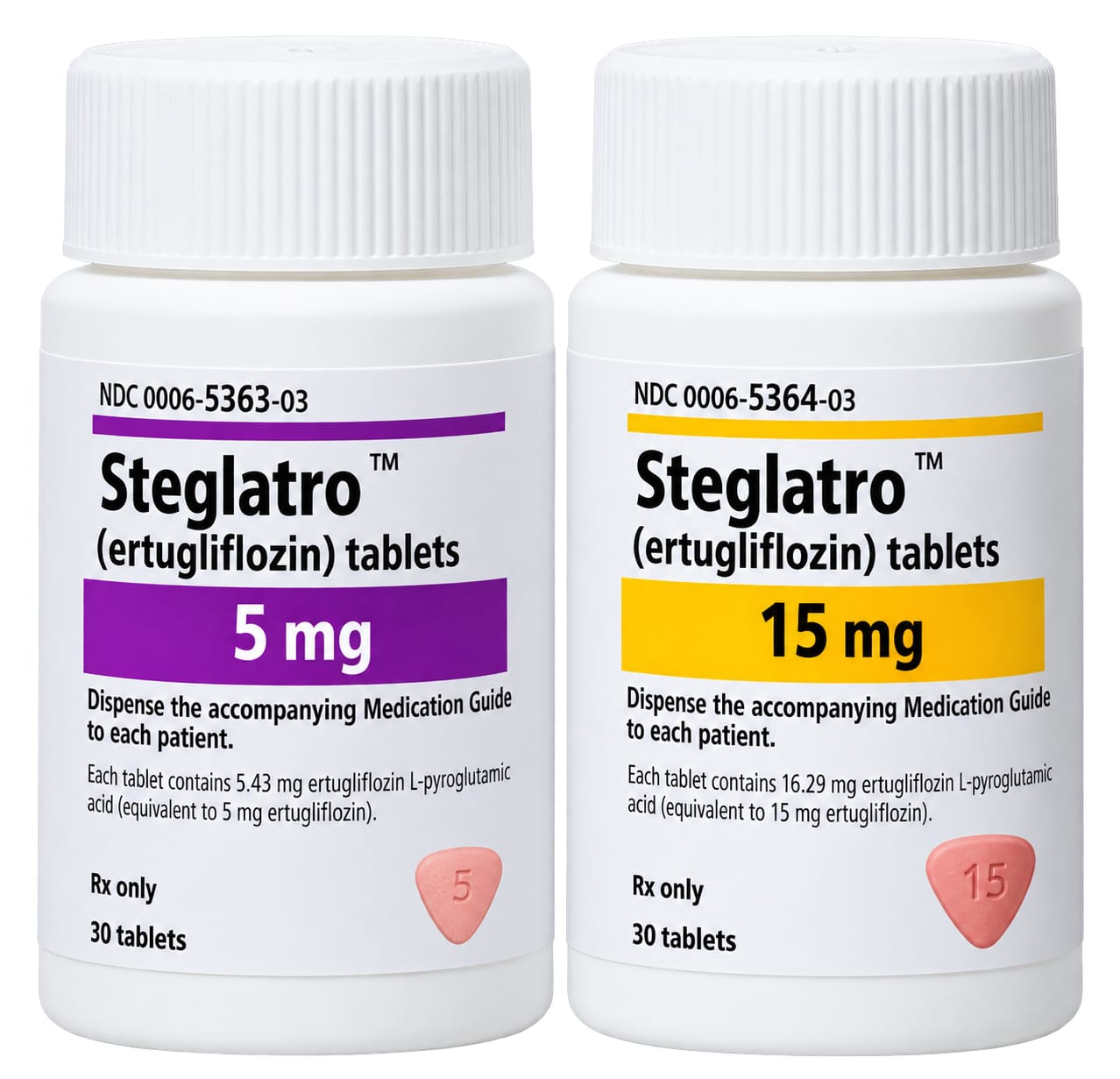
| Forms | Film-coated tablets (5 mg and 15 mg) |
Quick overview
Steglatro Tablet contains ertugliflozin, a medicine belonging to the SGLT2 inhibitor class. It is used in adults with type 2 diabetes mellitus to lower blood sugar levels alongside diet and exercise. It can be used alone when metformin is not suitable, or together with other blood sugar lowering medicines. Steglatro works by helping the body remove excess sugar through urine.
What is Steglatro Tablet
Steglatro is a tablet that contains the active substance ertugliflozin. It belongs to a group of medicines called SGLT2 inhibitors, which help lower blood sugar in people with type 2 diabetes.
Steglatro Tablet uses
- Lowers blood sugar levels in adults (18 years and older) with type 2 diabetes mellitus, as an adjunct to diet and exercise
- Can be used alone (monotherapy) when metformin is not suitable due to intolerance or contraindications
- Can be used together with other medicines that lower blood sugar
Benefits of Steglatro Tablet
- Lowers blood glucose (HbA1c) levels when used with diet and exercise
- Can be combined with other diabetes medicines for added blood sugar control
- May help reduce body weight and blood pressure as seen in clinical studies
How Steglatro Tablet works
Ertugliflozin blocks a protein called SGLT2 in the kidneys. This protein normally allows sugar to be reabsorbed back into the blood. By blocking it, more sugar is removed from the body through urine, which lowers blood sugar levels.
Steglatro Tablet dosage
Take the tablet once a day in the morning, with or without food. Try to take it at the same time each day to help you remember. If you have trouble swallowing, the tablet can be broken or crushed. Keep following your prescribed diet and exercise plan while taking this medicine. If you miss a dose, take it as soon as you remember, but do not take two doses on the same day. Do not stop taking this medicine without talking to your doctor, as blood sugar may rise if you stop.
| Age group | Dose |
|---|---|
| Under 18 years | Safety and effectiveness are not established; no standard pediatric dose |
| 18–64 years | Usually 5 mg once daily in the morning; may be increased to 15 mg once daily if additional glucose control is needed and treatment is tolerated |
| 65–74 years | Same adult dosing may be used, with closer monitoring of kidney function, blood pressure, and hydration |
| 75 years and older | Individualized cautiously because dehydration, low blood pressure, and kidney impairment are more common |
Available forms and strengths
- Film-coated tablets (5 mg and 15 mg)
Side effects of Steglatro Tablet
Common
- Vaginal yeast infection (thrush)
- Yeast infection of the penis
- Urinary tract infection
- Increased urination
- Thirst
- Vaginal itching
- Headache
- Changes in blood test results (urea, cholesterol, haemoglobin)
- Weight decreased
- Back pain
- Nasopharyngitis (cold symptoms)
Serious
- Diabetic ketoacidosis
- Necrotising fasciitis of the perineum (Fournier's gangrene)
- Severe dehydration or volume depletion leading to low blood pressure
- Serious urinary tract infections such as kidney infection (pyelonephritis) or blood infection (urosepsis)
- Lower limb amputation
- Low blood sugar (hypoglycaemia), especially when combined with insulin or sulfonylureas
- Acute kidney injury
- Allergic reactions such as angioedema
Warnings and precautions
- This medicine should not be used by people with type 1 diabetes, as it can increase the risk of a serious condition called diabetic ketoacidosis.
- This medicine can cause a serious condition called diabetic ketoacidosis, which can occur even when blood sugar levels are only moderately raised.
- A rare but serious infection of the genital and surrounding area, called Fournier's gangrene, has been reported with this type of medicine and needs urgent medical treatment.
- This medicine can cause dehydration and low blood pressure, especially in older adults, people with kidney problems, or those taking diuretics or blood pressure medicines.
- An increase in lower limb (mainly toe) amputations has been seen in long-term studies with this class of medicine, so routine foot care is important.
- This medicine increases the risk of genital yeast infections and urinary tract infections.
- Steglatro should not be used during pregnancy, as it may affect the baby's kidney development, especially in the second and third trimesters.
- Steglatro should not be used while breastfeeding because it is not known if it passes into breast milk, and there could be a risk to the infant's developing kidneys.
- Steglatro should not be started in people with reduced kidney function below a certain level, and should be stopped if kidney function drops further, since the medicine may not work as well and can increase risks.
- No dose change is needed for mild or moderate liver problems, but this medicine has not been studied in severe liver impairment and is not recommended in that case.
- Heavy alcohol use can increase the risk of a serious condition called ketoacidosis in people taking this medicine.
- This medicine does not usually affect your ability to drive or use machines, but if it is combined with insulin or certain other diabetes medicines, it can cause low blood sugar, which may affect your driving ability.
Storage
- This medicine does not require any special storage conditions
- Keep out of the sight and reach of children
- Do not use after the expiry date stated on the blister and carton
- Do not use if the packaging is damaged or shows signs of tampering
- Do not throw away medicines via wastewater or household waste; ask your pharmacist how to dispose of medicines you no longer use
When to see a doctor
- Get medical help right away if you have symptoms of diabetic ketoacidosis, such as rapid weight loss, nausea or vomiting, stomach pain, extreme thirst, fast or deep breathing, confusion, unusual sleepiness, or a sweet smell to your breath.
- Seek medical help immediately if you notice pain, tenderness, redness, or swelling in the genital or anal area along with fever or feeling generally unwell, as this could be a sign of a rare but life-threatening infection.
- Contact your doctor if you notice new pain, tenderness, sores, ulcers, or signs of infection on your legs or feet.
- Contact your doctor if you have signs of dehydration or low blood pressure, such as dizziness, light-headedness, weakness, or fainting, especially on standing up.
- Contact your doctor if you notice symptoms of low blood sugar such as headache, drowsiness, irritability, hunger, dizziness, confusion, sweating, shakiness, weakness, or a fast heartbeat.
Alternatives
- Jardiance
- Farxiga
- Invokana
Watch the video
FAQs
What is Steglatro Tablet used for?
Steglatro is used to lower blood sugar levels in adults with type 2 diabetes mellitus, alongside diet and exercise. It can be used alone when metformin is not suitable or combined with other blood sugar lowering medicines.
How does Steglatro Tablet work?
Steglatro contains ertugliflozin, which blocks a protein called SGLT2 in the kidneys that normally reabsorbs sugar back into the blood. By blocking it, more sugar is removed from the body through urine, lowering blood sugar levels.
What is the usual dose of Steglatro Tablet?
For adults aged 18-64, the usual dose is 5 mg once daily in the morning, which may be increased to 15 mg once daily if additional glucose control is needed and the treatment is tolerated. It is taken once a day with or without food.
What are the serious side effects of Steglatro Tablet?
Serious side effects include diabetic ketoacidosis, Fournier's gangrene (a rare genital infection), severe dehydration or low blood pressure, serious urinary tract infections, lower limb amputation, low blood sugar, acute kidney injury, and allergic reactions like angioedema.
Can Steglatro Tablet be used during pregnancy?
No, Steglatro should not be used during pregnancy as it may affect the baby's kidney development, especially in the second and third trimesters. It should also not be used while breastfeeding.
General information, not medical advice
Your prescriber and the leaflet in your pack know your situation. This page does not.
- Follow your prescriber and the leaflet
- Don't start, stop, or change a dose on your own
- Doses and warnings differ by country and product
Sources
Video
Related medicines

Injectafer Injection: Uses, Dosage, Side Effects, Precautions and Alternates
Iron products
Injectafer (ferric carboxymaltose) treats iron deficiency anemia and heart failure-related iron deficiency via IV. Learn uses, dosage, side effects, and

Gliclazide Tablet: Uses, Dosage, Side Effects, Precautions and Alternates
Sulfonylurea (hypoglycemic/antidiabetic agent)
Gliclazide Tablet is a sulfonylurea for type 2 diabetes that boosts insulin release. Learn about dosage, side effects, warnings, and precautions.