
Safety
General information, not medical advice
Your prescriber and the leaflet in your pack know your situation. This page does not.
- Follow your prescriber and the leaflet
- Don't start, stop, or change a dose on your own
- Doses and warnings differ by country and product
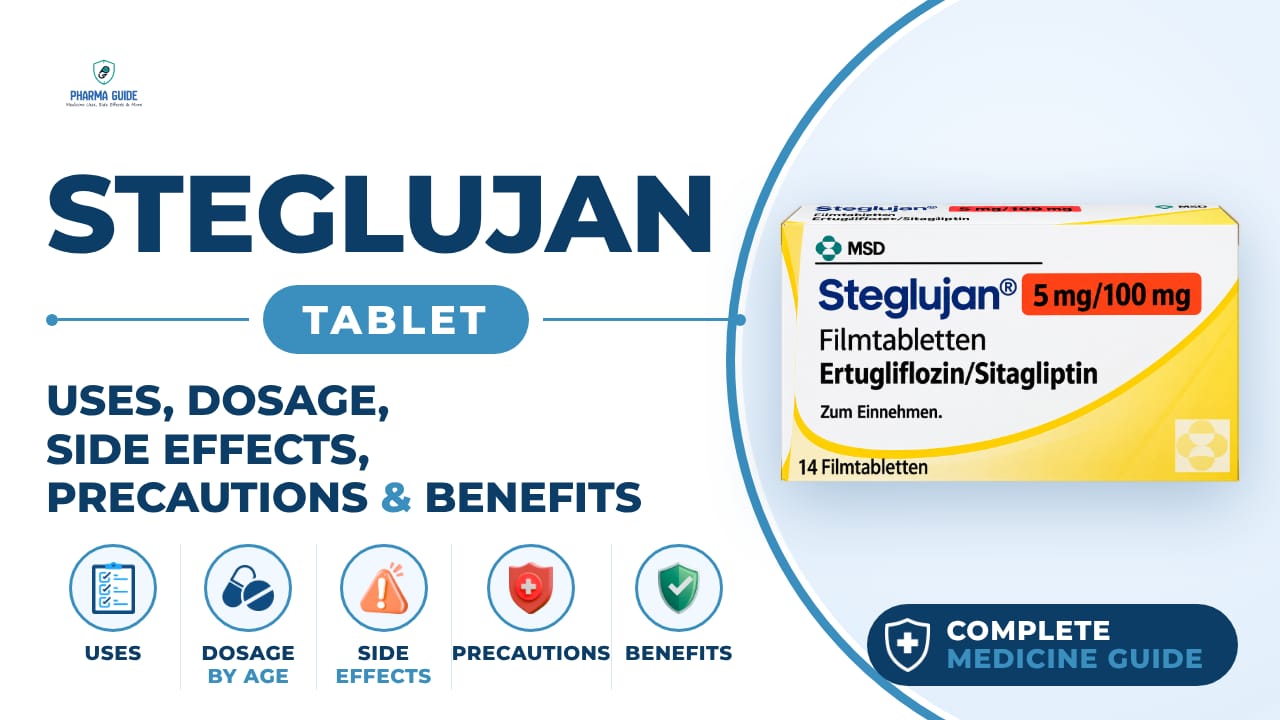
Steglujan Tablet: Uses, Dosage, Side Effects, Precautions and Alternates
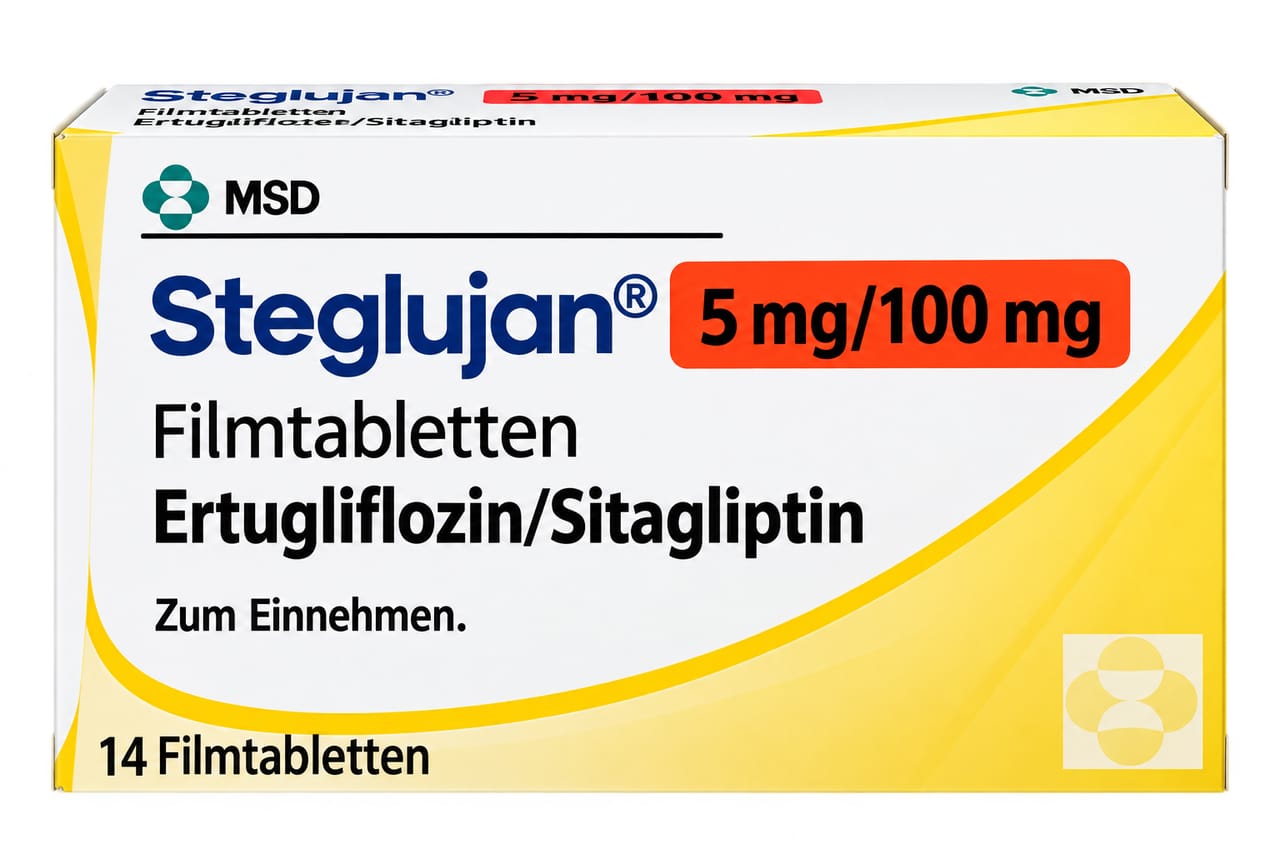
| Generic name | ertugliflozin and sitagliptin |
|---|---|
| Drug class | Combinations of oral blood glucose lowering drugs (SGLT2 inhibitor + DPP-4 inhibitor) |
| Forms | Film-coated tablets, 5 mg/100 mg (ertugliflozin/sitagliptin), Film-coated tablets, 15 mg/100 mg (ertugliflozin/sitagliptin) |
Quick overview
Steglujan is a tablet containing two medicines, ertugliflozin and sitagliptin, combined into one pill. It is used along with diet and exercise to help control blood sugar in adults with type 2 diabetes. It works through two different mechanisms to lower blood sugar and is taken once daily by mouth.
What is Steglujan Tablet
Steglujan is a tablet that contains two medicines, ertugliflozin and sitagliptin, combined into one pill. It is used along with diet and exercise to help control blood sugar in adults with type 2 diabetes.
Steglujan Tablet uses
- Used together with metformin, diet, and exercise to improve blood sugar (glucose) levels in adults with type 2 diabetes
- Used when blood sugar is not controlled on metformin and sitagliptin
- Used when already controlled on metformin, sitagliptin, and ertugliflozin as separate individual medicines
Benefits of Steglujan Tablet
- Lowers blood sugar (HbA1c and fasting glucose) in adults with type 2 diabetes
- May lower body weight compared to placebo in clinical studies
- May lower systolic blood pressure compared to placebo in clinical studies
How Steglujan Tablet works
Steglujan combines two medicines that work in different ways to lower blood sugar. Ertugliflozin works in the kidneys to help remove extra sugar from the body through urine. Sitagliptin helps the body release more insulin after meals, which helps lower blood sugar, especially after eating.
Steglujan Tablet dosage
Take Steglujan once a day in the morning, with or without food, by mouth. If you have trouble swallowing, the tablet can be broken or crushed since it is an immediate-release tablet. Keep following your diet and exercise plan while taking this medicine. If you miss a dose, take it as soon as you remember, but do not take two doses on the same day. If it is almost time for your next dose, skip the missed dose and go back to your regular schedule.
| Age group | Dose |
|---|---|
| Under 18 years | Safety and effectiveness are not established for Synjardy combination tablets |
| 18–64 years | Dose is individualized according to current empagliflozin/metformin therapy; commonly taken twice daily with meals |
| 65–74 years | Same adult dosing may be used, but kidney function and hydration status should be monitored more closely |
| 75 years and older | Use cautiously and individualize dosing because kidney impairment, dehydration, and metformin-related adverse effects are more likely |
Available forms and strengths
- Film-coated tablets, 5 mg/100 mg (ertugliflozin/sitagliptin)
- Film-coated tablets, 15 mg/100 mg (ertugliflozin/sitagliptin)
Side effects of Steglujan Tablet
Common
- Vaginal yeast infection
- Yeast infection of the penis
- Low blood sugar (hypoglycemia)
- Increased or changed urination (urgent need to urinate more often, in larger amounts, or at night)
- Headache
- Sore throat, stuffy or runny nose
- Upset stomach, nausea, vomiting
- Diarrhea
- Constipation
- Flatulence
- Thirst
- Vaginal itching
- Swelling of the hands or legs
- Joint pain, muscle aches, arm or leg pain, back pain
Serious
- Diabetic ketoacidosis
- Acute pancreatitis (inflammation of the pancreas)
- Serious allergic reactions (anaphylaxis, angioedema, rash, hives)
- Serious skin reactions including Stevens-Johnson syndrome and bullous pemphigoid (blistering skin condition)
- Acute kidney injury or worsening kidney function, sometimes requiring dialysis
- Serious urinary tract infections, including kidney infection (pyelonephritis) and urosepsis
- Necrotizing fasciitis of the genital/perineal area (rare but serious bacterial infection)
- Low blood pressure, dehydration, and volume depletion
- Possible need for lower limb amputation
- Heart failure
Warnings and precautions
- This medicine can cause diabetic ketoacidosis, a serious and life-threatening buildup of acids in the blood, which needs urgent hospital treatment. This can happen even when blood sugar levels are normal or only slightly high.
- This medicine should not be used by people with type 1 diabetes or a past history of diabetic ketoacidosis.
- This medicine can cause inflammation of the pancreas (pancreatitis), which can be severe and in rare cases fatal.
- This medicine may increase the risk of lower limb (leg or toe) amputation, especially in people with a history of amputation, blocked blood vessels, nerve damage, or foot ulcers.
- This medicine can cause dehydration and low blood pressure, especially in elderly patients, those on blood pressure medicines or water pills, and those with kidney problems.
- This medicine increases the risk of genital yeast infections and urinary tract infections, including serious kidney infections.
- Serious allergic reactions and serious skin reactions, including Stevens-Johnson syndrome and bullous pemphigoid, have occurred with this medicine, sometimes after the very first dose.
- A rare but serious bacterial infection of the tissue around the genitals and anus (necrotizing fasciitis) has been reported and can require hospitalization and surgery.
- This medicine should not be used during pregnancy because it is not known if it could harm an unborn baby. If you become pregnant, talk to your doctor about a different way to control your blood sugar.
- This medicine should not be used while breastfeeding because it is not known if it passes into breast milk or how it could affect a nursing baby.
- This medicine should not be used by people with severe kidney disease, end-stage kidney disease, or those on dialysis. People with moderate kidney problems should talk to their doctor before taking it, since kidney function needs to be checked before starting and regularly during treatment.
- No dose change is needed for mild or moderate liver problems, but this medicine has not been studied in people with severe liver disease and is not recommended for them.
- The effects of alcohol on this medicine have not been specifically studied, but heavy drinking can increase the risk of a serious condition called diabetic ketoacidosis, so it should be avoided or limited.
- This medicine is not expected to affect your ability to drive, but it can cause dizziness or lightheadedness, especially from low blood pressure or low blood sugar, so avoid driving or using machines until you know how it affects you.
Storage
- Store at 15°C to 30°C (or room temperature between 68°F to 77°F / 20°C to 25°C, depending on region)
- Protect from moisture
- Keep out of reach and sight of children
- Do not use after the expiry date on the pack
- Do not use if the packaging is damaged or shows signs of tampering
- Ask your pharmacist how to throw away medicines you no longer use; do not throw away via wastewater or household waste
When to see a doctor
- Get medical help right away and stop the medicine if you have symptoms of diabetic ketoacidosis, such as difficulty breathing, nausea, vomiting, stomach pain, loss of appetite, confusion, unusual tiredness or sleepiness, or sweet-smelling breath — even if your blood sugar is normal.
- Stop the medicine and get medical help right away if you have severe, persistent stomach pain that may spread to your back, with or without nausea and vomiting, as this may be a sign of pancreatitis.
- Get medical help right away if you notice signs of a serious allergic reaction, such as rash, hives, or swelling of the face, lips, tongue, or throat that causes trouble breathing or swallowing.
- Call your doctor right away if you have new pain, tenderness, sores, ulcers, or signs of infection in your leg or foot, as these may be warning signs related to possible amputation risk.
- Seek medical attention immediately if you develop fever, feel very weak or unwell, and notice pain, swelling, or redness in the area between and around the anus and genitals, as this could be a serious infection.
- Tell your doctor right away if you develop blisters or breakdown/peeling of your skin, as this could be a serious skin reaction that may need treatment in a hospital.
- Contact your doctor right away if you have signs of heart failure, such as increasing shortness of breath, swelling in the feet or legs, rapid weight gain, or unusual tiredness.
Alternatives
- Farxiga / dapagliflozin
- Onglyza / saxagliptin
- Januvia / sitagliptin
Watch the video
FAQs
What is Steglujan tablet used for?
Steglujan is used along with diet and exercise to help control blood sugar in adults with type 2 diabetes, often together with metformin or other diabetes medicines.
How does Steglujan work?
Steglujan combines two medicines that work differently to lower blood sugar. Ertugliflozin helps the kidneys remove extra sugar through urine, while sitagliptin helps the body release more insulin after meals.
How should I take Steglujan tablet?
Take Steglujan once a day in the morning, with or without food. It can be broken or crushed if you have trouble swallowing, since it is an immediate-release tablet. Continue following your diet and exercise plan while taking it.
What are the serious side effects of Steglujan?
Serious side effects include diabetic ketoacidosis, acute pancreatitis, serious allergic and skin reactions, kidney injury, serious urinary tract infections, dehydration, low blood pressure, possible lower limb amputation, and heart failure.
Who should not take Steglujan?
Steglujan should not be used by people with type 1 diabetes, a history of diabetic ketoacidosis, severe or end-stage kidney disease, or those on dialysis. It is also not recommended during pregnancy or breastfeeding.
General information, not medical advice
Your prescriber and the leaflet in your pack know your situation. This page does not.
- Follow your prescriber and the leaflet
- Don't start, stop, or change a dose on your own
- Doses and warnings differ by country and product
Sources
Video
Related medicines

Injectafer Injection: Uses, Dosage, Side Effects, Precautions and Alternates
Iron products
Injectafer (ferric carboxymaltose) treats iron deficiency anemia and heart failure-related iron deficiency via IV. Learn uses, dosage, side effects, and

Gliclazide Tablet: Uses, Dosage, Side Effects, Precautions and Alternates
Sulfonylurea (hypoglycemic/antidiabetic agent)
Gliclazide Tablet is a sulfonylurea for type 2 diabetes that boosts insulin release. Learn about dosage, side effects, warnings, and precautions.