
Safety
General information, not medical advice
Your prescriber and the leaflet in your pack know your situation. This page does not.
- Follow your prescriber and the leaflet
- Don't start, stop, or change a dose on your own
- Doses and warnings differ by country and product
Stelara Injection: Uses, Dosage, Side Effects, Precautions and Alternates
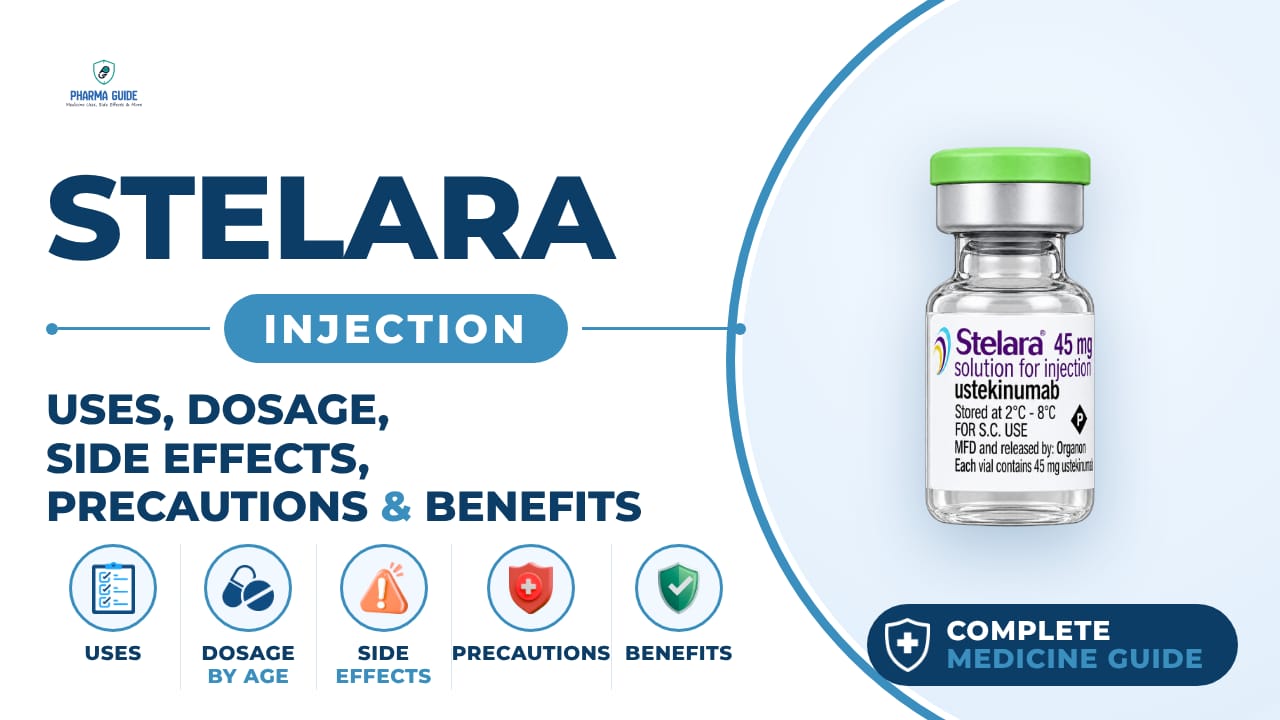
| Generic name | ustekinumab |
|---|---|
| Drug class | Interleukin inhibitors |
| Forms | Subcutaneous injection (prefilled syringe, vial), Intravenous infusion (vial) |
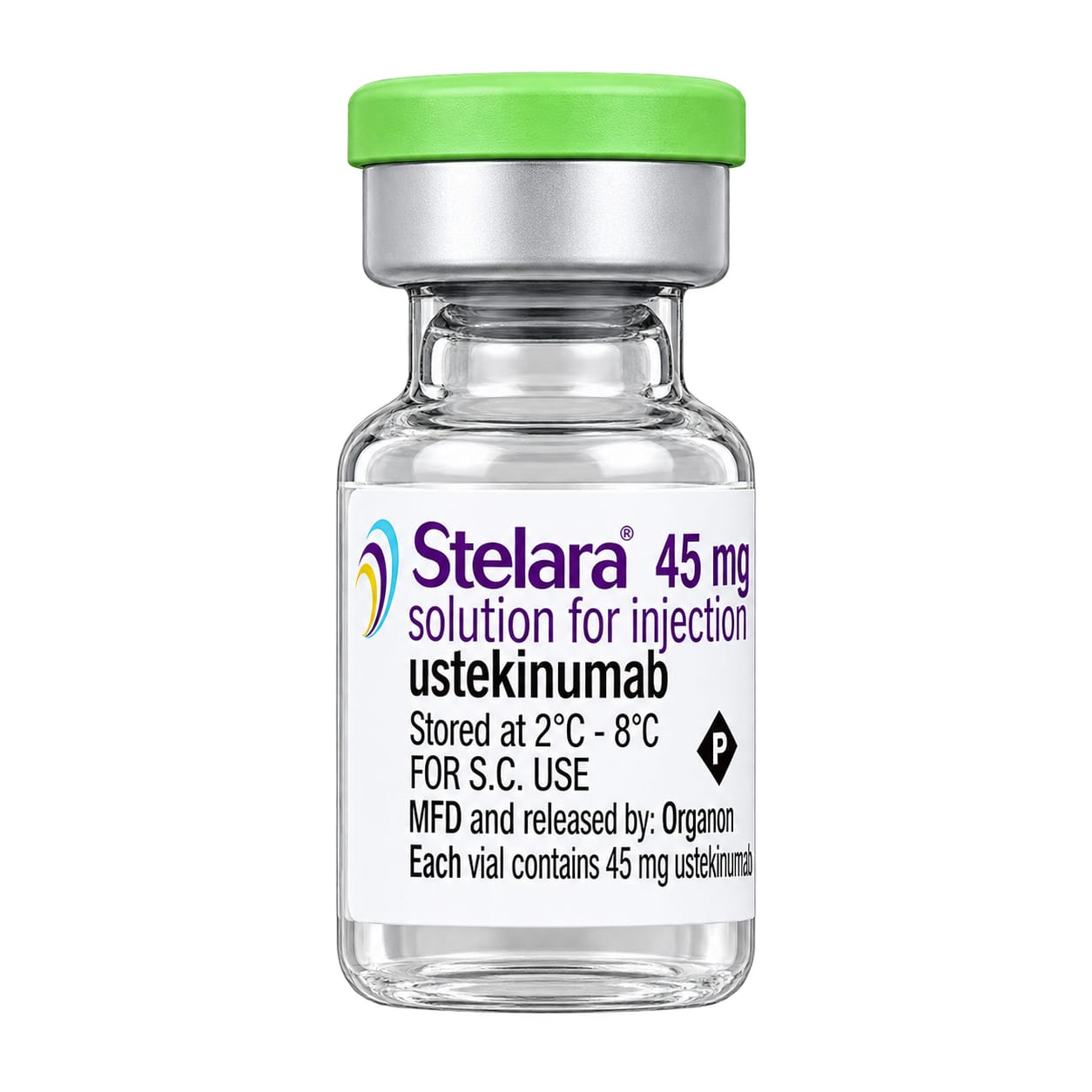
Quick overview
Stelara (ustekinumab) is a prescription medicine belonging to a class of drugs called interleukin inhibitors. It is used to treat Crohn's disease, plaque psoriasis, psoriatic arthritis, and ulcerative colitis in eligible adults and children. Stelara treats symptoms of these conditions and is not a cure. A healthcare provider usually gives the injection in a hospital or clinic setting, though it may also be given at home.
What is Stelara Injection
Stelara (ustekinumab) is a prescription medicine used to treat Crohn's disease, plaque psoriasis, psoriatic arthritis, and ulcerative colitis in eligible adults and children. It treats symptoms of these conditions and is not a cure. A healthcare provider usually gives the injection in a hospital or clinic setting, though it may also be given at home.
Stelara Injection uses
- Plaque psoriasis (moderate to severe)
- Psoriatic arthritis
- Crohn's disease
- Ulcerative colitis
Benefits of Stelara Injection
- Can help decrease the amount of plaques in plaque psoriasis
- Can help decrease the number of swollen or painful joints in psoriatic arthritis
- Can help decrease symptoms such as stomach pain and cramping and diarrhea in Crohn's disease and ulcerative colitis
How Stelara Injection works
Stelara works by blocking two natural proteins in the body called interleukin-12 and interleukin-23 that cause inflammation in these conditions. This slows down an overactive immune system.
Stelara Injection dosage
Follow all directions on your prescription label and read the medication guide or instructions each time before use. Prepare your injection only when you are ready to give it. Do not use the medicine if it looks cloudy, has changed color, or has particles in it, and call your pharmacist for new medicine. Do not shake the medicine.
Before injecting each dose, clean the injection site with rubbing alcohol. Inject under the skin in the upper arms, buttocks, thighs, or stomach area, and change the injection site each time. Do not inject into skin that is irritated, sore, infected, bruised, red, or hard. Do not rub the injection site after a shot, to lessen bruising.
For Crohn's disease and ulcerative colitis, the first dose is given through a vein by a healthcare provider, and later doses are given as an injection under the skin. For psoriasis or psoriatic arthritis, the medicine is given as an injection under the skin.
If a caregiver or patient gives the injection at home, proper training on preparing and giving the injection is needed first. Do not try to inject yourself unless you or your caregiver has been shown how by your doctor or nurse. Use a needle and syringe only once, then place them in a puncture-proof sharps container. Keep all scheduled follow-up appointments.
You will be tested for tuberculosis before starting this medication; if you need TB treatment, you should complete it before and during Stelara treatment.
| Age group | Dose |
|---|---|
| 6–11 Years | Weight-based dose: 0.75 mg/kg if <60 kg; 45 mg if 60–100 kg; 90 mg if >100 kg, according to the approved indication |
| 12–17 Years | 45 mg if ≤100 kg; 90 mg if >100 kg, with dosing schedule determined by the indication |
| Adults (18+ Years) | 45 mg if ≤100 kg; 90 mg if >100 kg for psoriasis/PsA; Crohn's disease and ulcerative colitis use IV weight-based induction followed by 90 mg subcutaneously at prescribed intervals |
Available forms and strengths
- Subcutaneous injection (prefilled syringe, vial)
- Intravenous infusion (vial)
Side effects of Stelara Injection
Common
- Diarrhea
- Dizziness
- Fatigue
- Headache
- Pain, redness, or irritation at the injection site
- Runny or stuffy nose
- Sore throat
- Itching
- Muscle pain
- Back pain
- Depression
- Flu or cold-like symptoms
- Upper respiratory tract infection
- Vaginal yeast infections
- Bronchitis
- Urinary tract infection
- Sinusitis
- Stomach pain
- Nausea
- Fever
Serious
- Allergic reactions such as skin rash, itching, hives, or swelling of the face, lips, tongue, or throat
- Change in your skin such as a new growth, a sore that doesn't heal, or a change in a mole
- Dry cough, shortness of breath, or trouble breathing
- Infection symptoms such as fever, chills, cough, sore throat, wounds that don't heal, pain or trouble passing urine, or general feeling of being unwell
- Sudden and severe headache, confusion, change in vision, or seizures, which may be signs of posterior reversible encephalopathy syndrome (PRES)
- Serious allergic reactions including feeling faint, trouble breathing, swelling of the face, eyelids, tongue, or throat, skin rash, and chest discomfort
- Lung inflammation, including shortness of breath or a cough that doesn't go away
- Serious infections, including tuberculosis
Warnings and precautions
- Stelara affects your immune system and can increase the risk of serious infections, including tuberculosis and infections caused by bacteria, fungi, or viruses. Some people need to be hospitalized for treatment of their infection.
- Your healthcare provider should check you for tuberculosis before you start Stelara, and may treat you for TB first if you are at risk.
- Stelara may decrease the activity of your immune system and increase the risk of certain cancers, including skin cancer.
- Do not receive live vaccines while using Stelara, and avoid contact with anyone who recently received a live vaccine, since the virus could be passed to you.
- Avoid the BCG vaccine during treatment, for one year before starting treatment, and for one year after stopping treatment.
- Avoid being near people who are sick or have infections, and tell your doctor right away if you develop signs of infection.
- It is not known whether this medicine will harm an unborn baby. Tell your doctor if you are pregnant or plan to become pregnant. If you are pregnant, you may be listed on a pregnancy registry to track effects on the baby.
- Stelara can pass into your breast milk. Talk to your healthcare provider about the best way to feed your baby if you receive Stelara.
- Screening for tuberculosis is generally required before treatment. Do not start treatment during a serious active infection unless specifically directed by a specialist.
- Tell your doctor about liver disease or hepatitis; monitoring may be required. No routine dose adjustment is generally established for kidney impairment, but kidney disease should be reported.
Storage
- It is preferred to store unopened vials and prefilled syringes in the refrigerator between 36°F and 46°F (2°C and 8°C).
- Store vials and prefilled syringes standing up straight (upright).
- Keep in the original carton to protect from light.
- Do not freeze.
- Do not shake.
- Individual prefilled syringes may be stored at room temperature up to 86°F (30°C) for a maximum of 30 days in the original carton to protect from light; record the date removed from the refrigerator on the carton.
- After storage at room temperature, do not return the syringe to the refrigerator.
- Throw away the prefilled syringe if not used within 30 days of room temperature storage.
- Do not use after the expiration date.
- Keep out of the reach of children and pets.
- Take unused or expired medication to a take-back program, or ask your pharmacist or care team how to get rid of it safely.
- Do not flush medications down the toilet or pour them into a drain unless instructed to do so.
When to see a doctor
- Stop using Stelara and get medical help right away if you get symptoms of a serious allergic reaction, such as feeling faint, trouble breathing, swelling of your face, eyelids, tongue, or throat, skin rash, or chest discomfort.
- Tell your healthcare provider right away if you get symptoms of posterior reversible encephalopathy syndrome (PRES), including headache, confusion, seizures, or vision problems.
- Tell your healthcare provider right away if you develop shortness of breath or a cough that doesn't go away.
- Call your care team for advice if you get fever, chills, sore throat, or other symptoms of a cold or flu; do not treat yourself.
- If you think you have taken too much of this medicine, seek emergency medical attention or contact a poison control center at once.
Alternatives
- Guselkumab
- Secukinumab
- Adalimumab
Watch the video
FAQs
What conditions does Stelara Injection treat?
Stelara treats moderate to severe plaque psoriasis, psoriatic arthritis, Crohn's disease, and ulcerative colitis in eligible adults and children. It treats symptoms of these conditions and is not a cure.
How does Stelara Injection work?
Stelara works by blocking two natural proteins in the body called interleukin-12 and interleukin-23 that cause inflammation in these conditions, which slows down an overactive immune system.
How is Stelara given?
For Crohn's disease and ulcerative colitis, the first dose is given through a vein by a healthcare provider, and later doses are given as an injection under the skin. For psoriasis or psoriatic arthritis, the medicine is given as an injection under the skin, usually in the upper arms, buttocks, thighs, or stomach area.
What are the serious side effects of Stelara?
Serious side effects include allergic reactions, new skin growths or sores that don't heal, dry cough or trouble breathing, signs of serious infection including tuberculosis, and symptoms of posterior reversible encephalopathy syndrome (PRES) such as sudden severe headache, confusion, vision changes, or seizures.
How should Stelara be stored?
Stelara should be stored in the refrigerator between 36°F and 46°F standing upright in its original carton to protect from light. Prefilled syringes may be stored at room temperature up to 86°F for a maximum of 30 days, but should not be returned to the refrigerator afterward.
General information, not medical advice
Your prescriber and the leaflet in your pack know your situation. This page does not.
- Follow your prescriber and the leaflet
- Don't start, stop, or change a dose on your own
- Doses and warnings differ by country and product
Sources
Video
Related medicines
Cosentyx Injection: Uses, Dosage, Side Effects, Precautions and Alternates
Interleukin inhibitors
Cosentyx (secukinumab) treats plaque psoriasis, psoriatic arthritis, and ankylosing spondylitis by blocking IL-17A. Learn dosage, side effects, and storage

Injectafer Injection: Uses, Dosage, Side Effects, Precautions and Alternates
Iron products
Injectafer (ferric carboxymaltose) treats iron deficiency anemia and heart failure-related iron deficiency via IV. Learn uses, dosage, side effects, and